
Recent from talks
George S. Greene
Knowledge base stats:
Talk channels stats:
Members stats:
George S. Greene
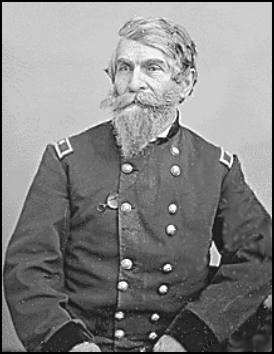
George Sears Greene (May 6, 1801 – January 28, 1899) was a civil engineer and a Union general during the American Civil War. He was part of the Greene family of Rhode Island, which had a record of distinguished military service to the United States. He first served in the Army from 1823 to 1836 after graduating second from his class at West Point. As a civilian, he was one of the founders of the American Society of Civil Engineers and Architects and was responsible for numerous railroads and aqueduct construction projects in the northeastern United States.
After 25 years as a civilian, he rejoined the Army to fight in the American Civil War. Despite his age, he quickly rose up the ranks and was appointed a brigadier general in early 1862. During the war, he took part in the Northern Virginia Campaign, the Battle of Antietam, and the Battle of Chancellorsville. His most notable contribution during the war was his defense of the Union right flank at Culp's Hill during the Battle of Gettysburg. He returned to engineering work after the war until his death in 1899.
Greene was born in Apponaug, Rhode Island, one of nine children of Caleb and Sarah Robinson (Greene) Greene. His family had roots in the founding of Rhode Island and in the American Revolutionary War, including General Nathanael Greene, George's second cousin.[citation needed] Caleb was a financially shrewd ship owner and merchant, but the Embargo Act of 1807, which prohibited U.S. vessels from carrying goods to other countries, and the War of 1812 left his family in financial difficulties. Young George attended Wrentham Academy and then a Latin grammar school in Providence and hoped to attend Brown University there, but his impoverished father could not afford it, so he moved to New York City and found work in a dry goods store on Pearl Street.
In the New York store, Greene met Major Sylvanus Thayer, superintendent of the United States Military Academy, who recommended him to the Secretary of War for appointment to the academy. Greene entered West Point at age 18 and graduated second of 35 cadets in the class of 1823. Top graduates of the academy generally chose the Engineers as their branch, but Greene decided on the artillery and was commissioned a second lieutenant in the 3rd U.S. Artillery Regiment. However, due to his excellent academic performance, he stayed at the academy until 1827 as an assistant professor of mathematics and as a principal assistant professor of engineering. One of the students he taught during this period was Cadet Robert E. Lee.
In the summer of 1828 Greene married Mary Elizabeth Vinton, sister of his best friend at West Point, David Hammond Vinton. Elizabeth gave birth to three children over the next four years: Mary Vinton, George Sears, and Francis Vinton Greene. While assigned to Fort Sullivan in Eastport, Maine, in 1833, tragedy struck Greene's family: Elizabeth and all three of their children died within seven months, probably from tuberculosis. To ease the pain on his mind and to escape the isolation and loneliness of peacetime Army garrison duty, he immersed himself in study of both the law and medicine, coming close to professional certification in both by the time he resigned his commission in 1836 to become a civil engineer.
Greene built railroads in six states and designed municipal sewage and water systems for Washington, D.C., Detroit, and several other cities. In New York City, he designed the Croton Aqueduct reservoir in Central Park and the enlarged High Bridge over the Harlem River. He was one of twelve founders in New York City of the American Society of Civil Engineers and Architects. While on a trip to Maine for railroad surveying, he met Martha Barrett Dana, daughter of Samuel Dana, a prominent Massachusetts politician. They were married in Charlestown, Massachusetts, on February 21, 1837. They had six children together, including four sons (three of them later served in the military), one daughter, and one son who died in infancy.
Despite being over 60 years old and having been out of the Army for 25 years, the crisis of the Union compelled Greene to seek to rejoin the service. He was essentially apolitical and was not an abolitionist, but he was a firm believer in restoring the Union. He was appointed colonel of the 60th New York Volunteer Infantry on January 18, 1862. The regiment of upstate New Yorkers had been dissatisfied with their colonel and the company commanders had petitioned for his removal. Governor Edwin D. Morgan, although initially reluctant to appoint Greene because of his age, saw his 13 years of regular army experience as a solution to his political/military problem. During this period, Governor John A. Andrew of Massachusetts was also prepared to offer Greene a regiment, but Greene chose to serve New York. The officers of the 60th were dismayed when the elderly, gray-haired man reported for duty. They had requested that their lieutenant colonel be promoted, which would have raised many of them in rank themselves.
On April 28, 1862, Greene was appointed brigadier general of volunteers and served on the staff of Maj. Gen. Nathaniel Banks in the Shenandoah Valley campaign against Stonewall Jackson. At age 61, Greene was one of the oldest generals in the Union army and his troops took to calling him "Old Man" or "Pap" Greene. (There were actually 17 general officers in the Civil War older than Greene.) However, his age did not keep him from being one of the most aggressive commanders in the army. He commanded the 3rd Brigade, 2nd Division, II Corps, of the Army of Virginia at the Battle of Cedar Mountain during the Northern Virginia Campaign. Attacked by a Confederate force three times the size of his own, Greene and his men refused to give ground, holding out until the neighboring Union units were forced to withdraw. His division commander, Brig. Gen. John W. Geary, received a severe wound during the action and Greene took command of the division temporarily.
Hub AI
George S. Greene AI simulator
(@George S. Greene_simulator)
George S. Greene
George Sears Greene (May 6, 1801 – January 28, 1899) was a civil engineer and a Union general during the American Civil War. He was part of the Greene family of Rhode Island, which had a record of distinguished military service to the United States. He first served in the Army from 1823 to 1836 after graduating second from his class at West Point. As a civilian, he was one of the founders of the American Society of Civil Engineers and Architects and was responsible for numerous railroads and aqueduct construction projects in the northeastern United States.
After 25 years as a civilian, he rejoined the Army to fight in the American Civil War. Despite his age, he quickly rose up the ranks and was appointed a brigadier general in early 1862. During the war, he took part in the Northern Virginia Campaign, the Battle of Antietam, and the Battle of Chancellorsville. His most notable contribution during the war was his defense of the Union right flank at Culp's Hill during the Battle of Gettysburg. He returned to engineering work after the war until his death in 1899.
Greene was born in Apponaug, Rhode Island, one of nine children of Caleb and Sarah Robinson (Greene) Greene. His family had roots in the founding of Rhode Island and in the American Revolutionary War, including General Nathanael Greene, George's second cousin.[citation needed] Caleb was a financially shrewd ship owner and merchant, but the Embargo Act of 1807, which prohibited U.S. vessels from carrying goods to other countries, and the War of 1812 left his family in financial difficulties. Young George attended Wrentham Academy and then a Latin grammar school in Providence and hoped to attend Brown University there, but his impoverished father could not afford it, so he moved to New York City and found work in a dry goods store on Pearl Street.
In the New York store, Greene met Major Sylvanus Thayer, superintendent of the United States Military Academy, who recommended him to the Secretary of War for appointment to the academy. Greene entered West Point at age 18 and graduated second of 35 cadets in the class of 1823. Top graduates of the academy generally chose the Engineers as their branch, but Greene decided on the artillery and was commissioned a second lieutenant in the 3rd U.S. Artillery Regiment. However, due to his excellent academic performance, he stayed at the academy until 1827 as an assistant professor of mathematics and as a principal assistant professor of engineering. One of the students he taught during this period was Cadet Robert E. Lee.
In the summer of 1828 Greene married Mary Elizabeth Vinton, sister of his best friend at West Point, David Hammond Vinton. Elizabeth gave birth to three children over the next four years: Mary Vinton, George Sears, and Francis Vinton Greene. While assigned to Fort Sullivan in Eastport, Maine, in 1833, tragedy struck Greene's family: Elizabeth and all three of their children died within seven months, probably from tuberculosis. To ease the pain on his mind and to escape the isolation and loneliness of peacetime Army garrison duty, he immersed himself in study of both the law and medicine, coming close to professional certification in both by the time he resigned his commission in 1836 to become a civil engineer.
Greene built railroads in six states and designed municipal sewage and water systems for Washington, D.C., Detroit, and several other cities. In New York City, he designed the Croton Aqueduct reservoir in Central Park and the enlarged High Bridge over the Harlem River. He was one of twelve founders in New York City of the American Society of Civil Engineers and Architects. While on a trip to Maine for railroad surveying, he met Martha Barrett Dana, daughter of Samuel Dana, a prominent Massachusetts politician. They were married in Charlestown, Massachusetts, on February 21, 1837. They had six children together, including four sons (three of them later served in the military), one daughter, and one son who died in infancy.
Despite being over 60 years old and having been out of the Army for 25 years, the crisis of the Union compelled Greene to seek to rejoin the service. He was essentially apolitical and was not an abolitionist, but he was a firm believer in restoring the Union. He was appointed colonel of the 60th New York Volunteer Infantry on January 18, 1862. The regiment of upstate New Yorkers had been dissatisfied with their colonel and the company commanders had petitioned for his removal. Governor Edwin D. Morgan, although initially reluctant to appoint Greene because of his age, saw his 13 years of regular army experience as a solution to his political/military problem. During this period, Governor John A. Andrew of Massachusetts was also prepared to offer Greene a regiment, but Greene chose to serve New York. The officers of the 60th were dismayed when the elderly, gray-haired man reported for duty. They had requested that their lieutenant colonel be promoted, which would have raised many of them in rank themselves.
On April 28, 1862, Greene was appointed brigadier general of volunteers and served on the staff of Maj. Gen. Nathaniel Banks in the Shenandoah Valley campaign against Stonewall Jackson. At age 61, Greene was one of the oldest generals in the Union army and his troops took to calling him "Old Man" or "Pap" Greene. (There were actually 17 general officers in the Civil War older than Greene.) However, his age did not keep him from being one of the most aggressive commanders in the army. He commanded the 3rd Brigade, 2nd Division, II Corps, of the Army of Virginia at the Battle of Cedar Mountain during the Northern Virginia Campaign. Attacked by a Confederate force three times the size of his own, Greene and his men refused to give ground, holding out until the neighboring Union units were forced to withdraw. His division commander, Brig. Gen. John W. Geary, received a severe wound during the action and Greene took command of the division temporarily.
Recent media