
Recent from talks
Georges-Louis Leclerc, Comte de Buffon
Knowledge base stats:
Talk channels stats:
Members stats:
Georges-Louis Leclerc, Comte de Buffon
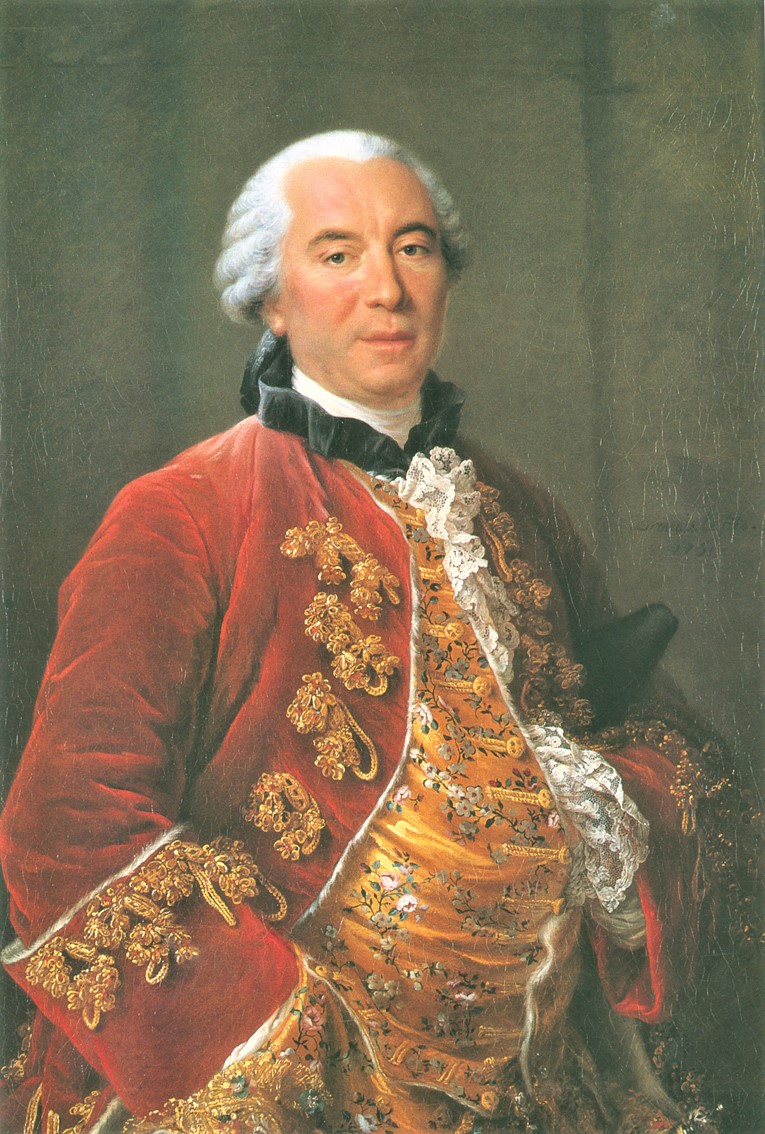
Georges-Louis Leclerc, Comte de Buffon (French: [ʒɔʁʒ lwi ləklɛʁ kɔ̃t də byfɔ̃]; 7 September 1707 – 16 April 1788) was a French naturalist, mathematician, and cosmologist. He held the position of intendant (director) at the Jardin du Roi, now called the Jardin des plantes.
Buffon's works influenced the next two generations of naturalists, including two prominent French scientists Jean-Baptiste Lamarck and Georges Cuvier. Buffon published thirty-six quarto volumes of his Histoire Naturelle during his lifetime, with additional volumes based on his notes and further research being published in the two decades following his death.
Ernst Mayr wrote that "Truly, Buffon was the father of all thought in natural history in the second half of the 18th century". Credited with being one of the first naturalists to recognize ecological succession, he was forced by the theology committee at the University of Paris to recant his theories about geological history and animal evolution because they contradicted the biblical narrative of Creation.
Georges Louis Leclerc was born at Montbard, in the province of Burgundy to Benjamin François Leclerc, a minor local official in charge of the gabelle salt tax and Anne-Christine Marlin, also from a family of civil servants. Georges was named after his mother's uncle (and godfather) Georges Blaisot, the tax-farmer of the Duke of Savoy for all of Sicily. In 1714 Blaisot died childless, leaving a considerable fortune to his seven-year-old godson. Benjamin Leclerc then purchased an estate containing the nearby village of Buffon and moved the family to Dijon acquiring various offices there as well as a seat in the Dijon Parlement.
Georges attended the Jesuit College of Godrans in Dijon from the age of ten onwards. From 1723 to 1726 he then studied law in Dijon, the prerequisite for continuing the family tradition in civil service. In 1728 Georges left Dijon to study mathematics and medicine at the University of Angers in France. At Angers in 1730 he made the acquaintance of Evelyn Pierrepont, the young English Duke of Kingston, who was on his grand tour of Europe, and traveled with him on a large and expensive entourage for a year and a half through southern France and parts of Italy.
There are persistent undocumented rumors from this period about duels, abductions and secret trips to England. In 1732 after the death of his mother and before the impending remarriage of his father, Georges left Kingston and returned to Dijon to secure his inheritance. Having added 'de Buffon' to his name while traveling with the Duke, he repurchased the village of Buffon, which his father had meanwhile sold off. With a fortune of about 80,000 livres (at the time, worth nearly 27 kilograms of gold), Buffon set himself up in Paris to pursue science, at first primarily mathematics and mechanics, and the increase of his fortune.
In 1732 he moved to Paris, where he met Voltaire and other intellectuals. He lived in the Faubourg Saint-Germain, with Gilles-François Boulduc, first apothecary of the King, professor of chemistry at the Jardin du Roi, member of the Academy of Sciences. He first made his mark in the field of mathematics and, in his Sur le jeu de franc-carreau (On the game of fair-square), introduced differential and integral calculus into probability theory; the problem of Buffon's needle in probability theory is named after him. In 1734 he was admitted to the French Academy of Sciences. During this period he corresponded with the Swiss mathematician Gabriel Cramer.
His protector Maurepas had asked the Academy of Sciences to do research on wood for the construction of ships in 1733. Soon afterward, Buffon began a long-term study, performing some of the most comprehensive tests to date on the mechanical properties of wood. Included were a series of tests to compare the properties of small specimens with those of large members. After carefully testing more than a thousand small specimens without knots or other defects, Buffon concluded that it was not possible to extrapolate to the properties of full-size timbers, and he began a series of tests on full-size structural members.
Hub AI
Georges-Louis Leclerc, Comte de Buffon AI simulator
(@Georges-Louis Leclerc, Comte de Buffon_simulator)
Georges-Louis Leclerc, Comte de Buffon
Georges-Louis Leclerc, Comte de Buffon (French: [ʒɔʁʒ lwi ləklɛʁ kɔ̃t də byfɔ̃]; 7 September 1707 – 16 April 1788) was a French naturalist, mathematician, and cosmologist. He held the position of intendant (director) at the Jardin du Roi, now called the Jardin des plantes.
Buffon's works influenced the next two generations of naturalists, including two prominent French scientists Jean-Baptiste Lamarck and Georges Cuvier. Buffon published thirty-six quarto volumes of his Histoire Naturelle during his lifetime, with additional volumes based on his notes and further research being published in the two decades following his death.
Ernst Mayr wrote that "Truly, Buffon was the father of all thought in natural history in the second half of the 18th century". Credited with being one of the first naturalists to recognize ecological succession, he was forced by the theology committee at the University of Paris to recant his theories about geological history and animal evolution because they contradicted the biblical narrative of Creation.
Georges Louis Leclerc was born at Montbard, in the province of Burgundy to Benjamin François Leclerc, a minor local official in charge of the gabelle salt tax and Anne-Christine Marlin, also from a family of civil servants. Georges was named after his mother's uncle (and godfather) Georges Blaisot, the tax-farmer of the Duke of Savoy for all of Sicily. In 1714 Blaisot died childless, leaving a considerable fortune to his seven-year-old godson. Benjamin Leclerc then purchased an estate containing the nearby village of Buffon and moved the family to Dijon acquiring various offices there as well as a seat in the Dijon Parlement.
Georges attended the Jesuit College of Godrans in Dijon from the age of ten onwards. From 1723 to 1726 he then studied law in Dijon, the prerequisite for continuing the family tradition in civil service. In 1728 Georges left Dijon to study mathematics and medicine at the University of Angers in France. At Angers in 1730 he made the acquaintance of Evelyn Pierrepont, the young English Duke of Kingston, who was on his grand tour of Europe, and traveled with him on a large and expensive entourage for a year and a half through southern France and parts of Italy.
There are persistent undocumented rumors from this period about duels, abductions and secret trips to England. In 1732 after the death of his mother and before the impending remarriage of his father, Georges left Kingston and returned to Dijon to secure his inheritance. Having added 'de Buffon' to his name while traveling with the Duke, he repurchased the village of Buffon, which his father had meanwhile sold off. With a fortune of about 80,000 livres (at the time, worth nearly 27 kilograms of gold), Buffon set himself up in Paris to pursue science, at first primarily mathematics and mechanics, and the increase of his fortune.
In 1732 he moved to Paris, where he met Voltaire and other intellectuals. He lived in the Faubourg Saint-Germain, with Gilles-François Boulduc, first apothecary of the King, professor of chemistry at the Jardin du Roi, member of the Academy of Sciences. He first made his mark in the field of mathematics and, in his Sur le jeu de franc-carreau (On the game of fair-square), introduced differential and integral calculus into probability theory; the problem of Buffon's needle in probability theory is named after him. In 1734 he was admitted to the French Academy of Sciences. During this period he corresponded with the Swiss mathematician Gabriel Cramer.
His protector Maurepas had asked the Academy of Sciences to do research on wood for the construction of ships in 1733. Soon afterward, Buffon began a long-term study, performing some of the most comprehensive tests to date on the mechanical properties of wood. Included were a series of tests to compare the properties of small specimens with those of large members. After carefully testing more than a thousand small specimens without knots or other defects, Buffon concluded that it was not possible to extrapolate to the properties of full-size timbers, and he began a series of tests on full-size structural members.
Recent media