
Recent from talks
German campaign of 1813
Knowledge base stats:
Talk channels stats:
Members stats:
German campaign of 1813
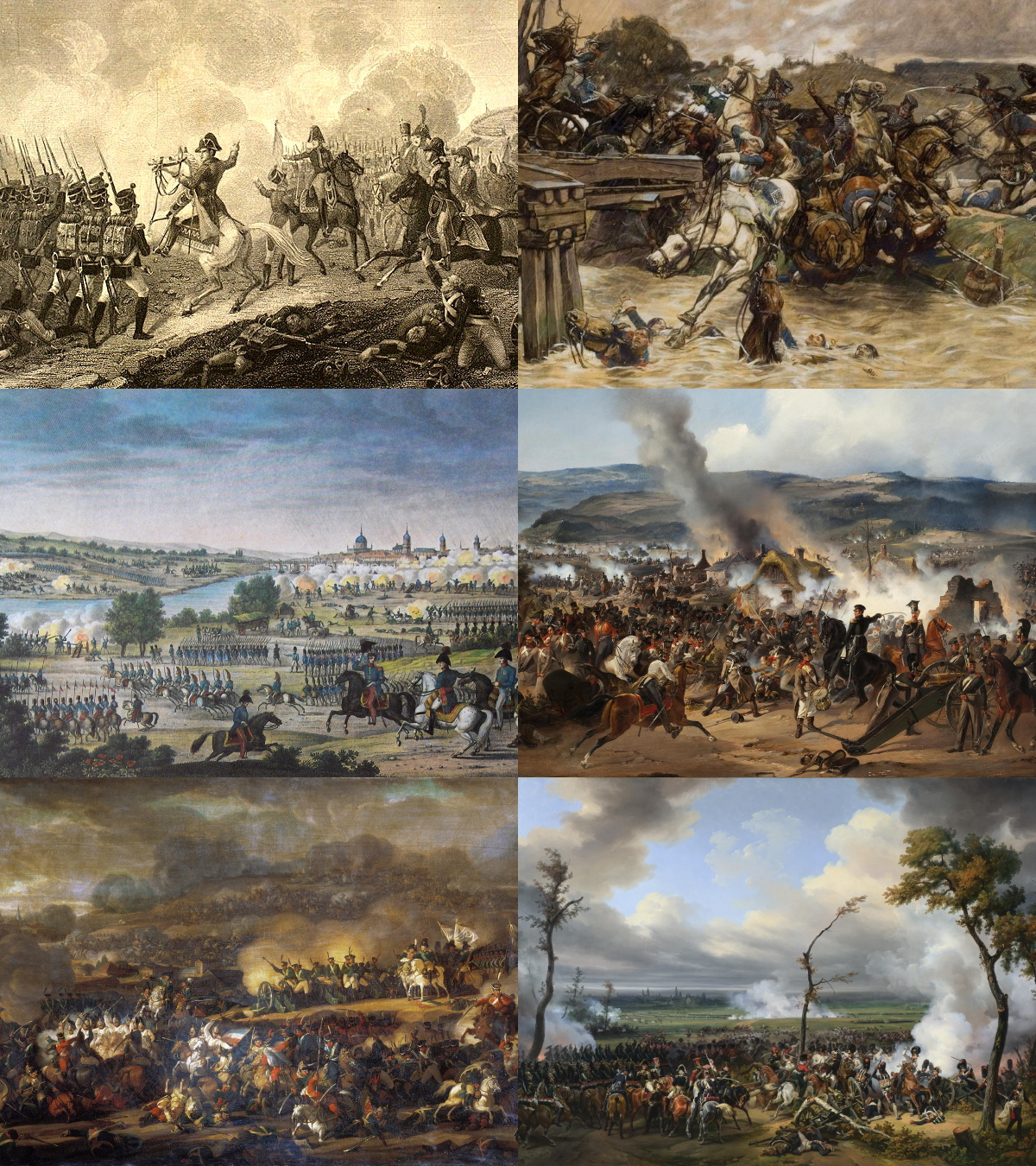
The German campaign (German: Befreiungskriege, lit. 'Wars of Liberation') was fought in 1813. Members of the Sixth Coalition, including the German states of Austria and Prussia, plus Russia and Sweden, fought a series of battles in Germany against the French Emperor Napoleon, his marshals, and the armies of the Confederation of the Rhine – an alliance of most of the other German states, – which ended the domination of the First French Empire.
After the devastating defeat of Napoleon's Grande Armée in the Russian campaign of 1812, Johann Yorck – the general in command of the Grande Armée's German auxiliaries (Hilfskorps) – declared a ceasefire with the Russians on 30 December 1812 via the Convention of Tauroggen. This was the decisive factor in the outbreak of the German campaign the following year.
The spring campaign between France and the Sixth Coalition ended inconclusively with a summer truce (Truce of Pläswitz). Via the Trachenberg Plan, developed during a period of ceasefire in the summer of 1813, the ministers of Prussia, Russia, and Sweden agreed to pursue a single allied strategy against Napoleon. Following the end of the ceasefire, Austria eventually sided with the coalition, thwarting Napoleon's hopes of reaching separate agreements with Austria and Russia. The coalition now had a clear numerical superiority, which they eventually brought to bear on Napoleon's main forces, despite earlier setbacks such as the Battle of Dresden. The high point of allied strategy was the Battle of Leipzig in October 1813, which ended in a decisive defeat for Napoleon. The Confederation of the Rhine was dissolved following the battle with many of its former member states joining the Coalition, breaking Napoleon's hold over Germany.
After a delay in which a new strategy was agreed upon, in early 1814 the coalition invaded France, coinciding with the march of Duke of Wellington's British army northward from Spain into southern France. Napoleon was forced to abdicate and Louis XVIII assumed the French throne. The war came to a formal end with the Treaty of Paris in May 1814.
Since 1806 writers and intellectuals such as Johann Philipp Palm, Johann Gottlieb Fichte, Ernst Moritz Arndt, Friedrich Ludwig Jahn, and Theodor Körner had been criticising the French occupation of much of Germany. They advocated limitations to the dynastic princes of Germany and a joint effort by all Germans, including Prussians and Austrians, to eject the French. From 1810, Arndt and Jahn repeatedly asked high-ranking figures in Prussian society to prepare such an uprising. Jahn himself organised the German League and made a major contribution to the founding of the Lützow Free Corps. These forerunners took part in the outbreak of hostilities in Germany, both by serving in the armed forces and by backing the coalition through their writings.[citation needed]
Even before the German campaign, there had been uprisings against French troops occupying Germany – these had broken out from 1806 onwards in Hesse and in 1809 during the Tyrolean Rebellion. These uprisings intensified in the same year under Wilhelm von Dörnberg, the initiator and commander-in-chief of the Hessian uprising, and Major Ferdinand von Schill.[citation needed]
Following the near-destruction of Napoleon's Grande Armée in Russia in 1812, Johann Yorck – the general in command of the Grande Armée's German auxiliaries (Hilfskorps) from the Confederation of the Rhine – declared a ceasefire with the Russians on 30 December 1812 via the Convention of Tauroggen. This was the decisive factor in the outbreak of the German campaign the following year.[citation needed]
On 17 March 1813 – the day Emperor Alexander I of Russia arrived in the Hoflager of King Frederick William III – Prussia declared war on France. On 20 March 1813, the Schlesische privilegierte Zeitung newspaper published Frederick's speech entitled An Mein Volk, delivered on 17 March and calling for a war of liberation. In addition to newly formed Prussian units such as the Landwehr and Landsturm, the initial fighting was undertaken by volunteers such as German volunteer troops, Jäger units, Free Corps (such as the Lützow Free Corps), and troops from Russia, (from the summer of 1813 onwards) Sweden under Crown Prince Charles John (the former French marshal Jean-Baptiste Bernadotte), and Austria under Field Marshal Karl von Schwarzenberg. Already busy with maintaining naval supremacy and fighting in the Peninsular War, Great Britain did not take any direct part in the German campaign, though it sent subsidies to support it.[citation needed] A single congreave rocket battery commanded by Captain Richard Bogue took part in the 1813 campaign. He was killed at Leipzig.
Hub AI
German campaign of 1813 AI simulator
(@German campaign of 1813_simulator)
German campaign of 1813
The German campaign (German: Befreiungskriege, lit. 'Wars of Liberation') was fought in 1813. Members of the Sixth Coalition, including the German states of Austria and Prussia, plus Russia and Sweden, fought a series of battles in Germany against the French Emperor Napoleon, his marshals, and the armies of the Confederation of the Rhine – an alliance of most of the other German states, – which ended the domination of the First French Empire.
After the devastating defeat of Napoleon's Grande Armée in the Russian campaign of 1812, Johann Yorck – the general in command of the Grande Armée's German auxiliaries (Hilfskorps) – declared a ceasefire with the Russians on 30 December 1812 via the Convention of Tauroggen. This was the decisive factor in the outbreak of the German campaign the following year.
The spring campaign between France and the Sixth Coalition ended inconclusively with a summer truce (Truce of Pläswitz). Via the Trachenberg Plan, developed during a period of ceasefire in the summer of 1813, the ministers of Prussia, Russia, and Sweden agreed to pursue a single allied strategy against Napoleon. Following the end of the ceasefire, Austria eventually sided with the coalition, thwarting Napoleon's hopes of reaching separate agreements with Austria and Russia. The coalition now had a clear numerical superiority, which they eventually brought to bear on Napoleon's main forces, despite earlier setbacks such as the Battle of Dresden. The high point of allied strategy was the Battle of Leipzig in October 1813, which ended in a decisive defeat for Napoleon. The Confederation of the Rhine was dissolved following the battle with many of its former member states joining the Coalition, breaking Napoleon's hold over Germany.
After a delay in which a new strategy was agreed upon, in early 1814 the coalition invaded France, coinciding with the march of Duke of Wellington's British army northward from Spain into southern France. Napoleon was forced to abdicate and Louis XVIII assumed the French throne. The war came to a formal end with the Treaty of Paris in May 1814.
Since 1806 writers and intellectuals such as Johann Philipp Palm, Johann Gottlieb Fichte, Ernst Moritz Arndt, Friedrich Ludwig Jahn, and Theodor Körner had been criticising the French occupation of much of Germany. They advocated limitations to the dynastic princes of Germany and a joint effort by all Germans, including Prussians and Austrians, to eject the French. From 1810, Arndt and Jahn repeatedly asked high-ranking figures in Prussian society to prepare such an uprising. Jahn himself organised the German League and made a major contribution to the founding of the Lützow Free Corps. These forerunners took part in the outbreak of hostilities in Germany, both by serving in the armed forces and by backing the coalition through their writings.[citation needed]
Even before the German campaign, there had been uprisings against French troops occupying Germany – these had broken out from 1806 onwards in Hesse and in 1809 during the Tyrolean Rebellion. These uprisings intensified in the same year under Wilhelm von Dörnberg, the initiator and commander-in-chief of the Hessian uprising, and Major Ferdinand von Schill.[citation needed]
Following the near-destruction of Napoleon's Grande Armée in Russia in 1812, Johann Yorck – the general in command of the Grande Armée's German auxiliaries (Hilfskorps) from the Confederation of the Rhine – declared a ceasefire with the Russians on 30 December 1812 via the Convention of Tauroggen. This was the decisive factor in the outbreak of the German campaign the following year.[citation needed]
On 17 March 1813 – the day Emperor Alexander I of Russia arrived in the Hoflager of King Frederick William III – Prussia declared war on France. On 20 March 1813, the Schlesische privilegierte Zeitung newspaper published Frederick's speech entitled An Mein Volk, delivered on 17 March and calling for a war of liberation. In addition to newly formed Prussian units such as the Landwehr and Landsturm, the initial fighting was undertaken by volunteers such as German volunteer troops, Jäger units, Free Corps (such as the Lützow Free Corps), and troops from Russia, (from the summer of 1813 onwards) Sweden under Crown Prince Charles John (the former French marshal Jean-Baptiste Bernadotte), and Austria under Field Marshal Karl von Schwarzenberg. Already busy with maintaining naval supremacy and fighting in the Peninsular War, Great Britain did not take any direct part in the German campaign, though it sent subsidies to support it.[citation needed] A single congreave rocket battery commanded by Captain Richard Bogue took part in the 1813 campaign. He was killed at Leipzig.
Recent media