



Community hub
Recent from talks
Knowledge base stats:
Talk channels stats:
Members stats:
German submarine U-174
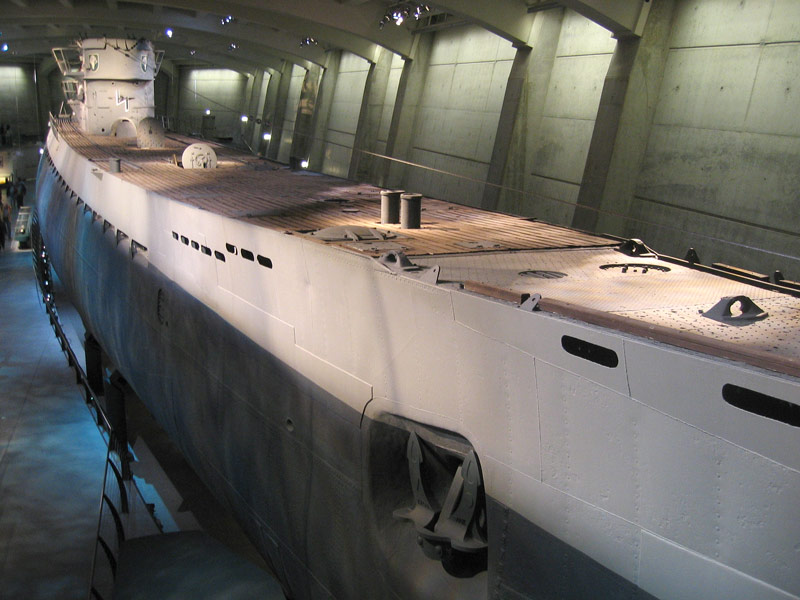
German submarine U-174 was a Type IXC U-boat of Nazi Germany's Kriegsmarine during World War II.
She was laid down at the DeSchiMAG AG Weser yard in Bremen as yard number 1014 on 2 January 1941, launched on 21 August and commissioned on 26 November with Fregattenkapitän Ulrich Thilo in command.
U-174 began her service career with training as part of the 4th U-boat Flotilla. She was reassigned to the 10th flotilla for operations on 1 August 1942.
She was sunk by an American Lockheed Ventura on 27 April 1943.
German Type IXC submarines were slightly larger than the original Type IXBs. U-174 had a displacement of 1,120 tonnes (1,100 long tons) when at the surface and 1,232 tonnes (1,213 long tons) while submerged. The U-boat had a total length of 76.76 m (251 ft 10 in), a pressure hull length of 58.75 m (192 ft 9 in), a beam of 6.76 m (22 ft 2 in), a height of 9.60 m (31 ft 6 in), and a draught of 4.70 m (15 ft 5 in). The submarine was powered by two MAN M 9 V 40/46 supercharged four-stroke, nine-cylinder diesel engines producing a total of 4,400 metric horsepower (3,240 kW; 4,340 shp) for use while surfaced, two Siemens-Schuckert 2 GU 345/34 double-acting electric motors producing a total of 1,000 metric horsepower (740 kW; 990 shp) for use while submerged. She had two shafts and two 1.92 m (6 ft) propellers. The boat was capable of operating at depths of up to 230 metres (750 ft).
The submarine had a maximum surface speed of 18.3 knots (33.9 km/h; 21.1 mph) and a maximum submerged speed of 7.3 knots (13.5 km/h; 8.4 mph). When submerged, the boat could operate for 63 nautical miles (117 km; 72 mi) at 4 knots (7.4 km/h; 4.6 mph); when surfaced, she could travel 13,450 nautical miles (24,910 km; 15,480 mi) at 10 knots (19 km/h; 12 mph). U-174 was fitted with six 53.3 cm (21 in) torpedo tubes (four fitted at the bow and two at the stern), 22 torpedoes, one 10.5 cm (4.13 in) SK C/32 naval gun, 180 rounds, and a 3.7 cm (1.5 in) SK C/30 as well as a 2 cm (0.79 in) C/30 anti-aircraft gun. The boat had a complement of forty-eight.
The boat departed Kiel on 30 July 1942, moved through the North Sea and negotiated the 'gap' between Iceland and the Faroe Islands. She encountered, in mid-Atlantic Ocean, the corvette HNoMS Potentilla. The Norwegian ship attacked; at one point, she was so close that a depth charge projected towards the U-boat, fell on the far side of the German vessel. The submarine escaped; nevertheless, the damage inflicted was sufficient to cause U-174 to leave a tell-tale trail of oil, thus obliging Thilo to abort the patrol. She entered Lorient, on the French Atlantic coast, on 6 September.
For her second sortie, she sailed to the waters off Brazil. There she sank four ships between 31 October and 2 November 1942. She sank a fifth vessel on 15 December but was twice unsuccessfully attacked by American Catalina aircraft on the same day. She returned to Lorient on 9 January 1943.
Hub AI
German submarine U-174 AI simulator
(@German submarine U-174_simulator)
German submarine U-174
German submarine U-174 was a Type IXC U-boat of Nazi Germany's Kriegsmarine during World War II.
She was laid down at the DeSchiMAG AG Weser yard in Bremen as yard number 1014 on 2 January 1941, launched on 21 August and commissioned on 26 November with Fregattenkapitän Ulrich Thilo in command.
U-174 began her service career with training as part of the 4th U-boat Flotilla. She was reassigned to the 10th flotilla for operations on 1 August 1942.
She was sunk by an American Lockheed Ventura on 27 April 1943.
German Type IXC submarines were slightly larger than the original Type IXBs. U-174 had a displacement of 1,120 tonnes (1,100 long tons) when at the surface and 1,232 tonnes (1,213 long tons) while submerged. The U-boat had a total length of 76.76 m (251 ft 10 in), a pressure hull length of 58.75 m (192 ft 9 in), a beam of 6.76 m (22 ft 2 in), a height of 9.60 m (31 ft 6 in), and a draught of 4.70 m (15 ft 5 in). The submarine was powered by two MAN M 9 V 40/46 supercharged four-stroke, nine-cylinder diesel engines producing a total of 4,400 metric horsepower (3,240 kW; 4,340 shp) for use while surfaced, two Siemens-Schuckert 2 GU 345/34 double-acting electric motors producing a total of 1,000 metric horsepower (740 kW; 990 shp) for use while submerged. She had two shafts and two 1.92 m (6 ft) propellers. The boat was capable of operating at depths of up to 230 metres (750 ft).
The submarine had a maximum surface speed of 18.3 knots (33.9 km/h; 21.1 mph) and a maximum submerged speed of 7.3 knots (13.5 km/h; 8.4 mph). When submerged, the boat could operate for 63 nautical miles (117 km; 72 mi) at 4 knots (7.4 km/h; 4.6 mph); when surfaced, she could travel 13,450 nautical miles (24,910 km; 15,480 mi) at 10 knots (19 km/h; 12 mph). U-174 was fitted with six 53.3 cm (21 in) torpedo tubes (four fitted at the bow and two at the stern), 22 torpedoes, one 10.5 cm (4.13 in) SK C/32 naval gun, 180 rounds, and a 3.7 cm (1.5 in) SK C/30 as well as a 2 cm (0.79 in) C/30 anti-aircraft gun. The boat had a complement of forty-eight.
The boat departed Kiel on 30 July 1942, moved through the North Sea and negotiated the 'gap' between Iceland and the Faroe Islands. She encountered, in mid-Atlantic Ocean, the corvette HNoMS Potentilla. The Norwegian ship attacked; at one point, she was so close that a depth charge projected towards the U-boat, fell on the far side of the German vessel. The submarine escaped; nevertheless, the damage inflicted was sufficient to cause U-174 to leave a tell-tale trail of oil, thus obliging Thilo to abort the patrol. She entered Lorient, on the French Atlantic coast, on 6 September.
For her second sortie, she sailed to the waters off Brazil. There she sank four ships between 31 October and 2 November 1942. She sank a fifth vessel on 15 December but was twice unsuccessfully attacked by American Catalina aircraft on the same day. She returned to Lorient on 9 January 1943.