
Recent from talks
Gertrude Stein
Knowledge base stats:
Talk channels stats:
Members stats:
Gertrude Stein
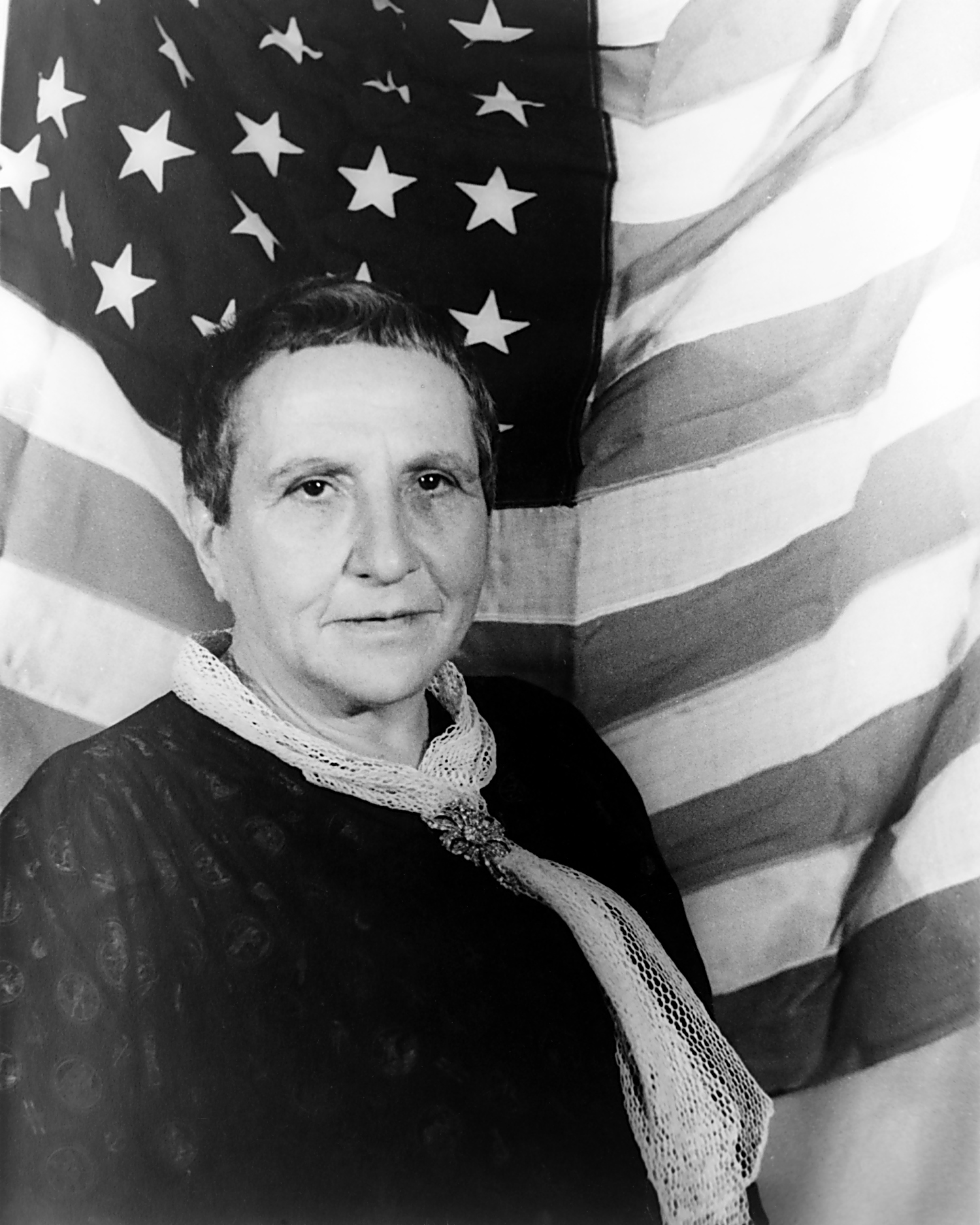
Gertrude Stein (February 3, 1874 – July 27, 1946) was an American novelist, poet, playwright, and art collector. Born in Allegheny, Pennsylvania (now part of Pittsburgh), and raised in Oakland, California, Stein moved to Paris in 1903, and made France her home for the remainder of her life. She hosted a Paris salon, where the leading figures of modernism in literature and art, such as Pablo Picasso, Ernest Hemingway, F. Scott Fitzgerald, Sinclair Lewis, Ezra Pound, Sherwood Anderson and Henri Matisse, would meet.
In 1933, Stein published a quasi-memoir of her Paris years, The Autobiography of Alice B. Toklas, written in the voice of Alice B. Toklas, her life partner. The book became a literary bestseller and vaulted Stein from the relative obscurity of the cult-literature scene into the limelight of mainstream attention. Two quotes from her works have become widely known: "Rose is a rose is a rose is a rose", and "there is no there there", with the latter often taken to be a reference to her childhood home of Oakland.
Her books include Q.E.D. (1903), about a lesbian romantic affair involving several of Stein's friends; Fernhurst, a fictional story about a love triangle; Three Lives (1905–06); The Making of Americans (1902–1911); and Tender Buttons (1914).
Her activities during World War II have been the subject of analysis and commentary. As a Jew living in Nazi-occupied France, Stein may have been able to sustain her lifestyle as an art collector, and indeed to ensure her physical safety, only through the protection of the powerful Vichy government official and Nazi collaborator Bernard Faÿ. After the war ended, Stein expressed admiration for another Nazi collaborator, Vichy leader Marshal Pétain.
Stein, the youngest of a family of seven children, was born on February 3, 1874, in Allegheny, Pennsylvania (which merged with Pittsburgh in 1907), to upper-middle-class Jewish parents, Daniel Stein and Amelia Stein, née Keyser. Her father was a wealthy businessman with real estate holdings. German and English were spoken in their home. Gertrude's siblings were: Michael (1865), Simon (1868), Bertha (1870), and Leo (1872).
When Stein was three years old, she and her family moved to Vienna, and then Paris. Accompanied by governesses and tutors, the Steins endeavored to imbue their children with the cultured sensibilities of European history and life. After a year-long sojourn abroad, they returned to America in 1878, settling in Oakland, California, where her father became director of San Francisco's streetcar lines, the Market Street Railway. Stein attended First Hebrew Congregation of Oakland's Sabbath school. During their residence in Oakland, they lived for four years on a ten-acre lot, and Stein built many memories of California there. She would often go on excursions with her brother, Leo, with whom she developed a close relationship. Stein found formal schooling in Oakland unstimulating, but she often read Shakespeare, Wordsworth, Scott, Burns, Smollett, Fielding, and more.
When Stein was 14 years old, her mother died. Three years later, her father died as well. Stein's eldest brother, Michael Stein, age 26, then took over the family business holdings, moved his four siblings to San Francisco, where he now was a director of the Market Street Cable Railway Company, and in 1892 arranged for Gertrude and another sister, Bertha, to live with their mother's family in Baltimore. Here she lived with her uncle David Bachrach, who in 1877 had married Gertrude's maternal aunt, Fanny Keyser.
In Baltimore, Stein met Claribel and Etta Cone, who held Saturday evening salons that she would later emulate in Paris. The Cones shared an appreciation for art and conversation about it and modeled a domestic division of labor that Stein would replicate in her relationship with Alice B. Toklas.
Hub AI
Gertrude Stein AI simulator
(@Gertrude Stein_simulator)
Gertrude Stein
Gertrude Stein (February 3, 1874 – July 27, 1946) was an American novelist, poet, playwright, and art collector. Born in Allegheny, Pennsylvania (now part of Pittsburgh), and raised in Oakland, California, Stein moved to Paris in 1903, and made France her home for the remainder of her life. She hosted a Paris salon, where the leading figures of modernism in literature and art, such as Pablo Picasso, Ernest Hemingway, F. Scott Fitzgerald, Sinclair Lewis, Ezra Pound, Sherwood Anderson and Henri Matisse, would meet.
In 1933, Stein published a quasi-memoir of her Paris years, The Autobiography of Alice B. Toklas, written in the voice of Alice B. Toklas, her life partner. The book became a literary bestseller and vaulted Stein from the relative obscurity of the cult-literature scene into the limelight of mainstream attention. Two quotes from her works have become widely known: "Rose is a rose is a rose is a rose", and "there is no there there", with the latter often taken to be a reference to her childhood home of Oakland.
Her books include Q.E.D. (1903), about a lesbian romantic affair involving several of Stein's friends; Fernhurst, a fictional story about a love triangle; Three Lives (1905–06); The Making of Americans (1902–1911); and Tender Buttons (1914).
Her activities during World War II have been the subject of analysis and commentary. As a Jew living in Nazi-occupied France, Stein may have been able to sustain her lifestyle as an art collector, and indeed to ensure her physical safety, only through the protection of the powerful Vichy government official and Nazi collaborator Bernard Faÿ. After the war ended, Stein expressed admiration for another Nazi collaborator, Vichy leader Marshal Pétain.
Stein, the youngest of a family of seven children, was born on February 3, 1874, in Allegheny, Pennsylvania (which merged with Pittsburgh in 1907), to upper-middle-class Jewish parents, Daniel Stein and Amelia Stein, née Keyser. Her father was a wealthy businessman with real estate holdings. German and English were spoken in their home. Gertrude's siblings were: Michael (1865), Simon (1868), Bertha (1870), and Leo (1872).
When Stein was three years old, she and her family moved to Vienna, and then Paris. Accompanied by governesses and tutors, the Steins endeavored to imbue their children with the cultured sensibilities of European history and life. After a year-long sojourn abroad, they returned to America in 1878, settling in Oakland, California, where her father became director of San Francisco's streetcar lines, the Market Street Railway. Stein attended First Hebrew Congregation of Oakland's Sabbath school. During their residence in Oakland, they lived for four years on a ten-acre lot, and Stein built many memories of California there. She would often go on excursions with her brother, Leo, with whom she developed a close relationship. Stein found formal schooling in Oakland unstimulating, but she often read Shakespeare, Wordsworth, Scott, Burns, Smollett, Fielding, and more.
When Stein was 14 years old, her mother died. Three years later, her father died as well. Stein's eldest brother, Michael Stein, age 26, then took over the family business holdings, moved his four siblings to San Francisco, where he now was a director of the Market Street Cable Railway Company, and in 1892 arranged for Gertrude and another sister, Bertha, to live with their mother's family in Baltimore. Here she lived with her uncle David Bachrach, who in 1877 had married Gertrude's maternal aunt, Fanny Keyser.
In Baltimore, Stein met Claribel and Etta Cone, who held Saturday evening salons that she would later emulate in Paris. The Cones shared an appreciation for art and conversation about it and modeled a domestic division of labor that Stein would replicate in her relationship with Alice B. Toklas.
Recent media