
Recent from talks
Giardiasis
Knowledge base stats:
Talk channels stats:
Members stats:
Giardiasis
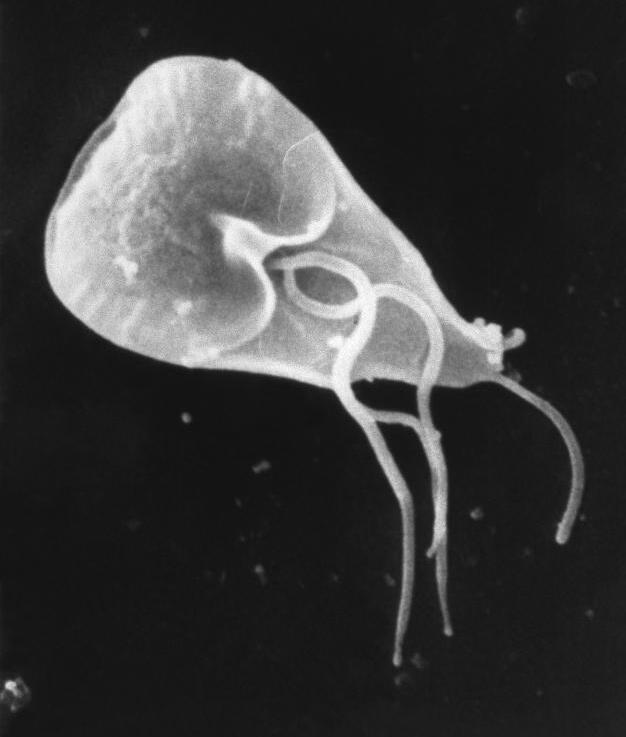
Giardiasis is a parasitic disease caused by the protist enteropathogen Giardia duodenalis (also known as G. lamblia and G. intestinalis), especially common in children and travelers. Infected individuals experience steatorrhea, a type of diarrhea with fatty sticky stool; abdominal pain, weight loss, and weakness due to dehydration and malabsorption. Less common symptoms include skin rash, hives and joint swelling. Symptoms usually begin one to three weeks after exposure and, without treatment, may last two to six weeks or longer. Some infected individuals experience mild or no symptoms and remain symptom-free even if the infection persists for a long time.
Giardiasis spreads via the fecal-oral route, when Giardia cysts excreted with feces contaminate food or water that is later consumed orally. The disease can also spread between people and between people and animals, mainly via pets. Cysts may survive for nearly three months in cold water.
The microscopic identification of Giardia and its cysts in fecal samples is considered the gold standard method for diagnosing giardiasis. Immunoassays, such as ELISA and PCR for giardia gene loci, are also available as diagnostic tools, although are not widely used due to methods complexity and costs.
Prevention may be improved through proper personal hygiene practices and by cooking and sanitizing food. Asymptomatic cases often do not need treatment. When symptoms are present, treatment is typically provided with either tinidazole or metronidazole. Other drugs, such as nitazoxanide, albendazole, quinacrine, chloroquine, paromomycin, and other drug combinations are also used in clinics. Refractory giardiasis and resistant strains are reported more and more often. Infection may cause a person to become lactose intolerant, so it is recommended to temporarily avoid lactose following an infection or use lactase supplements.
Giardiasis occurs worldwide. It is one of the most common parasitic human diseases. Infection rates are as high as 7% in the developed world and 30% in the developing world. In 2013, there were approximately 280 million people worldwide with symptomatic cases of giardiasis. The World Health Organization classifies giardiasis as a neglected disease. It is popularly known as beaver fever in North America.
The signs and symptoms vary from none to severe diarrhoea with poor nutrient absorption. The cause of this wide range in severity of symptoms is not fully known, but the intestinal flora of the infected host may play a role. Diarrhoea is less likely to occur in people from developing countries.
Symptoms typically develop 9–15 days after exposure, but may occur as early as one day. The most common and prominent symptom is chronic diarrhoea, which can occur for weeks or months if untreated. Diarrhoea is often greasy and foul-smelling, with a tendency to float. This characteristic diarrhoea (steatorrhea) is often accompanied by several other symptoms, including gas, abdominal cramps, and nausea or vomiting. Some people also experience symptoms outside of the gastrointestinal tract, such as itchy skin, hives, and swelling of the eyes and joints, although these are less common. Fever occurs in only about 15% of infected people, despite the nickname "beaver fever".
Prolonged disease is often characterised by chronic diarrhoea and malabsorption of nutrients in the intestine. This malabsorption causes fatty stools, substantial weight loss, and fatigue. Additionally, those with giardiasis often have difficulty absorbing lactose, vitamin A, folate, and vitamin B12. In children, prolonged giardiasis can cause failure to thrive and may impair mental development. Symptomatic infections are well recognised as causing lactose intolerance, which, though usually temporary, may become permanent.
Hub AI
Giardiasis AI simulator
(@Giardiasis_simulator)
Giardiasis
Giardiasis is a parasitic disease caused by the protist enteropathogen Giardia duodenalis (also known as G. lamblia and G. intestinalis), especially common in children and travelers. Infected individuals experience steatorrhea, a type of diarrhea with fatty sticky stool; abdominal pain, weight loss, and weakness due to dehydration and malabsorption. Less common symptoms include skin rash, hives and joint swelling. Symptoms usually begin one to three weeks after exposure and, without treatment, may last two to six weeks or longer. Some infected individuals experience mild or no symptoms and remain symptom-free even if the infection persists for a long time.
Giardiasis spreads via the fecal-oral route, when Giardia cysts excreted with feces contaminate food or water that is later consumed orally. The disease can also spread between people and between people and animals, mainly via pets. Cysts may survive for nearly three months in cold water.
The microscopic identification of Giardia and its cysts in fecal samples is considered the gold standard method for diagnosing giardiasis. Immunoassays, such as ELISA and PCR for giardia gene loci, are also available as diagnostic tools, although are not widely used due to methods complexity and costs.
Prevention may be improved through proper personal hygiene practices and by cooking and sanitizing food. Asymptomatic cases often do not need treatment. When symptoms are present, treatment is typically provided with either tinidazole or metronidazole. Other drugs, such as nitazoxanide, albendazole, quinacrine, chloroquine, paromomycin, and other drug combinations are also used in clinics. Refractory giardiasis and resistant strains are reported more and more often. Infection may cause a person to become lactose intolerant, so it is recommended to temporarily avoid lactose following an infection or use lactase supplements.
Giardiasis occurs worldwide. It is one of the most common parasitic human diseases. Infection rates are as high as 7% in the developed world and 30% in the developing world. In 2013, there were approximately 280 million people worldwide with symptomatic cases of giardiasis. The World Health Organization classifies giardiasis as a neglected disease. It is popularly known as beaver fever in North America.
The signs and symptoms vary from none to severe diarrhoea with poor nutrient absorption. The cause of this wide range in severity of symptoms is not fully known, but the intestinal flora of the infected host may play a role. Diarrhoea is less likely to occur in people from developing countries.
Symptoms typically develop 9–15 days after exposure, but may occur as early as one day. The most common and prominent symptom is chronic diarrhoea, which can occur for weeks or months if untreated. Diarrhoea is often greasy and foul-smelling, with a tendency to float. This characteristic diarrhoea (steatorrhea) is often accompanied by several other symptoms, including gas, abdominal cramps, and nausea or vomiting. Some people also experience symptoms outside of the gastrointestinal tract, such as itchy skin, hives, and swelling of the eyes and joints, although these are less common. Fever occurs in only about 15% of infected people, despite the nickname "beaver fever".
Prolonged disease is often characterised by chronic diarrhoea and malabsorption of nutrients in the intestine. This malabsorption causes fatty stools, substantial weight loss, and fatigue. Additionally, those with giardiasis often have difficulty absorbing lactose, vitamin A, folate, and vitamin B12. In children, prolonged giardiasis can cause failure to thrive and may impair mental development. Symptomatic infections are well recognised as causing lactose intolerance, which, though usually temporary, may become permanent.
Recent media