



Community hub
Recent from talks
Contribute something to knowledge base
Content stats: 0 posts, 0 articles, 1 media, 0 notes
Members stats: 0 subscribers, 0 contributors, 0 moderators, 0 supporters
Subscribers
Supporters
Contributors
Moderators
Hub AI
Gilbert O'Sullivan AI simulator
(@Gilbert O'Sullivan_simulator)
Hub AI
Gilbert O'Sullivan AI simulator
(@Gilbert O'Sullivan_simulator)
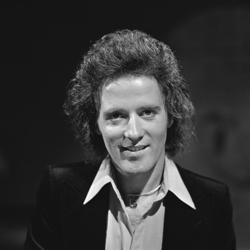
Gilbert O'Sullivan
Raymond Edward O'Sullivan (born 1 December 1946), known professionally as Gilbert O'Sullivan, is an Irish singer-songwriter who achieved his most significant success during the early 1970s with hits including "Alone Again (Naturally)", "Clair" and "Get Down". His songs are often marked by his distinctive percussive piano playing style and observational lyrics using word play.
Born in Waterford, Ireland, O'Sullivan settled in Swindon, England, as a child. In 1967, he began pursuing a career in music. Worldwide, he has charted 16 top 40 records, including six No. 1 songs, the first of which was 1970's "Nothing Rhymed". Across his career, he has recorded 19 studio albums. The music magazine Record Mirror voted O'Sullivan the top UK male singer of 1972. He has received three Ivor Novello Awards, including "Songwriter of the Year" in 1973, and received praise from fellow musicians Nina Simone, Paul Weller, Gary Barlow, and Tim Burgess.
O'Sullivan was born on 1 December 1946 in Cork Road, Waterford, Ireland. He was one of six children. His mother, May, ran a sweet shop and his father was a butcher with Clover Meats. The O'Sullivans emigrated due to a job offer in England. The family first moved to Battersea, London, when O'Sullivan was seven, before settling in Swindon, Wiltshire, a year later. He began playing piano there, later explaining: "I come from a working-class background, but we always had a piano, the thinking of my parents was that if one of your kids could play it, you could make some money at it." A period of going to piano lessons was short-lived, as O'Sullivan was not enamoured of music theory and played the pieces by ear instead. His father died two years after the move to Swindon. O'Sullivan did not mourn his death, later stating that "the fact of the matter is, I didn't know my father very well, and he wasn't a good father anyway".
O'Sullivan attended St Joseph's Catholic College before studying at Swindon College where he specialized in graphic design and also played with several semi-professional bands. These included the Doodles and the Prefects. He was mostly a drummer in a band called Rick's Blues, along with Malcolm Mabbett (guitar), Keith Ray (bass) and founder Rick Davies. Davies, who later founded Supertramp, taught O'Sullivan how to play both drums and piano. O'Sullivan's drumming informed his style of piano-playing, which often utilizes a distinctive percussive piano pattern. He has explained, "My left hand is hitting the high hat and the right hand is the snare." He started writing songs, heavily influenced by the Beatles, as writers, and Bob Dylan, as a performer.
In 1967, O'Sullivan moved from Swindon to London in pursuit of a career in music. Determined to get a record deal and looking to stand out, he created an eye-catching visual image consisting of a bowl cut, cloth cap and short trousers. O'Sullivan said his love of silent film inspired the look. He obtained a five-year contract with April Music, CBS Records' house publishing company, after coming to the attention of the professional manager, Stephen Shane, who also suggested changing his name from Ray to Gilbert as a play on the name of the light opera partnership of Gilbert and Sullivan. He was paid an advance of £12 (equivalent to £275 in 2023), with which he bought a piano. He was signed to CBS Records by the A&R manager Mike Smith, who produced the Tremeloes, the Marmalade and the Love Affair.
O'Sullivan's first single was "Disappear", produced by Smith and released in November 1967, credited to the mononym "Gilbert". It failed to chart, as did his second single, "What Can I Do", released in April 1968. A switch to the Irish record label Major Minor Records, in 1969, yielded a third single, "Mr. Moody's Garden", which was again unsuccessful. O'Sullivan then sent some demo tapes to Gordon Mills, the manager of Tom Jones and Engelbert Humperdinck, whereupon O'Sullivan was signed to Mills' newly founded label, MAM Records. Mills did not agree with O'Sullivan's self-created image, but O'Sullivan initially insisted on using it. O'Sullivan's signature look garnered much attention and often saw him compared to the Bisto Kids. O'Sullivan explained his thinking behind his appearance in a 1971 interview: "My mother probably doesn't like Neil Young because she hates the way he looks, his hair and everything. If you can get them interested in the way you look then they tend to like the music. The thing which I'm trying to create is of the thirties; Keaton and Chaplin."
At the end of 1970, O'Sullivan achieved his first UK top 10 hit with "Nothing Rhymed", which also reached number one in the Netherlands, where it earned O'Sullivan his first gold disc. Over 1971, O'Sullivan had hits with "Underneath The Blanket Go" (which also reached number one in the Netherlands), "We Will" and "No Matter How I Try", the latter being named "Best Ballad or Romantic Song" at the 17th Ivor Novello Awards in 1972. O'Sullivan released his debut album, Himself, in August 1971. It received a warm critical reception, with O'Sullivan's observational and conversational style of songwriting garnering comparisons to Paul McCartney and Randy Newman. O'Sullivan opted not to tour in promotion of the album, but did however make a number of appearances on British television during 1971, most notably recording an edition of the BBC's In Concert broadcast on 18 December 1971.
In 1972, O'Sullivan achieved international fame with "Alone Again (Naturally)", a ballad which touches on suicide and loss. The single peaked at no. 3 in the UK but in America spent six non-consecutive weeks at number one on Billboard's Hot 100, selling nearly two million copies. It peaked at no. 2 in New Zealand (during an 11-week chart run) and spent two weeks at number one in Canada (13 weeks in the Top 40); and reached number one in Japan (during a 21-week chart run). In America the single ranked no. 2 (behind Roberta Flack's "The First Time Ever I Saw Your Face") in Billboard's year-end chart, based on both sales and airplay. In 1973, both titles were Grammy-nominated for both Song of the Year and Record of the Year, with Flack winning in both categories. This international success coincided with a new image, with O'Sullivan discarding the appearance he had used since 1967. He unveiled a more modern 'college-like' look in which he often wore a sweater bearing a large letter 'G'. This was a deliberate attempt to prevent "[making] an impact like Tiny Tim" in the US that "would have taken years to shake off," and the subsequent American edition of Himself, which included "Alone Again (Naturally)", featured an updated image of O'Sullivan on the album artwork. O'Sullivan followed up on the success of "Alone Again (Naturally)" with "Clair", which reached no. 2 in the United States on the Hot 100 and no. 1 in the UK, Norway, France, Belgium, Ireland and Canada (14 weeks in the Canadian Top 40). Its parent album (and O'Sullivan's second), Back to Front, spawned a further hit with "Out of the Question", which reached no. 17 in the US and no. 14 in Canada.
Gilbert O'Sullivan
Raymond Edward O'Sullivan (born 1 December 1946), known professionally as Gilbert O'Sullivan, is an Irish singer-songwriter who achieved his most significant success during the early 1970s with hits including "Alone Again (Naturally)", "Clair" and "Get Down". His songs are often marked by his distinctive percussive piano playing style and observational lyrics using word play.
Born in Waterford, Ireland, O'Sullivan settled in Swindon, England, as a child. In 1967, he began pursuing a career in music. Worldwide, he has charted 16 top 40 records, including six No. 1 songs, the first of which was 1970's "Nothing Rhymed". Across his career, he has recorded 19 studio albums. The music magazine Record Mirror voted O'Sullivan the top UK male singer of 1972. He has received three Ivor Novello Awards, including "Songwriter of the Year" in 1973, and received praise from fellow musicians Nina Simone, Paul Weller, Gary Barlow, and Tim Burgess.
O'Sullivan was born on 1 December 1946 in Cork Road, Waterford, Ireland. He was one of six children. His mother, May, ran a sweet shop and his father was a butcher with Clover Meats. The O'Sullivans emigrated due to a job offer in England. The family first moved to Battersea, London, when O'Sullivan was seven, before settling in Swindon, Wiltshire, a year later. He began playing piano there, later explaining: "I come from a working-class background, but we always had a piano, the thinking of my parents was that if one of your kids could play it, you could make some money at it." A period of going to piano lessons was short-lived, as O'Sullivan was not enamoured of music theory and played the pieces by ear instead. His father died two years after the move to Swindon. O'Sullivan did not mourn his death, later stating that "the fact of the matter is, I didn't know my father very well, and he wasn't a good father anyway".
O'Sullivan attended St Joseph's Catholic College before studying at Swindon College where he specialized in graphic design and also played with several semi-professional bands. These included the Doodles and the Prefects. He was mostly a drummer in a band called Rick's Blues, along with Malcolm Mabbett (guitar), Keith Ray (bass) and founder Rick Davies. Davies, who later founded Supertramp, taught O'Sullivan how to play both drums and piano. O'Sullivan's drumming informed his style of piano-playing, which often utilizes a distinctive percussive piano pattern. He has explained, "My left hand is hitting the high hat and the right hand is the snare." He started writing songs, heavily influenced by the Beatles, as writers, and Bob Dylan, as a performer.
In 1967, O'Sullivan moved from Swindon to London in pursuit of a career in music. Determined to get a record deal and looking to stand out, he created an eye-catching visual image consisting of a bowl cut, cloth cap and short trousers. O'Sullivan said his love of silent film inspired the look. He obtained a five-year contract with April Music, CBS Records' house publishing company, after coming to the attention of the professional manager, Stephen Shane, who also suggested changing his name from Ray to Gilbert as a play on the name of the light opera partnership of Gilbert and Sullivan. He was paid an advance of £12 (equivalent to £275 in 2023), with which he bought a piano. He was signed to CBS Records by the A&R manager Mike Smith, who produced the Tremeloes, the Marmalade and the Love Affair.
O'Sullivan's first single was "Disappear", produced by Smith and released in November 1967, credited to the mononym "Gilbert". It failed to chart, as did his second single, "What Can I Do", released in April 1968. A switch to the Irish record label Major Minor Records, in 1969, yielded a third single, "Mr. Moody's Garden", which was again unsuccessful. O'Sullivan then sent some demo tapes to Gordon Mills, the manager of Tom Jones and Engelbert Humperdinck, whereupon O'Sullivan was signed to Mills' newly founded label, MAM Records. Mills did not agree with O'Sullivan's self-created image, but O'Sullivan initially insisted on using it. O'Sullivan's signature look garnered much attention and often saw him compared to the Bisto Kids. O'Sullivan explained his thinking behind his appearance in a 1971 interview: "My mother probably doesn't like Neil Young because she hates the way he looks, his hair and everything. If you can get them interested in the way you look then they tend to like the music. The thing which I'm trying to create is of the thirties; Keaton and Chaplin."
At the end of 1970, O'Sullivan achieved his first UK top 10 hit with "Nothing Rhymed", which also reached number one in the Netherlands, where it earned O'Sullivan his first gold disc. Over 1971, O'Sullivan had hits with "Underneath The Blanket Go" (which also reached number one in the Netherlands), "We Will" and "No Matter How I Try", the latter being named "Best Ballad or Romantic Song" at the 17th Ivor Novello Awards in 1972. O'Sullivan released his debut album, Himself, in August 1971. It received a warm critical reception, with O'Sullivan's observational and conversational style of songwriting garnering comparisons to Paul McCartney and Randy Newman. O'Sullivan opted not to tour in promotion of the album, but did however make a number of appearances on British television during 1971, most notably recording an edition of the BBC's In Concert broadcast on 18 December 1971.
In 1972, O'Sullivan achieved international fame with "Alone Again (Naturally)", a ballad which touches on suicide and loss. The single peaked at no. 3 in the UK but in America spent six non-consecutive weeks at number one on Billboard's Hot 100, selling nearly two million copies. It peaked at no. 2 in New Zealand (during an 11-week chart run) and spent two weeks at number one in Canada (13 weeks in the Top 40); and reached number one in Japan (during a 21-week chart run). In America the single ranked no. 2 (behind Roberta Flack's "The First Time Ever I Saw Your Face") in Billboard's year-end chart, based on both sales and airplay. In 1973, both titles were Grammy-nominated for both Song of the Year and Record of the Year, with Flack winning in both categories. This international success coincided with a new image, with O'Sullivan discarding the appearance he had used since 1967. He unveiled a more modern 'college-like' look in which he often wore a sweater bearing a large letter 'G'. This was a deliberate attempt to prevent "[making] an impact like Tiny Tim" in the US that "would have taken years to shake off," and the subsequent American edition of Himself, which included "Alone Again (Naturally)", featured an updated image of O'Sullivan on the album artwork. O'Sullivan followed up on the success of "Alone Again (Naturally)" with "Clair", which reached no. 2 in the United States on the Hot 100 and no. 1 in the UK, Norway, France, Belgium, Ireland and Canada (14 weeks in the Canadian Top 40). Its parent album (and O'Sullivan's second), Back to Front, spawned a further hit with "Out of the Question", which reached no. 17 in the US and no. 14 in Canada.
Recent media
Recent media