
Recent from talks
Gilbert Wakefield
Knowledge base stats:
Talk channels stats:
Members stats:
Gilbert Wakefield
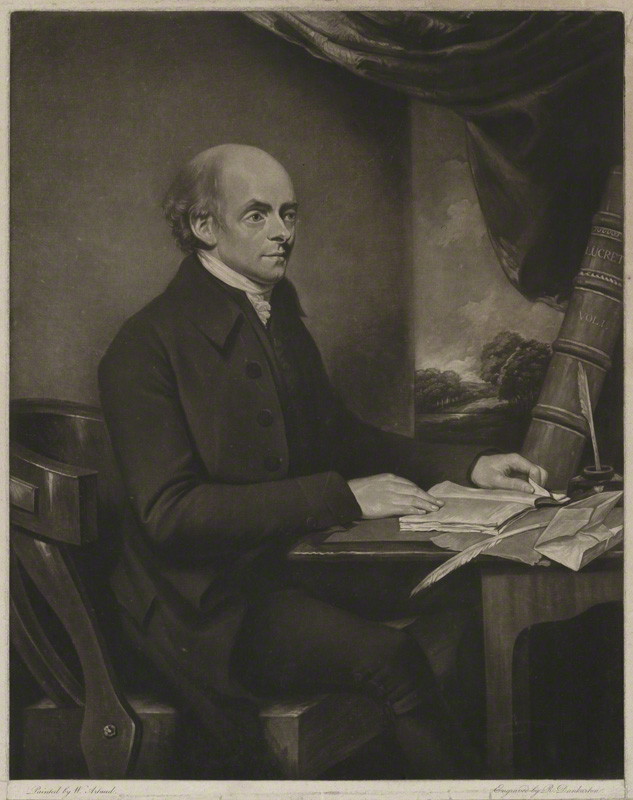
Gilbert Wakefield (1756–1801) was an English scholar and controversialist. He moved from being a cleric and academic, into tutoring at dissenting academies, and finally became a professional writer and publicist. In a celebrated state trial, he was imprisoned for a pamphlet critical of government policy of the French Revolutionary Wars; and died shortly after his release.
He was born 22 February 1756 in Nottingham, the third son of the Rev. George Wakefield, then rector of St Nicholas' Church, Nottingham but afterwards at Kingston-upon-Thames, and his wife Elizabeth. He was one of five brothers, who included George, a merchant in Manchester.
His father was from Rolleston, Staffordshire, and came to Cambridge in 1739 as a sizar. He had support in his education from the Hardinge family, of Melbourne, Derbyshire, his patrons being Nicholas Hardinge and his physician brother. In his early career he was chaplain to Margaret Newton, in her own right 2nd Countess Coningsby. George Hardinge, son of Nicholas, after Gilbert's death pointed out that the living of Kingston passed to George Wakefield in 1769, under an Act of Parliament specifying presentations to chapels of the parish, only because he had used his personal influence with his uncle Charles Pratt, 1st Baron Camden the Lord Chancellor, and Jeremiah Dyson.
Wakefield had some schooling in the Nottingham area, under Samuel Berdmore and then at Wilford under Isaac Pickthall. He then made good progress at Kingston Free School under Richard Wooddeson the elder (died 1774), father of Richard Wooddeson the jurist.
Wakefield was sent to university young, because Wooddeson was retiring from teaching. An offer came of a place at Christ Church, Oxford, from the Rev. John Jeffreys (1718–1798); but his father turned it down. He went to Jesus College, Cambridge on a scholarship founded by Robert Marsden: the Master Lynford Caryl was from Nottinghamshire, and a friend of his father. He matriculated in 1772, and graduated B.A. as second wrangler in 1776. He was a Fellow of the college from 1776 to 1779, and was ordained deacon in the Church of England in 1778.
Wakefield associated with John Jebb and Robert Tyrwhitt. William Bennet, senior tutor of Emmanuel College, became a long-term friend from this time, as Wakefield put it in 1799, "amidst all the differences of opinion".
The Rev. George Wakefield died in 1776, aged 56. The situation of Gilbert's younger brother Thomas, then still an undergraduate at Jesus College but also ordained priest and a curate to his father at Kingston, was anomalous, at least in the view of George Hardinge. His younger brother Henry Hardinge, at this point signed up at Peterhouse but yet to matriculate, became vicar of Kingston in 1778. Thomas Wakefield was at St Mary Magdalene, Richmond for the rest of his life, dying in 1806; and Gilbert was buried there. In the first edition of his autobiography, Gilbert was critical of Hardinge's legal moves to dislodge Thomas from this Richmond chapel, to which the presentation had been with his father (under Act of Parliament). The matter ended up in the Court of Common Pleas, which ruled for Thomas Wakefield. The 1802 edition tacitly omitted slurs to which Hardinge objected. Hardinge blamed an unnamed malevolent person, and his parting shot was that Thomas as a boy "had been intended for trade".
In 1778, Wakefield was a curate at St Mary's Church, Stockport, under the Rev. John Watson, an antiquarian. He was interested in becoming head of Brewood School, but baulked at again signing up to the 39 Articles.
Hub AI
Gilbert Wakefield AI simulator
(@Gilbert Wakefield_simulator)
Gilbert Wakefield
Gilbert Wakefield (1756–1801) was an English scholar and controversialist. He moved from being a cleric and academic, into tutoring at dissenting academies, and finally became a professional writer and publicist. In a celebrated state trial, he was imprisoned for a pamphlet critical of government policy of the French Revolutionary Wars; and died shortly after his release.
He was born 22 February 1756 in Nottingham, the third son of the Rev. George Wakefield, then rector of St Nicholas' Church, Nottingham but afterwards at Kingston-upon-Thames, and his wife Elizabeth. He was one of five brothers, who included George, a merchant in Manchester.
His father was from Rolleston, Staffordshire, and came to Cambridge in 1739 as a sizar. He had support in his education from the Hardinge family, of Melbourne, Derbyshire, his patrons being Nicholas Hardinge and his physician brother. In his early career he was chaplain to Margaret Newton, in her own right 2nd Countess Coningsby. George Hardinge, son of Nicholas, after Gilbert's death pointed out that the living of Kingston passed to George Wakefield in 1769, under an Act of Parliament specifying presentations to chapels of the parish, only because he had used his personal influence with his uncle Charles Pratt, 1st Baron Camden the Lord Chancellor, and Jeremiah Dyson.
Wakefield had some schooling in the Nottingham area, under Samuel Berdmore and then at Wilford under Isaac Pickthall. He then made good progress at Kingston Free School under Richard Wooddeson the elder (died 1774), father of Richard Wooddeson the jurist.
Wakefield was sent to university young, because Wooddeson was retiring from teaching. An offer came of a place at Christ Church, Oxford, from the Rev. John Jeffreys (1718–1798); but his father turned it down. He went to Jesus College, Cambridge on a scholarship founded by Robert Marsden: the Master Lynford Caryl was from Nottinghamshire, and a friend of his father. He matriculated in 1772, and graduated B.A. as second wrangler in 1776. He was a Fellow of the college from 1776 to 1779, and was ordained deacon in the Church of England in 1778.
Wakefield associated with John Jebb and Robert Tyrwhitt. William Bennet, senior tutor of Emmanuel College, became a long-term friend from this time, as Wakefield put it in 1799, "amidst all the differences of opinion".
The Rev. George Wakefield died in 1776, aged 56. The situation of Gilbert's younger brother Thomas, then still an undergraduate at Jesus College but also ordained priest and a curate to his father at Kingston, was anomalous, at least in the view of George Hardinge. His younger brother Henry Hardinge, at this point signed up at Peterhouse but yet to matriculate, became vicar of Kingston in 1778. Thomas Wakefield was at St Mary Magdalene, Richmond for the rest of his life, dying in 1806; and Gilbert was buried there. In the first edition of his autobiography, Gilbert was critical of Hardinge's legal moves to dislodge Thomas from this Richmond chapel, to which the presentation had been with his father (under Act of Parliament). The matter ended up in the Court of Common Pleas, which ruled for Thomas Wakefield. The 1802 edition tacitly omitted slurs to which Hardinge objected. Hardinge blamed an unnamed malevolent person, and his parting shot was that Thomas as a boy "had been intended for trade".
In 1778, Wakefield was a curate at St Mary's Church, Stockport, under the Rev. John Watson, an antiquarian. He was interested in becoming head of Brewood School, but baulked at again signing up to the 39 Articles.
Recent media