
Recent from talks
Giorgi Saakadze
Knowledge base stats:
Talk channels stats:
Members stats:
Giorgi Saakadze
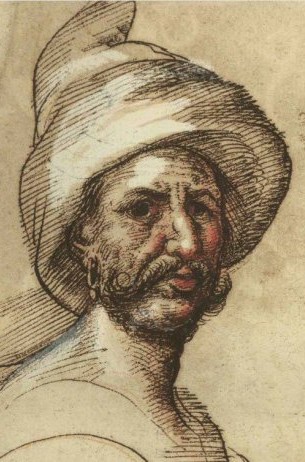
Giorgi Saakadze (Georgian: გიორგი სააკაძე; c. 1570 – October 3, 1629) was a Georgian politician and military commander who played an important but contradictory role in the politics of the early 17th-century Georgia. He was also known as the Grand Mouravi (დიდი მოურავი, didi mouravi) in Georgia, Mūrāv-Beg in Persia and Māūrāv-Hūn or Māġrāv-Bek in the Ottoman Empire for having served as a mouravi (an appointed royal official which can be translated as seneschal or bailiff) of Tbilisi.
Giorgi Saakadze was born in 1570 in Noste village (Peli village by other sources), near the town on Kaspi. Saakadze's family came from the untitled nobility (samepo aznauri). His father, Siaush, rose to prominence through his loyal service to King Simon I of Kartli, whom Giorgi joined in military service in his early career. Under the young king Luarsab II, he was appointed a mouravi of Tbilisi, Tskhinvali, and Dvaleti in 1608. Saakadze's influence and prestige especially grew after he destroyed an Ottoman invasion force at the battle of Tashiskari in June 1609, thereby saving Luarsab from being dislodged. In 1611, the king married Saakadze's sister, Makrine, annoying the great nobles, who grew increasingly suspicious of the ambitious and aspiring officer who had risen from the ranks of the petty nobility to become the most powerful man in Kartli. The animosity between the two noble parties centered on the princes Parsadan Tsitsishvili and Shadiman Baratashvili on one hand, and Saakadze on the other. The nobles convinced Luarsab that Saakadze was an Iranian traitor, prompting him to divorce Makrine and authorize a plot to kill him in May 1612.[page needed] Saakadze escaped the trap and defected to Iran. Having converted to Islam and displayed his military ability in Iran's war with the Ottomans, he quickly won the confidence of Shah Abbas I of Iran and was regularly consulted on the Georgian affairs.
In 1614, Saakadze took revenge on Luarsab and his nobles by aiding Shah Abbas in the invasion of Georgia which brought Luarsab's reign to an end, but dissuaded the Iranians from committing atrocities in Kartli after the nation surrendered.[page needed] In 1619, the shah appointed him a vekil (regent) to Bagrat Khan, the Iranian nominee to the throne of Kartli. Saakadze turned into a de facto ruler of Kartli. Once the hostilities with the Ottomans resumed, Saakadze served as one of the leading commanders in the shah's ranks from 1621 to 1623. His military exploits led Abbas to appoint him to the staff of Qarachaqay Khan who led a 35,000-strong army to crush a rebellion in Georgia. Saakadze then discovered that the Shah planned to massacre all armed Kartlians, including himself. He conspired with the rebel leaders—his brother-in-law Zurab of Aragvi and king Teimuraz I of Kakheti—and ambushed the Iranian army at Martqopi on March 25, 1625, winning a decisive victory. Saakadze went on to annihilate the Turkic nomads transplanted by the Iranian government to replace the exiled Georgian population, dislodged the shah's governor Paykar Khan from Kakheti and raided the Iranian garrisons as far as Ganja and Karabakh. In an act of revenge, Shah Abbas put Saakadze's younger son, Paata, to death, and sent his severed head to the Georgians. A punitive Iranian expedition followed soon thereafter, which won a costly victory over the Georgians at the Battle of Marabda. Saakadze withdrew into the mountains, and organized a powerful guerrilla resistance which forced Abbas I to recognize Teimuraz's royal status.
However, the unity of Georgian nobles quickly collapsed. Saakadze's opposition to Teimuraz's control of Kartli led to a bitter conflict which culminated in the fratricidal battle of Bazaleti in the fall of 1626. The royal army won a victory, driving Saakadze into exile to Constantinople where he entered the service of Sultan Murad IV. He briefly served as a governor of the Konya Vilayet and fought against the Iranians at Erzurum (1627-1628), and in Meskheti (1628). However, Grand Vizier Ekrem Hüsrev Pasha soon accused Saakadze of treason and had him, along with his son Avtandil, Prince Kaikhosro of Mukhrani, and other Georgians, put to death in Constantinople on October 3, 1629.[failed verification]
Saakadze's last surviving son, Ioram, later attained to the princely rank, and founded the House of Tarkhan-Mouravi, one of the most prestigious Georgian noble families.
Saakadze's controversial career has always been a source of conflicting perceptions of his role in Georgia's history.
The traditional historiography of Georgia, heavily influenced by Prince Vakhushti and Marie Brosset, continued to view him as a feudal adventurer and ambitious warlord involved in the turbulent whirl of intrigues and disturbances which fill the history of seventeenth-century Georgia.
The first attempt at the rehabilitation of Saakadze was made by his relative Metropolitan Joseph of Tbilisi in his poem The Grand Mouravi (დიდმოურავიანი, didmouraviani; 1681–87).
Hub AI
Giorgi Saakadze AI simulator
(@Giorgi Saakadze_simulator)
Giorgi Saakadze
Giorgi Saakadze (Georgian: გიორგი სააკაძე; c. 1570 – October 3, 1629) was a Georgian politician and military commander who played an important but contradictory role in the politics of the early 17th-century Georgia. He was also known as the Grand Mouravi (დიდი მოურავი, didi mouravi) in Georgia, Mūrāv-Beg in Persia and Māūrāv-Hūn or Māġrāv-Bek in the Ottoman Empire for having served as a mouravi (an appointed royal official which can be translated as seneschal or bailiff) of Tbilisi.
Giorgi Saakadze was born in 1570 in Noste village (Peli village by other sources), near the town on Kaspi. Saakadze's family came from the untitled nobility (samepo aznauri). His father, Siaush, rose to prominence through his loyal service to King Simon I of Kartli, whom Giorgi joined in military service in his early career. Under the young king Luarsab II, he was appointed a mouravi of Tbilisi, Tskhinvali, and Dvaleti in 1608. Saakadze's influence and prestige especially grew after he destroyed an Ottoman invasion force at the battle of Tashiskari in June 1609, thereby saving Luarsab from being dislodged. In 1611, the king married Saakadze's sister, Makrine, annoying the great nobles, who grew increasingly suspicious of the ambitious and aspiring officer who had risen from the ranks of the petty nobility to become the most powerful man in Kartli. The animosity between the two noble parties centered on the princes Parsadan Tsitsishvili and Shadiman Baratashvili on one hand, and Saakadze on the other. The nobles convinced Luarsab that Saakadze was an Iranian traitor, prompting him to divorce Makrine and authorize a plot to kill him in May 1612.[page needed] Saakadze escaped the trap and defected to Iran. Having converted to Islam and displayed his military ability in Iran's war with the Ottomans, he quickly won the confidence of Shah Abbas I of Iran and was regularly consulted on the Georgian affairs.
In 1614, Saakadze took revenge on Luarsab and his nobles by aiding Shah Abbas in the invasion of Georgia which brought Luarsab's reign to an end, but dissuaded the Iranians from committing atrocities in Kartli after the nation surrendered.[page needed] In 1619, the shah appointed him a vekil (regent) to Bagrat Khan, the Iranian nominee to the throne of Kartli. Saakadze turned into a de facto ruler of Kartli. Once the hostilities with the Ottomans resumed, Saakadze served as one of the leading commanders in the shah's ranks from 1621 to 1623. His military exploits led Abbas to appoint him to the staff of Qarachaqay Khan who led a 35,000-strong army to crush a rebellion in Georgia. Saakadze then discovered that the Shah planned to massacre all armed Kartlians, including himself. He conspired with the rebel leaders—his brother-in-law Zurab of Aragvi and king Teimuraz I of Kakheti—and ambushed the Iranian army at Martqopi on March 25, 1625, winning a decisive victory. Saakadze went on to annihilate the Turkic nomads transplanted by the Iranian government to replace the exiled Georgian population, dislodged the shah's governor Paykar Khan from Kakheti and raided the Iranian garrisons as far as Ganja and Karabakh. In an act of revenge, Shah Abbas put Saakadze's younger son, Paata, to death, and sent his severed head to the Georgians. A punitive Iranian expedition followed soon thereafter, which won a costly victory over the Georgians at the Battle of Marabda. Saakadze withdrew into the mountains, and organized a powerful guerrilla resistance which forced Abbas I to recognize Teimuraz's royal status.
However, the unity of Georgian nobles quickly collapsed. Saakadze's opposition to Teimuraz's control of Kartli led to a bitter conflict which culminated in the fratricidal battle of Bazaleti in the fall of 1626. The royal army won a victory, driving Saakadze into exile to Constantinople where he entered the service of Sultan Murad IV. He briefly served as a governor of the Konya Vilayet and fought against the Iranians at Erzurum (1627-1628), and in Meskheti (1628). However, Grand Vizier Ekrem Hüsrev Pasha soon accused Saakadze of treason and had him, along with his son Avtandil, Prince Kaikhosro of Mukhrani, and other Georgians, put to death in Constantinople on October 3, 1629.[failed verification]
Saakadze's last surviving son, Ioram, later attained to the princely rank, and founded the House of Tarkhan-Mouravi, one of the most prestigious Georgian noble families.
Saakadze's controversial career has always been a source of conflicting perceptions of his role in Georgia's history.
The traditional historiography of Georgia, heavily influenced by Prince Vakhushti and Marie Brosset, continued to view him as a feudal adventurer and ambitious warlord involved in the turbulent whirl of intrigues and disturbances which fill the history of seventeenth-century Georgia.
The first attempt at the rehabilitation of Saakadze was made by his relative Metropolitan Joseph of Tbilisi in his poem The Grand Mouravi (დიდმოურავიანი, didmouraviani; 1681–87).
Recent media