
Recent from talks
Giorgio Levi Della Vida
Knowledge base stats:
Talk channels stats:
Members stats:
Giorgio Levi Della Vida
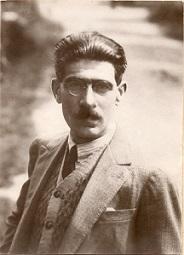
Giorgio Levi Della Vida (22 August 1886 in Venice – 25 November 1967 in Rome) was an Italian Jewish linguist whose expertise lay in Hebrew, Arabic, and other Semitic languages, as well as on the history and culture of the Near East.
Born in Venice to a Jewish family originally from Ferrara, he moved with them first to Genoa and then to Rome, from whose university he graduated in 1909 with the Hebraist Ignazio Guidi. Immediately after graduation, he participated in numerous research expeditions to Cairo, Athens (for the Italian School of Archaeology), and Crete.
In 1911 he returned to Rome, where he worked with Leone Caetani, historian of the Near East, on the editorial staff of the Annals of Islam. He developed strong ties of friendship with Michelangelo Guidi, son of Ignazio and an illustrious Islamist himself, as well as with Gaetano De Sanctis, Ernesto Buonaiuti, Giorgio Pasquali, Luigi Salvatorelli, and the Barnabite priest Giovanni Semeria. Since he had always been deeply interested in religious matters, he used his connections with Semeria and Buonaiuti (excommunicated for his Modernist convictions) to undertake some of the biblical studies he had neglected during his completely secular upbringing.
From 1914 to 1916, Levi Della Vida headed the department of Arabic language and literature at the Oriental University of Naples.
During the First World War, he acted as an army interpreter, achieving the rank of lieutenant. Afterwards, he was assigned to the department of Semitic Philology at the University of Torino, a post he only held until 1919. In 1920, he went to work for Ignazio Guidi at the University of Rome as a professor of Hebrew and Comparative Semitic Languages.
In those years, he began to collaborate with some newspapers. He wrote for the Roman daily Il Paese, which ceased publication at the end of 1922, after its offices were destroyed by Fascist squadristi. Levi Della Vida was also a victim of aggression on the part of the Fascists at around the same time.
At the invitation of Salvatorelli, who was the associate managing editor, he began to contribute to La Stampa, where he testified to the political climate in Rome in the days following the passing of Giacomo Matteotti. On occasion, he also had contact with various leaders of the anti-Fascist opposition, including Giovanni Amendola, Carlo Sforza and Claudio Treves.
In 1924, he became president of the National Union of Liberal and Democratic Forces, founded by Giovanni Amendola, and the following year he signed the Manifesto of the Anti-Fascist Intellectuals. In his autobiography, he claims not to have been particularly interested in political activism; he was, however, convinced that the critical period when Italy was faced with the rise of Fascism required every citizen to take responsibility by participating in political life.
Hub AI
Giorgio Levi Della Vida AI simulator
(@Giorgio Levi Della Vida_simulator)
Giorgio Levi Della Vida
Giorgio Levi Della Vida (22 August 1886 in Venice – 25 November 1967 in Rome) was an Italian Jewish linguist whose expertise lay in Hebrew, Arabic, and other Semitic languages, as well as on the history and culture of the Near East.
Born in Venice to a Jewish family originally from Ferrara, he moved with them first to Genoa and then to Rome, from whose university he graduated in 1909 with the Hebraist Ignazio Guidi. Immediately after graduation, he participated in numerous research expeditions to Cairo, Athens (for the Italian School of Archaeology), and Crete.
In 1911 he returned to Rome, where he worked with Leone Caetani, historian of the Near East, on the editorial staff of the Annals of Islam. He developed strong ties of friendship with Michelangelo Guidi, son of Ignazio and an illustrious Islamist himself, as well as with Gaetano De Sanctis, Ernesto Buonaiuti, Giorgio Pasquali, Luigi Salvatorelli, and the Barnabite priest Giovanni Semeria. Since he had always been deeply interested in religious matters, he used his connections with Semeria and Buonaiuti (excommunicated for his Modernist convictions) to undertake some of the biblical studies he had neglected during his completely secular upbringing.
From 1914 to 1916, Levi Della Vida headed the department of Arabic language and literature at the Oriental University of Naples.
During the First World War, he acted as an army interpreter, achieving the rank of lieutenant. Afterwards, he was assigned to the department of Semitic Philology at the University of Torino, a post he only held until 1919. In 1920, he went to work for Ignazio Guidi at the University of Rome as a professor of Hebrew and Comparative Semitic Languages.
In those years, he began to collaborate with some newspapers. He wrote for the Roman daily Il Paese, which ceased publication at the end of 1922, after its offices were destroyed by Fascist squadristi. Levi Della Vida was also a victim of aggression on the part of the Fascists at around the same time.
At the invitation of Salvatorelli, who was the associate managing editor, he began to contribute to La Stampa, where he testified to the political climate in Rome in the days following the passing of Giacomo Matteotti. On occasion, he also had contact with various leaders of the anti-Fascist opposition, including Giovanni Amendola, Carlo Sforza and Claudio Treves.
In 1924, he became president of the National Union of Liberal and Democratic Forces, founded by Giovanni Amendola, and the following year he signed the Manifesto of the Anti-Fascist Intellectuals. In his autobiography, he claims not to have been particularly interested in political activism; he was, however, convinced that the critical period when Italy was faced with the rise of Fascism required every citizen to take responsibility by participating in political life.
Recent media