
Recent from talks
Gitelman syndrome
Knowledge base stats:
Talk channels stats:
Members stats:
Gitelman syndrome
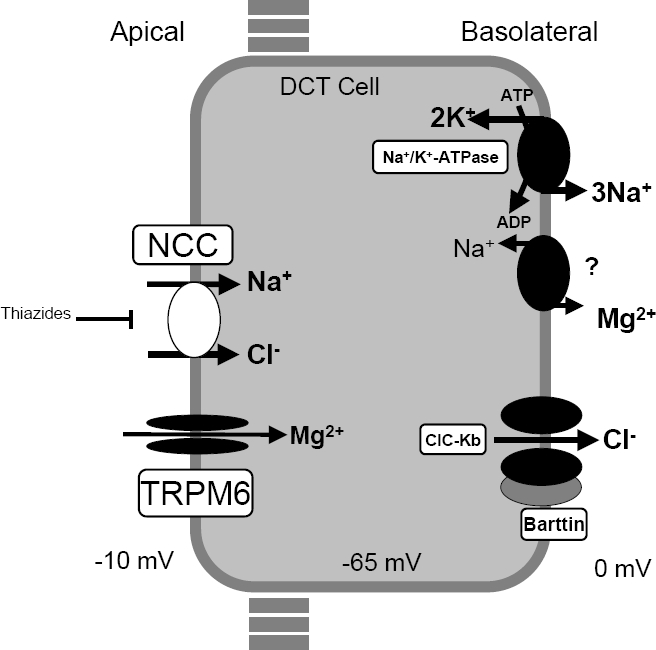
Gitelman syndrome (GS) is an autosomal recessive kidney tubule disorder characterized by low blood levels of potassium and magnesium, decreased excretion of calcium in the urine, and elevated blood pH. It is the most frequent hereditary salt-losing tubulopathy. Gitelman syndrome is caused by disease-causing variants on both alleles of the SLC12A3 gene. The SLC12A3 gene encodes the thiazide-sensitive sodium-chloride cotransporter (also known as NCC, NCCT, or TSC), which can be found in the distal convoluted tubule of the kidney.
Disease-causing variants in SLC12A3 lead to a loss of NCC function, i.e., reduced transport of sodium and chloride via NCC. The effect is an electrolyte imbalance similar to that seen with thiazide diuretic therapy (which causes pharmacological inhibition of NCC activity).
Gitelman syndrome was formerly considered a subset of Bartter syndrome until the distinct genetic and molecular bases of these disorders were identified.
Affected individuals may not have symptoms in some cases. Symptomatic individuals present with symptoms almost identical to those of patients who are on thiazide diuretics, given that the affected transporter is the target of thiazides.
Clinical signs of Gitelman syndrome include a high blood pH in combination with low levels of chloride, potassium, and magnesium in the blood and decreased calcium excretion in the urine. In contrast to people with Gordon's syndrome, those affected by Gitelman syndrome generally have low or normal blood pressure. Individuals affected by Gitelman syndrome often complain of severe muscle cramps or weakness, numbness, thirst, waking up at night to urinate, salt cravings, abnormal sensations, chondrocalcinosis, or weakness expressed as extreme fatigue or irritability. Though cravings for salt are most common and severe, cravings for sour foods (e.g. vinegar, lemons, and sour figs) have been noted in some persons affected. More severe symptoms such as seizures, tetany, and paralysis have been reported. Abnormal heart rhythms and a prolonged QT interval can be detected on electrocardiogram and cases of sudden cardiac death have been reported due to low potassium levels. Quality of life is decreased in Gitelman syndrome
Phenotypic variations observed among patients probably result from differences in their genetic background and may depend on which particular amino acid in the NCCT protein has been mutated. A study by Riviera-Munoz et al. identified a subset of individuals with Gitelman syndrome with a severe phenotypic expression. The clinical manifestations observed in this group were neuromuscular manifestations, growth retardation, and ventricular arrhythmias. The patients were mostly male and were found to have at least one allele of a splice defect on the SLC12A3 gene.
Gitelman syndrome is caused by disease-causing variants on both alleles of the SLC12A3 gene, which encodes NCC, the sodium-chloride cotransporter. The sodium-chloride cotransporter is a protein made up of 1021 amino acids and 12 transmembrane domains. A large number of disease-causing variants throughout the SLC12A3 gene have been reported, including missense, nonsense, frame-shift, splice-site and intronic variants. In 2012, more than 180 mutations of this transporter protein had already been described.
The sodium-chloride cotransporter is a protein located in the cell membrane. It participates in the control of ion homeostasis at the distal convoluted tubule of the nephron. Thus, loss of NCC function reduces sodium and chloride reabsorption in the distal convoluted tubule. This can lead to a lower blood pressure in these patients.
Hub AI
Gitelman syndrome AI simulator
(@Gitelman syndrome_simulator)
Gitelman syndrome
Gitelman syndrome (GS) is an autosomal recessive kidney tubule disorder characterized by low blood levels of potassium and magnesium, decreased excretion of calcium in the urine, and elevated blood pH. It is the most frequent hereditary salt-losing tubulopathy. Gitelman syndrome is caused by disease-causing variants on both alleles of the SLC12A3 gene. The SLC12A3 gene encodes the thiazide-sensitive sodium-chloride cotransporter (also known as NCC, NCCT, or TSC), which can be found in the distal convoluted tubule of the kidney.
Disease-causing variants in SLC12A3 lead to a loss of NCC function, i.e., reduced transport of sodium and chloride via NCC. The effect is an electrolyte imbalance similar to that seen with thiazide diuretic therapy (which causes pharmacological inhibition of NCC activity).
Gitelman syndrome was formerly considered a subset of Bartter syndrome until the distinct genetic and molecular bases of these disorders were identified.
Affected individuals may not have symptoms in some cases. Symptomatic individuals present with symptoms almost identical to those of patients who are on thiazide diuretics, given that the affected transporter is the target of thiazides.
Clinical signs of Gitelman syndrome include a high blood pH in combination with low levels of chloride, potassium, and magnesium in the blood and decreased calcium excretion in the urine. In contrast to people with Gordon's syndrome, those affected by Gitelman syndrome generally have low or normal blood pressure. Individuals affected by Gitelman syndrome often complain of severe muscle cramps or weakness, numbness, thirst, waking up at night to urinate, salt cravings, abnormal sensations, chondrocalcinosis, or weakness expressed as extreme fatigue or irritability. Though cravings for salt are most common and severe, cravings for sour foods (e.g. vinegar, lemons, and sour figs) have been noted in some persons affected. More severe symptoms such as seizures, tetany, and paralysis have been reported. Abnormal heart rhythms and a prolonged QT interval can be detected on electrocardiogram and cases of sudden cardiac death have been reported due to low potassium levels. Quality of life is decreased in Gitelman syndrome
Phenotypic variations observed among patients probably result from differences in their genetic background and may depend on which particular amino acid in the NCCT protein has been mutated. A study by Riviera-Munoz et al. identified a subset of individuals with Gitelman syndrome with a severe phenotypic expression. The clinical manifestations observed in this group were neuromuscular manifestations, growth retardation, and ventricular arrhythmias. The patients were mostly male and were found to have at least one allele of a splice defect on the SLC12A3 gene.
Gitelman syndrome is caused by disease-causing variants on both alleles of the SLC12A3 gene, which encodes NCC, the sodium-chloride cotransporter. The sodium-chloride cotransporter is a protein made up of 1021 amino acids and 12 transmembrane domains. A large number of disease-causing variants throughout the SLC12A3 gene have been reported, including missense, nonsense, frame-shift, splice-site and intronic variants. In 2012, more than 180 mutations of this transporter protein had already been described.
The sodium-chloride cotransporter is a protein located in the cell membrane. It participates in the control of ion homeostasis at the distal convoluted tubule of the nephron. Thus, loss of NCC function reduces sodium and chloride reabsorption in the distal convoluted tubule. This can lead to a lower blood pressure in these patients.
Recent media