
Recent from talks
Giuseppe Ungaretti
Knowledge base stats:
Talk channels stats:
Members stats:
Giuseppe Ungaretti
Giuseppe Ungaretti (Italian: [dʒuˈzɛppe uŋɡaˈretti]; 8 February 1888 – 2 June 1970) was an Italian modernist poet, journalist, essayist, critic, academic, and recipient of the inaugural 1970 Neustadt International Prize for Literature. A leading representative of the experimental trend known as Ermetismo ("Hermeticism"), he was one of the most prominent contributors to 20th-century Italian literature. Influenced by symbolism, he was briefly aligned with futurism. Like many futurists, he took an irredentist position during World War I. Ungaretti debuted as a poet while fighting in the trenches, publishing one of his best-known pieces, L'allegria ("The Joy").
During the interwar period, Ungaretti worked as a journalist with Benito Mussolini (whom he met during his socialist accession), as well as a foreign-based correspondent for Il Popolo d'Italia and Gazzetta del Popolo. While briefly associated with the Dadaists, he developed Hermeticism as a personal take on poetry. After spending several years in Brazil, he returned home during World War II, and was assigned a teaching post at the University of Rome, where he spent the final decades of his life and career.
Ungaretti was born in Alexandria, Egypt into a family from the Tuscan city of Lucca. Ungaretti's father worked on digging the Suez Canal, where he suffered a fatal accident in 1890. His widowed mother, who ran a bakery on the edge of the Sahara, educated her child on the basis of Roman Catholic tenets.
Giuseppe Ungaretti's formal education began in French, at Alexandria's Swiss School. It was there that he became acquainted with Parnassianism and Symbolist poetry, in particular with Gabriele d'Annunzio, Charles Baudelaire, Jules Laforgue, Stéphane Mallarmé and Arthur Rimbaud. He also became familiar with works of the Classicists Giacomo Leopardi and Giosuè Carducci, as well as with the writings of maverick author Giovanni Pascoli. This period marked his debut as a journalist and literary critic, with pieces published Risorgete, a journal edited by anarchist writer Enrico Pea. At the time, he was in correspondence with Giuseppe Prezzolini, editor of the influential magazine La Voce. A regular visitor of Pea's Baracca Rossa ("Red House"), Ungaretti was himself a sympathizer of anarchist-socialist circles. He abandoned Christianity and became an atheist. It was not until 1928 that he returned to the Catholic faith.
In 1912, the 24-year-old Giuseppe Ungaretti moved to Paris, France. On his way there, he stopped in Rome, Florence and Milan, meeting face to face with Prezzolini. Ungaretti attended lectures at the Collège de France and the University of Paris, and had among his teachers was philosopher Henri Bergson, whom he reportedly admired. The young writer also met and befriended French literary figure Guillaume Apollinaire, a promoter of Cubism and a forerunner of Surrealism. Apollinaire's work came to be a noted influence on his own. He was also in contact with the Italian expatriates, including leading representatives of Futurism such as Carlo Carrà, Umberto Boccioni, Aldo Palazzeschi, Giovanni Papini and Ardengo Soffici, as well as with the independent visual artist Amedeo Modigliani.
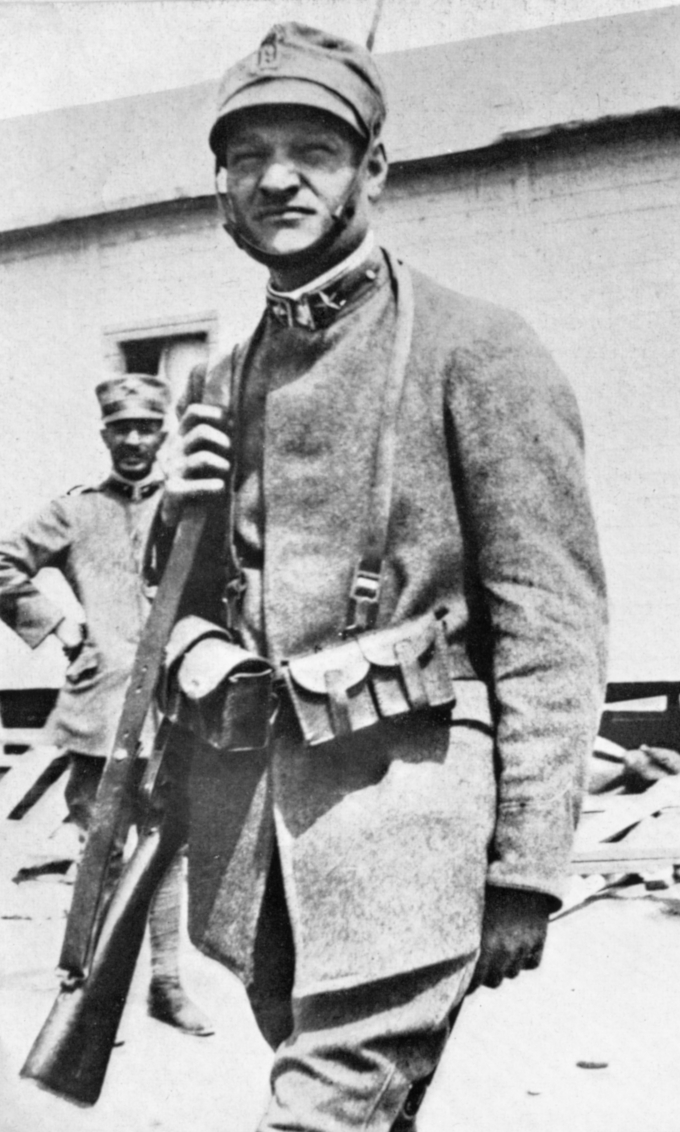
Upon the outbreak of World War I in 1914, Ungaretti, like his Futurist friends, supported an irredentist position, and called for his country's intervention on the side of the Entente Powers. Enrolled in the infantry a year later, he saw action on the Northern Italian theater, serving in the trenches. In contrast to his early enthusiasm, he became appalled by the realities of war. The conflict also made Ungaretti discover his talent as a poet, and, in 1917, he published the volume of free verse Il porto sepolto ("The Buried Port"), largely written on the Kras front. Although depicting the hardships of war life, his celebrated L'Allegria was not unenthusiastic about its purpose (even if in the poem "Fratelli", and in others, he describes the absurdity of the war and the brotherhood between all the men); this made Ungaretti's stance contrast with that of Lost Generation writers, who questioned their countries' intents, and similar to that of Italian intellectuals such as Soffici, Filippo Tommaso Marinetti, Piero Jahier and Curzio Malaparte.
By the time the 1918 armistice was signed, Ungaretti was again in Paris, working as a correspondent for Benito Mussolini's paper Il Popolo d'Italia. He published a volume of French-language poetry, titled La guerre ("The War", 1919). In 1920, Giuseppe Ungaretti married the Frenchwoman Jeanne Dupoix, with whom he had a daughter, Ninon (born 1925), and a son, Antonietto (born 1930).
During that period in Paris, Ungaretti came to affiliate with the anti-establishment and anti-art current known as Dadaism. He was present in the Paris-based Dadaist circle led by Romanian poet Tristan Tzara, being, alongside Alberto Savinio, Julius Evola, Gino Cantarelli, Aldo Fiozzi and Enrico Prampolini, one of the figures who established a transition from Italian Futurism to Dada. In May 1921, he was present at the Dadaist mock trial of reactionary author Maurice Barrès, during which the Dadaist movement began to separate itself into two competing parts, headed respectively by Tzara and André Breton. He was also affiliated with the literary circle formed around the journal La Ronda.
Hub AI
Giuseppe Ungaretti AI simulator
(@Giuseppe Ungaretti_simulator)
Giuseppe Ungaretti
Giuseppe Ungaretti (Italian: [dʒuˈzɛppe uŋɡaˈretti]; 8 February 1888 – 2 June 1970) was an Italian modernist poet, journalist, essayist, critic, academic, and recipient of the inaugural 1970 Neustadt International Prize for Literature. A leading representative of the experimental trend known as Ermetismo ("Hermeticism"), he was one of the most prominent contributors to 20th-century Italian literature. Influenced by symbolism, he was briefly aligned with futurism. Like many futurists, he took an irredentist position during World War I. Ungaretti debuted as a poet while fighting in the trenches, publishing one of his best-known pieces, L'allegria ("The Joy").
During the interwar period, Ungaretti worked as a journalist with Benito Mussolini (whom he met during his socialist accession), as well as a foreign-based correspondent for Il Popolo d'Italia and Gazzetta del Popolo. While briefly associated with the Dadaists, he developed Hermeticism as a personal take on poetry. After spending several years in Brazil, he returned home during World War II, and was assigned a teaching post at the University of Rome, where he spent the final decades of his life and career.
Ungaretti was born in Alexandria, Egypt into a family from the Tuscan city of Lucca. Ungaretti's father worked on digging the Suez Canal, where he suffered a fatal accident in 1890. His widowed mother, who ran a bakery on the edge of the Sahara, educated her child on the basis of Roman Catholic tenets.
Giuseppe Ungaretti's formal education began in French, at Alexandria's Swiss School. It was there that he became acquainted with Parnassianism and Symbolist poetry, in particular with Gabriele d'Annunzio, Charles Baudelaire, Jules Laforgue, Stéphane Mallarmé and Arthur Rimbaud. He also became familiar with works of the Classicists Giacomo Leopardi and Giosuè Carducci, as well as with the writings of maverick author Giovanni Pascoli. This period marked his debut as a journalist and literary critic, with pieces published Risorgete, a journal edited by anarchist writer Enrico Pea. At the time, he was in correspondence with Giuseppe Prezzolini, editor of the influential magazine La Voce. A regular visitor of Pea's Baracca Rossa ("Red House"), Ungaretti was himself a sympathizer of anarchist-socialist circles. He abandoned Christianity and became an atheist. It was not until 1928 that he returned to the Catholic faith.
In 1912, the 24-year-old Giuseppe Ungaretti moved to Paris, France. On his way there, he stopped in Rome, Florence and Milan, meeting face to face with Prezzolini. Ungaretti attended lectures at the Collège de France and the University of Paris, and had among his teachers was philosopher Henri Bergson, whom he reportedly admired. The young writer also met and befriended French literary figure Guillaume Apollinaire, a promoter of Cubism and a forerunner of Surrealism. Apollinaire's work came to be a noted influence on his own. He was also in contact with the Italian expatriates, including leading representatives of Futurism such as Carlo Carrà, Umberto Boccioni, Aldo Palazzeschi, Giovanni Papini and Ardengo Soffici, as well as with the independent visual artist Amedeo Modigliani.
Upon the outbreak of World War I in 1914, Ungaretti, like his Futurist friends, supported an irredentist position, and called for his country's intervention on the side of the Entente Powers. Enrolled in the infantry a year later, he saw action on the Northern Italian theater, serving in the trenches. In contrast to his early enthusiasm, he became appalled by the realities of war. The conflict also made Ungaretti discover his talent as a poet, and, in 1917, he published the volume of free verse Il porto sepolto ("The Buried Port"), largely written on the Kras front. Although depicting the hardships of war life, his celebrated L'Allegria was not unenthusiastic about its purpose (even if in the poem "Fratelli", and in others, he describes the absurdity of the war and the brotherhood between all the men); this made Ungaretti's stance contrast with that of Lost Generation writers, who questioned their countries' intents, and similar to that of Italian intellectuals such as Soffici, Filippo Tommaso Marinetti, Piero Jahier and Curzio Malaparte.
By the time the 1918 armistice was signed, Ungaretti was again in Paris, working as a correspondent for Benito Mussolini's paper Il Popolo d'Italia. He published a volume of French-language poetry, titled La guerre ("The War", 1919). In 1920, Giuseppe Ungaretti married the Frenchwoman Jeanne Dupoix, with whom he had a daughter, Ninon (born 1925), and a son, Antonietto (born 1930).
During that period in Paris, Ungaretti came to affiliate with the anti-establishment and anti-art current known as Dadaism. He was present in the Paris-based Dadaist circle led by Romanian poet Tristan Tzara, being, alongside Alberto Savinio, Julius Evola, Gino Cantarelli, Aldo Fiozzi and Enrico Prampolini, one of the figures who established a transition from Italian Futurism to Dada. In May 1921, he was present at the Dadaist mock trial of reactionary author Maurice Barrès, during which the Dadaist movement began to separate itself into two competing parts, headed respectively by Tzara and André Breton. He was also affiliated with the literary circle formed around the journal La Ronda.
Recent media