
Recent from talks
Goblin
Knowledge base stats:
Talk channels stats:
Members stats:
Goblin
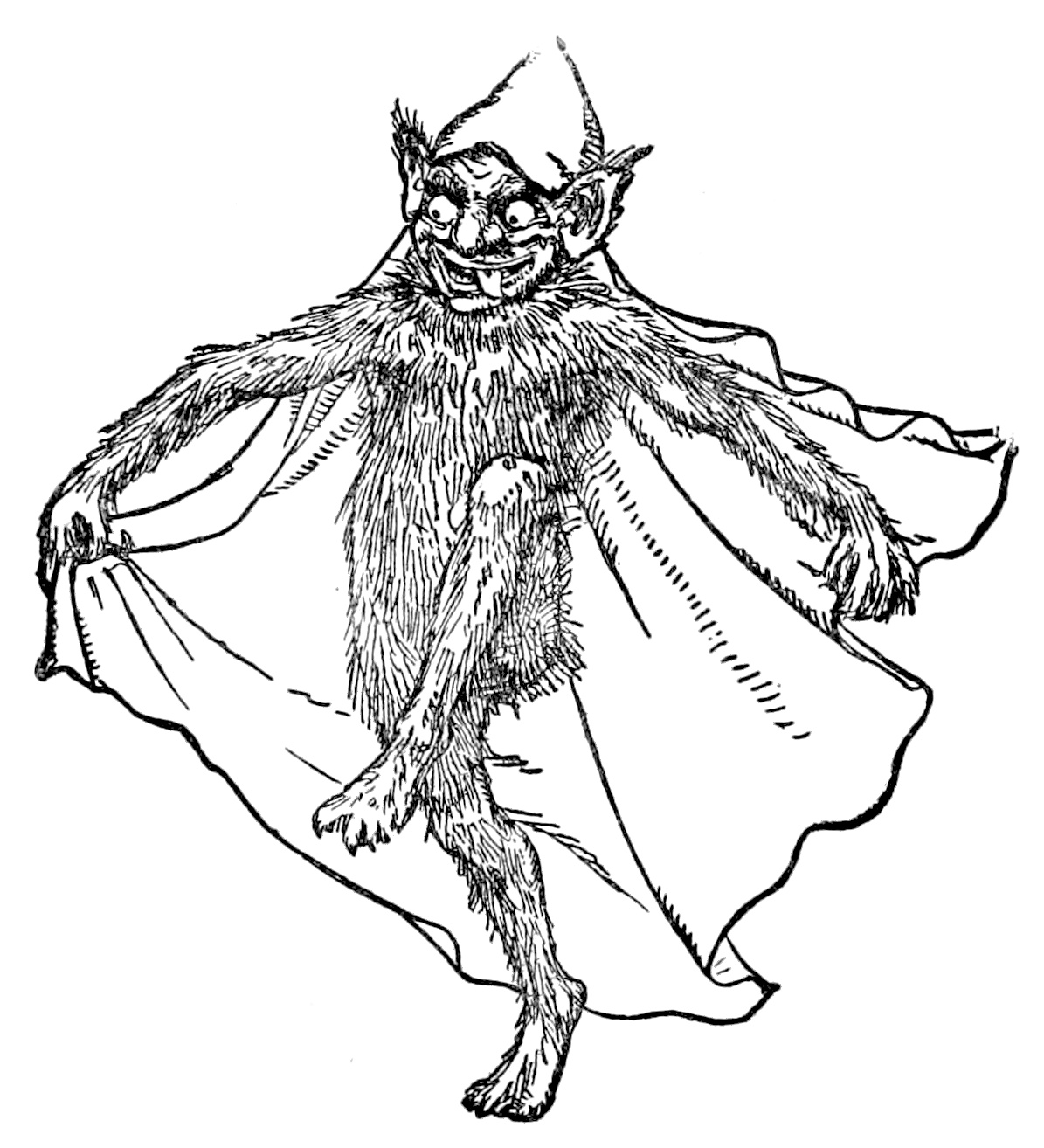
A goblin is a small, grotesque, monstrous humanoid creature that appears in the folklore of multiple European cultures. First attested in stories from the Middle Ages, they are ascribed conflicting abilities, temperaments, and appearances depending on the story and country of origin, ranging from mischievous household spirits to malicious, bestial thieves. They often have magical abilities similar to a fairy or demon, such as the ability to shapeshift.
Similar creatures include brownies, dwarves, duendes, gnomes, imps, leprechauns, and kobolds, but it is also commonly used as a blanket term for all small, fay creatures. The term is sometimes expanded to include goblin-like creatures of other cultures, such as the pukwudgie, dokkaebi, or ifrit.
Alternative spellings include gobblin, gobeline, gobling, goblyn, goblino, and gobbelin. The term "goblette" has been used to refer to female goblins.
The word goblin is first recorded in the 14th century and is probably from unattested Anglo-Norman *gobelin, similar to Old French gobelin, already attested around 1195 in Ambroise of Normandy's Guerre sainte, and to Medieval Latin gobelinus in Orderic Vitalis before 1141, which was the name of a devil or daemon haunting the country around Évreux, Normandy. It may be related both to German kobold and to Medieval Latin cabalus - or *gobalus, itself from Greek κόβαλος (kobalos), "rogue", "knave", "imp", "goblin". German Kobold contains the Germanic root kov- (Middle German Kobe "refuge, cavity", "hollow in a rock", Dial. English cove "hollow in a rock", English "sheltered recess on a coast", Old Norse kofi "hut, shed" ) which means originally a "hollow in the earth". The word is probably related to Dial. Norman gobe "hollow in a cliff", with simple suffix -lin or double suffixation -el-in (cf. Norman surnames Beuzelin, Gosselin, Étancelin, etc.)
Alternatively, it may be a diminutive or other derivative of the French proper name Gobel, more often Gobeau, diminutive forms Gobelet, Goblin, Goblot, but their signification is probably "somebody who sells tumblers or beakers or cups". Moreover, these proper names are not from Normandy, where the word gobelin, gobelinus first appears in the old documents.
The Welsh coblyn, a type of knocker, derives from the Old French gobelin via the English goblin.
In J. R. R. Tolkien's The Hobbit the evil creatures living in the Misty Mountains are referred to as goblins. In The Lord of the Rings, the same creatures are primarily referred to as orcs where the goblin name was used for the lesser orcs.
Goblinoids are a category of humanoid legendary creatures related to the goblin. The term was popularized in the Dungeons & Dragons fantasy role-playing game, in which goblins and related creatures are a staple of random encounters. Goblinoids are typically barbaric foes of the various human and "demi-human" races. Even though goblinoids in modern fantasy fiction are derived from J. R. R. Tolkien's orcs, the main types of goblinoids in Dungeons & Dragons are goblins, bugbears and hobgoblins; these creatures are also figures of mythology, next to ordinary goblins.
Hub AI
Goblin AI simulator
(@Goblin_simulator)
Goblin
A goblin is a small, grotesque, monstrous humanoid creature that appears in the folklore of multiple European cultures. First attested in stories from the Middle Ages, they are ascribed conflicting abilities, temperaments, and appearances depending on the story and country of origin, ranging from mischievous household spirits to malicious, bestial thieves. They often have magical abilities similar to a fairy or demon, such as the ability to shapeshift.
Similar creatures include brownies, dwarves, duendes, gnomes, imps, leprechauns, and kobolds, but it is also commonly used as a blanket term for all small, fay creatures. The term is sometimes expanded to include goblin-like creatures of other cultures, such as the pukwudgie, dokkaebi, or ifrit.
Alternative spellings include gobblin, gobeline, gobling, goblyn, goblino, and gobbelin. The term "goblette" has been used to refer to female goblins.
The word goblin is first recorded in the 14th century and is probably from unattested Anglo-Norman *gobelin, similar to Old French gobelin, already attested around 1195 in Ambroise of Normandy's Guerre sainte, and to Medieval Latin gobelinus in Orderic Vitalis before 1141, which was the name of a devil or daemon haunting the country around Évreux, Normandy. It may be related both to German kobold and to Medieval Latin cabalus - or *gobalus, itself from Greek κόβαλος (kobalos), "rogue", "knave", "imp", "goblin". German Kobold contains the Germanic root kov- (Middle German Kobe "refuge, cavity", "hollow in a rock", Dial. English cove "hollow in a rock", English "sheltered recess on a coast", Old Norse kofi "hut, shed" ) which means originally a "hollow in the earth". The word is probably related to Dial. Norman gobe "hollow in a cliff", with simple suffix -lin or double suffixation -el-in (cf. Norman surnames Beuzelin, Gosselin, Étancelin, etc.)
Alternatively, it may be a diminutive or other derivative of the French proper name Gobel, more often Gobeau, diminutive forms Gobelet, Goblin, Goblot, but their signification is probably "somebody who sells tumblers or beakers or cups". Moreover, these proper names are not from Normandy, where the word gobelin, gobelinus first appears in the old documents.
The Welsh coblyn, a type of knocker, derives from the Old French gobelin via the English goblin.
In J. R. R. Tolkien's The Hobbit the evil creatures living in the Misty Mountains are referred to as goblins. In The Lord of the Rings, the same creatures are primarily referred to as orcs where the goblin name was used for the lesser orcs.
Goblinoids are a category of humanoid legendary creatures related to the goblin. The term was popularized in the Dungeons & Dragons fantasy role-playing game, in which goblins and related creatures are a staple of random encounters. Goblinoids are typically barbaric foes of the various human and "demi-human" races. Even though goblinoids in modern fantasy fiction are derived from J. R. R. Tolkien's orcs, the main types of goblinoids in Dungeons & Dragons are goblins, bugbears and hobgoblins; these creatures are also figures of mythology, next to ordinary goblins.
Recent media