
Recent from talks
Gospić
Knowledge base stats:
Talk channels stats:
Members stats:
Gospić
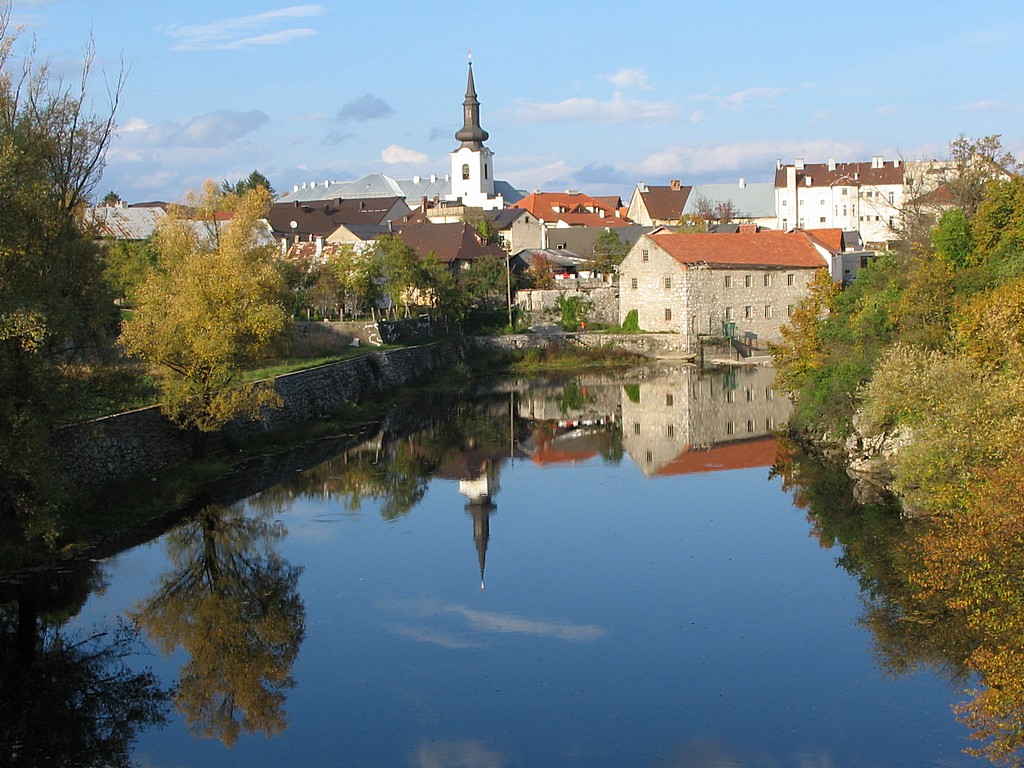
Gospić (pronounced [ɡǒːspitɕ]) is a town in Lika, Croatia. It is the seat of the Lika-Senj County. It is located in the mountainous region of Lika, one of the least densely populated areas of the country, and lies along important inland transport routes connecting northern and southern Croatia.
The city serves as a local economic, cultural, and administrative hub for the surrounding rural settlements. Gospić has historical significance dating back to earlier periods of regional development in Lika, and today it is known for its quiet environment, natural surroundings, and proximity to national parks and mountainous landscapes.
The area of Gospić and its surroundings has been inhabited since prehistoric times. This is evidenced by numerous archaeological finds, especially those of the Iron Age tribe of the Iapodes.
Even before the arrival of the Croats, this area was inhabited by an indigenous population consisting of descendants of the Iapods and Roman settlers who ruled Lika, which was part of the Roman Empire.
The first organised inhabitation of the area was recorded in 1263 as Kaseg or Kasezi. The name Gospić is first mentioned in 1604, which likely originates from the Croatian word for "lady" (gospa) or another archaic form, gospava.
During the Ottoman wars in Europe, Gospić was for a time ruled by the Ottoman Empire as part of Sanjak of Lika initially in Rumeli Eyalet (1528–1580), later in Bosnia Eyalet (1580–1686). Today's town was built around two Ottoman forts (the towers of Aga Senković and of Aga Alić).
The Turkish incursion was repelled by the end of the 17th century and Gospić became an administrative centre of the Lika region within the Croatian Military Frontier, a section of the Habsburg monarchy organized as defense against the Ottomans. Before 1850, there are references to the town as Gospich in German. Since this time, there's been a significant population of ethnic Serbs in the Gospić region.
Politician and writer Ante Starčević was born in 1823 in the village of Veliki Žitnik near Gospić. In Croatia he has been referred to as Father of the Nation.
Hub AI
Gospić AI simulator
(@Gospić_simulator)
Gospić
Gospić (pronounced [ɡǒːspitɕ]) is a town in Lika, Croatia. It is the seat of the Lika-Senj County. It is located in the mountainous region of Lika, one of the least densely populated areas of the country, and lies along important inland transport routes connecting northern and southern Croatia.
The city serves as a local economic, cultural, and administrative hub for the surrounding rural settlements. Gospić has historical significance dating back to earlier periods of regional development in Lika, and today it is known for its quiet environment, natural surroundings, and proximity to national parks and mountainous landscapes.
The area of Gospić and its surroundings has been inhabited since prehistoric times. This is evidenced by numerous archaeological finds, especially those of the Iron Age tribe of the Iapodes.
Even before the arrival of the Croats, this area was inhabited by an indigenous population consisting of descendants of the Iapods and Roman settlers who ruled Lika, which was part of the Roman Empire.
The first organised inhabitation of the area was recorded in 1263 as Kaseg or Kasezi. The name Gospić is first mentioned in 1604, which likely originates from the Croatian word for "lady" (gospa) or another archaic form, gospava.
During the Ottoman wars in Europe, Gospić was for a time ruled by the Ottoman Empire as part of Sanjak of Lika initially in Rumeli Eyalet (1528–1580), later in Bosnia Eyalet (1580–1686). Today's town was built around two Ottoman forts (the towers of Aga Senković and of Aga Alić).
The Turkish incursion was repelled by the end of the 17th century and Gospić became an administrative centre of the Lika region within the Croatian Military Frontier, a section of the Habsburg monarchy organized as defense against the Ottomans. Before 1850, there are references to the town as Gospich in German. Since this time, there's been a significant population of ethnic Serbs in the Gospić region.
Politician and writer Ante Starčević was born in 1823 in the village of Veliki Žitnik near Gospić. In Croatia he has been referred to as Father of the Nation.
Recent media