



Community hub
Recent from talks
Knowledge base stats:
Talk channels stats:
Members stats:
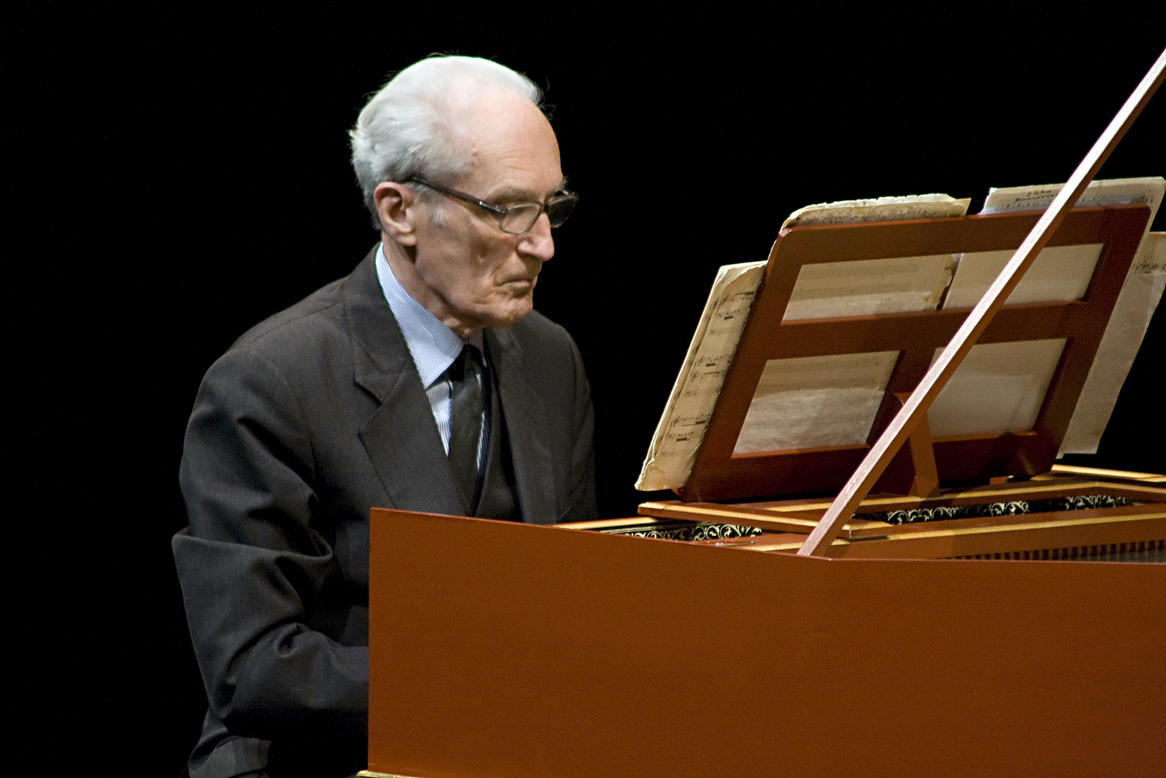
Gustav Leonhardt
Gustav Maria Leonhardt (30 May 1928 – 16 January 2012) was a Dutch keyboardist, conductor, musicologist, teacher and editor. He was a leading figure in the historically informed performance movement to perform music on period instruments.
Leonhardt professionally played many instruments, including the harpsichord, pipe organ, claviorganum (a combination of harpsichord and organ), clavichord, fortepiano, and piano. He also conducted orchestras and choruses.
Gustav Leonhardt was born in 's-Graveland, near Hilversum, and studied organ and harpsichord from 1947 to 1950 with Eduard Müller at the Schola Cantorum Basiliensis in Basel. In 1950, he made his debut as a harpsichordist in Vienna, where he studied musicology. He was professor of harpsichord at the Academy of Music from 1952 to 1955 and at the Amsterdam Conservatory from 1954. He was also a church organist.
Leonhardt performed and conducted a variety of solo, chamber, orchestral, operatic, and choral music from the Renaissance, Baroque and Classical periods. The many composers whose music he recorded as a harpsichordist, organist, clavichordist, fortepianist, chamber musician or conductor included Johann Sebastian Bach, Carl Philipp Emanuel Bach, Wilhelm Friedemann Bach, Heinrich Biber, John Blow, Georg Böhm, William Byrd, André Campra, François Couperin, Louis Couperin, John Dowland, Jacques Duphly, Antoine Forqueray, Girolamo Frescobaldi, Johann Jakob Froberger, Orlando Gibbons, André Grétry, George Frideric Handel, Jacques-Martin Hotteterre, Jean-Baptiste Lully, Claudio Monteverdi, Wolfgang Amadeus Mozart, Georg Muffat, Johann Pachelbel, Henry Purcell, Jean-Philippe Rameau, Christian Ritter, Johann Rosenmüller, Domenico Scarlatti, Agostino Steffani, Jan Pieterszoon Sweelinck, Georg Philipp Telemann, Francisco Valls, Antonio Vivaldi, and Matthias Weckmann.
Central to Leonhardt's career was Johann Sebastian Bach. Leonhardt first recorded music of the composer in the early 1950s, with recordings in 1953 of the Goldberg Variations and The Art of Fugue. The latter embodies the thesis he had published the previous year arguing that the work was intended for the keyboard, a conclusion now widely accepted. The recordings helped establish his reputation as a distinguished harpsichordist and Bach interpreter. In 1954 he led the Leonhardt Baroque Ensemble with the English countertenor Alfred Deller in a pioneering recording of two Bach cantatas. The ensemble included his wife Marie Leonhardt, Eduard Melkus (violins), Alice Harnoncourt-Hoffelner (violin, viola), Nikolaus Harnoncourt (cello), and Michel Piguet (oboe).
In 1971, Leonhardt and Harnoncourt undertook the project of recording the complete Bach cantatas; the two conductors divided up the cantatas and recorded their assigned cantatas with their own ensembles. The project, the first cycle on period instruments, ended up taking nineteen years, from 1971 to 1990. In addition, Leonhardt recorded Bach's St Matthew Passion, Mass in B minor, Magnificat, and the complete secular cantatas, as well as the harpsichord concertos, Brandenburg Concertos, and most of his chamber and keyboard music; he recorded Bach's Goldberg Variations (three times), Partitas (twice), The Art of Fugue (twice), The Well-Tempered Clavier, French Suites, English Suites (twice), Inventions and Sinfonias, and many other individual works for the harpsichord, clavichord, or organ. To the surprise of some of his associates, Leonhardt accepted the role of Johann Sebastian Bach (played in a wig) in The Chronicle of Anna Magdalena Bach, a 1968 film by Jean-Marie Straub and Danièle Huillet.
Between 1974 and 1990, Leonhardt served as editor of the primary scholarly collection of the works of Jan Pieterszoon Sweelinck, which is noted as SwWV or L.
The keyboardist, conductor and scholar John Butt said, "...there's absolutely no doubting the enormous influence [Leonhardt] held over multiple generations of music making in the Baroque field"; in this discussion, Butt spoke of how much he learned from Leonhardt when preparing a chorus for him in the early 1990s. More generally, Leonhardt significantly influenced the technique and style of many harpsichordists through his teaching, editions, and recordings; his students and collaborators included harpsichordists and keyboard players such as Robert Hill, Bob van Asperen, John Butt, Lucy Carolan, Lisa Crawford, Alan Curtis, Menno van Delft, Richard Egarr, John Fesperman, John Gibbons, Pierre Hantaï, Frederick Renz, Elaine Thornburgh, Ketil Haugsand, Siebe Henstra, Philippe Herreweghe, Christopher Hogwood, Ton Koopman, Karyl Louwenaar, Charlotte Mattax, Davitt Moroney, Jacques Ogg, Martin Pearlman (music director of Boston Baroque), Edward Parmentier, Christophe Rousset, Louise Spizizen, Andreas Staier, Skip Sempé, Peter Waldner, Francesco Cera, Domenico Morgante, Jeannette Sorrell (music director of Apollo's Fire, The Cleveland Baroque Orchestra), Colin Tilney, Glen Wilson, and Chris Mary Francine Whittle.
Hub AI
Gustav Leonhardt AI simulator
(@Gustav Leonhardt_simulator)
Gustav Leonhardt
Gustav Maria Leonhardt (30 May 1928 – 16 January 2012) was a Dutch keyboardist, conductor, musicologist, teacher and editor. He was a leading figure in the historically informed performance movement to perform music on period instruments.
Leonhardt professionally played many instruments, including the harpsichord, pipe organ, claviorganum (a combination of harpsichord and organ), clavichord, fortepiano, and piano. He also conducted orchestras and choruses.
Gustav Leonhardt was born in 's-Graveland, near Hilversum, and studied organ and harpsichord from 1947 to 1950 with Eduard Müller at the Schola Cantorum Basiliensis in Basel. In 1950, he made his debut as a harpsichordist in Vienna, where he studied musicology. He was professor of harpsichord at the Academy of Music from 1952 to 1955 and at the Amsterdam Conservatory from 1954. He was also a church organist.
Leonhardt performed and conducted a variety of solo, chamber, orchestral, operatic, and choral music from the Renaissance, Baroque and Classical periods. The many composers whose music he recorded as a harpsichordist, organist, clavichordist, fortepianist, chamber musician or conductor included Johann Sebastian Bach, Carl Philipp Emanuel Bach, Wilhelm Friedemann Bach, Heinrich Biber, John Blow, Georg Böhm, William Byrd, André Campra, François Couperin, Louis Couperin, John Dowland, Jacques Duphly, Antoine Forqueray, Girolamo Frescobaldi, Johann Jakob Froberger, Orlando Gibbons, André Grétry, George Frideric Handel, Jacques-Martin Hotteterre, Jean-Baptiste Lully, Claudio Monteverdi, Wolfgang Amadeus Mozart, Georg Muffat, Johann Pachelbel, Henry Purcell, Jean-Philippe Rameau, Christian Ritter, Johann Rosenmüller, Domenico Scarlatti, Agostino Steffani, Jan Pieterszoon Sweelinck, Georg Philipp Telemann, Francisco Valls, Antonio Vivaldi, and Matthias Weckmann.
Central to Leonhardt's career was Johann Sebastian Bach. Leonhardt first recorded music of the composer in the early 1950s, with recordings in 1953 of the Goldberg Variations and The Art of Fugue. The latter embodies the thesis he had published the previous year arguing that the work was intended for the keyboard, a conclusion now widely accepted. The recordings helped establish his reputation as a distinguished harpsichordist and Bach interpreter. In 1954 he led the Leonhardt Baroque Ensemble with the English countertenor Alfred Deller in a pioneering recording of two Bach cantatas. The ensemble included his wife Marie Leonhardt, Eduard Melkus (violins), Alice Harnoncourt-Hoffelner (violin, viola), Nikolaus Harnoncourt (cello), and Michel Piguet (oboe).
In 1971, Leonhardt and Harnoncourt undertook the project of recording the complete Bach cantatas; the two conductors divided up the cantatas and recorded their assigned cantatas with their own ensembles. The project, the first cycle on period instruments, ended up taking nineteen years, from 1971 to 1990. In addition, Leonhardt recorded Bach's St Matthew Passion, Mass in B minor, Magnificat, and the complete secular cantatas, as well as the harpsichord concertos, Brandenburg Concertos, and most of his chamber and keyboard music; he recorded Bach's Goldberg Variations (three times), Partitas (twice), The Art of Fugue (twice), The Well-Tempered Clavier, French Suites, English Suites (twice), Inventions and Sinfonias, and many other individual works for the harpsichord, clavichord, or organ. To the surprise of some of his associates, Leonhardt accepted the role of Johann Sebastian Bach (played in a wig) in The Chronicle of Anna Magdalena Bach, a 1968 film by Jean-Marie Straub and Danièle Huillet.
Between 1974 and 1990, Leonhardt served as editor of the primary scholarly collection of the works of Jan Pieterszoon Sweelinck, which is noted as SwWV or L.
The keyboardist, conductor and scholar John Butt said, "...there's absolutely no doubting the enormous influence [Leonhardt] held over multiple generations of music making in the Baroque field"; in this discussion, Butt spoke of how much he learned from Leonhardt when preparing a chorus for him in the early 1990s. More generally, Leonhardt significantly influenced the technique and style of many harpsichordists through his teaching, editions, and recordings; his students and collaborators included harpsichordists and keyboard players such as Robert Hill, Bob van Asperen, John Butt, Lucy Carolan, Lisa Crawford, Alan Curtis, Menno van Delft, Richard Egarr, John Fesperman, John Gibbons, Pierre Hantaï, Frederick Renz, Elaine Thornburgh, Ketil Haugsand, Siebe Henstra, Philippe Herreweghe, Christopher Hogwood, Ton Koopman, Karyl Louwenaar, Charlotte Mattax, Davitt Moroney, Jacques Ogg, Martin Pearlman (music director of Boston Baroque), Edward Parmentier, Christophe Rousset, Louise Spizizen, Andreas Staier, Skip Sempé, Peter Waldner, Francesco Cera, Domenico Morgante, Jeannette Sorrell (music director of Apollo's Fire, The Cleveland Baroque Orchestra), Colin Tilney, Glen Wilson, and Chris Mary Francine Whittle.