
Recent from talks
HMS Paladin (G69)
Knowledge base stats:
Talk channels stats:
Members stats:
HMS Paladin (G69)
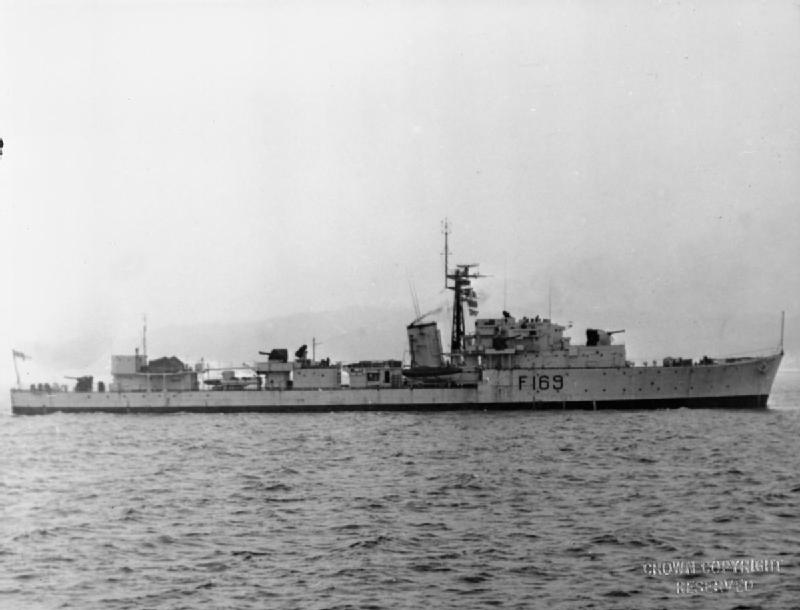
HMS Paladin was a P-class destroyer of the Royal Navy that served in the Second World War. She was built by John Brown and Co. Ltd., Clydebank. She saw action in the Mediterranean and Far East. After the war she was converted into a type 16 frigate and was eventually scrapped in 1962.
The P-class (and the preceding O-class) destroyers were designed prior to the outbreak of the Second World War to meet the Royal Navy's need for large numbers of destroyers in the event of war occurring. They were an intermediate between the large destroyers designed for fleet operations (such as the Tribal-class) and the smaller and slower Hunt-class escort destroyers. It was originally planned for both classes of destroyers to have a main gun armament of 4.7 inch (120 mm ) guns, but supply problems with the 4.7 inch mounts resulted in the decision to complete the eight P-class ships with 4-inch (102 mm) dual purpose (capable of both anti-ship and anti-aircraft fire) guns.
Paladin was 345 ft (105.16 m) long overall, 337 ft (102.72 m) at the waterline and 328 ft 9 in (100.20 m) between perpendiculars, with a beam of 35 ft (10.67 m) and a draught of 9 ft (2.74 m) mean and 13 ft 6 in (4.11 m) full load. Displacement was 1,550 long tons (1,570 t) standard and 2,250 long tons (2,290 t) full load. Two Admiralty three-drum boilers fed steam at 300 psi (2,100 kPa) and 620 °F (327 °C) to two sets of Parsons single-reduction geared steam turbines which drove two propeller shafts. The machinery was rated at 40,000 shp (30,000 kW) giving a maximum speed of 36.75 kn (42.3 mph; 68.1 km/h), corresponding to 33 kn (38 mph; 61 km/h) at deep load 500 long tons (510 t) of oil was carried, giving a radius of 3,850 nmi (4,430 mi; 7,130 km) at 20 kn (23 mph; 37 km/h). The ship had a crew of 176 officers and men.
Paladin had a main gun armament of five 4-inch (102 mm) QF Mark V anti-aircraft guns in single mounts. Close-in anti-aircraft armament of one quadruple 2-pounder "pom-pom" mount together with four single Oerlikon 20 mm cannon, with two on the bridge wings and two further aft abreast the searchlight platform. A single quadruple 21-inch (533 mm) torpedo tubes was carried, while a second bank of four tubes was later added instead of one of the 4-inch guns. Four depth charge throwers were fitted, with 70 depth charges carried.
Paladin was laid down at John Brown's Clydebank shipyard on 22 July 1940, launched on 11 June 1941 and completed on 12 December of that year.
Paladin was allocated to the Eastern Fleet which was then under the command of Admiral Sir James Somerville, leaving Greenock on 17 February 1942, arriving in Colombo via the Cape on 24 March, where she joined the 12th Destroyer Flotilla. At the end of March, warned of a prospective raid by Japanese carrier forces, Summerville, took the Eastern Fleet to sea, dividing it into two main part, with Paladin attached to the fast group, with the battleship Warspite and the aircraft carriers Indomitable and Formidable. On 5 April, the Japanese force struck at Colombo, and later that day, Japanese aircraft spotted the British heavy cruisers Cornwall and Dorsetshire, which were sunk by Japanese dive bombers. Paladin, together with the destroyer Panther and the cruiser Enterprise rescued 1122 survivors from the two ships, many of whom were in the water for 30 hours in a shark-infested sea.
In the first week of May 1942, Paladin took part in Operation Ironclad, the capture of Diego Suarez, Madagascar, from Vichy French forces, forming part of the screen for the heavy ships, and after resistance at Diego Suarez collapsed on 7 May, entered Diego Suarez harbour with Panther, the battleship Ramillies and the cruiser Hermione.
Following the completion of Operation Ironclad, Paladin was transferred to the Mediterranean Fleet, arriving at Alexandria on 13 June 1942. Shortly after arrival in the Mediterranean, she formed part of the covering force for Operation Vigorous, the passage of a convoy to Malta from Alexandria; at the same time, Operation Harpoon, the passage of another convoy from the west, sailed from Gibraltar. While the latter got through, the Vigorous convoy was prevented from doing so by the appearance of the Italian battle fleet, coupled with heavy air attacks. Paladin, together with the cruisers Dido and Euryalus and the destroyers Pakenham, Javelin and Jervis, bombarded Mersa Matruh on 19 July 1942. On 14 September, Paladin, along with the destroyers Pakenham, Javelin and Jervis and the cruiser Dido, bombarded the Daba area.
Hub AI
HMS Paladin (G69) AI simulator
(@HMS Paladin (G69)_simulator)
HMS Paladin (G69)
HMS Paladin was a P-class destroyer of the Royal Navy that served in the Second World War. She was built by John Brown and Co. Ltd., Clydebank. She saw action in the Mediterranean and Far East. After the war she was converted into a type 16 frigate and was eventually scrapped in 1962.
The P-class (and the preceding O-class) destroyers were designed prior to the outbreak of the Second World War to meet the Royal Navy's need for large numbers of destroyers in the event of war occurring. They were an intermediate between the large destroyers designed for fleet operations (such as the Tribal-class) and the smaller and slower Hunt-class escort destroyers. It was originally planned for both classes of destroyers to have a main gun armament of 4.7 inch (120 mm ) guns, but supply problems with the 4.7 inch mounts resulted in the decision to complete the eight P-class ships with 4-inch (102 mm) dual purpose (capable of both anti-ship and anti-aircraft fire) guns.
Paladin was 345 ft (105.16 m) long overall, 337 ft (102.72 m) at the waterline and 328 ft 9 in (100.20 m) between perpendiculars, with a beam of 35 ft (10.67 m) and a draught of 9 ft (2.74 m) mean and 13 ft 6 in (4.11 m) full load. Displacement was 1,550 long tons (1,570 t) standard and 2,250 long tons (2,290 t) full load. Two Admiralty three-drum boilers fed steam at 300 psi (2,100 kPa) and 620 °F (327 °C) to two sets of Parsons single-reduction geared steam turbines which drove two propeller shafts. The machinery was rated at 40,000 shp (30,000 kW) giving a maximum speed of 36.75 kn (42.3 mph; 68.1 km/h), corresponding to 33 kn (38 mph; 61 km/h) at deep load 500 long tons (510 t) of oil was carried, giving a radius of 3,850 nmi (4,430 mi; 7,130 km) at 20 kn (23 mph; 37 km/h). The ship had a crew of 176 officers and men.
Paladin had a main gun armament of five 4-inch (102 mm) QF Mark V anti-aircraft guns in single mounts. Close-in anti-aircraft armament of one quadruple 2-pounder "pom-pom" mount together with four single Oerlikon 20 mm cannon, with two on the bridge wings and two further aft abreast the searchlight platform. A single quadruple 21-inch (533 mm) torpedo tubes was carried, while a second bank of four tubes was later added instead of one of the 4-inch guns. Four depth charge throwers were fitted, with 70 depth charges carried.
Paladin was laid down at John Brown's Clydebank shipyard on 22 July 1940, launched on 11 June 1941 and completed on 12 December of that year.
Paladin was allocated to the Eastern Fleet which was then under the command of Admiral Sir James Somerville, leaving Greenock on 17 February 1942, arriving in Colombo via the Cape on 24 March, where she joined the 12th Destroyer Flotilla. At the end of March, warned of a prospective raid by Japanese carrier forces, Summerville, took the Eastern Fleet to sea, dividing it into two main part, with Paladin attached to the fast group, with the battleship Warspite and the aircraft carriers Indomitable and Formidable. On 5 April, the Japanese force struck at Colombo, and later that day, Japanese aircraft spotted the British heavy cruisers Cornwall and Dorsetshire, which were sunk by Japanese dive bombers. Paladin, together with the destroyer Panther and the cruiser Enterprise rescued 1122 survivors from the two ships, many of whom were in the water for 30 hours in a shark-infested sea.
In the first week of May 1942, Paladin took part in Operation Ironclad, the capture of Diego Suarez, Madagascar, from Vichy French forces, forming part of the screen for the heavy ships, and after resistance at Diego Suarez collapsed on 7 May, entered Diego Suarez harbour with Panther, the battleship Ramillies and the cruiser Hermione.
Following the completion of Operation Ironclad, Paladin was transferred to the Mediterranean Fleet, arriving at Alexandria on 13 June 1942. Shortly after arrival in the Mediterranean, she formed part of the covering force for Operation Vigorous, the passage of a convoy to Malta from Alexandria; at the same time, Operation Harpoon, the passage of another convoy from the west, sailed from Gibraltar. While the latter got through, the Vigorous convoy was prevented from doing so by the appearance of the Italian battle fleet, coupled with heavy air attacks. Paladin, together with the cruisers Dido and Euryalus and the destroyers Pakenham, Javelin and Jervis, bombarded Mersa Matruh on 19 July 1942. On 14 September, Paladin, along with the destroyers Pakenham, Javelin and Jervis and the cruiser Dido, bombarded the Daba area.
Recent media