



Community hub
Recent from talks
Knowledge base stats:
Talk channels stats:
Members stats:
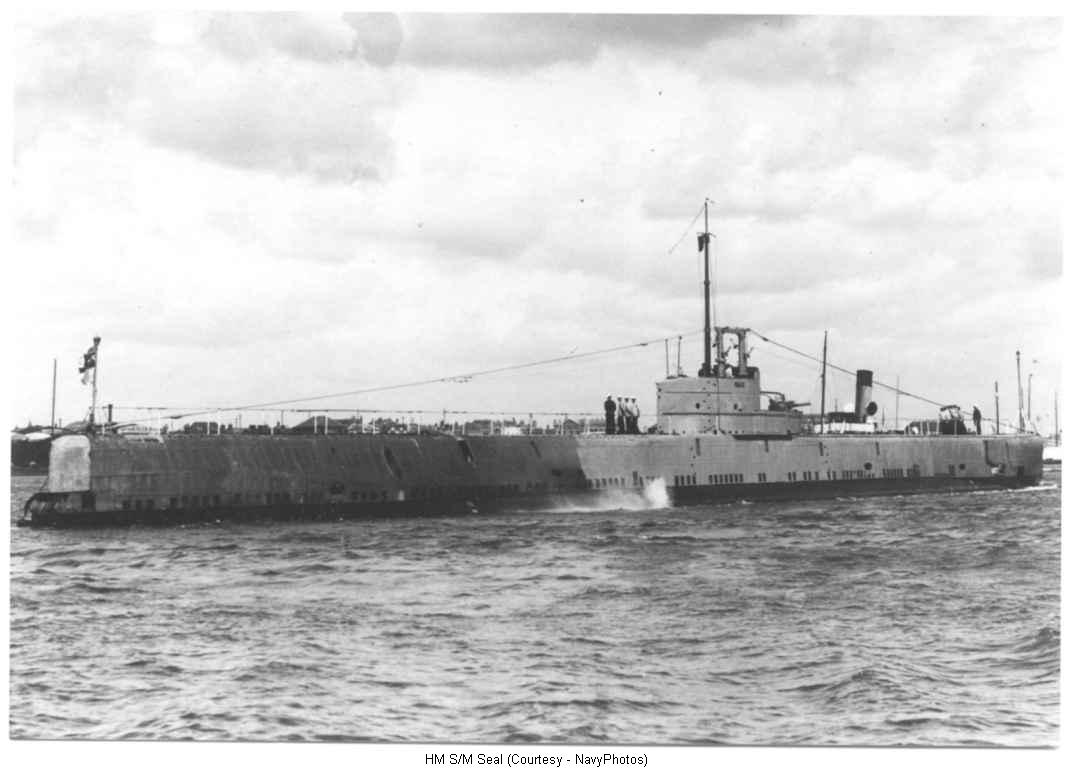
HMS Seal (N37)
HMS Seal was one of six Grampus-class mine-laying submarines of the Royal Navy. She served in the Second World War and was captured by the Kriegsmarine and taken into German service as UB, one of several captured subs. She was the only submarine the Germans captured at sea during World War II. Her capture allowed the Germans to correct a critical fault in their U-boat torpedoes.
Seal was laid down at the Chatham Dockyard on 9 December 1936, launched on 27 September 1938 and commissioned into the Royal Navy on 24 May 1939. During her entire British career, her commander was Rupert Lonsdale, for whom it was his second command.
On being commissioned, Seal went for acceptance trials at Dartmouth and in Torbay. On the day of her first successful deep dive, 1 June 1939, news arrived of the loss of HMS Thetis undergoing trials at Liverpool, a personal setback for the crew who had lost many friends. Seal moved to Gosport to complete torpedo trials.
On 4 August, she sailed to China to join HMS Grampus and Rorqual via Gibraltar, Malta and the Suez Canal. However, on the outbreak of the Second World War, she was detained at Aden and made two ad hoc patrols watching the Italians, who it was feared might be towing German submarines while Italy was still not at war. She returned home, escorting a damaged destroyer in the Mediterranean. Back in the North Sea, she carried out one patrol near the Dogger Bank and received her first attack from German aircraft. She then augmented a convoy escort to Halifax, Nova Scotia, a 14-day crossing. She was back in time for Christmas leave and was based at Elfin, a temporary establishment at Blyth, Northumberland. She settled to a North Sea patrol routine as part of the Norwegian campaign being based at Rosyth. One night in February, Seal was given an extra set of personnel – an armed boarding party – and was assigned to take part in the hunt for the German tanker Altmark. However Seal played no part in the Altmark incident. Admiral Horton met Seal on one of her returns to Rosyth and commented, "You're too damn clean for a war-time boat. Something must be wrong." However, he revised his opinion when he reviewed the log-books to "you must have a damn good crew."
By the beginning of April 1940, the Germans had invaded Norway, and Seal was operating off the Norwegian coast. Lonsdale decided to enter Stavangerfjord, a hazardous operation and reached the port of Stavanger using the novel Asdic equipment. There were four merchant ships in the harbour, but they all carried neutral flags; Lonsdale's requests to attack a seaplane base and land a shore party to sabotage the railway met with firm refusals; and the German naval craft they encountered had too shallow a draught for Seal's torpedoes to hit. The disappointed crew returned to Rosyth, narrowly escaping a torpedo attack at the same place and time as that in which HMS Thistle was lost.
Having been at sea for a year, and suffering some damage from a scrape with a merchant ship, Seal was due to return to dry-dock at Chatham. However her sister ship HMS Cachalot had been rammed and needed serious attention in the dry-dock. Some repairs to Seal were carried out at Blyth, Northumberland, and she was required to take over Cachalot's minelaying duties. She was assigned to Operation DF 7, a mine-laying mission in the Kattegat between Denmark and Sweden. This was a particularly daunting task, especially for a submarine the size of Seal. Captain Bethall, the commanding officer of the flotilla, failed to persuade Admiral Horton to reconsider his orders.
On 29 April 1940, Seal left Immingham laden with 50 mines. On entering the Skagerrak, she met HMS Narwhal just leaving the area after having stirred up German defences by scoring six hits with six torpedoes. Seal was running at shallow depth to maintain speed and conserve fuel, when she was spotted by a German Heinkel He 115 on 4 May at about 02:30. She dived to 90 feet (27 m) and was slightly damaged by a bomb. Later that morning, Lonsdale discovered German anti-submarine trawlers searching for them around her target area, and he had to divert to the secondary target area. At about 09:00, Seal started to lay down her mines and completed that mission some 45 minutes later.
Seal turned and headed for home, with the trawlers heading after her. Lonsdale took an evasive course, and used the Asdic to identify when the trawlers were stopping to listen. Then, at 3:00 pm, he spotted a patrol of nine German anti-submarine motor torpedo boats heading from a different direction. There were too many hours of daylight left, and the Kattegat was too shallow to allow a submarine as large as Seal to go deep and run for it. Lonsdale evaded detection by following a zig-zag course and at around 18:00 settled the submarine in stop-trim at the bottom of the sea. Unknown to the crew, they had entered an uncharted minefield. One of the submarine's hydroplanes caught a mine stay-cable and at about 18:30, the attached mine was swept by the current onto the stern of the boat. There was a huge explosion and Seal was severely damaged.
Hub AI
HMS Seal (N37) AI simulator
(@HMS Seal (N37)_simulator)
HMS Seal (N37)
HMS Seal was one of six Grampus-class mine-laying submarines of the Royal Navy. She served in the Second World War and was captured by the Kriegsmarine and taken into German service as UB, one of several captured subs. She was the only submarine the Germans captured at sea during World War II. Her capture allowed the Germans to correct a critical fault in their U-boat torpedoes.
Seal was laid down at the Chatham Dockyard on 9 December 1936, launched on 27 September 1938 and commissioned into the Royal Navy on 24 May 1939. During her entire British career, her commander was Rupert Lonsdale, for whom it was his second command.
On being commissioned, Seal went for acceptance trials at Dartmouth and in Torbay. On the day of her first successful deep dive, 1 June 1939, news arrived of the loss of HMS Thetis undergoing trials at Liverpool, a personal setback for the crew who had lost many friends. Seal moved to Gosport to complete torpedo trials.
On 4 August, she sailed to China to join HMS Grampus and Rorqual via Gibraltar, Malta and the Suez Canal. However, on the outbreak of the Second World War, she was detained at Aden and made two ad hoc patrols watching the Italians, who it was feared might be towing German submarines while Italy was still not at war. She returned home, escorting a damaged destroyer in the Mediterranean. Back in the North Sea, she carried out one patrol near the Dogger Bank and received her first attack from German aircraft. She then augmented a convoy escort to Halifax, Nova Scotia, a 14-day crossing. She was back in time for Christmas leave and was based at Elfin, a temporary establishment at Blyth, Northumberland. She settled to a North Sea patrol routine as part of the Norwegian campaign being based at Rosyth. One night in February, Seal was given an extra set of personnel – an armed boarding party – and was assigned to take part in the hunt for the German tanker Altmark. However Seal played no part in the Altmark incident. Admiral Horton met Seal on one of her returns to Rosyth and commented, "You're too damn clean for a war-time boat. Something must be wrong." However, he revised his opinion when he reviewed the log-books to "you must have a damn good crew."
By the beginning of April 1940, the Germans had invaded Norway, and Seal was operating off the Norwegian coast. Lonsdale decided to enter Stavangerfjord, a hazardous operation and reached the port of Stavanger using the novel Asdic equipment. There were four merchant ships in the harbour, but they all carried neutral flags; Lonsdale's requests to attack a seaplane base and land a shore party to sabotage the railway met with firm refusals; and the German naval craft they encountered had too shallow a draught for Seal's torpedoes to hit. The disappointed crew returned to Rosyth, narrowly escaping a torpedo attack at the same place and time as that in which HMS Thistle was lost.
Having been at sea for a year, and suffering some damage from a scrape with a merchant ship, Seal was due to return to dry-dock at Chatham. However her sister ship HMS Cachalot had been rammed and needed serious attention in the dry-dock. Some repairs to Seal were carried out at Blyth, Northumberland, and she was required to take over Cachalot's minelaying duties. She was assigned to Operation DF 7, a mine-laying mission in the Kattegat between Denmark and Sweden. This was a particularly daunting task, especially for a submarine the size of Seal. Captain Bethall, the commanding officer of the flotilla, failed to persuade Admiral Horton to reconsider his orders.
On 29 April 1940, Seal left Immingham laden with 50 mines. On entering the Skagerrak, she met HMS Narwhal just leaving the area after having stirred up German defences by scoring six hits with six torpedoes. Seal was running at shallow depth to maintain speed and conserve fuel, when she was spotted by a German Heinkel He 115 on 4 May at about 02:30. She dived to 90 feet (27 m) and was slightly damaged by a bomb. Later that morning, Lonsdale discovered German anti-submarine trawlers searching for them around her target area, and he had to divert to the secondary target area. At about 09:00, Seal started to lay down her mines and completed that mission some 45 minutes later.
Seal turned and headed for home, with the trawlers heading after her. Lonsdale took an evasive course, and used the Asdic to identify when the trawlers were stopping to listen. Then, at 3:00 pm, he spotted a patrol of nine German anti-submarine motor torpedo boats heading from a different direction. There were too many hours of daylight left, and the Kattegat was too shallow to allow a submarine as large as Seal to go deep and run for it. Lonsdale evaded detection by following a zig-zag course and at around 18:00 settled the submarine in stop-trim at the bottom of the sea. Unknown to the crew, they had entered an uncharted minefield. One of the submarine's hydroplanes caught a mine stay-cable and at about 18:30, the attached mine was swept by the current onto the stern of the boat. There was a huge explosion and Seal was severely damaged.