Hubbry Logo
Max HortonMax HortonMain
Open search
Max Horton
Community hub
Max Horton
logo
8 pages, 0 posts
0 subscribers
Be the first to start a discussion here.
Max Horton
Max Horton
from Wikipedia

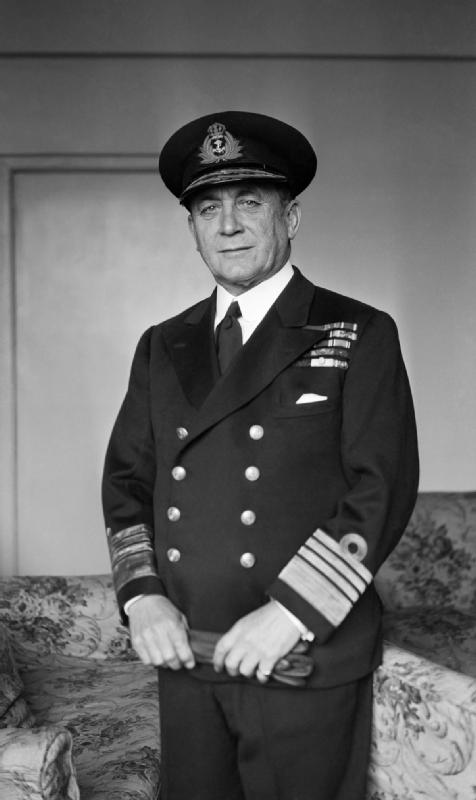
Admiral Sir Max Kennedy Horton, GCB, DSO & Two Bars, SGM (29 November 1883 – 30 July 1951) was a British submariner during the First World War and commander-in-chief of the Western Approaches in the later half of the Second World War, responsible for British participation in the Battle of the Atlantic.

Key Information

Early life

[edit]

Max Horton was born in Anglesey to Robert Joseph Angel Horton and Esther/Hester Maude Goldsmid, of the famous Goldsmid/D'Avigdor Goldsmid Anglo-Jewish family.[1]

Horton joined the Royal Navy officer training ship, HMS Britannia on 15 September 1898. Whilst on HMS Duke of Edinburgh, he was involved in the rescue efforts when SS Delhi ran aground off Cape Spartel and was subsequently awarded the Board of Trade Medal for Saving Life at Sea in silver.

First World War

[edit]

The outbreak of war saw Lieutenant-Commander Horton in command of one of the first British ocean-going submarines, the 800-ton HMS E9. At dawn on 13 September 1914, he torpedoed the German light cruiser SMS Hela six miles southwest of Heligoland. Hela was hit amidships with the two torpedoes, fired from a range of 600 yards. All but two of her crew were rescued by the U-18 and another German ship. Although pursued most of the day by German naval forces, E9 managed to reach Harwich safely.[2] Entering the port, Horton initiated the tradition of British submariners of hoisting the Jolly Roger after a successful patrol.[3]

Horton (left) with Noel Laurence, commander of HMS E1 (right), while serving in the Baltic

Three weeks later, Horton sank the German destroyer S116 off the mouth of the river Ems. For sinking the cruiser and the destroyer, Horton was awarded the Distinguished Service Order (DSO).

Sent to the Baltic Sea as part of a British flotilla, Horton sank a number of merchant vessels and, on 2 July 1915, damaged the German armoured cruiser SMS Prinz Adalbert. On 31 December 1914, Horton was promoted to Commander.

In 1917, Horton was awarded the bar to his DSO for long and arduous services in command of overseas submarines. Three years later, as a captain, he was awarded a second bar to his DSO for distinguished service in command of the Baltic submarine flotilla.

Interbellum

[edit]

During the 1920s, Horton served as captain of HMS Conquest and of the battleship HMS Resolution. Promoted to rear admiral on 17 October 1932, he became Commander of the 2nd Battle Squadron with his flag in the battleship HMS Malaya in December 1933 and Commander of the 1st Cruiser Squadron with his flag in HMS London in 1935. Promoted to vice admiral in 1937, he was given command of the Reserve Fleet that year.

As Vice-Admiral Commanding Reserve Fleet, he flew his flag in HMS Hawkins (a cruiser), and HMS Effingham (cruiser) from 24.06.1938.[4]

Second World War

[edit]

With the onset of World War II, Horton was put in command of the Northern Patrol enforcing the distant maritime blockade of Germany in the seas between Orkney and the Faroes. In 1940, he was made Rear Admiral Submarines. In the opinion of Horton's biographer, Rear Admiral William Scott Chalmers, a new regulation which required the post holder to be an officer who had served aboard submarines in the Great War, was forced through for the sole purpose of ensuring that Horton was on a very short list of qualifiers for this post, almost ensuring his rapid transfer to Aberdour, so great was the desire of some within the Admiralty to have Horton revitalize the submarine arm.[5]

Horton moved his headquarters from Aberdour, where he was under the control of the fleet commanders at Scapa Flow, to Northways in north London, officially because he wanted a freer hand in running his command, but purportedly because Northways was located near some of his favourite golf courses.[citation needed] Horton, an avid golfer, is said to have played a round of golf almost every day during the war (since most of the convoy battles took place at night), and was generously handicapped at a "financial 8".

He was responsible for the creation of convoy rescue ships, which accompanied some Atlantic convoys to rescue survivors from ships sunk by enemy action. Rescue ships were typically small freighters with passenger accommodations. Conversion to rescue service involved enlarging galley and food storage areas and providing berthing and sanitary facilities for approximately 150 men. The ships carried scrambling nets along the sides, and boats suitable for open sea work instead of normal lifeboats. Rescue ships normally included a small operating room for an embarked naval doctor and sick bay staff.

Max Horton with his naval officers, 10 June 1945

Having been promoted to full Admiral on 9 January 1941, Horton was appointed Commander-in-Chief, Western Approaches Command on 17 November 1942. Here he instituted a series of tactical changes in the way the escort ships were to be used. In addition to the existing escort group system, in which groups of ships were assigned to defend the perimeter of convoy boxes, Horton instituted a system of support groups, who would also travel with the convoys, but have much more freedom in pursuing submarines to the death, even if such action necessitated leaving the convoy for longer periods of time than were considered acceptable for escort groups. Horton's support groups proved to be decisive in the crucial spring of 1943, taking the battle to the U-boats and crushing the morale of the U-boat arm with persistent and successful counterattacks. Horton is widely credited, along with his predecessor, Admiral Sir Percy Noble, as being one of the most crucial figures in the Allied victory in the Atlantic. In August 1945, Max Horton, at his own request, was placed on the retired list in order to facilitate the promotion of younger officers. He was made a Knight Grand Cross of the Order of the Bath in June 1945[6] and was Bath King of Arms from January 1946.[7] He was awarded the Freedom of the City of Liverpool.

Memorials

[edit]

There is a memorial to him in Liverpool Cathedral.

In 2019, a full size sculpture of Horton was funded by the Rhosneigr community and placed in Rhosneigr, where he was born.

Memorial to Sir Max Horton

In 2021 a footstone was funded by the Jewish American Society for Historic Preservation in his honour. The footstone reads, "Admiral Sir Max Horton, RN, Honouring British Commonality and Diversity, Commander-in-Chief responsible for British participation in the Battle of the Atlantic WWII. Admiral Horton was of Jewish heritage born in Anglesey. 'Be strong and of good courage' Joshua 1:9, Donated by the Hackney Branch of the Association of Jewish Ex-Servicemen and Women and the Jewish American Society for Historic Preservation."[8] https://www.sdjewishworld.com/wp-content/uploads/2021/05/Admiral-Horton-with-JASHP-plaque19735.jpg

Dedication marker for Sir Max Horton

An anti-submarine trawler, HMS Commander Horton, was sunk on 27 April 1941 by German submarine U-552.[9]

Honours and awards

[edit]
Admiral Sir Max Horton memorial at Liverpool Cathedral

References

[edit]

Sources

[edit]
Military offices
Preceded by Commander-in-Chief, Reserve Fleet
1937–1939
Succeeded by
Post Disbanded
Preceded by Rear-Admiral Submarines
1940–1942
Succeeded by
Heraldic offices
Preceded by King of Arms of the Order of the Bath
1946–1951
Succeeded by
Revisions and contributorsEdit on WikipediaRead on Wikipedia
from Grokipedia
Admiral Sir Max Kennedy Horton (29 November 1883 – 30 July 1951) was a prominent officer who rose from a distinguished submariner in to become a key architect of Allied victory in the during , serving as Commander-in-Chief of the from 1942 to 1945. Born in , , , to Robert Joseph Angel Horton and Esther Maude Goldsmid of the Anglo-Jewish d’Avigdor-Goldsmid family, Horton entered the navy as a aboard in September 1898 and quickly specialized in submarines after his promotion to in 1903. Horton's World War I service marked him as one of Britain's most daring submarine commanders, taking command of HMS E9 in 1914 and sinking the German cruiser SMS Hela off on 13 September, followed by the torpedo boat S116 two days later, for which he received the (DSO). He then led daring operations in the from 1914 to 1918, earning two bars to his DSO in 1917 and 1920 for his services in command of submarines there; he later supervised the construction of submarines including HMS J6 and the experimental HMS M1. Earlier, in 1911, he had been awarded the Sea Gallantry Medal for his role in rescuing survivors from the wrecked SS Delhi. Between the wars, Horton advanced through commands such as HMS Conquest (1922–1924), HMS Resolution (1930), and the 1st Cruiser Squadron (1935), culminating in his appointment as of the in 1937 and Flag Officer Submarines in 1940, where he oversaw the navy's underwater forces amid escalating threats. In , his expertise proved invaluable against the German ; as head of from November 1942, he implemented convoy support groups, hunter-killer operations, and technologies like and mortars, while leveraging intelligence from to decimate the fleet. His strategies turned the tide by May 1943, with notable successes including the defense of ONS-5, which sank seven U-boats and reduced Allied shipping losses dramatically, enabling the Normandy invasion in 1944. For these efforts, he was knighted as KCB in 1939, promoted to GCB in 1945, and received numerous foreign honors. Horton retired on 15 August 1945 to make way for younger officers and died in at age 67, with his ashes interred in . His legacy endures as a master of , honored by a 2019 statue in that highlights his Jewish heritage.

Early Life and Education

Family Background and Birth

Max Horton was born on 29 November 1883 in Rhosneigr, , , at the Maelog Lake Hotel, which his parents later operated. He was the second of four sons to Robert Joseph Angel Horton, a with military connections who had faced financial difficulties on the exchange prior to Max's birth, and Esther Maude Horton (née Goldsmid), from the prominent Anglo-Jewish D'Avigdor-Goldsmid family. The family's circumstances prompted a from England to shortly before his birth, where his father managed the hotel and organized and excursions, providing a coastal environment that fostered Horton's early affinity for the sea. Raised in a once-wealthy but adjusted privileged setting, Horton spent his childhood largely in , often exploring the shoreline with his brother amid challenges integrating into the local Welsh-speaking community. The family's military heritage, combined with his mother's Jewish background, profoundly shaped his early motivations; at the age of nine, Horton expressed to her his determination to join the Royal Navy "to fight for her," a resolve linked to his mother's Jewish heritage. By his early years, he had already demonstrated notable sailing proficiency, influenced by the seaside lifestyle. Horton's initial education took place at a in before he transitioned to formal naval training in 1898.

Entry into the Royal Navy

Max Kennedy Horton, encouraged by his family's military background, entered the Royal Navy as a cadet at the Royal Naval College in , Dartmouth, on 15 September 1898, at the age of 14. He underwent initial officer training there for approximately 18 months before proceeding to practical sea service as a , completing his foundational education by 1903. Following his training, Horton was promoted to in 1903 and undertook early sea service on surface vessels, including the cruiser HMS Hermione, where he honed his skills in and technical operations. This period solidified his interest in the mechanical and innovative aspects of , setting the stage for his specialization in . In 1904, at the age of 20, Horton transferred to the nascent submarine branch as one of its pioneers, receiving an appointment as aboard HMS Thames, the Royal Navy's first dedicated depot ship. His aptitude for the field was evident in his swift progression; by 1905, aged 22, he assumed command of HMS A1, Britain's inaugural domestically designed , demonstrating his rapid mastery of the complex, unproven underwater craft amid its early developmental challenges.

World War I Service

Submarine Commands and Operations

Horton assumed command of the submarine HMS E9 in March 1914, just months before the outbreak of , marking the beginning of his prominent role in British submarine operations. Under his leadership, E9 conducted aggressive patrols in the , where on 13 September 1914, Horton executed a daring close-range torpedo attack—firing from approximately 600 yards—that sank the German light cruiser SMS Hela southwest of , achieving the first sinking of an enemy warship by a British submarine in the conflict. This success highlighted Horton's tactical boldness, as he navigated hazardous waters near German bases while evading pursuing destroyers. Following the Hela engagement, E9 continued patrols in the and transitioned to the in late 1914, operating from Russian bases at Reval (modern-day ) as part of a supporting Allied efforts against German naval forces. In 1915, after returning from Baltic operations, Horton took command of the larger submarine HMS J6, leading strenuous patrols in the that emphasized persistent surveillance and interception of enemy shipping. These missions involved threading through minefields and narrow channels, showcasing his skill in submarine maneuvering under threat. Horton's command style pioneered aggressive submarine tactics, including periscope-depth approaches for precise targeting and prolonged surface running to maximize endurance during extended patrols. He survived multiple depth-charge attacks, such as those following the Hela sinking, by skillfully diving and outmaneuvering escorts despite depleted batteries, which reinforced his reputation as a daring and resilient submariner. His pre-war experience in submarines since 1904 had honed these innovative approaches, enabling effective operations in contested waters.

Key Engagements and Achievements

During the early stages of World War I, Horton distinguished himself as commander of the submarine HMS E9, conducting daring patrols in the Heligoland Bight that yielded significant victories against the German High Seas Fleet. On 13 September 1914, he torpedoed and sank the German light cruiser SMS Hela with two torpedoes fired from 600 yards, marking one of the first major submarine successes of the war and disrupting German naval operations in the North Sea. Just weeks later, on 6 October 1914, E9 sank the German torpedo boat S116 off the Ems River, further demonstrating the submarine's effectiveness in coastal waters and earning Horton the Distinguished Service Order (DSO) for these actions. These engagements not only boosted British morale but also highlighted the strategic value of submarines in challenging surface naval dominance, contributing to the Allies' control over key North Sea approaches. For his leadership, Horton was promoted to commander on 31 December 1914. In late 1914, Horton navigated E9 through heavily mined and patrolled waters to enter the , a perilous feat that enabled British submarines to support Russian forces and enforce a against German shipments from . Operating from Reval (modern-day ), he sank an additional German on 4 June 1915, severely damaged the heavy cruiser Prinz Adalbert with torpedoes on 2 July 1915—for which he was awarded the Russian (4th Class)—and intercepted multiple merchant vessels carrying vital war materials on 18 and 19 October 1915. These operations crippled German supply lines, with Horton's making significant contributions to sinking enemy shipping in the Baltic while gathering critical intelligence on German naval movements that informed Allied strategy. His bold tactics, including surface transits under fire, established submarines as a decisive force in enclosed waters, enhancing the Allied 's effectiveness from 1915 through 1918. By 1916, Horton had transitioned to command the larger J-class submarine HMS J6, leading intensive patrols in the during key operations including the period of the in May–June 1916. These patrols, conducted amid harsh conditions, prevented enemy reconnaissance and protected Allied convoys, with Horton earning a reputation as the most feared British submariner among German commanders. In recognition of his overseas service, he received a bar to his DSO in 1917. As the war drew to a close in , Horton assumed leadership of the 9th in the Baltic, where he enforced the ongoing , conducted intelligence operations against remaining German forces, and supported demobilization efforts following the on 11 November 1918. His squadron monitored naval and countered potential threats from elements, ensuring a stable transition in the region amid the Russian Civil War's onset. These actions facilitated the safe withdrawal of Allied naval assets and laid the groundwork for interventions, culminating in a second bar to his DSO in 1920 for his flotilla command.

Interwar Career

Surface Ship Commands

Following his distinguished service in World War I submarines, which provided foundational expertise for his subsequent career, Max Horton was promoted to the rank of captain on 30 June 1920. Shortly thereafter, at age 37, he served as to Rear-Admiral (Submarines) Roger Keyes at the Admiralty, where his work on submarine policy contributed to shaping interwar doctrine on underwater operations. In March 1922, Horton assumed command of the light cruiser HMS Conquest, serving until 1924 as part of the Atlantic Fleet, where the vessel participated in fleet exercises supporting submarine flotillas. During this period, Conquest conducted patrols and training maneuvers in Atlantic waters, reflecting Horton's transition to surface vessel leadership amid post-war naval reorganization. Horton later took command of the battleship HMS Resolution on 30 November 1930, serving until November 1932 in the . Under his , Resolution engaged in routine patrols and fleet operations in the region. This role highlighted Horton's growing administrative acumen in managing large surface units, bridging his earlier submarine focus with broader fleet responsibilities. In July 1935, Horton, now a , assumed command of the 1st Cruiser Squadron in the , serving until November 1936.

Submarine Flotilla Leadership and Promotions

In the early interwar years, Horton leveraged his submarine expertise to lead the 1st Submarine Flotilla as Captain (S) from 14 March 1922 to 15 April 1924, overseeing operations, training, and tactical development for the flotilla's vessels based at Devonport. This role built on his prior command of the Baltic Submarine Flotilla in 1919–1920, where he directed offensive operations against Bolshevik forces, earning a second bar to his DSO for distinguished service. His leadership emphasized rigorous exercises to refine maneuvers and coordination with surface units, contributing to the Royal Navy's evolving doctrine for undersea warfare amid post-war budget constraints. Horton's steady rise through the ranks continued with his promotion to on 17 October 1932, recognizing his operational acumen and administrative skills honed in submarine service. He then served in senior surface commands, but his submariner background informed broader fleet policies. By 19 August 1936, he advanced to , positioning him for high-level strategic roles as international tensions mounted. As , Horton assumed command of the in 1937, a critical position where he directed the , , and of naval assets to ensure readiness for potential conflict. Drawing from his extensive experience, he prioritized enhancements in equipment reliability and crew proficiency across the fleet, including oversight of reserve submarine units to align with emerging threats. This preparatory work laid foundational improvements in tactics and that would prove vital in the impending war.

World War II Service

Early Anti-Submarine Efforts

Upon the outbreak of World War II in September 1939, Max Horton was initially appointed as Vice-Admiral of the Northern Patrol, tasked with enforcing a maritime blockade against Germany in the waters between Iceland, the Faroe Islands, and Norway. In early 1940, he transitioned to the role of Flag Officer (Submarines) on 9 January, assuming command of all British submarine operations from headquarters at Northways, London. In this capacity, Horton directed offensive submarine warfare against German shipping, emphasizing aggressive patrols to disrupt Axis supply lines. He was also responsible for the creation of convoy rescue ships, which accompanied Atlantic convoys to rescue survivors from torpedoed vessels. A pivotal application of Horton's occurred during the German invasion of in April 1940, where he deployed multiple British to enemy naval and merchant vessels in Norwegian waters. Under his direction, these achieved notable successes, sinking 21 German ships and inflicting significant damage on supply convoys supporting the invasion. Drawing from his extensive interwar experience in submarine modernization, Horton positioned his forces effectively to exploit the confined fjords and coastal routes, marking an early highlight of British submarine effectiveness in the . As threats intensified in 1940, Horton began shifting focus toward defensive anti-submarine measures, providing advisory input on protection strategies amid mounting losses in the Atlantic. His submariner perspective influenced the formation of early escort groups, advocating for coordinated and deployments to shield merchant shipping from submerged attacks. Promoted to full on 3 January 1941, Horton continued to leverage his expertise through 1941, promoting innovations such as enhanced integration of ASDIC () systems for detecting submerged s and preliminary countermeasures against emerging wolfpack tactics, where multiple s coordinated strikes on s. These efforts, grounded in his firsthand knowledge of operations, laid foundational tactical adjustments that bolstered Allied defensive capabilities during the initial phases of the .

Command of Western Approaches

In November 1942, Admiral Sir Max Horton was appointed Commander-in-Chief of Command, succeeding Admiral Sir Percy Noble, with the role commencing on 19 November. This command was pivotal in coordinating the defense of Allied convoys crossing the North Atlantic against German attacks during the . Horton assumed control at the in Derby House, , which had been established there in February 1941 to streamline communications and operations closer to the convoy assembly ports. From this underground bunker, he directed a multifaceted strategy emphasizing offensive to protect vital supply lines to Britain. Horton implemented innovative tactics that shifted the balance toward the Allies, including the formation of dedicated support groups comprising 6 to 8 destroyers, frigates, or corvettes—sometimes augmented by escort carriers or merchant aircraft carriers (MAC-ships)—designed to hunt U-boats independently while reinforcing threatened convoys. These hunter-killer groups operated with greater freedom than traditional escort vessels, allowing them to pursue submerged submarines aggressively using advanced detection like radar and ASDIC (sonar). He also prioritized air cover, integrating escort carriers to provide continuous aerial patrols over convoys and closing the mid-Atlantic "air gap" where U-boats had previously operated with impunity. To enhance effectiveness, Horton established training facilities such as the Western Approaches Tactical Unit in Liverpool and a "school of battle" in Larne, Northern Ireland, in February 1943, where crews simulated U-boat attacks using war games and models. These measures proved decisive after mid-1943; for instance, in Black May 1943, Allied forces under his oversight sank 41 U-boats—the highest monthly loss for the Kriegsmarine—prompting Admiral Karl Dönitz to withdraw submarines from the North Atlantic on 24 May. Horton's success relied on close collaboration with Allied forces, particularly placing RAF Coastal Command under his operational control in April 1943 to provide long-range aircraft like B-24 Liberators and Short Sunderlands for reconnaissance and strikes. He also coordinated with the Navy, securing additional escort carriers and 15 destroyers following a critical meeting with Prime Minister , which integrated American resources into convoy protection. This partnership extended to Canadian naval units, pooling intelligence and assets post-Casablanca Conference in January 1943. Under Horton's leadership from 1942 to 1945, operations coordinated by contributed to the sinking of numerous U-boats, ensuring the safe passage of millions of tons of supplies and turning the tide of the in favor of the Allies.

Later Life and Legacy

Post-War Retirement and Death

Following the defeat of in May 1945, Horton was relieved of his command as , on 15 August 1945 and placed on the retired list at his own request. After retirement, he served as Bath King of Arms, a ceremonial heraldic position, from January 1946. Horton's health had declined in the years following the war, and he died from on 30 July 1951 at his home in , aged 67. His remains were cremated, and his ashes interred in .

Memorials and Recognition

A memorial plaque to Admiral Sir Max Kennedy Horton is located in the memorial chapel of Liverpool Cathedral, honoring his pivotal role in the Battle of the Atlantic. The Royal Navy Submarine Museum in Gosport features exhibits highlighting Horton's World War I exploits and contributions to naval tactics. In 2019, a full-size statue of Horton was unveiled in his birthplace of Rhosneigr, Anglesey, funded by the local community and recognizing his Jewish heritage. In scholarly histories of the Battle of the Atlantic, Horton is credited for his innovative strategies, including the formation of hunter-killer groups that decisively countered U-boat threats and secured Allied supply lines.

Honours and Awards

World War I Distinctions

Horton was awarded the Distinguished Service Order (DSO) on 20 October 1914 for his successful command of the submarine HMS E9 in the sinking of the German light cruiser SMS Hela southwest of Heligoland on 13 September 1914, marking one of the first major Allied submarine victories of the war. This action, conducted in foggy conditions at close range, demonstrated Horton's tactical skill and contributed to the disruption of German naval operations in the North Sea. He received a bar to his DSO in 1917 for distinguished services in command of submarines during operations in the from 1914 to 1915, where he led patrols that sank several German vessels and supported Allied efforts against German naval forces. A second bar followed in 1920, recognizing his distinguished services in command of the British submarine flotilla in the during 1918–1919. These awards highlighted Horton's role in pioneering aggressive tactics that inflicted significant losses on the German fleet and later opposed Bolshevik forces. Horton was mentioned in despatches on multiple occasions during for his operational leadership in commands, including in September 1914 for the engagement, in 1916 for services during the campaign, and in 1918 for sustained command in the Baltic. These commendations underscored his strategic contributions to Allied naval superiority. In recognition of his Baltic operations, Horton was awarded the Russian (4th Class) in November 1915, reflecting international appreciation for his flotilla's role in blockading German reinforcements to the Eastern Front. This honor, one of the highest Russian military decorations, was conferred for his bold patrols that sank merchant and warships, aiding the Allied cause against .

World War II and Later Honours

Horton was appointed Knight Commander of the (KCB) in the 1939 , acknowledging his leadership in naval operations at the outset of . This elevation built on his earlier recognition as Companion of the (CB) in the 1934 , which honored his interwar contributions to and fleet commands. In recognition of his pivotal role as , during the , Horton was advanced to Knight Grand Cross of the (GCB) in the 1945 King's . This highest class of the order underscored his strategic innovations in , which significantly contributed to Allied victory in the campaign against German U-boats. Horton's international collaboration earned him foreign honors, including the Grand Officer of the () in 1943, the Chief Commander of the in 1946 for his coordination with American forces in the Atlantic theater, the Grand Cross of the Order of St. Olaf () in 1948 for services to , and the Commander of the (Netherlands) in 1948. Following his retirement in August 1945, Horton was appointed Bath King of Arms in January 1946, a ceremonial role reflecting his lifetime service to the Royal Navy.
Add your contribution
Related Hubs
User Avatar
No comments yet.