
Recent from talks
Hadith sciences
Knowledge base stats:
Talk channels stats:
Members stats:
Hadith sciences
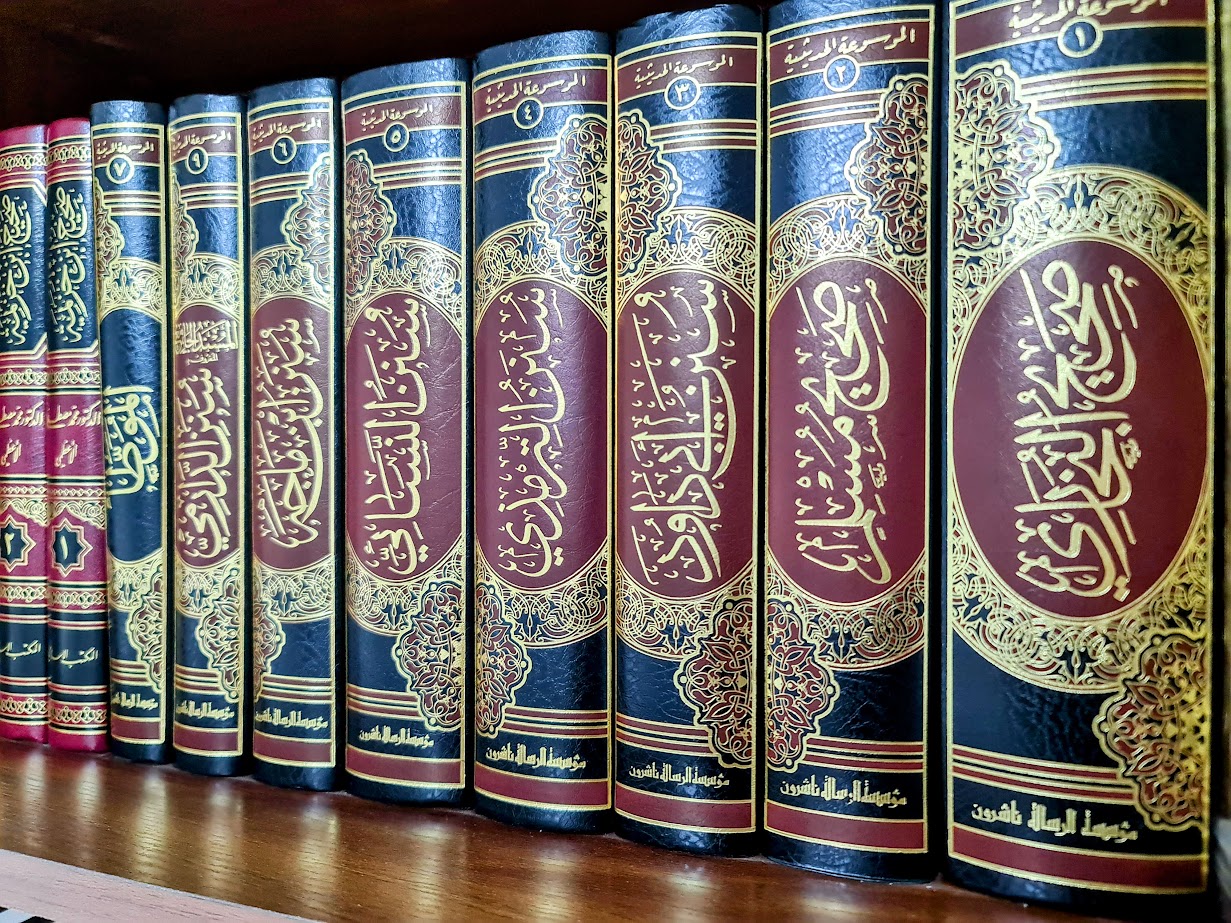
Hadith sciences (Arabic: علم الحديث ʻilm al-ḥadīth "science of hadith") consists of several religious scholarly disciplines used by Muslim scholars in the study and evaluation of the hadith. ("Science" is used in the sense of a field of study, not to be confused with following the principles of observation and experiment, developing falsifiable hypotheses, etc. of modern science.) The hadith are what most Muslims believe to be a record of the words, actions, and silent approvals of the Islamic prophet Muhammad as transmitted through chains of narrators. Hadith science scholars aim to determine which of these records are authentic, and which may be fabricated.
For most Muslims, determining the authenticity of hadith is enormously important in Islam because along with the Quran, the Sunnah of the Islamic prophet—his words, actions, and silent approvals—are considered the explanation of the divine revelation (wahy), and the record of them (i.e. hadith) provides the basis of Islamic law (Sharia). In addition, while the number of verses pertaining to law in the Quran is relatively few, hadith, for many, give direction on everything from details of religious obligations (such as Ghusl or Wudu, ablutions for salat prayer), to the correct forms of salutations, to the importance of benevolence to servants. Thus, the "great bulk" of the rules of Islamic law are derived from hadith, along with the Quran as a primary source.
There are three primary ways to determine the authenticity (sihha) of a hadith: by attempting to determine whether there are "other identical reports from other transmitters"; determining the reliability of the transmitters of the report; and "the continuity of the chain of transmission" of the hadith.
Traditional hadith sciences has been praised by some as "unrivaled, the ultimate in historical criticism", and heavily criticized for failing to filter out a massive amount of hadith "which cannot possibly be authentic". However, both Muslims and western scholars have criticised the hadith. Quranists reject the authority of the hadiths, viewing them as un-Quranic; some further claim that most hadiths are fabrications (pseudepigrapha) created in the 8th and 9th century AD, and which are falsely attributed to Muhammad. Some modern scholars have concluded that the many ḥadīths can be be traced to the time of the prophet authenticlly. Their analysis is based on updated evaluations of the narrators and transmission chains. Thus, they affirm its reliability according to contemporary standards of verification.″
The science of hadith has been described by one hadith specialist, Jalal al-Din al-Suyuti (d. 911 A.H/ 1505 C.E), as the science of the principles by which the conditions of both the sanad (the chain of narration), and the matn (the text of the hadith), are known. This science is concerned with the sanad and the matn with its objective being distinguishing the sahih, authentic, from other than it. Ibn Hajar al-Asqalani said the preferred definition is: knowledge of the principles by which the condition of the narrator and the narrated are determined.
After the death of Muhammad, his sayings were transmitted orally. According to Islamic tradition, Umar ibn al-Khattab, the second caliph, started the process of collecting all the hadiths together into one unified volume, but gave up the endeavor "for fear the Quran would be neglected by the Muslims" (according to Muhammad Zubayr Siddiqi).
The Umayyad caliph, Umar ibn Abd al-Aziz (aka Umar II, who reigned from 717-720 CE) also started an effort to collect all the hadiths. Teaching and collecting hadiths was part of a plan of his to renew the moral fiber of the Muslim community. He supported teachers of fiqh, sent educators to Bedouin tribes, ordered weekly hadith lectures in the Hejaz, and sent out scholars of hadith to Egypt and North Africa, (according to Muhammad Zubayr Siddiqi).
Umar also ordered the great scholar of Madinah, Abu Bakr ibn Hazm to write down all the hadiths of Muhammad and Umar ibn al-Khattab, particularly those narrated by Aisha. He had these hadiths collected in books which were circulated around the Umayyad Empire. Although these books are lost today, commentaries on them by Ibn al-Nadim reveals that they are organized like books of fiqh, such as the Muwatta of Imam Malik, the first large compilation of hadiths. Imam Malik himself probably followed the general plan of the early books of hadith ordered by Umar.
Hub AI
Hadith sciences AI simulator
(@Hadith sciences_simulator)
Hadith sciences
Hadith sciences (Arabic: علم الحديث ʻilm al-ḥadīth "science of hadith") consists of several religious scholarly disciplines used by Muslim scholars in the study and evaluation of the hadith. ("Science" is used in the sense of a field of study, not to be confused with following the principles of observation and experiment, developing falsifiable hypotheses, etc. of modern science.) The hadith are what most Muslims believe to be a record of the words, actions, and silent approvals of the Islamic prophet Muhammad as transmitted through chains of narrators. Hadith science scholars aim to determine which of these records are authentic, and which may be fabricated.
For most Muslims, determining the authenticity of hadith is enormously important in Islam because along with the Quran, the Sunnah of the Islamic prophet—his words, actions, and silent approvals—are considered the explanation of the divine revelation (wahy), and the record of them (i.e. hadith) provides the basis of Islamic law (Sharia). In addition, while the number of verses pertaining to law in the Quran is relatively few, hadith, for many, give direction on everything from details of religious obligations (such as Ghusl or Wudu, ablutions for salat prayer), to the correct forms of salutations, to the importance of benevolence to servants. Thus, the "great bulk" of the rules of Islamic law are derived from hadith, along with the Quran as a primary source.
There are three primary ways to determine the authenticity (sihha) of a hadith: by attempting to determine whether there are "other identical reports from other transmitters"; determining the reliability of the transmitters of the report; and "the continuity of the chain of transmission" of the hadith.
Traditional hadith sciences has been praised by some as "unrivaled, the ultimate in historical criticism", and heavily criticized for failing to filter out a massive amount of hadith "which cannot possibly be authentic". However, both Muslims and western scholars have criticised the hadith. Quranists reject the authority of the hadiths, viewing them as un-Quranic; some further claim that most hadiths are fabrications (pseudepigrapha) created in the 8th and 9th century AD, and which are falsely attributed to Muhammad. Some modern scholars have concluded that the many ḥadīths can be be traced to the time of the prophet authenticlly. Their analysis is based on updated evaluations of the narrators and transmission chains. Thus, they affirm its reliability according to contemporary standards of verification.″
The science of hadith has been described by one hadith specialist, Jalal al-Din al-Suyuti (d. 911 A.H/ 1505 C.E), as the science of the principles by which the conditions of both the sanad (the chain of narration), and the matn (the text of the hadith), are known. This science is concerned with the sanad and the matn with its objective being distinguishing the sahih, authentic, from other than it. Ibn Hajar al-Asqalani said the preferred definition is: knowledge of the principles by which the condition of the narrator and the narrated are determined.
After the death of Muhammad, his sayings were transmitted orally. According to Islamic tradition, Umar ibn al-Khattab, the second caliph, started the process of collecting all the hadiths together into one unified volume, but gave up the endeavor "for fear the Quran would be neglected by the Muslims" (according to Muhammad Zubayr Siddiqi).
The Umayyad caliph, Umar ibn Abd al-Aziz (aka Umar II, who reigned from 717-720 CE) also started an effort to collect all the hadiths. Teaching and collecting hadiths was part of a plan of his to renew the moral fiber of the Muslim community. He supported teachers of fiqh, sent educators to Bedouin tribes, ordered weekly hadith lectures in the Hejaz, and sent out scholars of hadith to Egypt and North Africa, (according to Muhammad Zubayr Siddiqi).
Umar also ordered the great scholar of Madinah, Abu Bakr ibn Hazm to write down all the hadiths of Muhammad and Umar ibn al-Khattab, particularly those narrated by Aisha. He had these hadiths collected in books which were circulated around the Umayyad Empire. Although these books are lost today, commentaries on them by Ibn al-Nadim reveals that they are organized like books of fiqh, such as the Muwatta of Imam Malik, the first large compilation of hadiths. Imam Malik himself probably followed the general plan of the early books of hadith ordered by Umar.
Recent media