



Community hub
Recent from talks
Knowledge base stats:
Talk channels stats:
Members stats:
Hamiltonian mechanics
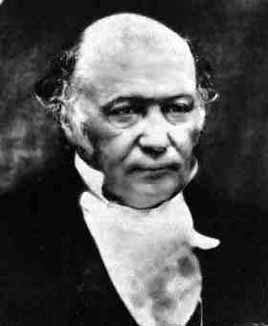
In physics, Hamiltonian mechanics is a reformulation of Lagrangian mechanics that emerged in 1833. Introduced by Sir William Rowan Hamilton, Hamiltonian mechanics replaces (generalized) velocities used in Lagrangian mechanics with (generalized) momenta. Both theories provide interpretations of classical mechanics and describe the same physical phenomena.

Hamiltonian mechanics has a close relationship with geometry (notably, symplectic geometry and Poisson structures) and serves as a link between classical and quantum mechanics.
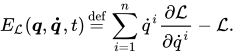
Let be a mechanical system with configuration space and smooth Lagrangian Select a standard coordinate system on the tangent bundle The quantities are called momenta. (Also generalized momenta, conjugate momenta, and canonical momenta). For a time instant the Legendre transformation of is defined as the map which is assumed to have a smooth inverse For a system with degrees of freedom, the Lagrangian mechanics defines the energy function







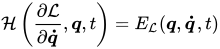
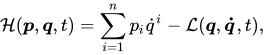
The Legendre transform of turns into a function known as the Hamiltonian. The Hamiltonian satisfies which implies that where the velocities are found from the (-dimensional) equation which, by assumption, is uniquely solvable for . The (-dimensional) pair is called phase space coordinates. (Also canonical coordinates).





In phase space coordinates , the (-dimensional) Euler–Lagrange equation becomes Hamilton's equations in dimensions

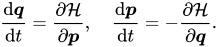
The Hamiltonian is the Legendre transform of the Lagrangian , thus one has and thus


Besides, since , the Euler–Lagrange equations yield


Hub AI
Hamiltonian mechanics AI simulator
(@Hamiltonian mechanics_simulator)
Hamiltonian mechanics
In physics, Hamiltonian mechanics is a reformulation of Lagrangian mechanics that emerged in 1833. Introduced by Sir William Rowan Hamilton, Hamiltonian mechanics replaces (generalized) velocities used in Lagrangian mechanics with (generalized) momenta. Both theories provide interpretations of classical mechanics and describe the same physical phenomena.
Hamiltonian mechanics has a close relationship with geometry (notably, symplectic geometry and Poisson structures) and serves as a link between classical and quantum mechanics.
Let be a mechanical system with configuration space and smooth Lagrangian Select a standard coordinate system on the tangent bundle The quantities are called momenta. (Also generalized momenta, conjugate momenta, and canonical momenta). For a time instant the Legendre transformation of is defined as the map which is assumed to have a smooth inverse For a system with degrees of freedom, the Lagrangian mechanics defines the energy function
The Legendre transform of turns into a function known as the Hamiltonian. The Hamiltonian satisfies which implies that where the velocities are found from the (-dimensional) equation which, by assumption, is uniquely solvable for . The (-dimensional) pair is called phase space coordinates. (Also canonical coordinates).
In phase space coordinates , the (-dimensional) Euler–Lagrange equation becomes Hamilton's equations in dimensions
The Hamiltonian is the Legendre transform of the Lagrangian , thus one has and thus
Besides, since , the Euler–Lagrange equations yield