



Community hub
Recent from talks
Knowledge base stats:
Talk channels stats:
Members stats:
Hamper
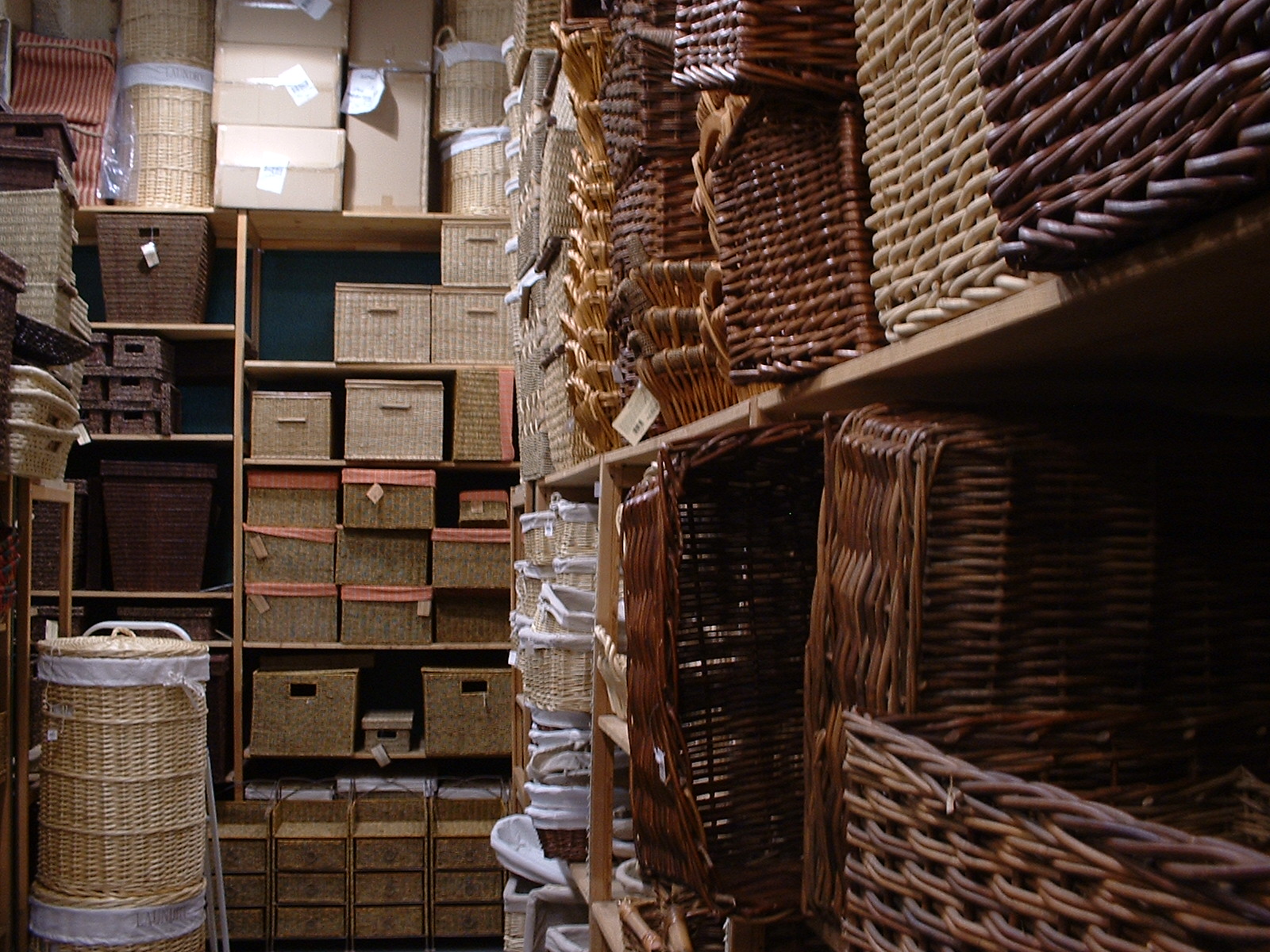
A hamper refers to one of several related basket-like items. In primarily British usage, it refers to a wicker basket, usually large, that is used for the transport of items, often food. In North America, the term generally refers to a household receptacle, often a basket, for clean (out of the dryer or off the line) or dirty clothing, regardless of its composition, i.e. "a laundry hamper". Typically a laundry hamper is used for storage and will be sturdier, taller and have a lid while a laundry basket is open and used mainly for transport.
In agricultural use, a hamper is a wide-mouthed container of basketwork that may often be carried on the back during the harvesting of fruit or vegetables by hand by workers in the field. The contents of the hamper may be decanted regularly into larger containers or a cart, wagon, or truck.
The open ventilation and the sturdiness offered by a hamper has made it suitable for the transport of food, hence the use of the picnic hamper. A picnic hamper often has straps or storage compartments for cutlery and crockery.
At one time it was common for laundry services to leave a large basketwork container with a lid which is now commonly referred to as a clothes hamper. The same type of container would be used to return clean clothing, which would be put away by the laundry service and the empty container left in place of the full container for later pickup. This type of daily or bi-daily hamper service was most common with Chinese laundry services in 19th-century England and America.
The words 'hamper' and 'hampyre' evolved as contractions of the Anglo-French hanaper, from the Medieval Latin hanaperium, which was a secure case for holding a large goblet or cup, and derived from hanapus, the Latin word for a bowl or cup. The first known usage of the word 'hamper' was in the 14th century.
There is a long tradition of community and social philanthropy and charity related to hampers, in which persons or community groups donate to needy people a hamper of food, clothing, toiletries, cleaning products, or other household necessities, to assist with their family economy.
Up until the mid 20th century, in the Western tradition, the hamper was a basket that could be carried by the donor and physically handed to the recipient. This limited the size of the gift to food ingredients for at most several days, or other necessities for one to two weeks. The basket itself was a useful item around the house or farm, and any cloth wrapping for the food or lining of the basket would also be usable by the recipient family.
In more recent times, the hamper would likely be a plastic bag or acrylic fibre bag of a size that can be carried, with tinned or packaged goods. A Christmas hamper is likely to be bigger and have some party or celebratory foods, or toys. Hampers can also contain related festive foods.
Hub AI
Hamper AI simulator
(@Hamper_simulator)
Hamper
A hamper refers to one of several related basket-like items. In primarily British usage, it refers to a wicker basket, usually large, that is used for the transport of items, often food. In North America, the term generally refers to a household receptacle, often a basket, for clean (out of the dryer or off the line) or dirty clothing, regardless of its composition, i.e. "a laundry hamper". Typically a laundry hamper is used for storage and will be sturdier, taller and have a lid while a laundry basket is open and used mainly for transport.
In agricultural use, a hamper is a wide-mouthed container of basketwork that may often be carried on the back during the harvesting of fruit or vegetables by hand by workers in the field. The contents of the hamper may be decanted regularly into larger containers or a cart, wagon, or truck.
The open ventilation and the sturdiness offered by a hamper has made it suitable for the transport of food, hence the use of the picnic hamper. A picnic hamper often has straps or storage compartments for cutlery and crockery.
At one time it was common for laundry services to leave a large basketwork container with a lid which is now commonly referred to as a clothes hamper. The same type of container would be used to return clean clothing, which would be put away by the laundry service and the empty container left in place of the full container for later pickup. This type of daily or bi-daily hamper service was most common with Chinese laundry services in 19th-century England and America.
The words 'hamper' and 'hampyre' evolved as contractions of the Anglo-French hanaper, from the Medieval Latin hanaperium, which was a secure case for holding a large goblet or cup, and derived from hanapus, the Latin word for a bowl or cup. The first known usage of the word 'hamper' was in the 14th century.
There is a long tradition of community and social philanthropy and charity related to hampers, in which persons or community groups donate to needy people a hamper of food, clothing, toiletries, cleaning products, or other household necessities, to assist with their family economy.
Up until the mid 20th century, in the Western tradition, the hamper was a basket that could be carried by the donor and physically handed to the recipient. This limited the size of the gift to food ingredients for at most several days, or other necessities for one to two weeks. The basket itself was a useful item around the house or farm, and any cloth wrapping for the food or lining of the basket would also be usable by the recipient family.
In more recent times, the hamper would likely be a plastic bag or acrylic fibre bag of a size that can be carried, with tinned or packaged goods. A Christmas hamper is likely to be bigger and have some party or celebratory foods, or toys. Hampers can also contain related festive foods.