


Community hub
Recent from talks
Contribute something
Nothing was collected or created yet.

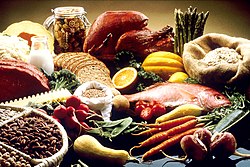
Food is any substance consumed by an organism for nutritional support. Food is usually of plant, animal, or fungal origin and contains essential nutrients such as carbohydrates, fats, proteins, vitamins, or minerals. The substance is ingested by an organism and assimilated by the organism's cells to provide energy, maintain life, or support growth. Different species of animals have different feeding behaviours that satisfy the needs of their metabolisms and have evolved to fill specific ecological niches within specific geographical contexts.
Omnivorous humans are highly adaptable and have adapted to obtaining food in many different ecosystems. Humans generally use cooking to prepare food for consumption. The majority of the food energy required is supplied by the industrial food industry, which produces food through intensive agriculture and distributes it through complex food processing and food distribution systems. This system of conventional agriculture relies heavily on fossil fuels, which means that the food and agricultural systems are one of the major contributors to climate change, accounting for as much as 37% of total greenhouse gas emissions.[1]
The food system has a significant impact on a wide range of other social and political issues, including sustainability, biological diversity, economics, population growth, water supply, and food security. Food safety and security are monitored by international agencies, like the International Association for Food Protection, the World Resources Institute, the World Food Programme, the Food and Agriculture Organization, and the International Food Information Council.
Definition and classification
[edit]Food is any substance consumed to provide nutritional support and energy to an organism.[2][3] It can be raw, processed, or formulated and is consumed orally by animals for growth, health, or pleasure. Food is mainly composed of water, lipids, proteins, and carbohydrates. Other organic substances (e.g., vitamins) and minerals (e.g., salts) can also be found in food.[4] Plants, algae, and some microorganisms use photosynthesis to make some of their own nutrients.[5] Water is found in nearly all foods and has been defined as food by itself.[6] Water has no food energy, and fibers have low energy densities, or food energy relative to volume, some providing none, while fat is the most energy-dense component.[3] Some inorganic substances are also essential for plant and animal functioning.[7]
Human food can be classified in various ways, either by related content or by how it is processed.[8] The number and composition of food groups can vary. Most systems include four basic groups described by their origins and relative nutritional functions: vegetables and fruit, cereals and bread, dairy, and meat.[9] Studies that look into diet quality group food into whole grains, refined grains, vegetables, fruits, nuts, legumes, eggs, dairy products, fish, red meat, processed meat, and sugar-sweetened beverages.[10][11][12] The Food and Agriculture Organization and World Health Organization use a system with eighteen or nineteen food classifications, including: cereals and their products; roots, tubers, plantains and their products; pulses, seeds and nuts and their products; milk and milk products; eggs and their products; fish, shellfish and their products; meat and meat products; insects, grubs and their products; vegetables and their products; fruits and their products; fats and oils; sweets and sugars; spices and condiments; beverages; foods for particular nutritional uses; food additives; composite dishes; and savory snacks. (The source claims nineteen but lists eighteen, numbered 1–15 and 17–19.)[13]
Food sources
[edit]
In a given ecosystem, food forms a web of interlocking chains with primary producers at the bottom and apex predators at the top.[14] Other aspects of the web include detrovores (that eat detritis) and decomposers (that break down dead organisms).[14] Primary producers include algae, plants, bacteria and protists that acquire their energy from sunlight.[15] Primary consumers are the herbivores that consume the plants, and secondary consumers are the carnivores that consume those herbivores. Some organisms, including most mammals and birds, have diets consisting of both animals and plants, and are considered omnivores.[16] The chain ends with the apex predators, the animals that have no known predators in its ecosystem.[17] Humans are considered apex predators.[18]
Humans are omnivores, finding sustenance in vegetables, fruits, cooked meat, milk, eggs, mushrooms and seaweed.[16] Cereal grain is a staple food that provides more food energy worldwide than any other type of crop.[19] Corn (maize), wheat, and rice account for 87% of all grain production worldwide.[20][21][22] Just over half of the world's crops are used to feed humans (55 percent), with 36 percent grown as animal feed and 9 percent for biofuels.[23] Fungi and bacteria are also used in the preparation of fermented foods like bread, wine, cheese and yogurt.[24]
Photosynthesis
[edit]During photosynthesis, energy from the sun is absorbed and used to transform water and carbon dioxide in the air or soil into oxygen and glucose. The oxygen is then released, and the glucose stored as an energy reserve.[25] Photosynthetic plants, algae and certain bacteria often represent the lowest point of the food chains,[26][27] making photosynthesis the primary source of energy and food for nearly all life on earth.[28]
Plants also absorb important nutrients and minerals from the air, natural waters, and soil.[29] Carbon, oxygen and hydrogen are absorbed from the air or water and are the basic nutrients needed for plant survival.[30] The three main nutrients absorbed from the soil for plant growth are nitrogen, phosphorus and potassium, with other important nutrients including calcium, sulfur, magnesium, iron boron, chlorine, manganese, zinc, copper molybdenum and nickel.[30]
Microorganisms
[edit]Bacteria and other microorganisms also form the lower rungs of the food chain. They obtain their energy from photosynthesis or by breaking down dead organisms, waste or chemical compounds. Some form symbiotic relationships with other organisms to obtain their nutrients.[31] Bacteria provide a source of food for protozoa,[32] who in turn provide a source of food for other organisms such as small invertebrates.[33] Other organisms that feed on bacteria include nematodes, fan worms, shellfish and a species of snail.
In the marine environment, plankton (which includes bacteria, archaea, algae, protozoa and microscopic fungi)[34] provide a crucial source of food to many small and large aquatic organisms.
Without bacteria, life would scarcely exist because bacteria convert atmospheric nitrogen into nutritious ammonia. Ammonia is the precursor to proteins, nucleic acids, and most vitamins. Since the advent of the industrial process for nitrogen fixation, the Haber-Bosch Process, the majority of ammonia in the world is human-made.[35]
Plants
[edit].jpg)
Plants as a food source are divided into seeds, fruits, vegetables, legumes, grains and nuts.[36] Where plants fall within these categories can vary, with botanically described fruits such as the tomato, squash, pepper and eggplant or seeds like peas commonly considered vegetables.[37] Food is a fruit if the part eaten is derived from the reproductive tissue, so seeds, nuts and grains are technically fruit.[38][39] From a culinary perspective, fruits are generally considered the remains of botanically described fruits after grains, nuts, seeds and fruits used as vegetables are removed.[40][better source needed] Grains can be defined as seeds that humans eat or harvest, with cereal grains (oats, wheat, rice, corn, barley, rye, sorghum and millet) belonging to the Poaceae (grass) family[41] and pulses coming from the Fabaceae (legume) family.[42] Whole grains are foods that contain all the elements of the original seed (bran, germ, and endosperm).[43] Nuts are dry fruits, distinguishable by their woody shell.[40][better source needed]
Fleshy fruits (distinguishable from dry fruits like grain, seeds and nuts) can be further classified as stone fruits (cherries and peaches), pome fruits (apples, pears), berries (blackberry, strawberry), citrus (oranges, lemon), melons (watermelon, cantaloupe), Mediterranean fruits (grapes, fig), tropical fruits (banana, pineapple).[40][better source needed] Vegetables refer to any other part of the plant that can be eaten, including roots, stems, leaves, flowers, bark or the entire plant itself.[44] These include root vegetables (potatoes and carrots), bulbs (onion family), flowers (cauliflower and broccoli), leaf vegetables (spinach and lettuce) and stem vegetables (celery and asparagus).[45][44]
The carbohydrate, protein and lipid content of plants is highly variable. Carbohydrates are mainly in the form of starch, fructose, glucose and other sugars.[36] Most vitamins are found from plant sources, with the exception of vitamin D and vitamin B12. Minerals can also be plentiful or not. Fruit can consist of up to 90% water, contain high levels of simple sugars that contribute to their sweet taste, and have a high vitamin C content.[36][40][better source needed] Compared to fleshy fruit (excepting Bananas) vegetables are high in starch,[46] potassium, dietary fiber, folate and vitamins and low in fat and calories.[47] Grains are more starch based[36] and nuts have a high protein, fiber, vitamin E and B content.[40][better source needed] Seeds are a good source of food for animals because they are abundant and contain fiber and healthful fats, such as omega-3 fats.[48][49] Complicated chemical interactions can enhance or depress bioavailability of certain nutrients. Phytates can prevent the release of some sugars and vitamins.[36]
Animals that only eat plants are called herbivores, with those that mostly just eat fruits known as frugivores,[50] while leaf and shoot eaters are folivores (pandas) and wood eaters termed xylophages (termites).[51] Frugivores include a diverse range of species from annelids to elephants, chimpanzees and many birds.[52][53][54] About 182 fish consume seeds or fruit.[55] Animals (domesticated and wild) use as many types of grasses that have adapted to different locations as their main source of nutrients.[56]
Humans eat thousands of plant species; there may be as many as 75,000 edible species of angiosperms, of which perhaps 7,000 are often eaten.[57] Plants can be processed into breads, pasta, cereals, juices and jams or raw ingredients such as sugar, herbs, spices and oils can be extracted.[36] Oilseeds are pressed to produce rich oils – sunflower, flaxseed, rapeseed (including canola oil) and sesame.[58]
Many plants and animals have coevolved in such a way that the fruit is a good source of nutrition for the animal, who then excretes the seeds some distance away, allowing greater dispersal.[59] Even seed predation can be mutually beneficial, as some seeds can survive the digestion process.[60][61] Insects are major eaters of seeds,[48] with ants being the only real seed dispersers.[62] Birds, although being major dispersers,[63] only rarely eat seeds as a source of food and can be identified by their thick beak that is used to crack open the seed coat.[64] Mammals eat a more diverse range of seeds, as they are able to crush harder and larger seeds with their teeth.[65]
Animals
[edit]
Animals are used as food either directly or indirectly. This includes meat, eggs, shellfish and dairy products like milk and cheese.[66] They are an important source of protein and are considered complete proteins for human consumption as they contain all the essential amino acids that the human body needs.[67] One 4-ounce (110 g) steak, chicken breast or pork chop contains about 30 grams of protein. One large egg has 7 grams of protein. A 4-ounce (110 g) serving of cheese has about 15 grams of protein. And 1 cup (~240 mL) of milk has about 8 grams of protein.[67] Other nutrients found in animal products include calories, fat, essential vitamins (including B12) and minerals (including zinc, iron, calcium, magnesium).[67]
Food products produced by animals include milk produced by mammary glands, which in many cultures is drunk or processed into dairy products (cheese, butter, etc.). Eggs laid by birds and other animals are eaten and bees produce honey, a reduced nectar from flowers that is used as a popular sweetener in many cultures. Some cultures consume blood, such as in blood sausage, as a thickener for sauces, or in a cured, salted form for times of food scarcity, and others use blood in stews such as jugged hare.[68]
Taste
[edit]Animals, specifically humans, typically have five different types of taste sense: sweet, sour, salty, bitter, and umami. The differing tastes are important for distinguishing between foods that are nutritionally beneficial and those which may contain toxins.[69] As animals have evolved, the tastes that provide the most energy are the most pleasant to eat while others are not enjoyable,[70] although humans in particular can acquire a preference for some substances which are initially unenjoyable.[69] Water, while important for survival, has no taste.[71]
Sweetness is almost always caused by a type of simple sugar, such as glucose or fructose, or disaccharides, such as sucrose, a molecule combining glucose and fructose.[72] Sourness is caused by acids, such as vinegar. Sour foods include citrus, especially lemons and limes. Sour is evolutionarily significant as it can signal a food that may have gone rancid due to bacteria.[73] Saltiness is the taste of alkali metal ions such as sodium and potassium. It is found in almost every food in low to moderate proportions and enhances flavor. Bitter taste is a sensation considered unpleasant, caused by foods such as unsweetened dark chocolate, caffeine, lemon rind, and some types of fruit. Umami, commonly described as savory, is a marker of proteins and characteristic of broths and cooked meats.[74] Foods that have a strong umami flavor include cheese, meat and mushrooms.[75]

While most animals' taste buds are located in their mouths, some insects' taste receptors are located on their legs, and some fish have taste buds along their entire bodies.[76][77] Dogs, cats, and birds have relatively few taste buds (a chicken has about 30),[78], and an adult human has between 2000 and 4000,[79] while a catfish can have more than a million.[77] Herbivores generally have more than carnivores as they need to tell which plants may be poisonous.[78] Not all mammals share the same tastes: some rodents can taste starch, cats cannot taste sweetness, and several carnivores (including hyenas, dolphins, and sea lions) have lost the ability to sense up to four of the five taste modalities found in humans.[80]
Digestion
[edit]Food is broken into nutrient components through digestive processes.[81] Proper digestion consists of mechanical processes (chewing, peristalsis) and chemical processes (the actions of digestive enzymes and microorganisms).[82][83] The digestive systems of herbivores and carnivores are very different as plant matter is harder to digest. Carnivores' mouths are designed for tearing and biting compared to the grinding action found in herbivores.[84] Herbivores, however, have comparatively longer digestive tracts and larger stomachs to aid in digesting the cellulose in plants.[85][86]
Food safety
[edit]According to the World Health Organization (WHO), about 600 million people worldwide get sick, and 420,000 die each year, from eating contaminated food.[87][88] Diarrhea is the most common illness caused by consuming contaminated food, with about 550 million cases and 230,000 deaths from diarrhea each year. Children under five years of age account for 40% of the burden of foodborne illness, with 125,000 deaths each year.[88][89]
A 2003 World Health Organization (WHO) report concluded that about 30% of reported food poisoning outbreaks in the WHO European Region occur in private homes.[90] According to the WHO and CDC, in the US alone, annually, there are 76 million cases of foodborne illness leading to 325,000 hospitalizations and 5,000 deaths.[91]
In Vietnam, from 2011 to 2016, on average, there were 668,673 cases of foodborne illness and 21 deaths each year.[92][93][94][95] In addition, during this period, 1,007 food poisoning outbreaks with 30,395 cases of food poisoning were reported.[88]
See also
[edit]
References
[edit]- ^ SAPEA (2020). A sustainable food system for the European Union (PDF). Berlin: Science Advice for Policy by European Academies. p. 39. doi:10.26356/sustainablefood. ISBN 978-3-9820301-7-3. Archived from the original (PDF) on 18 April 2020. Retrieved 14 April 2020.
- ^ "Food definition and meaning". Collins English Dictionary. Archived from the original on 1 May 2021. Retrieved 21 August 2021.
- ^ a b "Low-Energy-Dense Foods and Weight Management: Cutting Calories While Controlling Hunger" (PDF). Centers for Disease Control and Prevention. Archived (PDF) from the original on 18 November 2021. Retrieved 3 December 2021.
- ^ Rahman, M. Shafiur; McCarthy, Owen J. (July 1999). "A classification of food properties". International Journal of Food Properties. 2 (2): 93–99. doi:10.1080/10942919909524593. ISSN 1094-2912.
- ^ "What is Photosynthesis". Smithsonian Science Education Center. 12 April 2017. Archived from the original on 3 December 2021. Retrieved 3 December 2021.
- ^ "CPG Sec 555.875 Water in Food Products (Ingredient or Adulterant)". U.S. Food and Drug Administration. 11 February 2020. Archived from the original on 3 December 2021. Retrieved 3 December 2021.
- ^ Zoroddu, Maria Antonietta; Aaseth, Jan; Crisponi, Guido; Medici, Serenella; Peana, Massimiliano; Nurchi, Valeria Marina (1 June 2019). "The essential metals for humans: a brief overview". Journal of Inorganic Biochemistry. 195: 120–129. doi:10.1016/j.jinorgbio.2019.03.013. ISSN 0162-0134. PMID 30939379. S2CID 92997696. Archived from the original on 11 April 2022. Retrieved 11 April 2022.
- ^ Sadler, Christina R.; Grassby, Terri; Hart, Kathryn; Raats, Monique; Sokolović, Milka; Timotijevic, Lada (1 June 2021). "Processed food classification: Conceptualisation and challenges". Trends in Food Science & Technology. 112: 149–162. doi:10.1016/j.tifs.2021.02.059. ISSN 0924-2244. S2CID 233647428.
- ^ Nestle, Marion (2013) [2002]. Food Politics: How the Food Industry Influences Nutrition and Health. University of California Press. pp. 36–37. ISBN 978-0-520-27596-6.
- ^ Schwingshackl, Lukas; Schwedhelm, Carolina; Hoffmann, Georg; Lampousi, Anna-Maria; Knüppel, Sven; Iqbal, Khalid; Bechthold, Angela; Schlesinger, Sabrina; Boeing, Heiner (2017). "Food groups and risk of all-cause mortality: a systematic review and meta-analysis of prospective studies". The American Journal of Clinical Nutrition. 105 (6): 1462–1473. doi:10.3945/ajcn.117.153148. ISSN 0002-9165. PMID 28446499. S2CID 22494319.
- ^ Schwingshackl, Lukas; Schwedhelm, Carolina; Hoffmann, Georg; Knüppel, Sven; Preterre, Anne Laure; Iqbal, Khalid; Bechthold, Angela; Henauw, Stefaan De; Michels, Nathalie; Devleesschauwer, Brecht; Boeing, Heiner (2018). "Food groups and risk of colorectal cancer". International Journal of Cancer. 142 (9): 1748–1758. doi:10.1002/ijc.31198. ISSN 1097-0215. PMID 29210053.
- ^ Schwingshackl, Lukas; Hoffmann, Georg; Lampousi, Anna-Maria; Knüppel, Sven; Iqbal, Khalid; Schwedhelm, Carolina; Bechthold, Angela; Schlesinger, Sabrina; Boeing, Heiner (May 2017). "Food groups and risk of type 2 diabetes mellitus: a systematic review and meta-analysis of prospective studies". European Journal of Epidemiology. 32 (5): 363–375. doi:10.1007/s10654-017-0246-y. ISSN 0393-2990. PMC 5506108. PMID 28397016.
- ^ "Food groups and sub-groups". FAO. Archived from the original on 29 August 2021. Retrieved 29 August 2021.
- ^ a b "Food Web: Concept and Applications | Learn Science at Scitable". Nature. Archived from the original on 9 February 2022. Retrieved 15 December 2021.
- ^ Allan, J. David; Castillo, Marí M. (2007). "Primary producers". Stream Ecology. Dordrecht: Springer Netherlands. pp. 105–134. doi:10.1007/978-1-4020-5583-6_6. ISBN 978-1-4020-5583-6.
- ^ a b Society, National Geographic (21 January 2011). "omnivore". National Geographic Society. Archived from the original on 15 December 2021. Retrieved 15 December 2021.
- ^ Wallach, Arian D.; Izhaki, Ido; Toms, Judith D.; Ripple, William J.; Shanas, Uri (2015). "What is an apex predator?". Oikos. 124 (11): 1453–1461. Bibcode:2015Oikos.124.1453W. doi:10.1111/oik.01977. ISSN 0030-1299.
- ^ Roopnarine, Peter D. (4 March 2014). "Humans are apex predators". Proceedings of the National Academy of Sciences. 111 (9): E796. Bibcode:2014PNAS..111E.796R. doi:10.1073/pnas.1323645111. ISSN 0027-8424. PMC 3948303. PMID 24497513.
- ^ "food". National Geographic Society. 1 March 2011. Archived from the original on 22 March 2017. Retrieved 25 May 2017.
- ^ "ProdSTAT". FAOSTAT. Archived from the original on 10 February 2012.
- ^ Favour, Eboh (22 July 2016). "Design and Fabrication of a Mill Pulverizer". Academia. Archived from the original on 26 December 2017.
- ^ The Complete Book on Spices & Condiments (with Cultivation, Processing & Uses) 2nd Revised Edition: With Cultivation, Processing & Uses. Asia Pacific Business Press Inc. 2006. ISBN 978-81-7833-038-9. Archived from the original on 26 December 2017.
- ^ Plumer, Brad (21 August 2014). "How much of the world's cropland is actually used to grow food?". Vox. Archived from the original on 12 April 2022. Retrieved 11 April 2022.
- ^ Palombo, Enzo (21 April 2016). "Kitchen Science: bacteria and fungi are your foody friends". The Conversation. Archived from the original on 11 April 2022. Retrieved 11 April 2022.
- ^ "Photosynthesis". National Geographic Society. 24 October 2019. Archived from the original on 12 April 2022. Retrieved 11 April 2022.
- ^ "Oceanic Bacteria Trap Vast Amounts of Light Without Chlorophyll". The Scientist Magazine. Archived from the original on 6 April 2022. Retrieved 11 April 2022.
- ^ Leslie, Mitch (6 March 2009). "On the Origin of Photosynthesis". Science. 323 (5919): 1286–1287. doi:10.1126/science.323.5919.1286. ISSN 0036-8075. PMID 19264999. S2CID 206584539. Archived from the original on 11 April 2022. Retrieved 11 April 2022.
- ^ Messinger, Johannes; Ishitani, Osamu; Wang, Dunwei (2018). "Artificial photosynthesis – from sunlight to fuels and valuable products for a sustainable future". Sustainable Energy & Fuels. 2 (9): 1891–1892. doi:10.1039/C8SE90049C. ISSN 2398-4902. Archived from the original on 30 July 2022. Retrieved 11 April 2022.
- ^ Kathpalia, Renu; Bhatla, Satish C. (2018). "Plant Mineral Nutrition". In Bhatla, Satish C; A. Lal, Manju (eds.). Plant Physiology, Development and Metabolism. Singapore: Springer. pp. 37–81. doi:10.1007/978-981-13-2023-1_2. ISBN 978-981-13-2023-1. Retrieved 20 January 2023.
- ^ a b Morgan, J B; Connolly, E L (2013). "Plant-Soil Interactions: Nutrient Uptake". Nature Education Knowledge. 4 (8).
- ^ Gupta, Ankit; Gupta, Rasna; Singh, Ram Lakhan (2017), Singh, Ram Lakhan (ed.), "Microbes and Environment", Principles and Applications of Environmental Biotechnology for a Sustainable Future, Singapore: Springer: 43–84, doi:10.1007/978-981-10-1866-4_3, ISBN 978-981-10-1866-4, PMC 7189961
- ^ Foissner, W. (1 January 2005), "PROTOZOA", in Hillel, Daniel (ed.), Encyclopedia of Soils in the Environment, Oxford: Elsevier, pp. 336–347, doi:10.1016/b0-12-348530-4/00162-4, ISBN 978-0-12-348530-4, retrieved 1 May 2024
- ^ Foissner, W. (1 January 2014), "Protozoa☆", Reference Module in Earth Systems and Environmental Sciences, Elsevier, doi:10.1016/b978-0-12-409548-9.09130-2, ISBN 978-0-12-409548-9, retrieved 1 May 2024
- ^ Lawton, Graham (10 February 2024). "Fungi ahoy!". New Scientist. 261 (3477): 37–39. Bibcode:2024NewSc.261b..37L. doi:10.1016/S0262-4079(24)00274-4.
- ^ Vaclav Smil (2004). Enriching the Earth Fritz Haber, Carl Bosch, and the Transformation of World Food Production. MIT Press. ISBN 978-0-262-69313-4.
- ^ a b c d e f Fardet, Anthony (2017). "New Concepts and Paradigms for the Protective Effects of Plant-Based Food Components in Relation to Food Complexity". Vegetarian and Plant-Based Diets in Health and Disease Prevention. Elsevier. pp. 293–312. doi:10.1016/b978-0-12-803968-7.00016-2. ISBN 978-0-12-803968-7. Archived from the original on 15 June 2022. Retrieved 12 April 2022.
- ^ "FAQs". vric.ucdavis.edu. Archived from the original on 21 March 2021. Retrieved 12 April 2022.
- ^ "Nuts". fs.fed.us. Archived from the original on 27 February 2022. Retrieved 17 April 2022.
- ^ Chodosh, Sara (8 July 2021). "The bizarre botany that makes corn a fruit, a grain, and also (kind of) a vegetable". Popular Science. Archived from the original on 9 April 2022. Retrieved 17 April 2022.
- ^ a b c d e Rejman, Krystyna; Górska-Warsewicz, Hanna; Kaczorowska, Joanna; Laskowski, Wacław (17 June 2021). "Nutritional Significance of Fruit and Fruit Products in the Average Polish Diet". Nutrients. 13 (6): 2079. doi:10.3390/nu13062079. ISSN 2072-6643. PMC 8235518. PMID 34204541.
- ^ Thomson, Julie (13 June 2017). "Quinoa's 'Seed Or Grain' Debate Ends Right Here". HuffPost. Archived from the original on 15 April 2022. Retrieved 15 April 2022.
- ^ "Legumes and Pulses". The Nutrition Source. 28 October 2019. Archived from the original on 21 April 2022. Retrieved 15 April 2022.
- ^ "Definition of a Whole Grain | The Whole Grains Council". wholegrainscouncil.org. Archived from the original on 31 January 2022. Retrieved 15 April 2022.
- ^ a b "Vegetables: Foods from Roots, Stems, Bark, and Leaves". U.S. Forest Service. Archived from the original on 17 April 2022. Retrieved 12 April 2022.
- ^ "Vegetable Classifications". Vegetables. Archived from the original on 4 February 2022. Retrieved 12 April 2022.
- ^ Slavin, Joanne L.; Lloyd, Beate (1 July 2012). "Health Benefits of Fruits and Vegetables". Advances in Nutrition. 3 (4): 506–516. doi:10.3945/an.112.002154. ISSN 2156-5376. PMC 3649719. PMID 22797986.
- ^ "Vegetables". myplate.gov. U.S. Department of Agriculture. Archived from the original on 17 April 2022. Retrieved 17 April 2022.
- ^ a b Lundgren, Jonathan G.; Rosentrater, Kurt A. (13 September 2007). "The strength of seeds and their destruction by granivorous insects". Arthropod-Plant Interactions. 1 (2): 93–99. Bibcode:2007APInt...1...93L. doi:10.1007/s11829-007-9008-1. ISSN 1872-8855. S2CID 6410974. Archived from the original on 30 July 2022. Retrieved 15 April 2022.
- ^ "The nutrition powerhouse we should eat more of". BBC Food. Archived from the original on 12 April 2022. Retrieved 12 April 2022.
- ^ Kanchwala, Hussain (21 March 2019). "What Are Frugivores?". Science ABC. Archived from the original on 16 May 2022. Retrieved 17 April 2022.
- ^ "Herbivore". National Geographic Society. 21 January 2011. Archived from the original on 8 April 2022. Retrieved 17 April 2022.
- ^ Hagen, Melanie; Kissling, W. Daniel; Rasmussen, Claus; De Aguiar, Marcus A.M.; Brown, Lee E.; Carstensen, Daniel W.; Alves-Dos-Santos, Isabel; Dupont, Yoko L.; Edwards, Francois K. (2012). "Biodiversity, Species Interactions and Ecological Networks in a Fragmented World". Advances in Ecological Research. 46. Elsevier: 89–210. doi:10.1016/b978-0-12-396992-7.00002-2. hdl:10261/64172. ISBN 978-0-12-396992-7. Archived from the original on 4 May 2022. Retrieved 17 April 2022.
- ^ Scanes, Colin G. (2018). "Animals and Hominid Development". Animals and Human Society. Elsevier. pp. 83–102. doi:10.1016/b978-0-12-805247-1.00005-8. ISBN 978-0-12-805247-1. Archived from the original on 9 June 2018. Retrieved 17 April 2022.
- ^ Fleming, Theodore H. (1992). "How Do Fruit- and Nectar-Feeding Birds and Mammals Track Their Food Resources?". Effects of Resource Distribution on Animal–Plant Interactions. Elsevier. pp. 355–391. doi:10.1016/b978-0-08-091881-5.50015-3. ISBN 978-0-12-361955-6. Archived from the original on 25 May 2021. Retrieved 17 April 2022.
- ^ Correa, Sandra Bibiana; Winemiller, Kirk O.; LóPez-Fernández, Hernán; Galetti, Mauro (1 October 2007). "Evolutionary Perspectives on Seed Consumption and Dispersal by Fishes". BioScience. 57 (9): 748–756. doi:10.1641/B570907. ISSN 0006-3568. S2CID 13869429.
- ^ "Describe the utilization of grass in forage-livestock systems". Forage Information System. 28 May 2009. Archived from the original on 23 January 2022. Retrieved 12 April 2022.
- ^ Şerban, Procheş; Wilson, John R. U.; Vamosi, Jana C.; Richardson, David M. (1 February 2008). "Plant Diversity in the Human Diet: Weak Phylogenetic Signal Indicates Breadth". BioScience. 58 (2): 151–159. doi:10.1641/B580209. S2CID 86483332.
- ^ McGee, Chapter 9.
- ^ Eriksson, Ove (20 December 2014). "Evolution of angiosperm seed disperser mutualisms: the timing of origins and their consequences for coevolutionary interactions between angiosperms and frugivores". Biological Reviews. 91 (1): 168–186. doi:10.1111/brv.12164. PMID 25530412.
- ^ Heleno, Ruben H.; Ross, Georgina; Everard, Amy; Memmott, Jane; Ramos, Jaime A. (2011). "The role of avian 'seed predators' as seed dispersers: Seed predators as seed dispersers". Ibis. 153 (1): 199–203. doi:10.1111/j.1474-919X.2010.01088.x. hdl:10316/41308. Archived from the original on 15 April 2022. Retrieved 15 April 2022.
- ^ Spengler, Robert N. (1 April 2020). "Anthropogenic Seed Dispersal: Rethinking the Origins of Plant Domestication". Trends in Plant Science. 25 (4): 340–348. doi:10.1016/j.tplants.2020.01.005. hdl:21.11116/0000-0005-C7E0-D. ISSN 1360-1385. PMID 32191870. S2CID 213192873.
- ^ Simms, Ellen L. (1 January 2001). "Plant-Animal Interactions". In Levin, Simon Asher (ed.). Encyclopedia of Biodiversity. New York: Elsevier. pp. 601–619. doi:10.1016/b0-12-226865-2/00340-0. ISBN 978-0-12-226865-6. Archived from the original on 15 April 2022. Retrieved 15 April 2022.
- ^ Godínez-Alvarez, Héctor; Ríos-Casanova, Leticia; Peco, Begoña (2020). "Are large frugivorous birds better seed dispersers than medium- and small-sized ones? Effect of body mass on seed dispersal effectiveness". Ecology and Evolution. 10 (12): 6136–6143. Bibcode:2020EcoEv..10.6136G. doi:10.1002/ece3.6285. ISSN 2045-7758. PMC 7319144. PMID 32607219.
- ^ Jennings, Elizabeth (15 November 2019). "How Much Seed Do Birds Eat In a Day?". Sciencing. Archived from the original on 12 January 2022. Retrieved 14 April 2022.
- ^ Carpenter, Joanna K.; Wilmshurst, Janet M.; McConkey, Kim R.; Hume, Julian P.; Wotton, Debra M.; Shiels, Aaron B.; Burge, Olivia R.; Drake, Donald R. (2020). Barton, Kasey (ed.). "The forgotten fauna: Native vertebrate seed predators on islands". Functional Ecology. 34 (9): 1802–1813. Bibcode:2020FuEco..34.1802C. doi:10.1111/1365-2435.13629. ISSN 0269-8463. S2CID 225292938.
- ^ "Animal Products". ksre.k-state.edu. Archived from the original on 20 March 2022. Retrieved 12 May 2022.
- ^ a b c Marcus, Jacqueline B. (2013). "Protein Basics: Animal and Vegetable Proteins in Food and Health". Culinary Nutrition. Elsevier. pp. 189–230. doi:10.1016/b978-0-12-391882-6.00005-4. ISBN 978-0-12-391882-6. Archived from the original on 26 June 2018. Retrieved 13 May 2022.
- ^ Davidson, 81–82.
- ^ a b Yarmolinsky, David A.; Zuker, Charles S.; Ryba, Nicholas J.P. (16 October 2009). "Common Sense about Taste: From Mammals to Insects". Cell. 139 (2): 234–244. doi:10.1016/j.cell.2009.10.001. ISSN 0092-8674. PMC 3936514. PMID 19837029.
- ^ "Evolution of taste receptor may have shaped human sensitivity to toxic compounds". Medical News Today. Archived from the original on 27 September 2010. Retrieved 29 May 2015.
- ^ "Why does pure water have no taste or colour?". The Times of India. 3 April 2004. Archived from the original on 30 December 2015.
- ^ New Oxford American Dictionary
- ^ States "having an acid taste like lemon or vinegar: she sampled the wine and found it was sour. (of food, esp. milk) spoiled because of fermentation." New Oxford American Dictionary
- ^ Fleming, Amy (9 April 2013). "Umami: why the fifth taste is so important". The Guardian. Retrieved 5 January 2023.
- ^ Wilson, Kimberley (9 December 2022). "Food aversion: A psychologist reveals why you hate some foods, but could learn to love them". BBC Science Focus Magazine. Retrieved 5 January 2023.
- ^ Langley, Liz (14 September 2018). "Some Insects Taste With Their Feet and Hear With Their Wings". National Geographic. Archived from the original on 3 March 2021. Retrieved 5 January 2023.
- ^ a b Kasumyan, Alexander O. (10 April 2019). "The taste system in fishes and the effects of environmental variables". Journal of Fish Biology. 95 (1): 155–178. Bibcode:2019JFBio..95..155K. doi:10.1111/jfb.13940. ISSN 0022-1112. PMID 30793305. S2CID 73470487.
- ^ a b Gary, Stuart (12 August 2010). "Do animals taste the same things as humans?". Australian Broadcasting Corporation Science. Retrieved 5 January 2023.
- ^ "How does our sense of taste work?". InformedHealth.org. Institute for Quality and Efficiency in Health Care. 17 August 2016. Archived from the original on 10 January 2024 – via NCBI.
- ^ Scully, Simone M. (9 June 2014). "The Animals That Taste Only Saltiness". Nautilus. Archived from the original on 14 June 2014. Retrieved 8 August 2014.
- ^ "Digestion: Anatomy, physiology, and chemistry". Medical News Today. 28 June 2022. Retrieved 6 January 2023.
- ^ Patricia, Justin J.; Dhamoon, Amit S. (2022). "Physiology, Digestion". StatPearls. Treasure Island (FL): StatPearls Publishing. PMID 31334962. Retrieved 6 January 2023.
- ^ Inman, Mason (20 December 2011). "How Bacteria Turn Fiber into Food". PLOS Biology. 9 (12) e1001227. doi:10.1371/journal.pbio.1001227. ISSN 1544-9173. PMC 3243711. PMID 22205880.
- ^ "Herbivore | National Geographic Society". education.nationalgeographic.org. Retrieved 6 January 2023.
- ^ De Cuyper, Annelies; Meloro, Carlo; Abraham, Andrew J.; Müller, Dennis W. H.; Codron, Daryl; Janssens, Geert P. J.; Clauss, Marcus (1 May 2020). "The uneven weight distribution between predators and prey: Comparing gut fill between terrestrial herbivores and carnivores". Comparative Biochemistry and Physiology Part A: Molecular & Integrative Physiology. 243 110683. doi:10.1016/j.cbpa.2020.110683. hdl:1854/LU-8656684. ISSN 1095-6433. PMID 32097716.
- ^ Fujimori, Shunji (7 December 2021). "Humans have intestinal bacteria that degrade the plant cell walls in herbivores". World Journal of Gastroenterology. 27 (45): 7784–7791. doi:10.3748/wjg.v27.i45.7784. ISSN 1007-9327. PMC 8661373. PMID 34963741.
- ^ "Hơn 600 triệu người mắc bệnh do ăn phải các thực phẩm ô nhiễm - Chương trình mục tiêu quốc gia - Cổng thông tin Bộ Y tế". moh.gov.vn. Retrieved 26 December 2023.
- ^ a b c "An toàn Thực phẩm". www.who.int (in Vietnamese). Retrieved 26 December 2023.
- ^ "WHO: Các bệnh do thực phẩm ở trẻ em dưới 5 tuổi chiếm gần một phần ba số ca tử vong - Chương trình mục tiêu quốc gia - Cổng thông tin Bộ Y tế". moh.gov.vn. Retrieved 26 December 2023.
- ^ "Several foodborne diseases are increasing in Europe". World Health Organization. 16 December 2003. Archived from the original on 16 April 2005. Retrieved 26 December 2023.
- ^ "Food safety and foodborne illness". World Health Organization. Archived from the original on 27 January 2013. Retrieved 10 December 2010.
- ^ "Hơn 5.000 người bị ngộ độc thực phẩm mỗi năm". Báo Nhân Dân điện tử (in Vietnamese). 5 June 2017. Retrieved 26 December 2023.
- ^ "Chỉ 10% số người dân tin vào thực phẩm an toàn". laodong.vn (in Vietnamese). 6 June 2017. Retrieved 26 December 2023.
- ^ Tran, Lanh. "Dịch vụ nhận đặc tiệc tại nhà 24h". yte.nghean.gov.vn (in Vietnamese). Retrieved 26 December 2023.
- ^ "Cảnh giác ngộ độc thực phẩm từ bếp ăn tập thể - Hoạt động của địa phương - Cổng thông tin Bộ Y tế". moh.gov.vn. Retrieved 26 December 2023.
Further reading
[edit]- Collingham, E. M. (2011). The Taste of War: World War Two and the Battle for Food
- Katz, Solomon (2003). The Encyclopedia of Food and Culture, Scribner
- Mobbs, Michael (2012). Sustainable Food Sydney: NewSouth Publishing, ISBN 978-1-920705-54-1
- Nestle, Marion (2007). Food Politics: How the Food Industry Influences Nutrition and Health, University Presses of California, revised and expanded edition, ISBN 0-520-25403-1
- The Future of Food (2015). A panel discussion at the 2015 Digital Life Design (DLD) Annual Conference. "How can we grow and enjoy food, closer to home, further into the future? MIT Media Lab's Kevin Slavin hosts a conversation with food artist, educator, and entrepreneur Emilie Baltz, professor Caleb Harper from MIT Media Lab's CityFarm project, the Barbarian Group's Benjamin Palmer, and Andras Forgacs, the co-founder and CEO of Modern Meadow, who is growing 'victimless' meat in a lab. The discussion addresses issues of sustainable urban farming, ecosystems, technology, food supply chains and their broad environmental and humanitarian implications, and how these changes in food production may change what people may find delicious ... and the other way around." Posted on the official YouTube Channel of DLD
External links
[edit]

 Media related to food at Wikimedia Commons
 Food travel guide from Wikivoyage
 Works related to Food at Wikisource
 The dictionary definition of food at Wiktionary
- Official website of Food Timeline
- Food, BBC Radio 4 discussion with Rebecca Spang, Ivan Day and Felipe Fernandez-Armesto (In Our Time, 27 December 2001)


| International | |
|---|---|
| National | |
| Other | |

Definition and Fundamentals
Biological and Chemical Composition
Food derives its biological composition from the tissues, cells, and metabolic products of plants, animals, and microorganisms, which supply complex biomolecules essential for human nutrition. These sources provide structural components like plant cell walls rich in cellulose—a polysaccharide polymer of glucose units—and animal muscle tissues containing myofibrillar proteins such as actin and myosin.[7] Microbially derived foods, such as fermented products, incorporate enzymes and polysaccharides from bacteria and fungi, altering substrate compositions during processing.[8] Chemically, food consists predominantly of water, which accounts for 50% to 96% of fresh weight depending on the source; for instance, cucumbers contain approximately 96% water, while lean meats average 60-75%.[9] Water serves as a solvent, medium for reactions, and contributor to texture and volume in foods. The remaining dry matter comprises organic macronutrients—carbohydrates, proteins, and lipids—built from the elements carbon, hydrogen, oxygen, nitrogen, phosphorus, and sulfur (collectively CHNOPS), which form over 99% of living matter's mass.[10] Carbohydrates, composed solely of C, H, and O in ratios approximating (CH₂O)ₙ, include monosaccharides like glucose, disaccharides such as sucrose, and polysaccharides like starch and fiber, providing 4 kcal/g of energy.[2] Proteins, polymers of amino acids linked by peptide bonds, incorporate C, H, O, N, and sometimes S or P, yielding 4 kcal/g and serving as precursors for enzymes, hormones, and structural tissues; essential amino acids like leucine must be dietary-derived since humans cannot synthesize them.[11] Lipids, primarily triglycerides of fatty acids and glycerol, consist of C, H, O (with higher H:C ratios than carbs for energy density at 9 kcal/g), including saturated chains like palmitic acid in animal fats and unsaturated ones like oleic acid in plant oils.[2] Micronutrients—vitamins (organic, e.g., vitamin C as ascorbic acid with C, H, O) and minerals (inorganic, e.g., calcium ions)—are required in trace amounts but absent in demineralized or refined foods, with deficiencies arising from incomplete elemental profiles in processed items.[12] Elemental analysis via combustion methods confirms food's organic matrix: typical dry biomass shows 40-50% carbon, 5-7% hydrogen, 40-45% oxygen, 1-10% nitrogen, and minor sulfur or phosphorus, varying by source—e.g., higher nitrogen in protein-rich animal products versus carbon-heavy starches.[13] Plant-based foods emphasize carbohydrates (e.g., rice: ~80% carbs dry weight), animal sources prioritize proteins and fats (e.g., beef: ~20% protein, 10-20% fat raw), and microbial contributions add bioactive compounds like exopolysaccharides.[14] These compositions underpin digestibility, with fiber resisting enzymatic breakdown due to β-linkages in plant hemicellulose, contrasting α-linkages in digestible starches.[15]Classification Systems
Food classification systems organize edible substances into categories based on criteria such as biological origin, nutritional composition, processing extent, or dietary utility, facilitating research, regulation, and public health guidance.[16] These systems vary by purpose; for instance, biological classifications emphasize taxonomic sources, while nutritional ones prioritize macronutrient profiles.[17] One foundational approach classifies foods by origin, distinguishing plant-derived items like grains and vegetables from animal products such as meat and dairy, with additional categories for fungal, algal, or microbial sources.[17] Plant foods encompass fruits, vegetables, legumes, and cereals, providing carbohydrates, fibers, and vitamins, whereas animal foods supply proteins, fats, and bioavailable micronutrients like vitamin B12 absent in plants.[17] This dichotomy reflects evolutionary adaptations in human digestion, where animal tissues offer dense energy and complete amino acids, contrasting with plant matter's structural polysaccharides requiring microbial fermentation for breakdown.[17] Nutrient-based systems group foods by their primary chemical components, including macronutrients (proteins, carbohydrates, fats) and micronutrients (vitamins, minerals).[18] Over 40 nutrients are recognized, categorized into seven groups: carbohydrates, proteins, fats, vitamins, minerals, dietary fiber, and water, with foods like meats high in proteins and oils in fats.[18] Such classifications underpin metabolic studies, as proteins from animal sources exhibit higher digestibility (90-100%) than many plant counterparts (70-90%), influencing protein quality metrics like PDCAAS.[17] Dietary guidance systems, exemplified by U.S. Department of Agriculture (USDA) frameworks, evolved from early 20th-century models to promote balanced intake. The 1916 guide by Caroline Hunt divided foods into five groups: milk/meat, cereals, vegetables/fruits, fats/sugars, and desserts, emphasizing adequacy for children.[19] By 1943, wartime needs prompted the "Basic Seven" groups, adding butter/fats and eggs to address nutrient gaps under rationing.[19] The 1956 "Basic Four" simplified to milk, meats, fruits/vegetables, and breads/cereals, recommending 2-4 servings from produce daily.[20] In 1992, the Food Guide Pyramid quantified servings (e.g., 6-11 grains, 2-3 vegetables), peaking at base for carbohydrates.[21] Replaced in 2011 by MyPlate, it visually allocates half the plate to fruits/vegetables, a quarter to grains (preferring whole), and quarters to proteins/ dairy, reflecting evidence on obesity and chronic disease risks from excess refined carbs.[22] Processing-oriented systems, such as NOVA developed by Brazilian researchers in 2009, categorize foods into four groups by industrial transformation extent: Group 1 (unprocessed/minimally processed, e.g., fresh fruits); Group 2 (processed culinary ingredients, e.g., oils, sugar); Group 3 (processed foods, e.g., canned vegetables with salt); and Group 4 (ultra-processed, e.g., sodas, packaged snacks with additives).[23] NOVA links higher Group 4 consumption to adverse outcomes like obesity, based on cohort studies showing ultra-processed foods comprise 58% of U.S. calories yet correlate with 10% higher mortality risk per 10% intake increase.[24] Critics argue NOVA overlooks nutrient density, as some ultra-processed items (e.g., fortified cereals) provide essential vitamins, and its broad criteria conflate formulation with processing techniques.[25] Ongoing efforts by groups like IAFNS seek refined, science-based processing classifications integrating composition and health impacts.[26]| NOVA Group | Description | Examples |
|---|---|---|
| 1: Unprocessed/Minimally Processed | Natural foods with minimal alterations like cleaning or freezing | Fresh meats, fruits, vegetables, milk[23] |
| 2: Processed Culinary Ingredients | Substances extracted or refined for cooking | Oils, butter, sugar, salt[23] |
| 3: Processed Foods | Simple combinations of groups 1/2 with added salt/sugar for preservation | Cheeses, canned fish, fruits in syrup[23] |
| 4: Ultra-Processed | Formulations with many ingredients, including additives, for palatability | Soft drinks, instant noodles, packaged breads[23] |
Historical Development
Prehistoric Origins
Early hominins, dating back to at least 2.5 million years ago with species like Australopithecus and early Homo, subsisted primarily through scavenging and opportunistic hunting of small game, supplemented by gathering wild plants, fruits, and nuts, as evidenced by cut marks on animal bones from sites such as Olduvai Gorge in Tanzania indicating tool-assisted meat removal.[27] Butchery marks on fossils from 2.6 million years ago further demonstrate systematic extraction of marrow and flesh, suggesting meat became a reliable energy source that supported brain enlargement in Homo erectus.[27] These practices relied on stone tools like choppers and flakes for processing, with no evidence of domestication or storage, reflecting a nomadic lifestyle tied to seasonal resource availability. Plant-based foraging formed the bulk of caloric intake in many environments, with archaeological finds from Pleistocene sites revealing consumption of tubers, roots, seeds, and starchy plants; for instance, dental wear patterns and starch residues on tools indicate grinding and processing of wild grains and tubers by early Homo sapiens around 100,000 years ago.[28] Stable isotope analysis of bones from Moroccan sites dated 15,000 years ago shows diets richer in plants than previously assumed, challenging meat-dominant narratives and highlighting reliance on C3 plants like acorns and pistachios alongside game.[29] Hunter-gatherer groups adapted diets to local ecologies, incorporating fish, shellfish, and insects where available, with ethnographic parallels from modern foragers confirming that plants often provided 60-80% of energy in non-arctic settings.[30] The control of fire, emerging around 1 million years ago but with confirmed cooking evidence by 780,000 years ago at Gesher Benot Ya'aqov in Israel—via heated fish remains—marked a pivotal shift, enabling detoxification of tubers, increased nutrient bioavailability, and reduced jaw strain from raw foods, thus facilitating larger brains.[31] Neanderthals and early Homo sapiens in Eurasian caves prepared multicomponent plant foods, such as starch-enriched patties or porridges, as shown by charred residues from 70,000-120,000 years ago, involving pounding, mixing with water and fats, and possibly salting with ash for flavor.[28] Scavenging carrion, including putrefied meat, supplemented hunts, providing high-fat nutrition during scarcity and influencing social cooperation, per isotopic and tool evidence from multiple Pleistocene sites.[32] These methods persisted until the Neolithic transition around 12,000 years ago, underscoring food's role in driving physiological and cognitive evolution through energy-dense, processed intakes.[33]Agricultural Revolution
The Neolithic Revolution, marking the transition from hunter-gatherer societies to agriculture, commenced approximately 12,000 years ago in the Fertile Crescent of Southwest Asia following the end of the Pleistocene glacial period around 11,700 years ago.[34][35] This shift involved the selective cultivation of wild plants and herding of animals, enabling food surpluses that supported permanent settlements.[36] Archaeological evidence, including phytoliths and seed remains from sites like Choga Gholan in Iran dated to 12,000 years before present, indicates early experimentation with plant management before full domestication.[37] Key domesticated plants in the Near East included emmer wheat, einkorn wheat, barley, lentils, peas, chickpeas, and figs, with genetic and morphological changes in seeds evidencing human selection for non-shattering varieties by around 10,000 BCE.[38] Animal domestication followed, beginning with sheep and goats herded in regions like modern Iraq between 13,000 and 10,000 years ago, as shown by bone morphology and dung deposits indicating managed herds.[36][35] Cattle and pigs were domesticated subsequently, around 9,000–8,000 BCE, providing reliable sources of meat, milk, and labor, which fundamentally altered food procurement from opportunistic foraging to systematic production.[39][40] Agriculture developed independently in other regions, such as rice and millet in China by 9,000 BCE and maize in Mesoamerica around 7,000 BCE, but the Fertile Crescent innovations spread via migration and trade, influencing Eurasian diets with grain-based staples.[41][42] This revolution enabled population densities to rise from sparse bands to villages housing hundreds, as surplus grains stored in silos reduced famine risks and freed labor for non-subsistence activities.[43][44] However, the dietary shift narrowed food variety, relying heavily on cereals that comprised up to 80% of caloric intake in early farming communities, leading to evidence of nutritional deficiencies like iron anemia and increased dental wear from abrasive grains, as skeletal analyses from Levantine sites reveal.[45] Sedentary living also heightened exposure to zoonotic diseases from livestock proximity and parasites in denser populations, though overall caloric availability supported demographic expansion.[46] These changes laid the foundation for hierarchical societies and urban centers, where food production systems prioritized storable crops over diverse wild resources.[47]Industrialization and Modern Shifts
The industrialization of food production began in the late 18th and early 19th centuries, coinciding with broader mechanization during the Industrial Revolution, which introduced powered machinery, steam engines, and early factories to agriculture and processing.[48] This shift enabled large-scale canning, first developed by French inventor Nicolas Appert in 1809, who sealed food in glass jars heated in boiling water to prevent spoilage, a method initially spurred by a French government prize for preserving army provisions.[49] By 1810, British merchant Peter Durand patented tin-plated iron cans, facilitating durable, portable storage that extended shelf life without refrigeration and supported urban food distribution as populations migrated to cities.[50] Further advancements in preservation included pasteurization, patented by Louis Pasteur in 1865, which heated liquids like milk to kill pathogens while retaining nutritional value, reducing spoilage rates in dairy and beverages.[51] Mechanical refrigeration emerged in the mid-19th century, with commercial ice-making machines by 1850s and practical vapor-compression systems by the 1870s, allowing year-round transport of perishables like meat and fish; by 1913, the first domestic electric refrigerator appeared, though industrial applications preceded this.[52] These innovations, combined with steam-powered mills and threshers from the 1780s onward, boosted output: for instance, U.S. wheat production rose from 80 million bushels in 1860 to 635 million by 1900, driven by mechanized harvesting.[53] The 20th century accelerated these trends through the Second Agricultural Revolution's extensions, including chemical fertilizers and hybrid seeds, but the Green Revolution from the 1940s to 1970s marked a pivotal intensification, with high-yield wheat varieties developed by Norman Borlaug in Mexico yielding up to three times more grain per acre under irrigation and fertilizer use.[43] Adopted widely in Asia and Latin America, it increased global cereal production by 250% between 1950 and 1984, averting famines in countries like India where wheat output doubled from 1967 to 1978.[54] World agricultural output grew nearly fourfold from 1961 to 2020, primarily in developing regions, through expanded use of synthetic inputs and mechanized irrigation covering 20% more arable land equivalents without proportional expansion.[55] Modern shifts since the mid-20th century emphasize globalization and processing, with international trade in foodstuffs rising from 8% of production in 1960 to over 20% by 2020, enabling year-round availability via refrigerated shipping containers introduced in the 1950s.[56] Ultra-processed foods, formulated with industrial additives for extended shelf life and palatability, expanded post-1960s due to advances in extrusion and emulsification technologies; by 2019, they comprised 57% of U.S. adult caloric intake, correlating with higher consumption of sugars and fats but also reducing immediate hunger in low-income areas through affordability.[57] These developments, while enhancing efficiency and access, have intensified reliance on monocultures and supply chains vulnerable to disruptions, as seen in 2022 grain export halts from Ukraine amid conflict.[58]Primary Food Sources
Plant-Based Sources
Plant-based sources encompass edible parts of plants, including grains, fruits, vegetables, legumes, roots, tubers, nuts, and seeds, which provide the bulk of global human caloric intake. Cereals such as rice, wheat, and maize alone account for approximately 50% of the world's daily caloric consumption, with rice contributing 16%, wheat 20%, and maize 13%.[59] Fifteen crop plants supply 90% of global food energy, underscoring the dominance of plant-derived staples in sustaining populations.[60] Cereals represent the primary category, with global production reaching a record 2,836 million tonnes in 2023, driven by increases in maize output.[61] These grains are milled into flours for bread, pasta, and porridges, offering carbohydrates as the main energy source alongside moderate protein and B vitamins. Legumes, including soybeans, beans, and lentils, contribute about 8% of caloric production through soybeans and provide higher-quality plant protein, fiber, and minerals like iron and zinc, though often requiring processing to improve digestibility.[59][62] Fruits and vegetables supply essential micronutrients, with fruits rich in vitamin C and antioxidants, and vegetables providing vitamins A and K, folate, and potassium; however, they contribute less to calories, focusing instead on nutritional density and fiber for digestive health.[63] Roots and tubers, such as potatoes and cassava, serve as calorie-dense staples in regions like Africa and Asia, offering starch but limited protein. Nuts and seeds deliver healthy unsaturated fats, vitamin E, and magnesium, though their high energy density limits bulk consumption. Plant oils extracted from seeds like soy, palm, and sunflower provide essential fatty acids, comprising a significant portion of dietary lipids globally.[60][64]Animal-Based Sources
Animal-based sources include foods derived directly from animals, such as meat, fish, dairy products, and eggs, which have served as primary protein providers in human diets for over three million years.[65] These sources offer complete proteins containing all essential amino acids in bioavailable forms, along with micronutrients like vitamin B12, heme iron, and zinc that are scarce or absent in plant foods.[66][67] Historically, animal products enabled brain expansion and physical development in hominins through dense caloric and nutrient delivery, contrasting with plant-heavy diets that require larger volumes for equivalent nutrition.[68][65] Global production of animal-based foods reached significant scales by the early 21st century, with meat output estimated at 365 million tonnes in 2024, driven primarily by poultry which accounted for the largest share following a 55% increase in total meat production from 2000 to 2022.[69][70] Beef, pork, and poultry dominate terrestrial meat categories, sourced from cattle, swine, and birds like chickens and turkeys, while sheep and goats contribute lamb and mutton.[71] Dairy production, including milk processed into cheese and butter, complements meat by providing fats and calcium, with eggs from poultry offering versatile nutrient packets.[7][71] Aquatic sources, encompassing fish and shellfish, added 223.2 million tonnes in 2022 through capture fisheries and aquaculture, supplying omega-3 fatty acids and iodine alongside protein.[72] These animal-derived foods maintain superiority in digestibility and nutrient absorption over plant alternatives; for instance, animal proteins yield higher ideal daily amino acid profiles, and replacing them with plants reduces vitamin B12 and iodine status.[73][74] While production scales reflect demand for their nutritional density, animal sources remain evolutionarily aligned with human physiology, supporting growth and health without the deficiencies common in exclusive plant diets.[75][67]Microbial and Emerging Sources
Single-cell proteins (SCP), derived from microorganisms such as bacteria, yeasts, fungi, and algae, serve as a high-protein biomass for human and animal consumption, typically containing 50-80% protein on a dry basis with amino acid profiles comparable to conventional sources.[76][77] These proteins are produced via fermentation on substrates like agricultural waste or gases, offering potential sustainability advantages due to rapid growth rates and lower land requirements compared to traditional crops or livestock.[78][79] Mycoprotein, a filamentous fungal SCP from Fusarium venenatum, exemplifies commercial microbial food, fermented in large-scale air-lift bioreactors using carbohydrates from maize and wheat, yielding a product with approximately 45-50% protein, high fiber (25%), and low saturated fat (2-3%).[80][81] It provides complete essential amino acids and has demonstrated health benefits in clinical trials, including improved glycemic control and satiety, though rare allergic reactions to fungal RNA necessitate processing to hydrolyze nucleic acids.[82][83] Microalgae such as Spirulina platensis and Chlorella vulgaris contribute additional microbial sources, with protein contents of 50-70% and 50-60%, respectively, alongside lipids, vitamins, and pigments like chlorophyll and carotenoids.[84] Cultivated in photobioreactors or open ponds, these algae are harvested, dried, and incorporated into supplements or foods, providing omega-3 fatty acids and antioxidants, though bioavailability varies and heavy metal contamination risks exist in non-controlled production.[85][86] Emerging sources build on microbial platforms through precision fermentation, where genetically engineered yeasts or fungi produce animal-like proteins, such as whey or casein, using inexpensive feedstocks like sugars, enabling scalable output of dairy analogs without livestock.[87][88] By 2025, this technology supports ingredients for cheeses and fats, with companies achieving cost reductions via optimized strains, though regulatory hurdles persist for whole-food applications.[89][90] Insect biomass, including crickets and mealworms, represents another emerging protein avenue, offering 40-77% crude protein and essential fatty acids, farmed on organic waste for lower environmental impact than beef.[91][92] Regulatory approvals in regions like the EU and US have enabled flours and bars by 2025, but consumer acceptance lags due to sensory issues and allergenicity akin to shellfish.[93][94] Cultivated meat, grown from animal stem cells in bioreactors, remains nascent as of 2025, with advancements in media formulation reducing costs but no widespread retail availability outside limited trials; scalability challenges and legislative bans in some U.S. states hinder progress.[95][96][97] These sources collectively address protein demand amid population growth, prioritizing empirical yields over unsubstantiated sustainability claims until lifecycle analyses confirm net benefits.[98][99]Nutritional Science
Essential Nutrients
Essential nutrients are substances required by the human body for normal growth, maintenance, and repair, which cannot be synthesized in adequate amounts internally and thus must be obtained through the diet. These include macronutrients needed in relatively large quantities—proteins, carbohydrates, and fats—along with water, and micronutrients such as vitamins and minerals required in smaller amounts.[2] The concept stems from physiological necessities: for instance, the body lacks the enzymatic pathways to produce certain amino acids, fatty acids, or vitamins de novo, leading to deficiencies without dietary intake.[2] Proteins supply essential amino acids, of which nine—histidine, isoleucine, leucine, lysine, methionine, phenylalanine, threonine, tryptophan, and valine—cannot be synthesized by human enzymes and must be consumed.[100] These support tissue synthesis, enzyme production, and hormone regulation; inadequate intake risks muscle wasting and impaired immunity, as observed in historical protein-energy malnutrition cases.[101] Carbohydrates provide glucose for brain function and energy, though the body can produce glucose via gluconeogenesis from non-carbohydrate sources, rendering them non-strictly essential but practically vital for efficient ATP production.[102] Fats deliver essential fatty acids, specifically linoleic acid (an omega-6) and alpha-linolenic acid (an omega-3), precursors to eicosanoids and membrane components absent in endogenous synthesis.[102] Water, comprising about 60% of adult body mass, facilitates nutrient transport, thermoregulation, and metabolic reactions, with daily needs averaging 2.7 liters for women and 3.7 liters for men from all sources to prevent dehydration-related cognitive and renal impairments.[103] Vitamins encompass 13 compounds indispensable for metabolic cofactors and antioxidants. Fat-soluble vitamins—A (retinol for vision), D (calciferol for calcium absorption), E (tocopherol as antioxidant), and K (phylloquinone for coagulation)—accumulate in tissues, risking toxicity from excess, while water-soluble ones—thiamine (B1), riboflavin (B2), niacin (B3), pantothenic acid (B5), pyridoxine (B6), biotin (B7), folate (B9), cobalamin (B12), and ascorbic acid (C)—support energy metabolism, DNA synthesis, and collagen formation, with excesses excreted but deficiencies causing conditions like beriberi (B1) or scurvy (C).[104] Minerals divide into major elements (calcium, phosphorus, magnesium, sodium, potassium, chloride, sulfur) for skeletal structure, nerve signaling, and acid-base balance, and trace elements (iron for hemoglobin, zinc for immunity, iodine for thyroid function, selenium for antioxidant enzymes, copper, manganese, molybdenum, chromium) required in microgram-to-milligram quantities to avert anemias or goiters.[105] Empirical data from controlled depletion studies confirm these as irreplaceable, with bioavailability varying by food matrix—e.g., heme iron from meat absorbs better than plant non-heme forms.[106]| Category | Examples | Key Functions | Dietary Sources |
|---|---|---|---|
| Essential Amino Acids | Histidine, Isoleucine, Leucine, Lysine, Methionine, Phenylalanine, Threonine, Tryptophan, Valine | Protein synthesis, neurotransmitter precursors | Meat, eggs, dairy, soy, quinoa[100] |
| Essential Fatty Acids | Linoleic acid, Alpha-linolenic acid | Membrane integrity, inflammation modulation | Vegetable oils, nuts, seeds, fish[102] |
| Vitamins (Fat-Soluble) | A, D, E, K | Vision, bone health, antioxidation, clotting | Liver, sunlight-exposed skin, nuts, greens[104] |
| Vitamins (Water-Soluble) | B1, B2, B3, B5, B6, B7, B9, B12, C | Energy metabolism, red blood cell formation, immune support | Grains, meats, fruits, vegetables[104] |
| Major Minerals | Calcium, Phosphorus, Magnesium, Sodium, Potassium, Chloride, Sulfur | Bone formation, electrolyte balance, muscle contraction | Dairy, nuts, salts, meats[105] |
| Trace Minerals | Iron, Zinc, Iodine, Selenium, Copper, Manganese, etc. | Oxygen transport, enzyme catalysis, thyroid hormone synthesis | Red meat, shellfish, iodized salt, Brazil nuts[105] |