
Recent from talks
Hans Kammler
Knowledge base stats:
Talk channels stats:
Members stats:
Hans Kammler
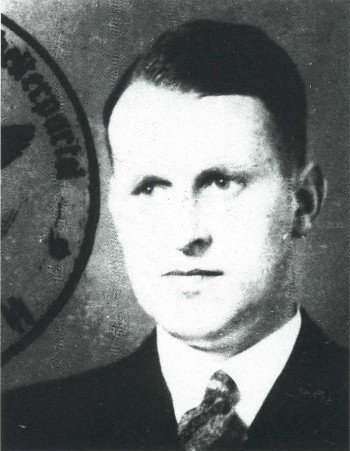
Hans Kammler (26 August 1901 – 9 May 1945) was an SS-Obergruppenführer responsible for Nazi civil engineering projects and its top secret V-weapons program. He oversaw the construction of various Nazi concentration camps, including Auschwitz, before being put in charge of the V-2 rocket and Emergency Fighter Programs towards the end of World War II. Kammler disappeared in May 1945 during the final days of the war, although conjecture about his capture or death remains.
Kammler was born in Stettin, German Empire (now Szczecin, Poland). In 1919, after volunteering for army service, he served in the Rossbach Freikorps. From 1919 to 1923, he studied civil engineering at the Technische Hochschule der Freien Stadt Danzig and Munich and was awarded his doctorate of engineering (Dr. Ing.) in November 1932, following some years of practical work in local building administration.
In 1931, Kammler joined the Nazi Party (NSDAP), where he held a variety of administrative positions after the Nazi government came to national power in 1933. Initially, he was head of the Aviation Ministry's building department. He joined the Schutzstaffel (SS) on 20 May 1933. In 1934, he was serving the Reich's Ministry as the leader of the Reichsbund der Kleingärtner und Kleinsiedler (Reich's federation of allotment gardeners and small home owners).
Committed to the Nazi cause, engineers like Kammler "saw no contradiction between notions of blood and soil and the methods of modern organization and technology." Historian Michael Thad Allen argues that Kammler wanted to place "the best means of modern organization" at the Nazis' disposal since he believed that National Socialism was a "necessary catalyst" for modern construction. For Kammler, the concepts of "modern technology, organization, and ideologies of German supremacy" were all interwoven.
Before joining Oswald Pohl's department at the SS Main Economic and Administrative Office (WVHA), Kammler had already been advising the SS Race and Settlement Main Office as a consultant. In June 1941, he joined the Waffen-SS. Due to Himmler's desire to increase the pace and scale of SS construction activities, Kammler was released as an adviser to the Reichskommissariat for the Reinforcement of Germandom, so his technical and managerial competencies could be exploited. In the person of Kammler, Allen writes, "technological competence and extreme Nazi fanaticism coexisted in the same man." Even Albert Speer—Adolf Hitler's chief architect—came to fear Kammler and placed him among "Himmler's most brutal and most ruthless henchmen." Kammler was known to scrutinise the education of his subordinates as well as their ideological commitment to National Socialism, which he factored into their duty assignments and promotions.
Immediately after being assigned to the WVHA, Kammler became Pohl's deputy, where he worked with SS-Gruppenführer Richard Glücks of Office D (Concentration Camps Inspectorate), and was also named Chief of Office C, which designed and constructed all the concentration and extermination camps. On 26 September 1941—just days after the announcement of the plan for Majdanek—Kammler ordered the construction of the largest of the camps at Auschwitz. On 19 December 1941, Kammler updated Himmler about the slow progress at both Auschwitz-Birkenau and Majdanek, remarking that construction was delayed due to the freezing weather, lack of materials, and insufficient manpower. By late March 1942, the systematic mass deportation of Jews to Auschwitz had begun.
Historian Nikolaus Wachsmann states that Kammler "was intimately involved in all the major building projects in Auschwitz." For instance, in his capacity within the WVHA, Kammler oversaw the installation of more efficient cremation facilities at Auschwitz-Birkenau when the Nazis converted it into an extermination camp. Under Kammler's supervision, new crematoria were planned during August 1942 at Birkenau to facilitate burning up to one-hundred twenty thousand corpses per month.
Kammler's construction unit Amtsgruppe C was involved in the razing of the Warsaw Ghetto from April 1943 onwards.
Hub AI
Hans Kammler AI simulator
(@Hans Kammler_simulator)
Hans Kammler
Hans Kammler (26 August 1901 – 9 May 1945) was an SS-Obergruppenführer responsible for Nazi civil engineering projects and its top secret V-weapons program. He oversaw the construction of various Nazi concentration camps, including Auschwitz, before being put in charge of the V-2 rocket and Emergency Fighter Programs towards the end of World War II. Kammler disappeared in May 1945 during the final days of the war, although conjecture about his capture or death remains.
Kammler was born in Stettin, German Empire (now Szczecin, Poland). In 1919, after volunteering for army service, he served in the Rossbach Freikorps. From 1919 to 1923, he studied civil engineering at the Technische Hochschule der Freien Stadt Danzig and Munich and was awarded his doctorate of engineering (Dr. Ing.) in November 1932, following some years of practical work in local building administration.
In 1931, Kammler joined the Nazi Party (NSDAP), where he held a variety of administrative positions after the Nazi government came to national power in 1933. Initially, he was head of the Aviation Ministry's building department. He joined the Schutzstaffel (SS) on 20 May 1933. In 1934, he was serving the Reich's Ministry as the leader of the Reichsbund der Kleingärtner und Kleinsiedler (Reich's federation of allotment gardeners and small home owners).
Committed to the Nazi cause, engineers like Kammler "saw no contradiction between notions of blood and soil and the methods of modern organization and technology." Historian Michael Thad Allen argues that Kammler wanted to place "the best means of modern organization" at the Nazis' disposal since he believed that National Socialism was a "necessary catalyst" for modern construction. For Kammler, the concepts of "modern technology, organization, and ideologies of German supremacy" were all interwoven.
Before joining Oswald Pohl's department at the SS Main Economic and Administrative Office (WVHA), Kammler had already been advising the SS Race and Settlement Main Office as a consultant. In June 1941, he joined the Waffen-SS. Due to Himmler's desire to increase the pace and scale of SS construction activities, Kammler was released as an adviser to the Reichskommissariat for the Reinforcement of Germandom, so his technical and managerial competencies could be exploited. In the person of Kammler, Allen writes, "technological competence and extreme Nazi fanaticism coexisted in the same man." Even Albert Speer—Adolf Hitler's chief architect—came to fear Kammler and placed him among "Himmler's most brutal and most ruthless henchmen." Kammler was known to scrutinise the education of his subordinates as well as their ideological commitment to National Socialism, which he factored into their duty assignments and promotions.
Immediately after being assigned to the WVHA, Kammler became Pohl's deputy, where he worked with SS-Gruppenführer Richard Glücks of Office D (Concentration Camps Inspectorate), and was also named Chief of Office C, which designed and constructed all the concentration and extermination camps. On 26 September 1941—just days after the announcement of the plan for Majdanek—Kammler ordered the construction of the largest of the camps at Auschwitz. On 19 December 1941, Kammler updated Himmler about the slow progress at both Auschwitz-Birkenau and Majdanek, remarking that construction was delayed due to the freezing weather, lack of materials, and insufficient manpower. By late March 1942, the systematic mass deportation of Jews to Auschwitz had begun.
Historian Nikolaus Wachsmann states that Kammler "was intimately involved in all the major building projects in Auschwitz." For instance, in his capacity within the WVHA, Kammler oversaw the installation of more efficient cremation facilities at Auschwitz-Birkenau when the Nazis converted it into an extermination camp. Under Kammler's supervision, new crematoria were planned during August 1942 at Birkenau to facilitate burning up to one-hundred twenty thousand corpses per month.
Kammler's construction unit Amtsgruppe C was involved in the razing of the Warsaw Ghetto from April 1943 onwards.
Recent media