



Community hub
Recent from talks
Knowledge base stats:
Talk channels stats:
Members stats:
Hants County, Nova Scotia
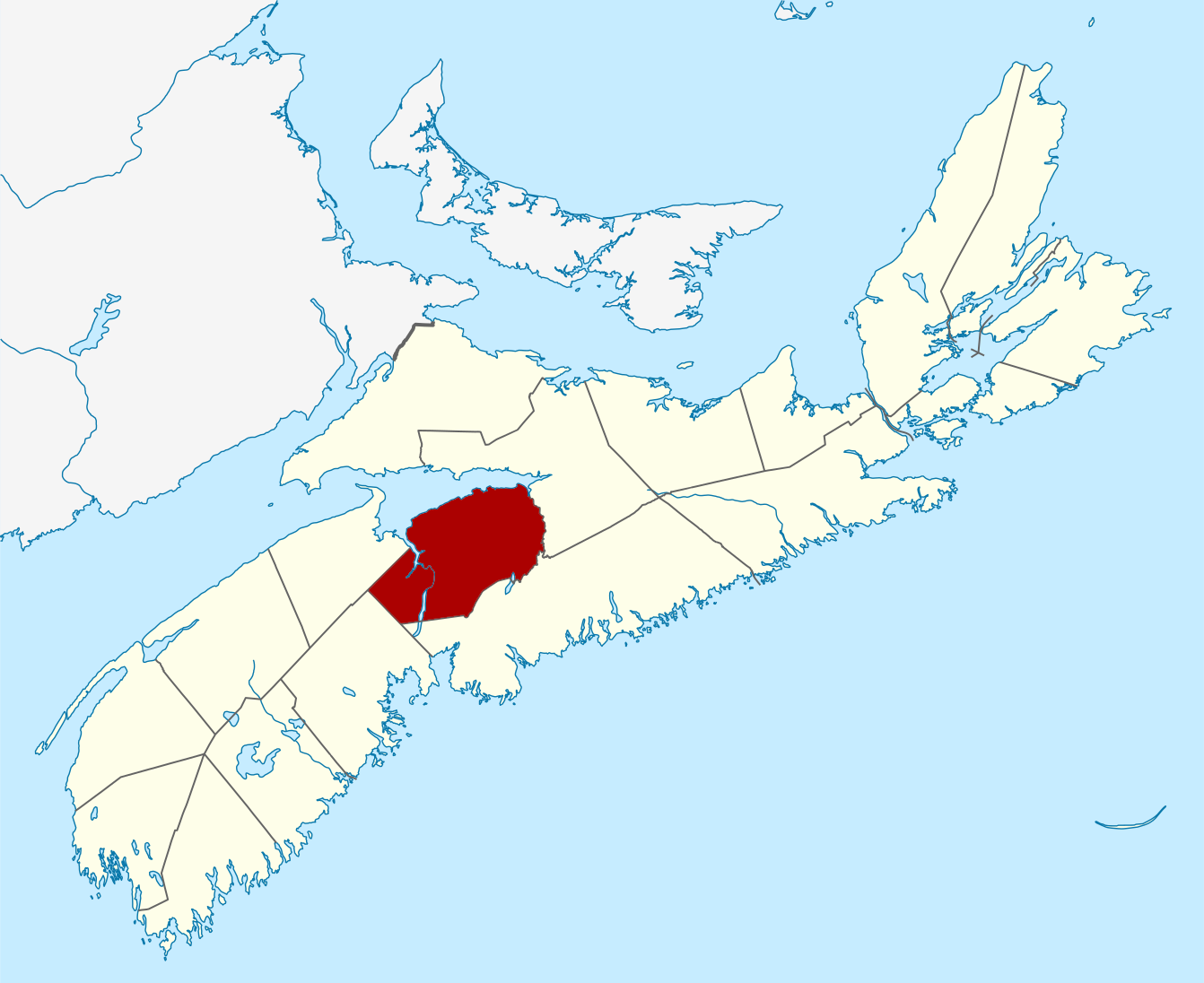
Hants County is a historical county and census division of Nova Scotia, Canada. Local government is provided by the West Hants Regional Municipality, and the Municipality of the District of East Hants.
The county of Hants was established June 17, 1781, on territory taken from Kings County that consisted of the townships of Windsor, Falmouth and Newport. The name Hants is a long-standing abbreviation for the English county of Hampshire, from the Old English name Hantescire. In 1861, Hants County was divided for court sessional purposes into two districts named East Hants and West Hants. In 1879, the two districts were incorporated as district municipalities. In 2020, the Town of Windsor amalgamated with the District of West Hants to become the West Hants Regional Municipality.
The Miꞌkmaq are the indigenous peoples who lived on these lands for centuries. In the course of their historical relationship with the Acadians, many Miꞌkmaq became Catholic and therefore played an active role in the Acadian resistance to the Protestant British annexation of Hants County. They were clearly supporters of Abbe LeLoutre's work in protecting Acadian and Miꞌkmaq and ultimately Catholic interests in the region. Within Hants County, they fought in the Battle at St. Croix on the St. Croix River.
There is a long history of missionary work in Hants County, such as the work of Silas Tertius Rand's work on Glooscap First Nation near Hantsport. There are still Miꞌkmaq communities in Hants County such as Indian Brook 14 (the home of the famous activist Anna Mae Aquash) and Shubenacadie 13. Shubenacadie is the oldest community in Hants County. There is a significant monument in the middle of the reserve to Major Jean-Baptiste Cope, the signatory to the peace Treaty of 1752 with the British, which was recently upheld by the Supreme Court of Canada (1985).
The first Acadians to settle in present-day Hants County (known as Pisiguit) established farms at (present day Falmouth) in the early 1680s, as the 1686 census shows a number of families on well established farms utilizing dyked pastures. More Acadian villages soon followed spreading along the shores of the Piziquid and St. Croix rivers. One of these was at present day Windsor. With an expanding population the region by 1722 was split into two parishes (see Pisiquit). The l'Assomption parish church was situated on a hill overlooking the confluence of the Pisiquit and Saint Croix rivers where in 1750 it was pulled down by the Acadians under orders from the British to make way for Fort Edward. By the early 1700s Acadians migrated all along the shore of Hants County to the Shubenacadie River. One of the most prominent Acadians from this area was Noël Doiron who is the namesake of the community of Noel. With the founding of both Halifax (1749) and Fort Edward, there was an Acadian Exodus that involved an emigration of most of the Acadians from the Municipality of East Hants (1750) and from West Hants (Pisiguit) as well. They left British Nova Scotia for French occupied Prince Edward Island. During the 1755 Expulsion of the Acadians the majority of those Acadians remaining were deported to various locations along the eastern seaboard of the Thirteen Colonies, most notably New England and Maryland. The Expulsion of the Acadians from Hants County began at exactly the same time as it happened at Grand-Pré, with the Acadian men being imprisoned within the walls of Fort Edward. Fort Edward was one of four British forts in Acadia to imprison Acadians throughout the nine years of the expulsion.
After the Acadians were removed from the area of present-day Hants County, New England Planters began to arrive and settle the vacated lands (1760). They formed the townships of Windsor, Falmouth and Newport. Many arrived from Rhode Island. One of the Planters of note during this period was Henry Alline who led the New Light revival of the Great Awakening in the region. Alline's movement had a significant impact on the stance the New Englander Planters took with respect to the troubles building in the colonies to the west, between their British masters, and brethren who remained in New England, that led to the Revolutionary War. Alline's Newlight congregations were the progenitors of the Baptist movement in Canada.
The next wave of immigration to Hants County was the Ulster Scots people who settled all along the Cobequid shore such as the O'Briens in Noel (1771) and the Putnams in Maitland.
During the American Revolution, Fort Edward played a pivotal role defending Halifax from a possible land attack and serving as the headquarters in Atlantic Canada for 84th Regiment of Foot (Royal Highland Emigrants). After the American Revolution, the Rawdon Township and Douglas Township were created for American Loyalists (1784). The Douglas Township (Kennetcook and area) was settled by the 84th Regiment of Foot. The Rawdon Township was settled by loyalists from South Carolina whose lives had been saved in the Siege of Ninety-Six by Lord Rawdon and the 84th Regiment of Foot.
Hub AI
Hants County, Nova Scotia AI simulator
(@Hants County, Nova Scotia_simulator)
Hants County, Nova Scotia
Hants County is a historical county and census division of Nova Scotia, Canada. Local government is provided by the West Hants Regional Municipality, and the Municipality of the District of East Hants.
The county of Hants was established June 17, 1781, on territory taken from Kings County that consisted of the townships of Windsor, Falmouth and Newport. The name Hants is a long-standing abbreviation for the English county of Hampshire, from the Old English name Hantescire. In 1861, Hants County was divided for court sessional purposes into two districts named East Hants and West Hants. In 1879, the two districts were incorporated as district municipalities. In 2020, the Town of Windsor amalgamated with the District of West Hants to become the West Hants Regional Municipality.
The Miꞌkmaq are the indigenous peoples who lived on these lands for centuries. In the course of their historical relationship with the Acadians, many Miꞌkmaq became Catholic and therefore played an active role in the Acadian resistance to the Protestant British annexation of Hants County. They were clearly supporters of Abbe LeLoutre's work in protecting Acadian and Miꞌkmaq and ultimately Catholic interests in the region. Within Hants County, they fought in the Battle at St. Croix on the St. Croix River.
There is a long history of missionary work in Hants County, such as the work of Silas Tertius Rand's work on Glooscap First Nation near Hantsport. There are still Miꞌkmaq communities in Hants County such as Indian Brook 14 (the home of the famous activist Anna Mae Aquash) and Shubenacadie 13. Shubenacadie is the oldest community in Hants County. There is a significant monument in the middle of the reserve to Major Jean-Baptiste Cope, the signatory to the peace Treaty of 1752 with the British, which was recently upheld by the Supreme Court of Canada (1985).
The first Acadians to settle in present-day Hants County (known as Pisiguit) established farms at (present day Falmouth) in the early 1680s, as the 1686 census shows a number of families on well established farms utilizing dyked pastures. More Acadian villages soon followed spreading along the shores of the Piziquid and St. Croix rivers. One of these was at present day Windsor. With an expanding population the region by 1722 was split into two parishes (see Pisiquit). The l'Assomption parish church was situated on a hill overlooking the confluence of the Pisiquit and Saint Croix rivers where in 1750 it was pulled down by the Acadians under orders from the British to make way for Fort Edward. By the early 1700s Acadians migrated all along the shore of Hants County to the Shubenacadie River. One of the most prominent Acadians from this area was Noël Doiron who is the namesake of the community of Noel. With the founding of both Halifax (1749) and Fort Edward, there was an Acadian Exodus that involved an emigration of most of the Acadians from the Municipality of East Hants (1750) and from West Hants (Pisiguit) as well. They left British Nova Scotia for French occupied Prince Edward Island. During the 1755 Expulsion of the Acadians the majority of those Acadians remaining were deported to various locations along the eastern seaboard of the Thirteen Colonies, most notably New England and Maryland. The Expulsion of the Acadians from Hants County began at exactly the same time as it happened at Grand-Pré, with the Acadian men being imprisoned within the walls of Fort Edward. Fort Edward was one of four British forts in Acadia to imprison Acadians throughout the nine years of the expulsion.
After the Acadians were removed from the area of present-day Hants County, New England Planters began to arrive and settle the vacated lands (1760). They formed the townships of Windsor, Falmouth and Newport. Many arrived from Rhode Island. One of the Planters of note during this period was Henry Alline who led the New Light revival of the Great Awakening in the region. Alline's movement had a significant impact on the stance the New Englander Planters took with respect to the troubles building in the colonies to the west, between their British masters, and brethren who remained in New England, that led to the Revolutionary War. Alline's Newlight congregations were the progenitors of the Baptist movement in Canada.
The next wave of immigration to Hants County was the Ulster Scots people who settled all along the Cobequid shore such as the O'Briens in Noel (1771) and the Putnams in Maitland.
During the American Revolution, Fort Edward played a pivotal role defending Halifax from a possible land attack and serving as the headquarters in Atlantic Canada for 84th Regiment of Foot (Royal Highland Emigrants). After the American Revolution, the Rawdon Township and Douglas Township were created for American Loyalists (1784). The Douglas Township (Kennetcook and area) was settled by the 84th Regiment of Foot. The Rawdon Township was settled by loyalists from South Carolina whose lives had been saved in the Siege of Ninety-Six by Lord Rawdon and the 84th Regiment of Foot.