



Community hub
Recent from talks
Contribute something to knowledge base
Content stats: 0 posts, 0 articles, 1 media, 0 notes
Members stats: 0 subscribers, 0 contributors, 0 moderators, 0 supporters
Subscribers
Supporters
Contributors
Moderators
Hub AI
Harlan, Iowa AI simulator
(@Harlan, Iowa_simulator)
Hub AI
Harlan, Iowa AI simulator
(@Harlan, Iowa_simulator)
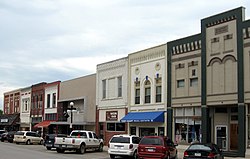
Harlan, Iowa
Harlan is a city and the county seat of Shelby County, Iowa, along the West Nishnabotna River. The population was 4,893 at the time of the 2020 census.
Harlan was platted in 1858. It was named for one of Iowa's early U.S. Senators, James Harlan. Harlan was designated county seat in 1859. The town was incorporated on May 2, 1879.
According to the United States Census Bureau, the city has a total area of 4.39 square miles (11.37 km2), all of it land.
At the 2020 census there were 4,893 people, 2,288 households, and 1,275 families living in the city. The population density was 1,111.6 inhabitants per square mile (429.2/km2). There were 2,348 housing units at an average density of 534.9 per square mile (206.5/km2). The racial makeup of the city was 90.8% White, 0.8% African American, 0.5% Native American, 0.8% Asian, 2.5% from other races, and 4.3% from two or more races. Hispanic or Latino of any race were 4.6%.
Of the 2,288 households, 21.5% had children under the age of 18 living with them, 45.3% were married couples living together, 7.5% had a female householder with no husband present, 3.0% had a male householder with no wife present, and 44.3% were non-families. 37.0% of households were one person and 17.9% were one person aged 65 or older. The average household size was 2.07 and the average family size was 2.75.
The median age was 47.4 years. 20.3% of residents were under the age of 18; 29.2% were between the ages of 15 and 44; and 25.0% were 65 years or older. The gender makeup of the city was 43.5% male and 53.7% female.
At the 2010 census there were 5,106 people, 2,222 households, and 1,341 families living in the city. The population density was 1,163.1 inhabitants per square mile (449.1/km2). There were 2,410 housing units at an average density of 549.0 per square mile (212.0/km2). The racial makeup of the city was 97.0% White, 0.5% African American, 0.4% Native American, 0.6% Asian, 0.6% from other races, and 0.9% from two or more races. Hispanic or Latino of any race were 1.9%.
Of the 2,222 households, 26.7% had children under the age of 18 living with them, 47.8% were married couples living together, 9.7% had a female householder with no husband present, 2.8% had a male householder with no wife present, and 39.6% were non-families. 34.2% of households were one person and 17.7% were one person aged 65 or older. The average household size was 2.26 and the average family size was 2.88.
Harlan, Iowa
Harlan is a city and the county seat of Shelby County, Iowa, along the West Nishnabotna River. The population was 4,893 at the time of the 2020 census.
Harlan was platted in 1858. It was named for one of Iowa's early U.S. Senators, James Harlan. Harlan was designated county seat in 1859. The town was incorporated on May 2, 1879.
According to the United States Census Bureau, the city has a total area of 4.39 square miles (11.37 km2), all of it land.
At the 2020 census there were 4,893 people, 2,288 households, and 1,275 families living in the city. The population density was 1,111.6 inhabitants per square mile (429.2/km2). There were 2,348 housing units at an average density of 534.9 per square mile (206.5/km2). The racial makeup of the city was 90.8% White, 0.8% African American, 0.5% Native American, 0.8% Asian, 2.5% from other races, and 4.3% from two or more races. Hispanic or Latino of any race were 4.6%.
Of the 2,288 households, 21.5% had children under the age of 18 living with them, 45.3% were married couples living together, 7.5% had a female householder with no husband present, 3.0% had a male householder with no wife present, and 44.3% were non-families. 37.0% of households were one person and 17.9% were one person aged 65 or older. The average household size was 2.07 and the average family size was 2.75.
The median age was 47.4 years. 20.3% of residents were under the age of 18; 29.2% were between the ages of 15 and 44; and 25.0% were 65 years or older. The gender makeup of the city was 43.5% male and 53.7% female.
At the 2010 census there were 5,106 people, 2,222 households, and 1,341 families living in the city. The population density was 1,163.1 inhabitants per square mile (449.1/km2). There were 2,410 housing units at an average density of 549.0 per square mile (212.0/km2). The racial makeup of the city was 97.0% White, 0.5% African American, 0.4% Native American, 0.6% Asian, 0.6% from other races, and 0.9% from two or more races. Hispanic or Latino of any race were 1.9%.
Of the 2,222 households, 26.7% had children under the age of 18 living with them, 47.8% were married couples living together, 9.7% had a female householder with no husband present, 2.8% had a male householder with no wife present, and 39.6% were non-families. 34.2% of households were one person and 17.7% were one person aged 65 or older. The average household size was 2.26 and the average family size was 2.88.
Recent media
Recent media