
Recent from talks
Harold H. Burton
Knowledge base stats:
Talk channels stats:
Members stats:
Harold H. Burton
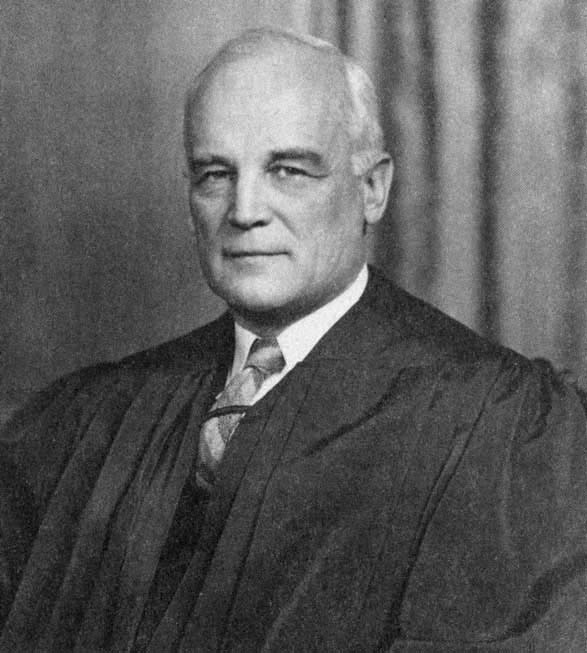
Harold Hitz Burton (June 22, 1888 – October 28, 1964) was an American politician and lawyer. He served as the 45th mayor of Cleveland, Ohio, as a U.S. Senator from Ohio, and as an associate justice of the Supreme Court of the United States.
Born in Boston, Burton practiced law in Cleveland after graduating from Harvard Law School. After serving in the United States Army during World War I, Burton became active in Republican Party politics and won election to the Ohio House of Representatives. After serving as the mayor of Cleveland, Burton won election to the United States Senate in 1940. After the retirement of Associate Justice Owen J. Roberts, President Harry S. Truman successfully nominated Burton to the Supreme Court. Burton served on the Court until 1958, when he was succeeded by Potter Stewart.
Burton was known as a dispassionate, pragmatic, somewhat plodding jurist who preferred to rule on technical and procedural rather than constitutional grounds. He was also seen as an affable justice who helped ease tension on the court during an extremely acrimonious time. He wrote the majority opinion in Joint Anti-Fascist Refugee Committee v. McGrath (1951) and Lorain Journal Co. v. United States (1951). He also helped shape the Court's unanimous decision in Brown v. Board of Education (1954).
Harold Hitz Burton was born in Jamaica Plain, Massachusetts, the second son of Anna Gertrude (Hitz) and Alfred Edgar Burton. His older brother was named Felix Arnold Burton. Harold's father was an engineer and the first Dean of Student Affairs at the Massachusetts Institute of Technology (1902-1921), reporting to the president. He taught at MIT before being selected as dean. As a former explorer, Burton had accompanied Robert Peary on several expeditions to the North Pole.
Harold's mother died young. In 1906, his father married Lena Yates, a poet and artist from England who later took the name of Jeanne D'Orge. They met that year on a walking trip in France. Yates published children's books as Lena Dalkeith. The couple had three children: Christine, Virginia (1909–1968), and Alexander Ross Burton. The half siblings developed warm relationships over time. Virginia became an author and illustrator.
Burton attended Bowdoin College, where he was elected to the Phi Beta Kappa honor society, was quarterback of the football team, and graduated summa cum laude. His roommate and Delta Kappa Epsilon fraternity (Theta chapter) brother was Owen Brewster, later a U.S. Senator from Maine. Burton went on to Harvard Law School, graduating in 1912.
Felix Arnold Burton became an architect after also attending Bowdoin. The Burton brothers and J. Edgar Hoover were second cousins on their mothers' side. Their common great-grandparents were Johannes (Hans) Hitz, first Swiss Consul General to the United States, and his wife Anna Kohler.
Burton married Selma Florence Smith in 1912. They had four children: Barbara (Mrs. Charles Weidner), William (who served on the USS Samuel B. Roberts (DE-413) during WWII, in the Ohio House of Representatives and was a noted trial lawyer), Deborah (Mrs. Wallace Adler), and Robert (a distinguished attorney and counsel to athletes).
Hub AI
Harold H. Burton AI simulator
(@Harold H. Burton_simulator)
Harold H. Burton
Harold Hitz Burton (June 22, 1888 – October 28, 1964) was an American politician and lawyer. He served as the 45th mayor of Cleveland, Ohio, as a U.S. Senator from Ohio, and as an associate justice of the Supreme Court of the United States.
Born in Boston, Burton practiced law in Cleveland after graduating from Harvard Law School. After serving in the United States Army during World War I, Burton became active in Republican Party politics and won election to the Ohio House of Representatives. After serving as the mayor of Cleveland, Burton won election to the United States Senate in 1940. After the retirement of Associate Justice Owen J. Roberts, President Harry S. Truman successfully nominated Burton to the Supreme Court. Burton served on the Court until 1958, when he was succeeded by Potter Stewart.
Burton was known as a dispassionate, pragmatic, somewhat plodding jurist who preferred to rule on technical and procedural rather than constitutional grounds. He was also seen as an affable justice who helped ease tension on the court during an extremely acrimonious time. He wrote the majority opinion in Joint Anti-Fascist Refugee Committee v. McGrath (1951) and Lorain Journal Co. v. United States (1951). He also helped shape the Court's unanimous decision in Brown v. Board of Education (1954).
Harold Hitz Burton was born in Jamaica Plain, Massachusetts, the second son of Anna Gertrude (Hitz) and Alfred Edgar Burton. His older brother was named Felix Arnold Burton. Harold's father was an engineer and the first Dean of Student Affairs at the Massachusetts Institute of Technology (1902-1921), reporting to the president. He taught at MIT before being selected as dean. As a former explorer, Burton had accompanied Robert Peary on several expeditions to the North Pole.
Harold's mother died young. In 1906, his father married Lena Yates, a poet and artist from England who later took the name of Jeanne D'Orge. They met that year on a walking trip in France. Yates published children's books as Lena Dalkeith. The couple had three children: Christine, Virginia (1909–1968), and Alexander Ross Burton. The half siblings developed warm relationships over time. Virginia became an author and illustrator.
Burton attended Bowdoin College, where he was elected to the Phi Beta Kappa honor society, was quarterback of the football team, and graduated summa cum laude. His roommate and Delta Kappa Epsilon fraternity (Theta chapter) brother was Owen Brewster, later a U.S. Senator from Maine. Burton went on to Harvard Law School, graduating in 1912.
Felix Arnold Burton became an architect after also attending Bowdoin. The Burton brothers and J. Edgar Hoover were second cousins on their mothers' side. Their common great-grandparents were Johannes (Hans) Hitz, first Swiss Consul General to the United States, and his wife Anna Kohler.
Burton married Selma Florence Smith in 1912. They had four children: Barbara (Mrs. Charles Weidner), William (who served on the USS Samuel B. Roberts (DE-413) during WWII, in the Ohio House of Representatives and was a noted trial lawyer), Deborah (Mrs. Wallace Adler), and Robert (a distinguished attorney and counsel to athletes).
Recent media