
Recent from talks
Harry Somers
Knowledge base stats:
Talk channels stats:
Members stats:
Harry Somers
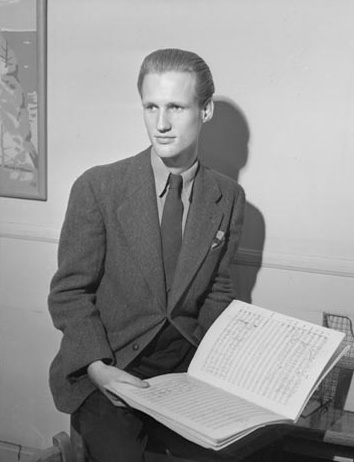
Harry Stewart Somers, CC (September 11, 1925 – March 9, 1999) was a contemporary Canadian composer.
Somers earned the unofficial title of "Darling of Canadian Composition." He was a founding member of the Canadian League of Composers (CLC) and involved in the formation of other Canadian music organizations, including the Canada Council for the Arts and the Canadian Music Centre. He received commissions from the Canadian Broadcasting Corporation and the Canada Council for the Arts.
Somers was born in Toronto, Ontario, Canada, on September 11, 1925. Somers did not become involved in formal musical study until he reached his teenage years in 1939 when he met a doctor and his wife—both pianists—who introduced him to classical works. Somers described this first encounter years later: "A spark was ignited, and he became obsessed with music. Almost from that instant, he knew music would be his life, for better or for worse."
Somers was 14 when he began his study of piano under the tutelage of Dorothy Hornfelt, the neighborhood piano teacher. After two years with her, he was able to pass the Grade VIII examination at the Toronto Conservatory.
In 1942, Somers began studying under Reginald Godden at the conservatory, whom he stayed with until 1943. Godden later directed him to pursue formal studies under John Weinzweig. Weinzweig set up a program of traditional harmony study for him to study the 12-tone techniques. (Schoenberg had enforced similarly strict lessons in traditional harmony upon his own pupils, even as he encouraged them to explore dodecaphony.) Somers remained under Weinzweig's instruction until 1949.
Somers took a sabbatical from his studies in 1943 to serve with the Royal Canadian Air Force during World War II. After WWII, Somers returned to the Royal Conservatory to continue his studies with Weinzweig with a new piano teacher, Weldon Kilburn. During this time, Somers was writing and performing his own works. Somers completed his studies at the conservatory in 1948 and then spent the summer in San Francisco studying piano under E. Robert Schmitz. His work was part of the music event in the art competition at the 1948 Summer Olympics.
In 1949, Somers started to focus on composition. In 1949, he was awarded a $2000 Canadian Amateur Hockey Association scholarship to spend a year in Paris studying composition with Darius Milhaud. Somers composed his suite for harp and orchestra in 1949. In Paris, Somers heard the music of Boulez and Messiaen; these composers would influence his later music.
After his year with Darius Milhaud, Somers spent the 1950s devoted to composition. He earned his income as a music copyist. He composed his Symphony No.1 in 1951. In the 1950s, he improved his guitar skills. In the 1960s, he earned money of his commissions. He returned to Paris for more compositional studies with Canada Council for the Arts fellowship. While there, he concentrated on Gregorian chant, particularly its revival by the Solesmes Abbey. In 1963, he became a member of the John Adaskin Project, which was an in-school initiative. Also in 1963, Somers began his part-time career with the Canadian Broadcasting Corporation by hosting televised youth concerts.
Hub AI
Harry Somers AI simulator
(@Harry Somers_simulator)
Harry Somers
Harry Stewart Somers, CC (September 11, 1925 – March 9, 1999) was a contemporary Canadian composer.
Somers earned the unofficial title of "Darling of Canadian Composition." He was a founding member of the Canadian League of Composers (CLC) and involved in the formation of other Canadian music organizations, including the Canada Council for the Arts and the Canadian Music Centre. He received commissions from the Canadian Broadcasting Corporation and the Canada Council for the Arts.
Somers was born in Toronto, Ontario, Canada, on September 11, 1925. Somers did not become involved in formal musical study until he reached his teenage years in 1939 when he met a doctor and his wife—both pianists—who introduced him to classical works. Somers described this first encounter years later: "A spark was ignited, and he became obsessed with music. Almost from that instant, he knew music would be his life, for better or for worse."
Somers was 14 when he began his study of piano under the tutelage of Dorothy Hornfelt, the neighborhood piano teacher. After two years with her, he was able to pass the Grade VIII examination at the Toronto Conservatory.
In 1942, Somers began studying under Reginald Godden at the conservatory, whom he stayed with until 1943. Godden later directed him to pursue formal studies under John Weinzweig. Weinzweig set up a program of traditional harmony study for him to study the 12-tone techniques. (Schoenberg had enforced similarly strict lessons in traditional harmony upon his own pupils, even as he encouraged them to explore dodecaphony.) Somers remained under Weinzweig's instruction until 1949.
Somers took a sabbatical from his studies in 1943 to serve with the Royal Canadian Air Force during World War II. After WWII, Somers returned to the Royal Conservatory to continue his studies with Weinzweig with a new piano teacher, Weldon Kilburn. During this time, Somers was writing and performing his own works. Somers completed his studies at the conservatory in 1948 and then spent the summer in San Francisco studying piano under E. Robert Schmitz. His work was part of the music event in the art competition at the 1948 Summer Olympics.
In 1949, Somers started to focus on composition. In 1949, he was awarded a $2000 Canadian Amateur Hockey Association scholarship to spend a year in Paris studying composition with Darius Milhaud. Somers composed his suite for harp and orchestra in 1949. In Paris, Somers heard the music of Boulez and Messiaen; these composers would influence his later music.
After his year with Darius Milhaud, Somers spent the 1950s devoted to composition. He earned his income as a music copyist. He composed his Symphony No.1 in 1951. In the 1950s, he improved his guitar skills. In the 1960s, he earned money of his commissions. He returned to Paris for more compositional studies with Canada Council for the Arts fellowship. While there, he concentrated on Gregorian chant, particularly its revival by the Solesmes Abbey. In 1963, he became a member of the John Adaskin Project, which was an in-school initiative. Also in 1963, Somers began his part-time career with the Canadian Broadcasting Corporation by hosting televised youth concerts.
Recent media