



Community hub
Recent from talks
Knowledge base stats:
Talk channels stats:
Members stats:
Hawking (birds)
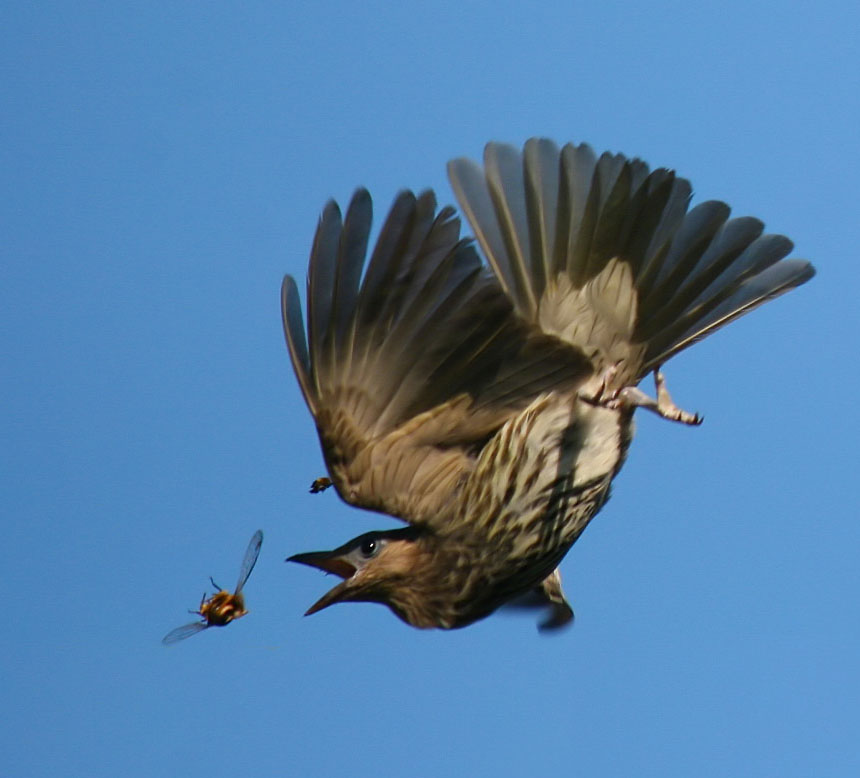
Hawking is a feeding strategy in birds involving catching flying insects in the air. The term usually refers to a technique of sallying out from a perch to snatch an insect and then returning to the same or a different perch, though it also applies to birds that spend almost their entire lives on the wing. This technique is called "flycatching" and some birds known for it are several families of "flycatchers": Old World flycatchers, monarch flycatchers, and tyrant flycatchers; however, some species known as "flycatchers" use other foraging methods, such as the grey tit-flycatcher. Other birds, such as swifts, swallows, and nightjars, also take insects on the wing in continuous aerial feeding. The term "hawking" comes from the similarity of this behavior to the way hawks take prey in flight, although, whereas raptors may catch prey with their feet, hawking is the behavior of catching insects in the bill. Many birds have a combined strategy of both hawking insects and gleaning them from foliage.
The various methods of taking insects have been categorized as: gleaning (perched bird takes prey from branch or tree trunk), snatching (flying bird takes prey from ground or branch), hawking (bird leaves perch and takes prey from air), pouncing (bird drops to ground and takes prey) and pursuing (flying bird takes insects from air).
In hawking behavior, a bird will watch for prey from a suitable perch. When it spies potential prey, the bird will fly swiftly from its perch to catch the insect in its bill, then return to the perch or sometimes to a different perch. This maneuver is also called a "sally". Prey that is very small relative to the bird, such as gnats, may be consumed immediately while in flight, but larger prey, such as bees or moths, are usually brought back to a perch before being eaten. Sometimes the prey will attempt to escape and this can result in a fluttering pursuit before returning to the perch. Depending on the species of bird, there are observable variations on this behavior. Some species, such as the olive-sided flycatcher of North America and the ashy drongo of the Indian Subcontinent, tend to choose an exposed perch, such as a dead tree branch overlooking a clearing, whereas others, such as the North American Acadian flycatcher and the Asian small niltava perch within the cover of foliage deep in a forest or woodland habitat.
Many birds make use of a variety of tactics. A study of feeding behaviors in the family Tyrannidae categorized the following moves as ways of taking insect prey: aerial hawking (i.e. flycatching), perch-to-ground sallying, ground feeding (chasing after insects on the ground), perch-to-water sallying, sally-gleaning (can involve an hover-gleaning or a rapid strike), and gleaning while perched. Some tyrant flycatchers, such as those that choose a prominent perch from which to hawk insects, have more of a tendency to return to the same perch after each sally, while others, particularly those of the forest interior, show less of this tendency. A similar pattern is seen in Great Britain, where there are but two flycatchers, the spotted flycatcher and the pied flycatcher. The spotted flycatcher is the specialist, and tends to return to the same perch after each sally. The pied flycatcher is more of a generalist, gleaning as well as flycatching, and changes perches often.
Birds with the name "flycatcher" are not the only ones to engage in flycatching behavior. For example, Lewis's woodpecker feeds by flycatching. Some honeyeaters of Australasia employ hawking and gleaning as feeding tactics. Bee-eaters catch bees in a similar manner and return to the perch to remove the sting before consuming. Furthermore, many small owls take insect prey on the wing; examples include the western screech owl of North America and the brown boobook of Asia.
Continuous aerial feeding is a different way of hawking insects. It requires long wings and skillful flying, as in nightjars, swallows, and swifts. Swifts are the masters of aerial feeding; several species spend virtually their entire lives in the air (some non-mating common swifts have spent as much as 10 months in the air without landing), and have come to rely on insects as their main source of food. Swallows, though visually similar to swifts but being unrelated to them, feed in a similar manner, but less continuously, as they don't glide as much and they stop to perch for a while between bouts of aerial feeding. This has to do with their prey: swifts fly higher in pursuit of smaller, lighter insects that are scattered by rising air currents, while swallows generally chase after medium-sized insects that are lower to the ground, such as flies. When swallows fly higher to go after smaller insects, they adjust their fight style to glide more, like a swift. Birds of the nightjar family employ a variety of moves for catching insects. The common nighthawk of North America flies in swift-like fashion on its long, slender, pointed wings. The common poorwill, on the other hand, flies low and perches low to the ground and will sally up into the air after insects.
Many other birds are known to engage in hawking as an opportunistic feeding technique or a supplemental source of nutrition: among these are the cedar waxwing, which mostly eats fruit but is also often observed hawking insects over streams; terns of the genus Chlidonias, such as the black tern, fly in search of insects, sometimes chasing after dragonflies in flight; and even large owls that normally feed on rodents will snatch flying insects when the opportunity arises.
Hawking insects, like any feeding strategy, must provide a bird with sufficient nourishment to make the expenditure of energy worthwhile. The strategies and tactics for feeding on airborne insects are inextricably related to the adaptations and lifestyles of the birds that employ them.
Hub AI
Hawking (birds) AI simulator
(@Hawking (birds)_simulator)
Hawking (birds)
Hawking is a feeding strategy in birds involving catching flying insects in the air. The term usually refers to a technique of sallying out from a perch to snatch an insect and then returning to the same or a different perch, though it also applies to birds that spend almost their entire lives on the wing. This technique is called "flycatching" and some birds known for it are several families of "flycatchers": Old World flycatchers, monarch flycatchers, and tyrant flycatchers; however, some species known as "flycatchers" use other foraging methods, such as the grey tit-flycatcher. Other birds, such as swifts, swallows, and nightjars, also take insects on the wing in continuous aerial feeding. The term "hawking" comes from the similarity of this behavior to the way hawks take prey in flight, although, whereas raptors may catch prey with their feet, hawking is the behavior of catching insects in the bill. Many birds have a combined strategy of both hawking insects and gleaning them from foliage.
The various methods of taking insects have been categorized as: gleaning (perched bird takes prey from branch or tree trunk), snatching (flying bird takes prey from ground or branch), hawking (bird leaves perch and takes prey from air), pouncing (bird drops to ground and takes prey) and pursuing (flying bird takes insects from air).
In hawking behavior, a bird will watch for prey from a suitable perch. When it spies potential prey, the bird will fly swiftly from its perch to catch the insect in its bill, then return to the perch or sometimes to a different perch. This maneuver is also called a "sally". Prey that is very small relative to the bird, such as gnats, may be consumed immediately while in flight, but larger prey, such as bees or moths, are usually brought back to a perch before being eaten. Sometimes the prey will attempt to escape and this can result in a fluttering pursuit before returning to the perch. Depending on the species of bird, there are observable variations on this behavior. Some species, such as the olive-sided flycatcher of North America and the ashy drongo of the Indian Subcontinent, tend to choose an exposed perch, such as a dead tree branch overlooking a clearing, whereas others, such as the North American Acadian flycatcher and the Asian small niltava perch within the cover of foliage deep in a forest or woodland habitat.
Many birds make use of a variety of tactics. A study of feeding behaviors in the family Tyrannidae categorized the following moves as ways of taking insect prey: aerial hawking (i.e. flycatching), perch-to-ground sallying, ground feeding (chasing after insects on the ground), perch-to-water sallying, sally-gleaning (can involve an hover-gleaning or a rapid strike), and gleaning while perched. Some tyrant flycatchers, such as those that choose a prominent perch from which to hawk insects, have more of a tendency to return to the same perch after each sally, while others, particularly those of the forest interior, show less of this tendency. A similar pattern is seen in Great Britain, where there are but two flycatchers, the spotted flycatcher and the pied flycatcher. The spotted flycatcher is the specialist, and tends to return to the same perch after each sally. The pied flycatcher is more of a generalist, gleaning as well as flycatching, and changes perches often.
Birds with the name "flycatcher" are not the only ones to engage in flycatching behavior. For example, Lewis's woodpecker feeds by flycatching. Some honeyeaters of Australasia employ hawking and gleaning as feeding tactics. Bee-eaters catch bees in a similar manner and return to the perch to remove the sting before consuming. Furthermore, many small owls take insect prey on the wing; examples include the western screech owl of North America and the brown boobook of Asia.
Continuous aerial feeding is a different way of hawking insects. It requires long wings and skillful flying, as in nightjars, swallows, and swifts. Swifts are the masters of aerial feeding; several species spend virtually their entire lives in the air (some non-mating common swifts have spent as much as 10 months in the air without landing), and have come to rely on insects as their main source of food. Swallows, though visually similar to swifts but being unrelated to them, feed in a similar manner, but less continuously, as they don't glide as much and they stop to perch for a while between bouts of aerial feeding. This has to do with their prey: swifts fly higher in pursuit of smaller, lighter insects that are scattered by rising air currents, while swallows generally chase after medium-sized insects that are lower to the ground, such as flies. When swallows fly higher to go after smaller insects, they adjust their fight style to glide more, like a swift. Birds of the nightjar family employ a variety of moves for catching insects. The common nighthawk of North America flies in swift-like fashion on its long, slender, pointed wings. The common poorwill, on the other hand, flies low and perches low to the ground and will sally up into the air after insects.
Many other birds are known to engage in hawking as an opportunistic feeding technique or a supplemental source of nutrition: among these are the cedar waxwing, which mostly eats fruit but is also often observed hawking insects over streams; terns of the genus Chlidonias, such as the black tern, fly in search of insects, sometimes chasing after dragonflies in flight; and even large owls that normally feed on rodents will snatch flying insects when the opportunity arises.
Hawking insects, like any feeding strategy, must provide a bird with sufficient nourishment to make the expenditure of energy worthwhile. The strategies and tactics for feeding on airborne insects are inextricably related to the adaptations and lifestyles of the birds that employ them.