Hubbry Logo
HawkHawkMain
Open search
Hawk
Community hub
Hawk
logo
8 pages, 0 posts
0 subscribers
Be the first to start a discussion here.
Contribute something
Hawk
Hawk
from Wikipedia

Hawk
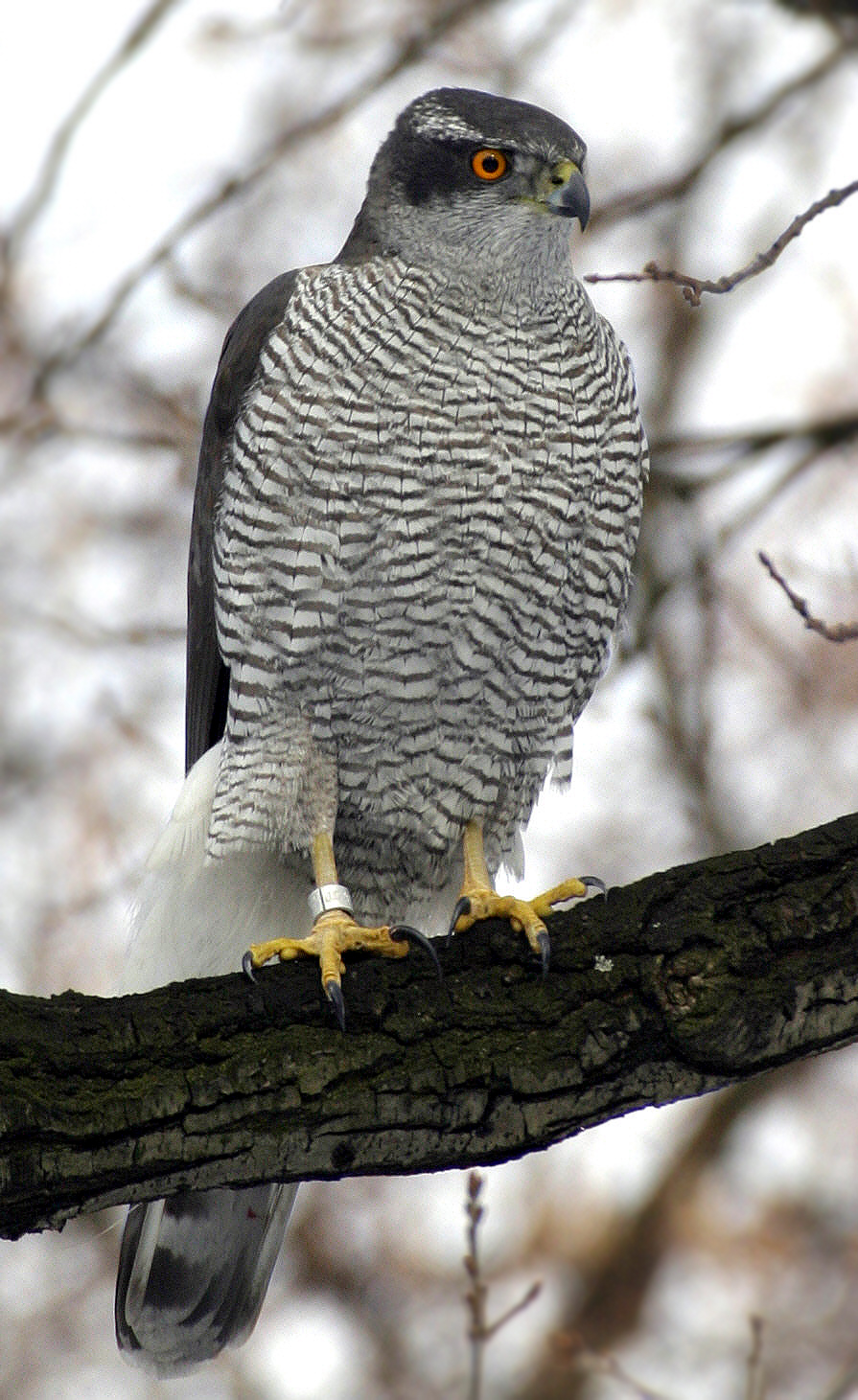
Adult Eurasian goshawk
Scientific classificationEdit this classification
Kingdom: Animalia
Phylum: Chordata
Class: Aves
Order: Accipitriformes
Family: Accipitridae
Sharp-shinned hawk, a small member of the Accipitrinae subfamily

Hawks are birds of prey of the family Accipitridae. They are very widely distributed and are found on all continents, except Antarctica.[1]

The subfamily Accipitrinae includes goshawks, sparrowhawks, sharp-shinned hawks, and others. This subfamily are mainly woodland birds with short broad wings, long tails, and high visual acuity. They hunt by dashing suddenly from a concealed perch.[2]

In the United States, members of the Buteo group are also called hawks, though birds of this group are called buzzards in other parts of the world. Generally, buteos have broad wings and sturdy builds. They are relatively larger-winged and shorter-tailed than accipiters, and fly further distances in open areas. Buteos descend or pounce on their prey rather than engaging in fast, horizontal pursuit.

The terms accipitrine hawk and buteonine hawk are used to distinguish between the types in regions where hawk applies to both. The term "true hawk" is sometimes used for the accipitrine hawks in regions where buzzard is preferred for the buteonine hawks.

All these groups are members of the family Accipitridae, which includes hawks and buzzards as well as kites, harriers, and eagles. To confuse things further, some authors use "hawk" generally for any small to medium Accipitrid that is not an eagle.[3]

A Red-tailed hawk (Buteo jamaicensis), a member of the Buteo group

The common names of some birds include the term "hawk", reflecting traditional usage rather than taxonomy. For example, some people call an osprey a "fish hawk" or a peregrine falcon a "duck hawk".

History

[edit]

Falconry was once called "hawking", and any bird used for falconry could be referred to as a hawk.[4]

Aristotle listed eleven types of ἱέρακες (hierakes, hawks; singular ἱέραξ, hierax): aisalōn (merlin), asterias, hypotriorchēs, kirkos, leios, perkos, phassophonos, phrynologos, pternis, spizias, and triorchēs. Pliny numbered sixteen kinds of hawks, but named only aigithos, epileios, kenchrēïs (kestrel), kybindis, and triorchēs (buzzard).[5]

Groups

[edit]

Accipiterine group

[edit]

Accipitrine hawks generally hunt other birds as their primary prey and thus are sometimes called "hen-hawks". Similarly, they are sometimes called "wood-hawks" because of their woodland habitat. Though they are also known as "true hawks" With most being called "sparrowhawks" or "goshawks" with the both being named such because of them hunting small birds (like sparrow) and large water-fowl (like goose) respectively

The subfamily Accipitrinae contains the genus Accipiter as well as the genera Micronisus (Gabar goshawk), Urotriorchis (long-tailed hawk), and Megatriorchis (Doria's goshawk). Melierax (chanting goshawk) may be included in the subfamily or given a subfamily of its own.

Erythrotriorchis (red- and chestnut-shouldered goshawk) is traditionally included in Accipitridae, but is possibly a convergent genus from an unrelated group (see red goshawk taxonomy).

Buteonine group

[edit]

The "Buteonine group" includes genera Buteo, Parabuteo, Geranoetus, and most of Leucopternis. Members of this group have also been called "hawk-buzzards".[6]

The proposed new genera Morphnarchus, Rupornis, and Pseudastur would be formed from members of Buteo and Leucopternis.[7]

Members of the "Buteogallus group" are also called hawks, with the exception of solitary eagle species. Buteo is the type genus of the subfamily Buteoninae. This subfamily traditionally includes eagles and sea-eagles, but Lerner and Mindell (2005)[8] proposed placing them into separate the subfamilies Aquilinae and Haliaaetinae. This would leave only the buteonine hawks/buzzards in Buteoninae.

Characteristics

[edit]

Intelligence

[edit]

In February 2005, Canadian ornithologist Louis Lefebvre announced a method of measuring avian "IQ" by measuring their innovation in feeding habits. Based on this scale, hawks were named among the most intelligent birds.[9]

Eyesight

[edit]

Hawks, like most birds, are tetrachromats with four types of colour receptors in the eye. Unlike some birds, but similar to other diurnal raptors, most hawk species are violet-sensitive but cannot perceive ultraviolet light.[10] Hawks also have relatively high visual acuity – the distance at which they can resolve an image – with red-tailed hawks reported to have 16.8 cycles per degree.[11] This is due to the large number of photoreceptors in the retina (up to 1,000,000 per square mm in Buteo, compared to 200,000 in humans), a high number of nerves connecting these receptors to the brain, and an indented fovea, which magnifies the central portion of the visual field.[12][13][14] Hawks additionally have two foveae (depressions in the retina with high photoreceptor density) in each eye, one centrally-placed and the other temporally-placed.[15] Finally, the eyeball is elongated, placing the lens far from the retina and giving a long focal length.[16]

Migration

[edit]

Like most birds, hawks migrate in the autumn and the spring. The autumn migration season begins in August and ends mid-December, and different types of hawk choose different times in each season to migrate. Some migration distances are longer than others, and birds traveling longer distances tend to depart in early autumn while those traveling shorter distances start much later. Studies have shown that it is better for a hawk to arrive at its destination as early as possible to have first pick of mates, territory, food, and other resources.[17]

There are a variety of factors impacting the strategy and success of a hawk's migration. Kerlinger states that a bird has more body fat when it begins its migration than when it arrives at its destination. Thus, the more fat a bird has when it begins its migration, the better its chances of making the trip safely. Flight path is another important factor in migration because a bird's route can greatly affect the conditions it encounters during its journey. For example, wind direction and speed can either throw the bird off course or push it in the right direction.[18] Due to the relative variability of air conditions over large bodies of water and the resulting impact on safety, hawks tend to avoid any large bodies of water while migrating by detouring around lakes or flying along coasts.[19]

Hawkwatching is a citizen scientist activity that monitors hawk migration and provides data to the scientific community.

Habitat and distribution

[edit]

The red-tailed hawk is probably the most common hawk in North America.[20]

Past observations have indicated that, while hawks can easily adapt to most environments, they prefer open habitats such as deserts and fields, likely because it is easier to spot prey. As they are able to live anywhere, they can also be found in mountainous plains and tropical, moist areas such as Central America, the West Indies, and Jamaica.[21]

Behavior

[edit]
Perch Hunting. This perching hawk located, captured and returned with prey at sunset

Parents feed young hawks from early in their lives until they leave the nest.[22] Young hawks, while still in the fledgling phase, will leave their nests as early as six weeks old, but they do not hunt until they are older. Like most birds of prey, hawks kill their prey with their talons. Hawks usually prefer hunting just before nightfall when daylight lessens.[17] Although hawks are known for being violent predators, some are gentle and quiet.[citation needed]

Hawks fly by flapping their wings rapidly then relying on momentum to glide through the air.[19] Like other birds, they are known to form flocks when migrating, which improves survival rates over traveling alone. Flocks of birds, especially hawks, are sometimes called "kettles" in the United States.[non sequitur][18]: 215–16 

Reproduction

[edit]

Hawks are known for their unique mating season and means of reproduction.

Some species of hawk are monogamous and have one partner their whole lives. The male and female of a mating pair build their nest before mating season then improve it throughout nesting season. They usually do this before mating.[19]

Hawks have a striking mating ritual. First, a male and a female fly together in a circular motion. Once they reach a certain height, the male dives toward the female before ascending back to that height. The two birds repeat this until the male latches onto the female, and they begin to free-fall towards the ground.

In one year, a female hawk will lay about five eggs. Both the male and the female guard and care for the eggs for about a month until they hatch.[22]

Diet

[edit]
Red-tailed hawk removing fur from a rodent before eating it, Mission Peak Regional Preserve, California

Hawks feed on a variety of smaller animals such as snakes, lizards, fish, mice, rabbits, squirrels, birds, or any other type of small game that is found on the ground.[22] As an example, red-shouldered hawks eat smaller birds like doves as well as bugs like grasshoppers and crickets.[19]

In culture

[edit]

The term war hawk, or simply hawk, is used in politics to describe someone perceived as favoring war. The term reportedly originated in the United States during the 1810 debates in Congress over a possible war with Great Britain. Congressman John Randolph is said to have referred to Henry Clay's pro-war faction as the "war-hawks".[23] Those who are politically opposed to war or philosophically advocate peace are referred to as doves.

Numerous sporting clubs, such as the Atlanta Hawks, the Hawthorn Hawks, and the Malmö Redhawks, use the bird as an emblem. The sports teams of Miami University in Oxford, Ohio officially became known as the RedHawks in 1997 after changing the name from Redskins. The sports teams of Saint Joseph's University in Philadelphia use the Hawk as an emblem for sports teams as well for students and graduates. The University of Iowa uses the name Hawkeyes for their sports teams. Although the name "Hawkeyes" is not derived from a hawk, they have Herky the Hawk as their mascot and a hawk head as their team logo.

Mughal Emperor Aurangzeb holding a hawk in his darbar

Hawks are strongly associated with Guru Gobind Singh in the Sikh community. He is believed to have kept a white Northern Goshawk. As a result, the Northern Goshawk was made the official state bird of Punjab, India.[24][25][26][27]

In Korea, from the early Joseon period, hawks and other birds of prey were associated with a branch of government known as the Imperial Censorate, suggesting the qualities of courage and a keen sense of justice. Artists such as Chŏng Hongnae specialised in portraying hawks for royalty, and his Hawk at Sunrise is in the collection of the Metropolitan Museum of Art.[28]

References

[edit]
[edit]
Revisions and contributorsEdit on WikipediaRead on Wikipedia
from Grokipedia

Hawks are diurnal primarily within the family , characterized by broad wings, hooked beaks, strong talons, and exceptional vision enabling them to hunt from perches or in flight. They are distinguished from falcons by their method of killing prey through squeezing with talons rather than biting the neck, and from eagles by their generally smaller size and more agile flight suited to or open pursuits.
Found on every continent except , hawks occupy diverse s from forests to grasslands, with like the (Buteo jamaicensis) being among the most common and adaptable in , often perching conspicuously to scan for and other small vertebrates. As apex or mesopredators, they play a key role in maintaining ecological balance by controlling populations of pests such as mice and sparrows, demonstrating remarkable adaptability that has allowed many to thrive near settlements despite habitat pressures. Notable genera include Accipiter (goshawks and sparrowhawks, agile forest hunters) and (soaring buzzard-like hawks), with over 200 exhibiting varied from cryptic browns to striking markings for and display.

Definition and Taxonomy

Etymology and Common Usage

The English word "hawk" derives from Old English hafoc, denoting a employed in or . This term traces to Proto-Germanic *habukaz, cognate with haukr, habuh, and Dutch hauk, reflecting a shared Germanic linguistic heritage for raptorial birds. The *kap- or similar, implying "to " or "seize," aligns with the bird's predatory talons and method of capturing prey mid-flight or from a . In ornithological contexts, "hawk" typically refers to diurnal in the family , encompassing genera like Accipiter (e.g., goshawks and sparrowhawks, known for woodland ambushes) and Buteo (e.g., buzzards, often termed hawks in the for their soaring hunts). The designation excludes larger eagles, scavenging vultures, and falcons of the separate family, which employ distinct aerial techniques like stooping dives. This usage emphasizes medium-sized raptors adapted for active predation on vertebrates and , though vernacular application can extend loosely to other small-to-medium accipitrids or even non-accipitrids in regional dialects. Historically tied to since medieval , where "hawk" specified certain trainable distinct from "falcons," the term's modern scope reflects taxonomic refinements post-18th-century Linnaean , prioritizing ecological roles over strict phylogeny. In , common names like "" for Buteo jamaicensis—a widespread soarer preying on —exemplify prevalent usage, with over 20 so designated by authorities like the Cornell Lab of .

Taxonomic Classification

Hawks constitute a grouping of diurnal primarily within the family , which encompasses over 250 species distributed across approximately 70 genera worldwide. This family is classified under the order , characterized by hooked beaks, strong talons, and keen vision adapted for predation. The higher taxonomic ranks for Accipitridae members are as follows:
  • Kingdom: Animalia
  • Phylum: Chordata
  • Class: Aves
  • Order: Accipitriformes
  • Family: Accipitridae
Within Accipitridae, the term "hawk" informally applies to species in multiple subfamilies and genera, reflecting morphological and behavioral similarities rather than strict monophyly. The subfamily Accipitrinae, often termed "true hawks," includes the genus Accipiter with species such as the northern goshawk (Accipiter gentilis) and sharp-shinned hawk (Accipiter striatus), noted for their agile flight and woodland hunting. Other hawk-like raptors fall under the genus Buteo, exemplified by the red-tailed hawk (Buteo jamaicensis), which features broad wings suited for soaring. This polyphyletic usage distinguishes hawks from larger eagles or specialized kites and harriers within the same family.

Evolutionary History

The family , which includes hawks as well as eagles, kites, and harriers, traces its origins to the early Eocene epoch, approximately 56–47 million years ago, based on remains from the Egem site in consisting of a and two ungual phalanges attributed to an early accipitrid. The fossil record of the group becomes more substantial from the late Eocene onward, around 35 million years ago, with remains indicating forms similar to modern buzzards and other buteonine hawks, though these early taxa lacked the full suite of specialized predatory traits seen today. Phylogenetic analyses place the divergence of Accipitridae from other accipitriform lineages, such as ospreys and secretarybirds, in the early , following the Cretaceous-Paleogene that reshaped avian diversification among theropod descendants. By the , around 30–31 million years ago, small hawk-like diurnal raptors had emerged, as evidenced by Aviraptor longicrus from Menilitic deposits in —a long-legged form with affinities to early , highlighting nascent diversity in body size and limb proportions adapted for agile predation. This period marks increasing specialization within the family, with fossils from and showing transitions toward the hooked beaks, reversed hind toes, and powerful talons characteristic of modern hawks. Genomic studies of extant raptors identify convergent evolutionary signatures in genes linked to enhanced (e.g., expansions) and skeletal robusticity, which likely arose incrementally from Eocene ancestors to support aerial hunting strategies. The subfamily (true hawks, including genera like and ) underwent significant radiation during the epoch, 23–5 million years ago, coinciding with global cooling and that favored woodland and open-country predators. evidence of buteonine hawks, such as the oldest record of Buteo from the late of , confirms the establishment of modern genera by this time, with adaptations for soaring and perch-hunting reflecting responses to expanding grasslands. Migration behaviors, a key life-history trait in many hawk species, evolved polyphyletically within Accipitrinae during the middle , driven by biogeographic shifts and seasonal resource availability rather than a single origin. Overall, the evolutionary trajectory of hawks emphasizes iterative refinements in predatory morphology amid paleoenvironmental changes, with no evidence of major post- innovations in core anatomical features.

Physical Characteristics

Morphology and Adaptations

Hawks in the family display a morphology typified by diurnal , featuring broad wings, a hooked with a waxy cere at its base, strong legs, and sharp talons. These structures support their predatory lifestyle, with the beak designed for tearing flesh and the talons for grasping prey. is typically in shades of brown, gray, black, or white, often providing against forest or open terrains. Morphological variations occur across genera; buteos such as the red-tailed hawk (Buteo jamaicensis) have broad, rounded wings spanning up to 1.4 meters, enabling efficient soaring on thermal updrafts to scan large areas for prey with minimal energy expenditure. In contrast, accipiters like Cooper's hawk (Accipiter cooperii), measuring 36-50 cm in length, possess shorter, rounded wings and a long tail for enhanced maneuverability during high-speed pursuits through dense vegetation. Key adaptations include powerful, curved talons that pierce and immobilize , complemented by muscular legs capable of exerting significant force. Some exhibit a reversible tarsus, allowing the foot to flex in ways that facilitate secure perching on branches or prey. These traits, evolved for precise strikes, underscore the family's specialization in aerial predation across diverse habitats.

Sensory Abilities

Hawks possess exceptionally acute vision adapted for detecting and pursuing prey from afar. Diurnal raptors like hawks feature large eyes relative to body size, with a high density of photoreceptors enabling tetrachromatic that includes sensitivity, surpassing human trichromatic capabilities. This allows discrimination of fine color details, as evidenced by Harris's hawks (Parabuteo unicinctus) achieving chromatic approximately twice that of humans when resolving red-green patterns. Anatomical adaptations include a deep central fovea for high-resolution forward vision during dives and a shallower temporal fovea for lateral scanning, supporting both acuity in bright and motion detection. in hawks typically ranges from 2 to 3 times human levels, permitting detection of small prey like from distances up to 1-2 kilometers under optimal conditions. Hearing in hawks is acute but secondary to vision, with sensitivity peaked in the 1-5 kHz range suitable for localizing rustling prey or distress calls. Unlike nocturnal raptors such as , hawks lack specialized asymmetrical ear structures for precise vertical localization, relying instead on visual cues for strike accuracy. Olfaction plays a minimal role in hawk foraging, as most accipitrids exhibit reduced size and limited sensitivity compared to vultures, with vision and hearing dominating sensory . Taste perception is present but rudimentary, aiding in prey assessment post-capture rather than detection.

Ecology and Distribution

Habitats and Global Range

Hawks, encompassing various genera within the family , exhibit a , occurring on all continents except and extending to numerous oceanic island groups. This near-global presence reflects their adaptability to diverse environmental conditions, with over 250 species documented across temperate, tropical, and subtropical regions. For instance, species in the genus (buzzards or typical hawks) are prevalent in the , , , and , while species (goshawks and sparrowhawks) dominate forested areas worldwide. Habitat preferences vary by genus and species, but collectively, hawks utilize virtually all terrestrial ecosystems, including Arctic tundra, alpine meadows, savannas, rainforests, woodlands, grasslands, deserts, coastal zones, agricultural fields, and even urban-suburban interfaces. Forest-dwelling species like the northern goshawk (Accipiter gentilis) favor mature coniferous or mixed woodlands for cover and perching, whereas open-country hawks such as the red-tailed hawk (Buteo jamaicensis) thrive in prairies, scrublands, and farmlands where visibility aids hunting. Harriers (genus Circus) specialize in marshes and grasslands, demonstrating how ecological niches within the family allow coexistence across habitat gradients. While some maintain year-round residency in stable habitats, others migrate seasonally to exploit varying prey availability, influencing effective range dynamics; for example, many North American buteos shift southward during winter, extending their temperate breeding grounds' influence into neotropical wintering areas. Habitat from human activities poses localized threats, but the family's broad ecological tolerance sustains overall global viability.

Migration and Movement Patterns

Many hawk species exhibit partial migration, where northern breeding populations move southward to winter in milder climates, while southern individuals remain resident year-round, driven by food scarcity in harsh winters rather than photoperiod alone. Migration distances vary by species and latitude; for instance, red-tailed hawks (Buteo jamaicensis) typically undertake short- to medium-distance movements under 1,500 km, with northern birds from and shifting to the . In contrast, Swainson's hawks (Buteo swainsoni) perform long-distance migrations exceeding 12,000 km roundtrip from North American breeding grounds to , departing in late August to September. Accipiter hawks, specialized for woodland hunting, show more pronounced migratory tendencies among northern populations. Sharp-shinned hawks (Accipiter striatus) are long-distance migrants, with breeding birds from and traveling to or northern , often covering over 1,500 km; Appalachian and western mountain populations may remain partially resident. Cooper's hawks (Accipiter cooperii) similarly migrate southward, with some reaching southern and , though many overwinter across the continental . Broad-winged hawks (Buteo platypterus), a , migrate obligately in massive flocks or "kettles" of hundreds to thousands, soaring on thermal updrafts from North American forests to Central and South American winter ranges. Autumn migration peaks from mid-August to October, concentrated along topographic corridors like ridgelines and shorelines to exploit updrafts and avoid large water crossings, with southerly winds funneling birds into visible concentrations. Spring returns occur earlier and more dispersed, often individually rather than in flocks. Non-migratory movement includes daily foraging ranges of several kilometers within territories, with juveniles dispersing widely post-fledging to establish new ranges, sometimes exceeding 1,000 km. Rough-legged hawks (Buteo lagopus), breeding in the , exemplify medium-distance migration, shifting en masse to the and southern for winter.

Behavior

Social Structure and Daily Activities

Hawks generally exhibit a solitary , with individuals or monogamous pairs maintaining and defending exclusive territories year-round to secure grounds and nesting sites. These territories vary in size from 0.5 to 2 square kilometers depending on prey availability and quality, and intrusions by conspecifics often provoke aggressive displays such as screaming calls, stooping dives, or physical combat. Pair bonds form during the first or second breeding season and persist until the of one mate, with both partners cooperating in territory defense but minimal social interaction outside breeding. Juveniles disperse from natal areas within months of fledging to establish their own territories, reducing competition and . A notable exception among hawk species is the (Parabuteo unicinctus), which forms stable family groups of 2 to 6 individuals, including breeding pairs and offspring from previous years that act as helpers in rearing subsequent and cooperative . These groups maintain hierarchies through dominance displays and allopreening, enabling coordinated strategies that increase success rates compared to solitary in other hawks. Such is rare among diurnal raptors and linked to the species' arid habitats where prey patches support group exploitation. Daily activities of hawks follow a diurnal cycle, with peak activity from dawn to centered on , which occupies 50-70% of daylight hours depending on and energy demands. Individuals typically begin the day by feathers on a to optimize insulation and flight efficiency, followed by scanning open areas from elevated vantage points such as utility poles, trees, or ridges for prey movement. involves either stationary perching with sudden stoops or soaring on thermals to cover larger areas, with red-tailed hawks (Buteo jamaicensis) often employing the former to ambush and birds within 100-200 meters. Non-breeding periods emphasize individual maintenance and exploration, including brief flights for territory patrols and roosting in sheltered sites at night to conserve energy, with heart rates dropping significantly after sunset. During breeding, activities shift to include courtship flights, nest repairs, and biparental provisioning, reducing personal foraging time but enhancing offspring survival. Accipiter species, such as Cooper's hawks, adapt routines to woodland ambushes, weaving through vegetation for avian prey, while buteos favor open-country soaring that aligns with thermal availability peaking mid-morning. Rest periods involve loafing on perches, where hawks may mantle wings over kills to shield from competitors.

Hunting Techniques and Diet

Hawks, as diurnal in the family , employ diverse hunting techniques tailored to their morphology and habitats, primarily relying on exceptional to detect prey from distances exceeding 1 kilometer. species, such as the Cooper's hawk (Accipiter cooperii), specialize in ambush predation, using short, explosive flights through dense vegetation to surprise and capture birds, which constitute the majority of their diet, including medium-sized species like and . In contrast, hawks, exemplified by the (Buteo jamaicensis), often hunt from perches or by soaring at heights up to 300 meters before stooping at speeds over 100 km/h to grasp small mammals, which form 60-70% of their intake, such as voles, rabbits, and ground squirrels. Dietary preferences vary by genus and region but are overwhelmingly carnivorous, focusing on vertebrates supplemented by when abundant. Northern goshawks (Accipiter gentilis) consume a mix of ground squirrels, rabbits, hares, and birds like woodpeckers and corvids, occasionally taking reptiles or insects. diets emphasize mammals but include reptiles, amphibians, and birds; for instance, red-shouldered hawks (Buteo lineatus) derive about 58% of breeding-season prey from reptiles, 18% from amphibians, and smaller portions from mammals and birds. Prey is typically swallowed whole or partially consumed at a , with birds often plucked and beheaded to remove feathers and indigestible parts. Hunting success rates differ, with Accipiters achieving captures in forested ambushes through stealth rather than speed, while Buteos leverage updrafts for energy-efficient aerial , adapting to prey availability such as seasonal rodent irruptions. These strategies reflect evolutionary adaptations for efficient energy expenditure, with diets shifting opportunistically—e.g., increased consumption during mammal scarcity—ensuring survival across temperate and tropical ranges.

Reproduction and Life History

Mating Systems and Breeding

Most species of hawks in the family exhibit social , forming pair bonds that often persist for multiple breeding seasons or even for life, though genetic may vary due to occasional extra-pair copulations. Pairs typically defend territories year-round or intensify defense during breeding, with males and females cooperating in boundary patrols and vocal displays to deter intruders. rituals commence in late winter or early spring, involving synchronized soaring flights, aerial chases, and talon-locking maneuvers, followed by the male presenting prey to the female to solidify the bond. Breeding occurs annually, with clutch sizes ranging from 1 to 6 eggs depending on species and environmental conditions; smaller accipiters like Cooper's hawks (Accipiter cooperii) usually lay 3–5 eggs, while buteos such as the ( jamaicensis) produce 1–5. Eggs are white or pale blue with brown spots, laid at intervals of 2–3 days. Incubation begins with the first or second egg and lasts 28–35 days, primarily performed by the female while the male provisions food, though both sexes share duties once hatched. Hatching is asynchronous, leading to sibling hierarchies where larger chicks may outcompete smaller ones for , potentially resulting in facultative in some under resource scarcity. Pairs rarely renest if the first fails early, but success rates improve with established territories and abundant prey, yielding 1–3 fledglings on average per brood.

Nesting and Parental Care

Hawks in the family typically construct large, bulky nests from sticks, twigs, and bark, often lined with greener materials such as sprigs or lichens for and insulation; these structures are commonly reused and refurbished across multiple breeding seasons, with pairs selecting elevated sites in trees, cliffs, or occasionally human-made structures to minimize predation risk. Nest-building is a shared activity between monogamous pairs, beginning in late winter or early spring depending on and , and serves as part of displays where males perform aerial maneuvers while females inspect or contribute to the site. Clutch sizes generally range from 1 to 5 eggs, most often 2–3 in species like the ( jamaicensis), laid at intervals of 2–3 days with incubation lasting 28–35 days, primarily by the female who is provisioned with prey by the male during this period. Eggs are white or pale blue with brown spots, and asynchronous often leads to hierarchical interactions, including potential facultative in resource-limited broods where dominant chicks evict or kill subordinates to maximize personal survival. Nestlings are altricial, hatching helpless and downy, requiring intensive biparental care; the female broods them for the first 2–3 weeks while the male delivers most prey items, though females may contribute larger or heavier as nestlings grow. Feeding rates vary with food availability and breeding experience, with experienced pairs provisioning more efficiently to offset and enhance fledging success; both parents actively defend the nest against intruders, with defense intensity influenced by factors like nest height and familiarity with threats. Young hawks after 4–8 weeks, depending on species—for instance, fledglings depart the nest at 6–7 weeks but remain dependent on parents for up to 10 weeks post-fledging, during which time adults continue to provide food and protection while teaching hunting skills through observation and partial provisioning. This extended care period, lasting from weeks to months across , supports juvenile dispersal and survival, though it diminishes as parents redirect efforts toward the next breeding cycle.

Development and Mortality Factors

Hawk nestlings hatch in an altricial state, blind, covered in sparse down, and weighing approximately 2 ounces in species such as the red-tailed hawk (Buteo jamaicensis), requiring intensive parental provisioning for rapid growth. They develop thermoregulatory abilities within the first week, with eyes opening around 10-14 days and feathers emerging by 3-4 weeks, enabling limited movement and preening. Fledging typically occurs after 42-46 days in the nest for red-tailed hawks and around 45 days for Cooper's hawks (Accipiter cooperii), though fledglings lack strong flight initially and remain near the nest site. Post-fledging, young hawks depend on parents for and for 4-8 weeks, gradually acquiring proficiency; vertebrate prey capture begins about 42 days after fledging in red-tailed hawks, with full self-sufficiency emerging by 53 days in some cases. Juveniles retain distinct for roughly one year before first breeding attempts, during which dispersal and territorial establishment occur. Survival to independence hinges on learning efficiency, with parents reducing provisioning to encourage independence around 51-54 days post-hatching in Cooper's hawks. Mortality rates peak during the nestling and early juvenile phases, with nestling survival to fledging ranging from 58% in (Buteo regalis) to higher in stable habitats, often limited by , weather extremes, or predation. Juvenile post-fledging survival varies by and environment; for instance, 72% of radio-tagged ferruginous hawk fledglings survive the initial dependency period, but cumulative first-year survival drops to about 43%. In urban settings, first-year Cooper's hawks face 25-36% mortality from collisions with vehicles and windows alone. Leading causes of juvenile mortality include predation (dominant in rural areas, e.g., by great horned owls or mammals), from immature foraging skills, and anthropogenic threats such as , rodenticides, and historical , which once accounted for significant losses in red-tailed hawks. Disease and parasites contribute less frequently but exacerbate vulnerabilities during dispersal, when survival can decline to 71% in northern goshawks (Accipiter gentilis) due to habitat shifts and prey scarcity. Overall, first-year mortality often exceeds 50% across hawk species, underscoring the precarious transition to adulthood.

Conservation and Threats

Populations of many hawk , particularly in , have stabilized or increased since the mid-20th century after sharp declines attributed to organochlorine pesticides such as , which thinned eggshells and reduced . The North American Breeding Bird Survey indicates annual increases for several common , reflecting to human-modified landscapes including suburbs and agricultural areas. However, trends vary by and region, with some migratory populations showing declines possibly linked to habitat loss on wintering grounds in . The red-tailed hawk (Buteo jamaicensis), one of the most widespread and abundant hawks, has an estimated North American population of 2.6 million individuals and has increased by approximately 1.3% annually from 1966 to 2019. Its global status is rated as Least Concern by BirdLife International, with stable or growing numbers across diverse habitats from deserts to forests. Similarly, Cooper's hawk (Accipiter cooperii) populations have rebounded robustly post-DDT era, with an estimated 840,000 mature individuals in the U.S. and Canada and ongoing increases documented through breeding bird surveys; it is now thriving in urbanizing environments. The sharp-shinned hawk (Accipiter striatus) maintains a stable trend with around 440,000 individuals, having recovered from historical lows, though migration counts at some watch sites suggest localized variability. In contrast, the (Accipiter gentilis) exhibits more precarious regional status despite a global Least Concern rating when combined with Eurasian populations. It is listed as endangered in states like and due to in mature forests, with breeding populations remaining sparse and sensitive to . Other species, such as the (Buteo regalis), show declining trends in breeding areas tied to grassland conversion, underscoring conservation concerns in regions. Overall, while most hawk species are not globally threatened, ongoing monitoring through initiatives like the Raptor Population Index reveals that 73% of assessed sites for species like indicate stability, but habitat-specific declines necessitate targeted protections.

Natural and Anthropogenic Threats

Natural threats to hawks primarily affect juveniles, eggs, and nestlings, with adults facing lower predation risk due to their agility and defensive behaviors. Larger raptors such as eagles and great horned owls prey on hawk eggs and young, while mammalian predators including raccoons, foxes, and bobcats target nests; snakes and even larger hawks may consume fledglings. Disease also contributes significantly, with causing respiratory infections, avian pox leading to skin lesions on unfeathered areas, and adenoviral infections resulting in necrotizing in species like red-tailed hawks. Other pathogens, including and , induce lethal effects through neurological damage or systemic infection, while parasitic conditions like frounce () and impair feeding and digestion. Environmental factors such as , starvation during prey shortages, and intraspecific territorial conflicts further elevate mortality, particularly in harsh winters or drought-affected regions. Anthropogenic threats have historically and continue to impose substantial pressures on hawk populations through direct and indirect mechanisms. Habitat loss from , , and fragments nesting and foraging areas, contributing to declines in species like Cooper's hawks, where development has encroached on over 33% of documented nest sites in some regions. Pesticides, notably used until its 1972 U.S. ban, caused eggshell thinning and reproductive failure in predatory raptors including sparrow hawks via of DDE, reducing hatching success by disrupting calcium metabolism. Contemporary rodenticides like anticoagulants poison hawks through contaminated prey, with 68% of necropsied red-tailed hawks in New York showing residues. Collisions with human infrastructure represent acute risks, including electrocution on uninsulated power lines, which kills thousands of raptors annually, and vehicle strikes in urban areas. Wind turbine blades pose collision hazards, particularly for red-tailed hawks whose soaring flight patterns intersect rotor-swept zones, with fatality estimates contributing to population-level impacts in high-density farms. Lead poisoning from ingested bullet fragments in hunter-killed game affects scavenging and predatory hawks, causing neurological impairment and mortality; up to 80-90% of treated bald eagles (a comparable raptor) exhibit elevated blood lead levels seasonally. Illegal shooting persists despite protections, often targeting perceived threats to livestock or game, exacerbating declines in vulnerable populations.

Conservation Measures and Outcomes

Conservation measures for hawks, members of the family , have emphasized legal protections, pollutant regulation, and habitat management to counter historical declines from persecution, pesticides, and land-use changes. The U.S. Migratory Bird Treaty Act of 1918 established federal prohibitions on hunting, capturing, or harming migratory hawks, forming a core framework for their preservation across . Similarly, international efforts, such as those by the Hawk Conservancy Trust in the , focus on research, anti-persecution initiatives, and habitat enhancement to achieve net positive population outcomes for native raptor species. A landmark measure was the U.S. ban on and related organochlorine pesticides, which addressed eggshell thinning and reproductive failures documented in multiple hawk species during the mid-20th century; this regulation facilitated widespread recoveries akin to those observed in other raptors. Additional strategies include reducing secondary poisoning from rodenticides, which threaten urban and rural hawk populations by contaminating prey, and implementing forestry guidelines to preserve nesting habitats for species like the (Accipiter gentilis). Monitoring programs, such as the Raptor Population Index, track migration and breeding trends to inform . Outcomes vary by species and region but demonstrate overall success for many common hawks. The (Buteo jamaicensis) exemplifies recovery, with North American populations increasing by about 1.3% annually from 1966 to 2019 per Breeding Bird Survey data, alongside 20th-century range expansions into former marginal habitats. Globally secure and considered of least concern, this benefits from broad tolerance and legal safeguards, maintaining estimated populations exceeding 2.6 million individuals. In contrast, the holds least concern status worldwide but faces regional sensitivities, such as endangered listings in parts of the U.S. (e.g., since 1999) due to impacts, with conservation yielding stable counts at migration watchpoints like Hawk Mountain. Harris's hawk (Parabuteo unicinctus) populations remain vulnerable to from and , though targeted protections sustain viable numbers in core ranges. Broader analyses indicate stable or increasing trends for most North American hawks, underscoring the efficacy of integrated measures despite persistent localized threats.

Interactions with Humans

Cultural and Symbolic Roles

In ancient , hawks and falcons were sacred birds emblematic of deities such as , who was depicted with a falcon head symbolizing kingship, protection, and vigilance; pharaohs incorporated hawk motifs in to invoke divine . Hawks were also linked to the sun god , representing solar power and high-altitude flight akin to the sun's path, with mummified hawks buried in catacombs like during the Late Period (747–332 BCE). Among many Native American tribes, hawks embody power, courage, and strength, often serving as messengers between the physical and spiritual realms due to their keen vision and soaring flight. The holds particular sacred status for the as a protector spirit, with its tail feathers used in rituals for spiritual significance. In broader tribal lore, hawks symbolize guardianship, , and clear , acting as guides for and focus. Biblically, hawks appear as unclean birds prohibited for consumption under (Leviticus 11:16; Deuteronomy 14:15), reflecting their predatory nature. Job 39:26 rhetorically questions whether the hawk flies by , attributing its migratory instincts and wing-spreading to divine sovereignty, underscoring themes of creation's dependence on . Isaiah 34:11 prophesies hawks inhabiting desolate regions as symbols of judgment and abandonment. In European heraldry, hawks or falcons denote nobility, vigilance, and persistence, representing individuals who pursue goals relentlessly without respite; they feature in coats of arms as charges symbolizing martial prowess and acuity. The serves as an emblem in Arab state flags and arms, evoking tribal heritage and sovereignty. Across various mythologies, hawks recurrently align with solar symbolism and sun gods, embodying destructive desire or fateful forces in some interpretations.

Practical Uses and Economic Benefits

Hawks, particularly species like the (Parabuteo unicinctus) and (Accipiter gentilis), are trained for , where they pursue and capture game such as rabbits, , and pheasants in a practice dating back centuries but regulated today under permits in many countries. These birds' agility and hunting instincts make them suitable for beginners and experienced falconers alike, with Harris's hawks favored for their social pack-hunting behavior that facilitates group training. In professional applications, trained hawks serve in bird abatement programs to deter pest species like pigeons, , and starlings from agricultural fields, urban structures, and airports, employing the predators' presence to induce fear without lethal harm. Such services provide an alternative to netting, , or chemicals, particularly effective in open areas where hawks can patrol large expanses. Economically, these pest control deployments yield benefits by minimizing crop depredation; analogous raptor programs have curtailed bird-induced grape losses by up to 95% in vineyards, suggesting similar efficiencies for hawk applications in fruit and grain protection. Wild hawk populations, including red-tailed hawks (Buteo jamaicensis), further contribute by naturally suppressing rodent numbers, averting agricultural damage that could otherwise necessitate costly rodenticides or yield reductions. Falconry services themselves generate revenue for licensed operators, supporting a niche industry while promoting raptor conservation through and awareness.

Conflicts and Management Strategies

Hawks, particularly species such as the (Accipiter cooperii) and (Buteo jamaicensis), occasionally conflict with human activities through predation on small-scale operations and backyard flocks. These raptors target chickens, ducks, and other , often ambushing them during daylight hours in open or semi-wooded areas. Cooper's hawks, known for their agility in forested habitats, have been documented preying on poultry by flying through dense cover to surprise victims, while red-tailed hawks perch on elevated sites to spot and swoop down on exposed birds. Such incidents are more common in rural or suburban settings where free-ranging lack full enclosure, leading to economic losses for smallholders, though large-scale commercial operations experience minimal impact due to secured housing. In the United States, hawks are protected under the Migratory Bird Treaty Act of 1918, prohibiting lethal control without specific depredation permits from the U.S. Fish and Service, which are rarely issued for losses given the birds' ecological role in controlling rodent populations. Historical persecution of red-tailed hawks as livestock threats in the early contributed to population declines, but protections since the have stabilized numbers, emphasizing non-lethal resolutions. Translocation of problem individuals via live-trapping—using baited cage traps followed by release at least 50 miles from the conflict site—has proven effective for persistent offenders, as recommended by the USDA Animal and Plant Health Inspection Service (APHIS). Nest removal outside breeding seasons can reduce aggression from territorial pairs, but is limited to non-nesting periods to avoid harming eggs or fledglings. Preventive management focuses on modification and physical barriers to minimize encounters. Poultry keepers are advised to eliminate perches within 100 yards of flocks by trimming trees or installing anti-perch spikes, as hawks rely on vantage points for . Enclosing runs with solid roofs or netting prevents aerial access, while substituting hardware cloth (1/2-inch mesh) for on coops deters breaches, as hawks can exploit larger gaps. Deterrents such as reflective tape, old CDs, or grids strung 4-6 inches apart over open areas disrupt flight paths and startle predators without . Supervised free-ranging during peak hawk activity (midday) or providing cover like brush piles for chickens to hide reduces vulnerability, with data from extension services showing these measures cut losses by up to 90% in small flocks. In cases of repeated attacks, confining birds to coops for 10-21 days starves the hawk of easy prey, prompting it to relocate.

References

Add your contribution
Related Hubs
Contribute something
User Avatar
No comments yet.