


Community hub
Recent from talks
Contribute something to knowledge base
Content stats: 0 posts, 0 articles, 1 media, 0 notes
Members stats: 0 subscribers, 0 contributors, 0 moderators, 0 supporters
Subscribers
Supporters
Contributors
Moderators
Hub AI
Headwaters Forest Reserve AI simulator
(@Headwaters Forest Reserve_simulator)
Hub AI
Headwaters Forest Reserve AI simulator
(@Headwaters Forest Reserve_simulator)
Headwaters Forest Reserve
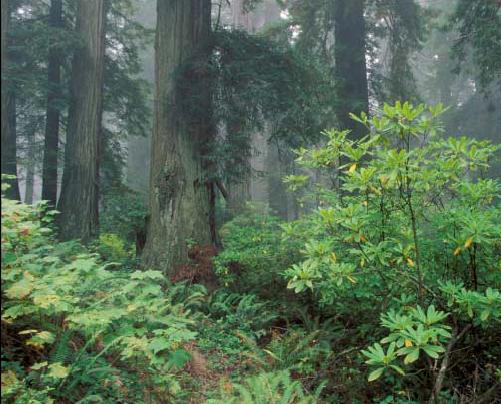
The Headwaters Forest Reserve is a group of old growth coast redwood (Sequoia sempervirens) groves in the Northern California coastal forests ecoregion near Humboldt Bay of the U.S. state of California. Comprising about 7,472 acres (30.24 km2), it is managed by the Bureau of Land Management (BLM) as part of the National Landscape Conservation System.
The climate is characterized by maritime conditions of cool, wet and foggy winters and cool to warm cloudy summers. Elevations range from 100 feet (30 m) to over 2,000 feet (610 m).
The reserve was established in 1999 (H.R. 2107, Title V. Sec.501.) The reserve was created after a 15-year effort to save the ancient ecosystem (with some trees estimated at over two thousand years old), from being clearcut.
This reserve of 7,472 acres (30.24 km2) is public land and is under the stewardship of the US Department of the Interior, Bureau of Land Management (BLM). Of the total area, 3,088 acres (12.50 km2) are old-growth redwood stands, surrounded by 4,384 acres (17.74 km2) of previously harvested timberlands. These were included in the purchase to protect the watershed related to the old-growth forest. The reserve is located about 6 miles (9.7 km) southeast of Eureka, California and is managed by BLM officials from the agency's Arcata Field Office in nearby Arcata. The historic town of Falk and lumber mill site is within the reserve.
According to the BLM, "the reserve is set aside to protect and preserve the ecological and wildlife values in the area, particularly the stands of old-growth redwood that provide habitat for the threatened Marbled Murrelet, Northern Spotted Owl, native salmon stocks, and other old growth forest dependent species..." It also protects stream systems that provide habitat for the threatened coho salmon.
Other forest trees in the reserve include Douglas-fir, tanoak, Sitka spruce, western red ceder, western hemlock and red alder. There are limited distribution (CNPS list 4) plants in the reserve, including the heart-shaped twayblade and Kellogg's lily.
The Headwaters Forest Reserve is one of the few remaining refuges for the marbled murrelet, an endangered seabird. Marbled murrelets make their nests on large redwood tree branches between March 25 and September 15. The seabird nesting can be disastrously disrupted by human activity. During breeding season, approximately June 25 to August 1, visitors are prohibited from entering the forest.
By the late 20th century, most of the forest was owned by the Pacific Lumber Company, which became under the leadership of Charles Hurwitz and his company Maxxam, Inc, as the result of a hostile takeover in 1985. Maxxam, Inc. changed logging policies at Pacific Lumber Company, replacing it with clearcutting. Almost 60 per cent of the reserve was harvested by mostly clearcutting; more than 35 miles (56 km) of roads were constructed, resulting in more than 100 stream crossings, which greatly degraded watershed ability to store and filter water runoff. The untouched portion is dense, old-growth forest with pristine watershed conditions.
Headwaters Forest Reserve
The Headwaters Forest Reserve is a group of old growth coast redwood (Sequoia sempervirens) groves in the Northern California coastal forests ecoregion near Humboldt Bay of the U.S. state of California. Comprising about 7,472 acres (30.24 km2), it is managed by the Bureau of Land Management (BLM) as part of the National Landscape Conservation System.
The climate is characterized by maritime conditions of cool, wet and foggy winters and cool to warm cloudy summers. Elevations range from 100 feet (30 m) to over 2,000 feet (610 m).
The reserve was established in 1999 (H.R. 2107, Title V. Sec.501.) The reserve was created after a 15-year effort to save the ancient ecosystem (with some trees estimated at over two thousand years old), from being clearcut.
This reserve of 7,472 acres (30.24 km2) is public land and is under the stewardship of the US Department of the Interior, Bureau of Land Management (BLM). Of the total area, 3,088 acres (12.50 km2) are old-growth redwood stands, surrounded by 4,384 acres (17.74 km2) of previously harvested timberlands. These were included in the purchase to protect the watershed related to the old-growth forest. The reserve is located about 6 miles (9.7 km) southeast of Eureka, California and is managed by BLM officials from the agency's Arcata Field Office in nearby Arcata. The historic town of Falk and lumber mill site is within the reserve.
According to the BLM, "the reserve is set aside to protect and preserve the ecological and wildlife values in the area, particularly the stands of old-growth redwood that provide habitat for the threatened Marbled Murrelet, Northern Spotted Owl, native salmon stocks, and other old growth forest dependent species..." It also protects stream systems that provide habitat for the threatened coho salmon.
Other forest trees in the reserve include Douglas-fir, tanoak, Sitka spruce, western red ceder, western hemlock and red alder. There are limited distribution (CNPS list 4) plants in the reserve, including the heart-shaped twayblade and Kellogg's lily.
The Headwaters Forest Reserve is one of the few remaining refuges for the marbled murrelet, an endangered seabird. Marbled murrelets make their nests on large redwood tree branches between March 25 and September 15. The seabird nesting can be disastrously disrupted by human activity. During breeding season, approximately June 25 to August 1, visitors are prohibited from entering the forest.
By the late 20th century, most of the forest was owned by the Pacific Lumber Company, which became under the leadership of Charles Hurwitz and his company Maxxam, Inc, as the result of a hostile takeover in 1985. Maxxam, Inc. changed logging policies at Pacific Lumber Company, replacing it with clearcutting. Almost 60 per cent of the reserve was harvested by mostly clearcutting; more than 35 miles (56 km) of roads were constructed, resulting in more than 100 stream crossings, which greatly degraded watershed ability to store and filter water runoff. The untouched portion is dense, old-growth forest with pristine watershed conditions.
Recent media
Recent media