



Community hub
Recent from talks
Knowledge base stats:
Talk channels stats:
Members stats:
Heinrich Bullinger
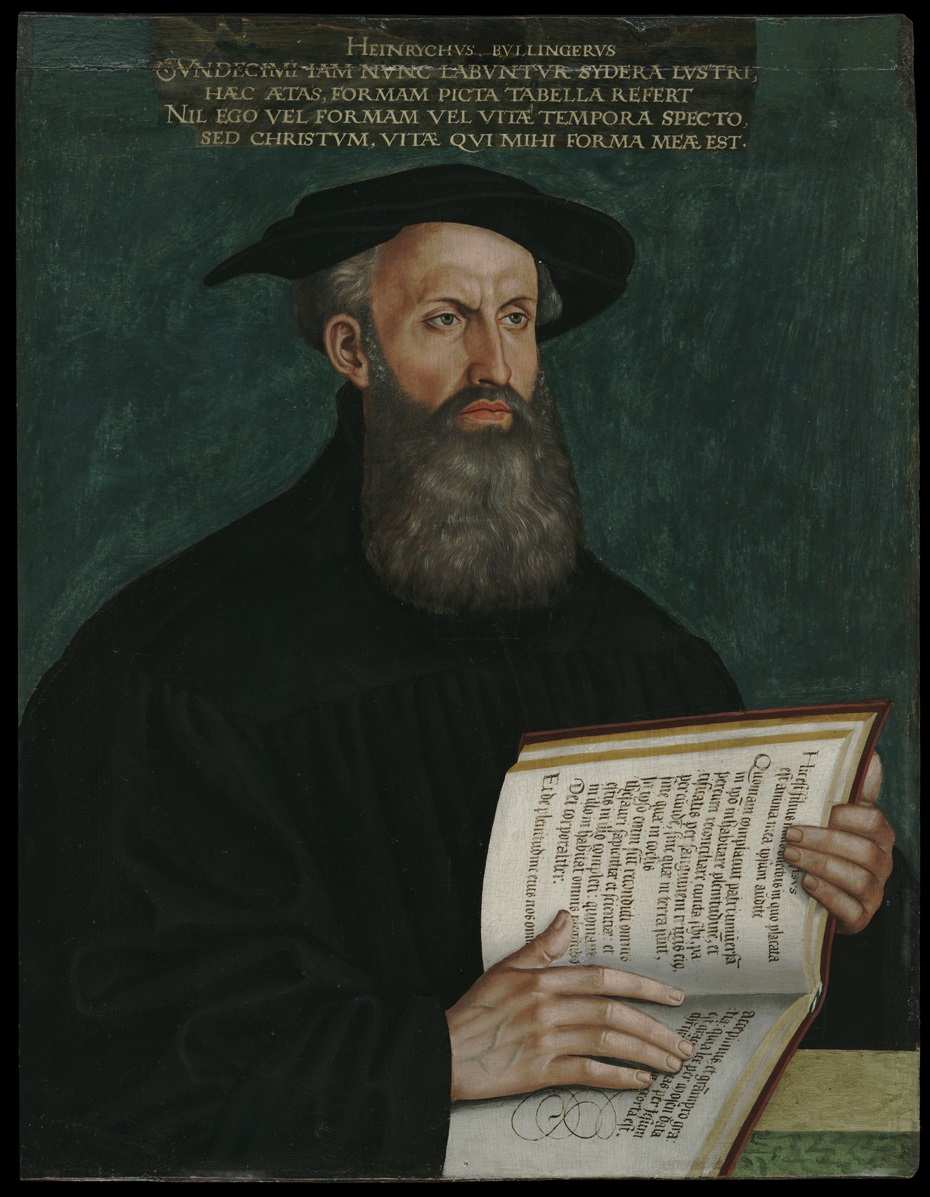
Heinrich Bullinger (18 July 1504 – 17 September 1575) was a Swiss Reformer and theologian, the successor of Huldrych Zwingli as head of the Church of Zürich and a pastor at the Grossmünster. One of the most important leaders of the Swiss Reformation, Bullinger co-authored the Helvetic Confessions and collaborated with John Calvin to work out a Reformed doctrine of the Lord's Supper.
Heinrich Bullinger was born to Heinrich Bullinger Sr., a priest, and Anna Wiederkehr, at Bremgarten, Aargau, Switzerland. Heinrich and Anna were able to live as husband and wife, even though not legally married, because the bishop of Constance, who had clerical oversight over Aargau, had unofficially sanctioned clerical concubinage by waiving penalties against the offense in exchange for an annual fee, called a cradle tax. Heinrich was the fifth son and youngest of seven children born to the couple. The family was relatively affluent, and often hosted guests. As a small child, Bullinger survived the plague and a potentially fatal accident.
At age 11, Bullinger was sent to the St. Martin's Latin school in Emmerich in the Duchy of Cleves. Though the family was wealthy by standards of the day, Bullinger's father refused to provide the boy money for food. He encouraged his son to beg for bread for three years, as he had done, and by doing so increase the boy's empathy for the poor. At St. Martin's Latin school, Bullinger studied classic texts, including Jerome, Horace, and Virgil. He was also influenced by the Brethren of the Common Life and their adoption of the Devotio moderna, which emphasized Christian living and the reading of the Bible. Due to this influence, he expressed an interest in becoming a Carthusian monk.
In 1519, at 14, he went to the University of Cologne, where it was supposed he would prepare to follow his father into the clergy. Although there is no evidence that Bullinger was initially aware of Martin Luther's Ninety-five Theses or the Leipzig Disputation of 1519, a year later, he had definitely been exposed to Reformation teaching. He read Peter Lombard's Sentences and the Decretum Gratiani, which led him to the church fathers. Bullinger discovered that the Fathers relied more on Scripture than did Lombard and Gratian, and this discovery encouraged Bullinger to read both the Bible and Luther, including The Babylonian Captivity of the Church and The Freedom of a Christian. He also read works by other Reformers, such as Philip Melanchthon's Loci communes. Now believing that salvation came through God's grace rather than through man's good works, Bullinger was converted to Protestantism. Later in life, he wrote that he had also been encouraged to embrace the Reformation because of the humanist influence of two of his teachers, Johannes Pfrissemius and Arnold von Wesel. Other intellectual influences on Bullinger included the humanism of Erasmus and Rodolphus Agricola, the theology of the church fathers Cyprian, Lactantius, Hilary, Athanasius, Jerome, and Augustine, and the theology of Thomas Aquinas.
In 1522, as a follower of Martin Luther, Bullinger earned his Master of Arts degree but ceased receiving the Eucharist. He also abandoned his previous intention of entering the Carthusian order. When he returned to Bremgarten, his family accepted his new theological views. Though Bullinger was called to lead an abbey in the Black Forest, he found its monks worldly and licentious and so returned home again and spent some months reading history, the church fathers, and Reformation theology.
In 1523, he accepted a post as a teacher at a Cistercian monastery, Kappel Abbey, though only under the condition that he would not take monastic vows nor attend mass. At Kappel Abbey, Bullinger initiated a systematic program of Bible reading and exegesis. He also tried to reform its Trivium curriculum in a more humanist and Protestant direction. Bullinger discovered that the monks barely understood Latin, and so he preached to them in Swiss-German. By 1525, the abbey had abolished mass, and the next year all the monks renounced their vows as they participated in their first Reformed Eucharist.
During this period, during the Reformation in Zürich, Bullinger heard Huldrych Zwingli and Leo Jud preach; and in 1523, he met them. Bullinger became a friend and ally of Zwingli and was present at the Zürich disputation of 1525. Under the influence of Zwingli and the Waldensians, Bullinger moved to a more symbolic understanding of the Eucharist. In 1527, he spent five months in Zürich studying Greek and Hebrew while regularly attending the Prophezei that Zwingli had established there. Zürich authorities sent Bullinger with the city delegation to assist Zwingli at the Bern Disputation, an occasion where he met Martin Bucer, Ambrosius Blaurer, and Berthold Haller. In 1528, at the urging of the Zürich Synod, Bullinger left Kappel Abbey and was ordained as a parish minister in the new Reformed church of Zürich.
Meanwhile, Bullinger wrote theological treatises on the Eucharist, covenants, images, and the relationship of the church to society, important topics he continued to develop in his later writings. He sent these treatises to neighboring cities, attempting to win them to the Reformed position; and these treatises were attacked by Roman Catholics defending papal infallibility and transubstantiation. Bullinger's humanism was also evident in his writings about the church fathers, his belief in the study of liberal arts as preparatory for the study of Scriptures, and even a play he wrote about the classical story of Lucretia.
Hub AI
Heinrich Bullinger AI simulator
(@Heinrich Bullinger_simulator)
Heinrich Bullinger
Heinrich Bullinger (18 July 1504 – 17 September 1575) was a Swiss Reformer and theologian, the successor of Huldrych Zwingli as head of the Church of Zürich and a pastor at the Grossmünster. One of the most important leaders of the Swiss Reformation, Bullinger co-authored the Helvetic Confessions and collaborated with John Calvin to work out a Reformed doctrine of the Lord's Supper.
Heinrich Bullinger was born to Heinrich Bullinger Sr., a priest, and Anna Wiederkehr, at Bremgarten, Aargau, Switzerland. Heinrich and Anna were able to live as husband and wife, even though not legally married, because the bishop of Constance, who had clerical oversight over Aargau, had unofficially sanctioned clerical concubinage by waiving penalties against the offense in exchange for an annual fee, called a cradle tax. Heinrich was the fifth son and youngest of seven children born to the couple. The family was relatively affluent, and often hosted guests. As a small child, Bullinger survived the plague and a potentially fatal accident.
At age 11, Bullinger was sent to the St. Martin's Latin school in Emmerich in the Duchy of Cleves. Though the family was wealthy by standards of the day, Bullinger's father refused to provide the boy money for food. He encouraged his son to beg for bread for three years, as he had done, and by doing so increase the boy's empathy for the poor. At St. Martin's Latin school, Bullinger studied classic texts, including Jerome, Horace, and Virgil. He was also influenced by the Brethren of the Common Life and their adoption of the Devotio moderna, which emphasized Christian living and the reading of the Bible. Due to this influence, he expressed an interest in becoming a Carthusian monk.
In 1519, at 14, he went to the University of Cologne, where it was supposed he would prepare to follow his father into the clergy. Although there is no evidence that Bullinger was initially aware of Martin Luther's Ninety-five Theses or the Leipzig Disputation of 1519, a year later, he had definitely been exposed to Reformation teaching. He read Peter Lombard's Sentences and the Decretum Gratiani, which led him to the church fathers. Bullinger discovered that the Fathers relied more on Scripture than did Lombard and Gratian, and this discovery encouraged Bullinger to read both the Bible and Luther, including The Babylonian Captivity of the Church and The Freedom of a Christian. He also read works by other Reformers, such as Philip Melanchthon's Loci communes. Now believing that salvation came through God's grace rather than through man's good works, Bullinger was converted to Protestantism. Later in life, he wrote that he had also been encouraged to embrace the Reformation because of the humanist influence of two of his teachers, Johannes Pfrissemius and Arnold von Wesel. Other intellectual influences on Bullinger included the humanism of Erasmus and Rodolphus Agricola, the theology of the church fathers Cyprian, Lactantius, Hilary, Athanasius, Jerome, and Augustine, and the theology of Thomas Aquinas.
In 1522, as a follower of Martin Luther, Bullinger earned his Master of Arts degree but ceased receiving the Eucharist. He also abandoned his previous intention of entering the Carthusian order. When he returned to Bremgarten, his family accepted his new theological views. Though Bullinger was called to lead an abbey in the Black Forest, he found its monks worldly and licentious and so returned home again and spent some months reading history, the church fathers, and Reformation theology.
In 1523, he accepted a post as a teacher at a Cistercian monastery, Kappel Abbey, though only under the condition that he would not take monastic vows nor attend mass. At Kappel Abbey, Bullinger initiated a systematic program of Bible reading and exegesis. He also tried to reform its Trivium curriculum in a more humanist and Protestant direction. Bullinger discovered that the monks barely understood Latin, and so he preached to them in Swiss-German. By 1525, the abbey had abolished mass, and the next year all the monks renounced their vows as they participated in their first Reformed Eucharist.
During this period, during the Reformation in Zürich, Bullinger heard Huldrych Zwingli and Leo Jud preach; and in 1523, he met them. Bullinger became a friend and ally of Zwingli and was present at the Zürich disputation of 1525. Under the influence of Zwingli and the Waldensians, Bullinger moved to a more symbolic understanding of the Eucharist. In 1527, he spent five months in Zürich studying Greek and Hebrew while regularly attending the Prophezei that Zwingli had established there. Zürich authorities sent Bullinger with the city delegation to assist Zwingli at the Bern Disputation, an occasion where he met Martin Bucer, Ambrosius Blaurer, and Berthold Haller. In 1528, at the urging of the Zürich Synod, Bullinger left Kappel Abbey and was ordained as a parish minister in the new Reformed church of Zürich.
Meanwhile, Bullinger wrote theological treatises on the Eucharist, covenants, images, and the relationship of the church to society, important topics he continued to develop in his later writings. He sent these treatises to neighboring cities, attempting to win them to the Reformed position; and these treatises were attacked by Roman Catholics defending papal infallibility and transubstantiation. Bullinger's humanism was also evident in his writings about the church fathers, his belief in the study of liberal arts as preparatory for the study of Scriptures, and even a play he wrote about the classical story of Lucretia.