
Recent from talks
Helwan HA-300
Knowledge base stats:
Talk channels stats:
Members stats:
Helwan HA-300
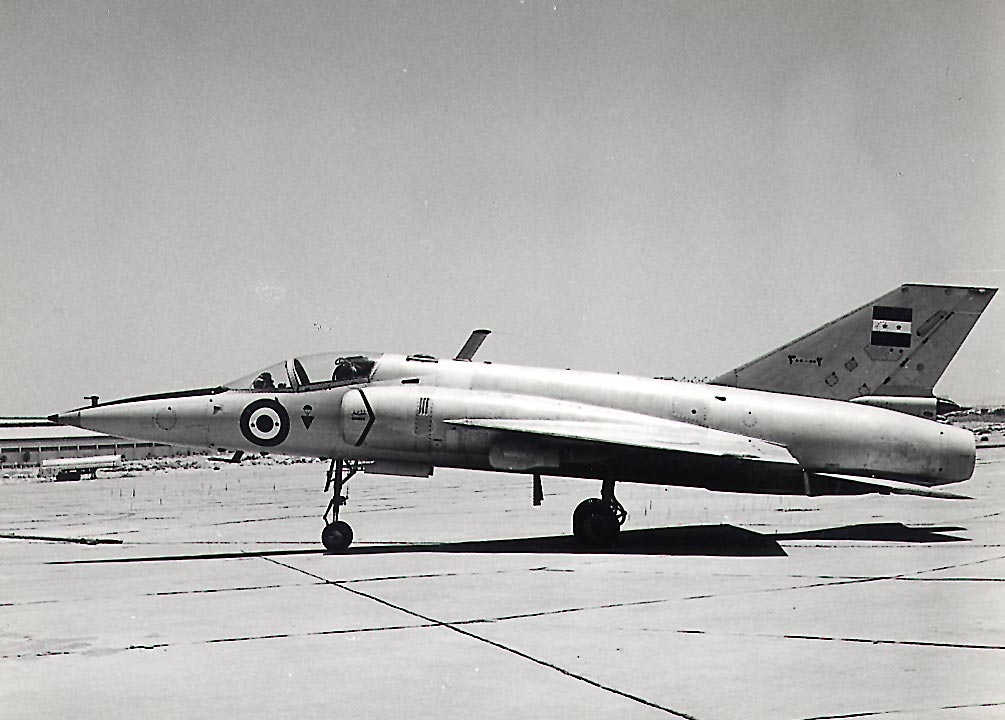
The Helwan HA-300 (Arabic: حلوان ٣٠٠) was a single-engine, delta-wing, light supersonic interceptor aircraft developed in Egypt during the 1960s.
At various stages, Spain and India were involved in the development program. Spain was financing two projects, the HA-200 and the Hispano HA-300, but cancelled the HA-300 project before a prototype was built due to overruns. Egypt then took over financing, and the program was transferred to Egypt where both it and its engine would be made, and where the aircraft was successfully flown. Near the end of the program, India began financing the development of the E-300 engine for use in the Indian HF-24 Marut jet fighter.
The HA-300 was an ambitious and costly project for Egypt, at a time when it was seeking to expand both its civilian and defence aviation industry.
At the end of World War II, German aircraft designer Willy Messerschmitt moved to Spain, where he joined Hispano Aviación and started designing an ultralight fighter aircraft in 1951.
When Messerschmitt was eventually allowed to start work on the project, designated the HA-300, he first built a tailless delta-winged glider, the Hispano HA P-300 (also known as the HA-23P). It was of mixed wood and metal construction, having a light alloy forward fuselage and wooden rear section. Of 20 feet 2 inches (6.15 m) span, the thin delta wing was also of mixed construction, with an area of 215 square feet (20.0 m2) and an aspect ratio of 1.89:1. For test flights the glider was towed into the air, first by a car and then, more successfully, by a CASA 2.111. One test flight was prematurely terminated due to instability and the glider did not become airborne. Wind tunnel tests also confirmed the instability. Due to funding problems, non-availability of the planned afterburning Bristol Orpheus engine for production and the resultant long development time, Spain abandoned the project in 1960.
Egypt then acquired the design from Hispano Aviación. The design team, headed by Messerschmitt, moved to Helwan, Egypt, to continue its work on the HA-300, which now stood for Helwan Aircraft 300. Ferdinand Brandner, an Austrian jet engine expert, was also invited to develop a turbojet for the new fighter, to replace the abandoned Orpheus. Egypt aimed to produce a lightweight supersonic, single-seat fighter that could join the Egyptian Air Force as an interceptor.
Egyptian development of the HA-300 started in the test facilities and workshops in Factory No. 36 in Helwan, southeast of Cairo, under the supervision of the Egyptian General Aero Organisation (EGAO), beginning officially in 1959.
Besides the addition of a jet engine with semicircular side intakes and single exhaust nozzle, the fighter also featured a slightly smaller wing with an additional low-mounted, all-moving tail stabilizer. Much of the avionics fit was of European origin.
Hub AI
Helwan HA-300 AI simulator
(@Helwan HA-300_simulator)
Helwan HA-300
The Helwan HA-300 (Arabic: حلوان ٣٠٠) was a single-engine, delta-wing, light supersonic interceptor aircraft developed in Egypt during the 1960s.
At various stages, Spain and India were involved in the development program. Spain was financing two projects, the HA-200 and the Hispano HA-300, but cancelled the HA-300 project before a prototype was built due to overruns. Egypt then took over financing, and the program was transferred to Egypt where both it and its engine would be made, and where the aircraft was successfully flown. Near the end of the program, India began financing the development of the E-300 engine for use in the Indian HF-24 Marut jet fighter.
The HA-300 was an ambitious and costly project for Egypt, at a time when it was seeking to expand both its civilian and defence aviation industry.
At the end of World War II, German aircraft designer Willy Messerschmitt moved to Spain, where he joined Hispano Aviación and started designing an ultralight fighter aircraft in 1951.
When Messerschmitt was eventually allowed to start work on the project, designated the HA-300, he first built a tailless delta-winged glider, the Hispano HA P-300 (also known as the HA-23P). It was of mixed wood and metal construction, having a light alloy forward fuselage and wooden rear section. Of 20 feet 2 inches (6.15 m) span, the thin delta wing was also of mixed construction, with an area of 215 square feet (20.0 m2) and an aspect ratio of 1.89:1. For test flights the glider was towed into the air, first by a car and then, more successfully, by a CASA 2.111. One test flight was prematurely terminated due to instability and the glider did not become airborne. Wind tunnel tests also confirmed the instability. Due to funding problems, non-availability of the planned afterburning Bristol Orpheus engine for production and the resultant long development time, Spain abandoned the project in 1960.
Egypt then acquired the design from Hispano Aviación. The design team, headed by Messerschmitt, moved to Helwan, Egypt, to continue its work on the HA-300, which now stood for Helwan Aircraft 300. Ferdinand Brandner, an Austrian jet engine expert, was also invited to develop a turbojet for the new fighter, to replace the abandoned Orpheus. Egypt aimed to produce a lightweight supersonic, single-seat fighter that could join the Egyptian Air Force as an interceptor.
Egyptian development of the HA-300 started in the test facilities and workshops in Factory No. 36 in Helwan, southeast of Cairo, under the supervision of the Egyptian General Aero Organisation (EGAO), beginning officially in 1959.
Besides the addition of a jet engine with semicircular side intakes and single exhaust nozzle, the fighter also featured a slightly smaller wing with an additional low-mounted, all-moving tail stabilizer. Much of the avionics fit was of European origin.
Recent media