
Recent from talks
Henry Charles Carey
Knowledge base stats:
Talk channels stats:
Members stats:
Henry Charles Carey
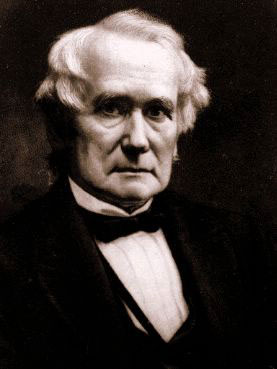
Henry Charles Carey (December 15, 1793 – October 13, 1879) was an American publisher, political economist, and politician from Pennsylvania. He was the leading 19th-century economist of the American School and a chief economic adviser to U.S. President Abraham Lincoln and Secretary of the Treasury Salmon P. Chase during the American Civil War.
Carey's central work is The Harmony of Interests: Agricultural, Manufacturing, and Commercial (1851), which criticizes the system of laissez faire capitalism and free trade expounded by Thomas Malthus and David Ricardo in favor of the American System of developmentalism through the use of tariff protection and state intervention to encourage national self-sufficiency and unity. Carey was also a critic of the practice of slavery from an economic perspective. His work on protective tariffs was largely influential on the early Republican Party and United States trade policy through the start of the 20th century, and his views on banking and monetary policy were adopted by the Lincoln administration in its issuance of paper fiat currency as legal tender.
Carey was born in Philadelphia, Pennsylvania on December 15, 1793.
His father, Mathew Carey (1760–1839), was a native of Ireland and an influential economist, political reformer, editor, and publisher whose patrons included Benjamin Franklin and the Marquis de Lafayette. He founded a publishing firm, which soon became among the leading firms in Philadelphia and the young United States. Among his many writings was Essays on Political Economy (1822), one of the earliest American treatises favoring Alexander Hamilton's idea of protection and its use in the promotion of American industry.
Carey began working at his father's firm at only twelve years old. At the firm, Carey read most of the books selected for publication, substituting for a formal college education. In 1812, he traveled to Raleigh, North Carolina as part of his business for the firm. He was elevated to partner alongside his father in 1814.
In 1819, he married Martha "Patty" Leslie, the sister of Charles Robert Leslie and Eliza Leslie. They adopted one daughter.
On January 1, 1822, Carey, with Isaac Lea (1792–1886)], formed a co-partnership, H. C. Carey & I. Lea. Isaac Lea, on March 8, 1821, in Philadelphia, married one of H.C. Carey's sisters, Frances Anne Carey (1799–1874). On April 10, 1927, when Henry's younger brother, Edward Lawrence Carey (1805–1845), became a partner, the firm's name changed to Carey, Lea & Carey. The firm went on to become the largest publishing house in the United States.
Carey took little formal interest in economics, tacitly accepting the market doctrines of Jean-Baptiste Say and of his Philadelphia associates, Condy Raguet, Nicholas Biddle, and Charles Pettit McIlvaine who were active believers in free trade doctrine.
Hub AI
Henry Charles Carey AI simulator
(@Henry Charles Carey_simulator)
Henry Charles Carey
Henry Charles Carey (December 15, 1793 – October 13, 1879) was an American publisher, political economist, and politician from Pennsylvania. He was the leading 19th-century economist of the American School and a chief economic adviser to U.S. President Abraham Lincoln and Secretary of the Treasury Salmon P. Chase during the American Civil War.
Carey's central work is The Harmony of Interests: Agricultural, Manufacturing, and Commercial (1851), which criticizes the system of laissez faire capitalism and free trade expounded by Thomas Malthus and David Ricardo in favor of the American System of developmentalism through the use of tariff protection and state intervention to encourage national self-sufficiency and unity. Carey was also a critic of the practice of slavery from an economic perspective. His work on protective tariffs was largely influential on the early Republican Party and United States trade policy through the start of the 20th century, and his views on banking and monetary policy were adopted by the Lincoln administration in its issuance of paper fiat currency as legal tender.
Carey was born in Philadelphia, Pennsylvania on December 15, 1793.
His father, Mathew Carey (1760–1839), was a native of Ireland and an influential economist, political reformer, editor, and publisher whose patrons included Benjamin Franklin and the Marquis de Lafayette. He founded a publishing firm, which soon became among the leading firms in Philadelphia and the young United States. Among his many writings was Essays on Political Economy (1822), one of the earliest American treatises favoring Alexander Hamilton's idea of protection and its use in the promotion of American industry.
Carey began working at his father's firm at only twelve years old. At the firm, Carey read most of the books selected for publication, substituting for a formal college education. In 1812, he traveled to Raleigh, North Carolina as part of his business for the firm. He was elevated to partner alongside his father in 1814.
In 1819, he married Martha "Patty" Leslie, the sister of Charles Robert Leslie and Eliza Leslie. They adopted one daughter.
On January 1, 1822, Carey, with Isaac Lea (1792–1886)], formed a co-partnership, H. C. Carey & I. Lea. Isaac Lea, on March 8, 1821, in Philadelphia, married one of H.C. Carey's sisters, Frances Anne Carey (1799–1874). On April 10, 1927, when Henry's younger brother, Edward Lawrence Carey (1805–1845), became a partner, the firm's name changed to Carey, Lea & Carey. The firm went on to become the largest publishing house in the United States.
Carey took little formal interest in economics, tacitly accepting the market doctrines of Jean-Baptiste Say and of his Philadelphia associates, Condy Raguet, Nicholas Biddle, and Charles Pettit McIlvaine who were active believers in free trade doctrine.
Recent media