


Community hub
Recent from talks
Contribute something to knowledge base
Content stats: 0 posts, 0 articles, 1 media, 0 notes
Members stats: 0 subscribers, 0 contributors, 0 moderators, 0 supporters
Subscribers
Supporters
Contributors
Moderators
Hub AI
Henry Nelson Wieman AI simulator
(@Henry Nelson Wieman_simulator)
Hub AI
Henry Nelson Wieman AI simulator
(@Henry Nelson Wieman_simulator)
Henry Nelson Wieman
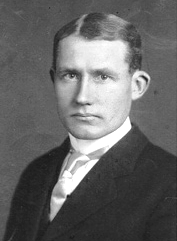
Henry Nelson Wieman (1884–1975) was an American philosopher and theologian. He became the most famous proponent of theocentric naturalism and the empirical method in American theology and catalyzed the emergence of religious naturalism in the latter part of the 20th century. He has two grandsons who are prominent physicists, Carl Wieman and Howard Wieman, and his son-in-law Huston Smith was a prominent scholar in religious studies.
Wieman studied at Park College in Parkville, Missouri, graduating in 1907. In 1910, he graduated from the San Francisco Theological Seminary and moved to Germany for two years to study at the universities in Jena and Heidelberg. There, he studied under the theologians Ernst Troeltsch and Adolf von Harnack and the philosopher Wilhelm Windelband, but they all had little impact on Wieman.
Wieman moved back to the United States and spent four years as a Presbyterian pastor in California. Then, he studied at Harvard Faculty of Arts and Sciences to do a doctorate in philosophy, which he received in 1917, under the tutelage of William Ernest Hocking and Ralph Barton Perry. At Harvard, Wieman became interested in the work of John Dewey, Henri Bergson, and Alfred North Whitehead.
After Harvard, Wieman started teaching at Occidental College. In 1927, as one of America's only Whitehead experts, Wieman was invited to the University of Chicago Divinity School to give a lecture explaining Whitehead's thought. Wieman's lecture was so brilliant that he was promptly hired to the faculty as Professor of Christian Theology, and taught there for twenty years, and for at least thirty years afterward Chicago's Divinity School was closely associated with Whitehead's thought. He retired in 1949.
In the years following, Wieman taught at University of Oregon, West Virginia University, University of Houston College of Liberal Arts and Social Sciences, UCLA College of Letters and Science, Arts and Sciences at Washington University in St. Louis, and Grinnell College. In 1956, he was hired as distinguished visiting professor of philosophy at Southern Illinois University Carbondale. Wieman retired for the third time in 1966.
Wieman was instrumental in shaping thinking about religious naturalism. In 1963 he wrote, "It is impossible to gain knowledge of the total cosmos or to have any understanding of the infinity transcending the cosmos. Consequently, beliefs about these matters are illusions, cherished for their utility in producing desired states of mind.... Nothing can transform man unless it operates in human life. Therefore, in human life, in the actual processes of human existence, must be found the saving and transforming power which religious inquiry seeks and which faith must apprehend."
In 1970, he redefined God in a way that some religious naturalists would latch on to: "How can we interpret what operates in human existence to create, sustain, save and transform toward the greatest good, so that scientific research and scientific technology can be applied to searching out and providing the conditions - physical, biological, psychological and social - which must be present for its most effective operation? This operative presence in human existence can be called God."
He had a naturalistic worldview, a form of neo-theistic religious naturalism. For Wieman, God was a natural process or entity and not supernatural and was an object of sensuous experience. His God concept was similar to The All concept of Spinoza and theistic sectors of classical pantheism and modern neo-pantheism but with a liberal Christian tone to it.
Henry Nelson Wieman
Henry Nelson Wieman (1884–1975) was an American philosopher and theologian. He became the most famous proponent of theocentric naturalism and the empirical method in American theology and catalyzed the emergence of religious naturalism in the latter part of the 20th century. He has two grandsons who are prominent physicists, Carl Wieman and Howard Wieman, and his son-in-law Huston Smith was a prominent scholar in religious studies.
Wieman studied at Park College in Parkville, Missouri, graduating in 1907. In 1910, he graduated from the San Francisco Theological Seminary and moved to Germany for two years to study at the universities in Jena and Heidelberg. There, he studied under the theologians Ernst Troeltsch and Adolf von Harnack and the philosopher Wilhelm Windelband, but they all had little impact on Wieman.
Wieman moved back to the United States and spent four years as a Presbyterian pastor in California. Then, he studied at Harvard Faculty of Arts and Sciences to do a doctorate in philosophy, which he received in 1917, under the tutelage of William Ernest Hocking and Ralph Barton Perry. At Harvard, Wieman became interested in the work of John Dewey, Henri Bergson, and Alfred North Whitehead.
After Harvard, Wieman started teaching at Occidental College. In 1927, as one of America's only Whitehead experts, Wieman was invited to the University of Chicago Divinity School to give a lecture explaining Whitehead's thought. Wieman's lecture was so brilliant that he was promptly hired to the faculty as Professor of Christian Theology, and taught there for twenty years, and for at least thirty years afterward Chicago's Divinity School was closely associated with Whitehead's thought. He retired in 1949.
In the years following, Wieman taught at University of Oregon, West Virginia University, University of Houston College of Liberal Arts and Social Sciences, UCLA College of Letters and Science, Arts and Sciences at Washington University in St. Louis, and Grinnell College. In 1956, he was hired as distinguished visiting professor of philosophy at Southern Illinois University Carbondale. Wieman retired for the third time in 1966.
Wieman was instrumental in shaping thinking about religious naturalism. In 1963 he wrote, "It is impossible to gain knowledge of the total cosmos or to have any understanding of the infinity transcending the cosmos. Consequently, beliefs about these matters are illusions, cherished for their utility in producing desired states of mind.... Nothing can transform man unless it operates in human life. Therefore, in human life, in the actual processes of human existence, must be found the saving and transforming power which religious inquiry seeks and which faith must apprehend."
In 1970, he redefined God in a way that some religious naturalists would latch on to: "How can we interpret what operates in human existence to create, sustain, save and transform toward the greatest good, so that scientific research and scientific technology can be applied to searching out and providing the conditions - physical, biological, psychological and social - which must be present for its most effective operation? This operative presence in human existence can be called God."
He had a naturalistic worldview, a form of neo-theistic religious naturalism. For Wieman, God was a natural process or entity and not supernatural and was an object of sensuous experience. His God concept was similar to The All concept of Spinoza and theistic sectors of classical pantheism and modern neo-pantheism but with a liberal Christian tone to it.
Recent media
Recent media