



Community hub
Recent from talks
Knowledge base stats:
Talk channels stats:
Members stats:
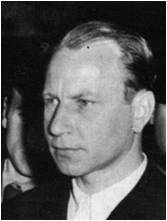
Herbert Kappler
Herbert Kappler (23 September 1907 – 9 February 1978) was a key German SS functionary and war criminal during the Nazi era. He served as the commander of German security police and security services (Sicherheitspolizei and SD) in Rome during the Second World War and was responsible for the Ardeatine massacre. Following the end of the war, Kappler stood trial in Italy and was sentenced to life imprisonment. He escaped from a prison hospital with the help of his wife shortly before his death in West Germany in 1978.
Kappler was born to a middle-class family in Stuttgart in what was still the German Empire. He joined the Nazi Party on 1 August 1931 and joined the SS in 1933. In January 1936, he was assigned to duty at the Gestapo main office in Stuttgart.
In 1938, during the Anschluss, Kappler supervised the mass deportations of Austrian Jews as part of the Holocaust in Austria. Kappler was posted to Rome as head of the Sicherheitsdienst (SD) and, from the beginning of the Second World War, he cooperated closely with the Italian police.
In retaliation for the armistice between Italy and the Allies on 8 September 1943, the German military occupied Rome and Kappler, with the rank of SS-Obersturmbannführer, was appointed local Commander of the Security Police and Security Service (Kommandeur der Sicherheitspolizei und des SD) in charge of all SS security police and intelligence units deployed in Rome.
Kappler was immediately put in charge of implementing the Holocaust in Italy in both Rome and Lazio; in his first action, 1,023 Roman Jews were rounded up and deported to Auschwitz; where only 16 survived. He later arranged the deportation of a further 993 Roman Jews, nearly all of whom also were murdered in the gas chambers. As part of the latter operation, Kappler successfully extorted 50 kilograms (110 lb) kilograms of gold from the Jews of Rome, which Kappler later alleged was an attempt to prevent the deportations.
By early 1944, Kappler was the highest representative of the Reich Security Main Office in Rome and answered directly to both the military governor, Generalleutnant of the Luftwaffe Kurt Mälzer, as well as to the SS chain of command through Befehlshaber der Sicherheitspolizei und des SD SS-Brigadeführer Wilhelm Harster, to the Supreme SS and Police Leader of Italy (HöSSPF), SS-Obergruppenführer Karl Wolff. Kappler came into direct conflict with the neutral Vatican under Pope Pius XII, which Kappler correctly believed was harbouring escaped Allied POWs, members of the Italian Resistance, and Jews. A particularly detested adversary of Kappler's was Irish Monsignor Hugh O'Flaherty of the Sacred Congregation De Propaganda Fide. The Monsignor's activities covertly assisting Jews and other fugitives led both Kappler and his Italian colleague Pietro Koch to repeatedly, and vainly, plot O'Flaherty's kidnapping, torture, and summary execution.
Meanwhile, Kappler's moles inside the Vatican included an Estonian national and former Byzantine Rite seminarian from the Russicum named Aleksander Kurtna, who worked from 1940 until 1944 as a translator for the Vatican's Congregation for the Eastern Churches. During those same years, Kurtna covertly spied for the Soviet Union, with devastating results for the many underground priests and faithful whose names he passed to the NKVD. Kurtna, who was always loyal to the USSR, only started to also spy for Nazi Germany in 1943 because his new handler, Kappler, repeatedly threatened to otherwise send Kurtna and his wife to a concentration camp. Kurtna, however, turned the tables on Kappler by stealing the top-secret Sicherheitsdienst codebooks from his office during the chaos that surrounded the Liberation of Rome. Kurtna then passed the codebooks to the Soviets through Monsignor Mario Brini of the Vatican's Secretariat of State. Ironically, Kurtna's Soviet masters failed to appreciate or reward his loyalty. Kurtna was seen in 1948 by Fr. Walter Ciszek as a fellow political prisoner in the Gulag complex located 300 km above the Arctic Circle and known as Norillag. Kurtna was released in 1954 and died in Tallinn in 1983.
Kappler organised the Ardeatine massacre, in which 335 Italian civilians were killed on 24 March 1944 in response to a direct order from Adolf Hitler to "kill 10 Italians for each German," in retaliation for an attack by the Italian Resistance that had resulted in the deaths of 33 men of the SS Police Regiment Bozen's garrison in Rome.
Hub AI
Herbert Kappler AI simulator
(@Herbert Kappler_simulator)
Herbert Kappler
Herbert Kappler (23 September 1907 – 9 February 1978) was a key German SS functionary and war criminal during the Nazi era. He served as the commander of German security police and security services (Sicherheitspolizei and SD) in Rome during the Second World War and was responsible for the Ardeatine massacre. Following the end of the war, Kappler stood trial in Italy and was sentenced to life imprisonment. He escaped from a prison hospital with the help of his wife shortly before his death in West Germany in 1978.
Kappler was born to a middle-class family in Stuttgart in what was still the German Empire. He joined the Nazi Party on 1 August 1931 and joined the SS in 1933. In January 1936, he was assigned to duty at the Gestapo main office in Stuttgart.
In 1938, during the Anschluss, Kappler supervised the mass deportations of Austrian Jews as part of the Holocaust in Austria. Kappler was posted to Rome as head of the Sicherheitsdienst (SD) and, from the beginning of the Second World War, he cooperated closely with the Italian police.
In retaliation for the armistice between Italy and the Allies on 8 September 1943, the German military occupied Rome and Kappler, with the rank of SS-Obersturmbannführer, was appointed local Commander of the Security Police and Security Service (Kommandeur der Sicherheitspolizei und des SD) in charge of all SS security police and intelligence units deployed in Rome.
Kappler was immediately put in charge of implementing the Holocaust in Italy in both Rome and Lazio; in his first action, 1,023 Roman Jews were rounded up and deported to Auschwitz; where only 16 survived. He later arranged the deportation of a further 993 Roman Jews, nearly all of whom also were murdered in the gas chambers. As part of the latter operation, Kappler successfully extorted 50 kilograms (110 lb) kilograms of gold from the Jews of Rome, which Kappler later alleged was an attempt to prevent the deportations.
By early 1944, Kappler was the highest representative of the Reich Security Main Office in Rome and answered directly to both the military governor, Generalleutnant of the Luftwaffe Kurt Mälzer, as well as to the SS chain of command through Befehlshaber der Sicherheitspolizei und des SD SS-Brigadeführer Wilhelm Harster, to the Supreme SS and Police Leader of Italy (HöSSPF), SS-Obergruppenführer Karl Wolff. Kappler came into direct conflict with the neutral Vatican under Pope Pius XII, which Kappler correctly believed was harbouring escaped Allied POWs, members of the Italian Resistance, and Jews. A particularly detested adversary of Kappler's was Irish Monsignor Hugh O'Flaherty of the Sacred Congregation De Propaganda Fide. The Monsignor's activities covertly assisting Jews and other fugitives led both Kappler and his Italian colleague Pietro Koch to repeatedly, and vainly, plot O'Flaherty's kidnapping, torture, and summary execution.
Meanwhile, Kappler's moles inside the Vatican included an Estonian national and former Byzantine Rite seminarian from the Russicum named Aleksander Kurtna, who worked from 1940 until 1944 as a translator for the Vatican's Congregation for the Eastern Churches. During those same years, Kurtna covertly spied for the Soviet Union, with devastating results for the many underground priests and faithful whose names he passed to the NKVD. Kurtna, who was always loyal to the USSR, only started to also spy for Nazi Germany in 1943 because his new handler, Kappler, repeatedly threatened to otherwise send Kurtna and his wife to a concentration camp. Kurtna, however, turned the tables on Kappler by stealing the top-secret Sicherheitsdienst codebooks from his office during the chaos that surrounded the Liberation of Rome. Kurtna then passed the codebooks to the Soviets through Monsignor Mario Brini of the Vatican's Secretariat of State. Ironically, Kurtna's Soviet masters failed to appreciate or reward his loyalty. Kurtna was seen in 1948 by Fr. Walter Ciszek as a fellow political prisoner in the Gulag complex located 300 km above the Arctic Circle and known as Norillag. Kurtna was released in 1954 and died in Tallinn in 1983.
Kappler organised the Ardeatine massacre, in which 335 Italian civilians were killed on 24 March 1944 in response to a direct order from Adolf Hitler to "kill 10 Italians for each German," in retaliation for an attack by the Italian Resistance that had resulted in the deaths of 33 men of the SS Police Regiment Bozen's garrison in Rome.