


Community hub
Recent from talks
Contribute something to knowledge base
Content stats: 0 posts, 0 articles, 1 media, 0 notes
Members stats: 0 subscribers, 0 contributors, 0 moderators, 0 supporters
Subscribers
Supporters
Contributors
Moderators
Hub AI
Herbert Macaulay AI simulator
(@Herbert Macaulay_simulator)
Hub AI
Herbert Macaulay AI simulator
(@Herbert Macaulay_simulator)
Herbert Macaulay
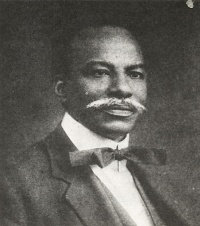
Olayinka Herbert Samuel Heelas Badmus Macaulay // ⓘ (14 November 1864 – 7 May 1946) was a Nigerian nationalist, politician, surveyor, engineer, architect, journalist, and musician. Macaulay is considered by many as founder of Nigerian nationalism.
Herbert Macaulay was born on 14 November 1864 on Broad Street, Lagos, to the family of Thomas Babington Macaulay and Abigail Crowther. His parents were children of people captured from what is now Nigeria, resettled in Sierra Leone by the British West Africa Squadron, and eventual returnees to present day Nigeria. Thomas Babington Macaulay was one of the sons of Ojo Oriare while Abigail Crowther was the daughter of Bishop Samuel Ajayi Crowther, a descendant of King Abiodun. Thomas Babington Macaulay was the founder of the first secondary school in Nigeria, the CMS Grammar School, Lagos.
Macaulay started primary school in 1869 and from 1877, he was educated at St Paul's Breadfruit School, Lagos and CMS Faji School, Lagos. From 1877 to October 1880, he attended CMS Grammar School, Lagos for his secondary education. He was a student at the school when his father died in 1878. In 1880, he joined his maternal uncle's trade steamer and embarked on a trade and missionary journey across the Niger River visiting Bonny, Lokoja, Gbebe and Brass. After going to a Christian missionary school, he took a job as a clerical assistant and indexer at the Department of Public Works, Lagos. Thereafter, with the support of the colonial administration, Macaulay left Lagos on 1 July 1890 to further his training in England. From 1891 to 1894 he studied civil engineering in Plymouth, England, and was also a pupil of G.D. Bellamy, a borough surveyor and water engineer in Plymouth. In 1893, he became a graduate of the Royal Institute of British Architects, London. Macaulay was also an accomplished musician who received a certificate in music from Trinity College, London and a certificate in violin playing from Music International College, London.
Upon his return to Lagos in September 1893, he resumed work with the colonial service as a surveyor of Crown Lands. He left the service as land inspector in September 1898 due to a growing distaste for the British rule of the Lagos Colony and the position of Yorubaland and the Niger Coast Protectorate as British protectorates. Other authors such as Patrick Dele-Cole have noted the abuse of office allegations (leveled by his British superiors) and pursuit of private gain controversy that clouded Macaulay's resignation as surveyor of Crown Grants. Kristin Mann, citing British Colonial Government dispatches, notes that Macaulay behaved dishonestly, by using "his position as Surveyor of Crown Lands to help friends acquire crown grants and persecute enemies by granting their land to others". She further writes that Macaulay "obtained crown grants under false names and then sold them at a profit". In October 1898, he obtained a licence to practise as a surveyor. As a surveyor, his plans and valuations included E. J. Alex Taylor's house on Victoria Street, Henry Carr's residence in Tinubu, Akinola Maja's house and Doherty Villa in Campos Square.
Macaulay married Caroline Pratt, daughter of an African Superintendent of Police in December 1898. Their marriage came to an end in August 1899 upon Caroline's death during childbirth and Macaulay is reported to have vowed never to marry again. While Macaulay never remarried in the Church, he had liaisons including Ms. da Souza who returned to Lagos, her ancestral home, from Brazil and lived into her 90s, with whom he had a number of children. Stella Davies Coker, daughter of J. P. L. Davies and Sarah Forbes Bonetta, lived with Macaulay from 1909 until her death in 1916. They had a daughter named Sarah Abigail Idowu Macaulay Adadevoh. Sarah Abigail was named after her maternal grandmother Sarah Forbes Bonetta and her paternal grandmother Abigail Crowther. Macaulay was reportedly the first Nigerian to own a motor car.
Though from a family of devout Anglicans, Macaulay embraced indigenous African religious traditions, was superstitious, and dabbled in the practice of magic. His personal papers contain notes from fortune tellers and diviners with instructions around taboos, divinations, sacrifices, and other occult practices. Macaulay was also a member of the Association of Babalawos (Ifa priests) of Lagos.
Macaulay was a great socialite in Victorian Lagos. He organized concerts and film shows (He was among the first Nigerians that brought films to Nigeria by inviting film companies to come to Lagos to exhibit films) at his residence (named "Kirsten Hall" after his German Consul friend Arthur Kirsten) on 8, Balbina Street in Yaba. Macaulay was nicknamed "Wizard of Kirsten Hall" because of his ability to obtain classified information. Macaulay ran a network of informants who he paid handsomely. Many times, minutes from colonial government meetings would be leaked in newspapers that Macaulay was associated with. Whole sections of colonial government files and telegrams can be found in the Macaulay Papers at the Africana section of the Library at the University of Ibadan.
Prior to the beginning of the twentieth century, Macaulay associated with many Lagos socialites, worked as a private surveyor and had a moderate outlook about colonialism. However, by the end of the 1800s, he had begun to veer from his professional and social activities to become a political activist. He joined the Anti-Slavery and Aborigines' Protection Society. Macaulay was an unlikely champion of the masses. A grandson of Ajayi Crowther, the first African bishop of the Niger Territory, he was born into a Lagos that was divided politically into groups arranged in a convenient pecking order – the British authorities who lived in the posh Marina district, the Saros and other slave descendants who lived to the west, and the Brazilians who lived behind the whites in the Portuguese Town. Behind all three lived the real Lagosians, the masses of indigenous Yoruba people, disliked and generally ignored by their privileged neighbours. It was not until Macaulay's generation that the Saros and Brazilians even began to contemplate making common cause with the masses.
Herbert Macaulay
Olayinka Herbert Samuel Heelas Badmus Macaulay // ⓘ (14 November 1864 – 7 May 1946) was a Nigerian nationalist, politician, surveyor, engineer, architect, journalist, and musician. Macaulay is considered by many as founder of Nigerian nationalism.
Herbert Macaulay was born on 14 November 1864 on Broad Street, Lagos, to the family of Thomas Babington Macaulay and Abigail Crowther. His parents were children of people captured from what is now Nigeria, resettled in Sierra Leone by the British West Africa Squadron, and eventual returnees to present day Nigeria. Thomas Babington Macaulay was one of the sons of Ojo Oriare while Abigail Crowther was the daughter of Bishop Samuel Ajayi Crowther, a descendant of King Abiodun. Thomas Babington Macaulay was the founder of the first secondary school in Nigeria, the CMS Grammar School, Lagos.
Macaulay started primary school in 1869 and from 1877, he was educated at St Paul's Breadfruit School, Lagos and CMS Faji School, Lagos. From 1877 to October 1880, he attended CMS Grammar School, Lagos for his secondary education. He was a student at the school when his father died in 1878. In 1880, he joined his maternal uncle's trade steamer and embarked on a trade and missionary journey across the Niger River visiting Bonny, Lokoja, Gbebe and Brass. After going to a Christian missionary school, he took a job as a clerical assistant and indexer at the Department of Public Works, Lagos. Thereafter, with the support of the colonial administration, Macaulay left Lagos on 1 July 1890 to further his training in England. From 1891 to 1894 he studied civil engineering in Plymouth, England, and was also a pupil of G.D. Bellamy, a borough surveyor and water engineer in Plymouth. In 1893, he became a graduate of the Royal Institute of British Architects, London. Macaulay was also an accomplished musician who received a certificate in music from Trinity College, London and a certificate in violin playing from Music International College, London.
Upon his return to Lagos in September 1893, he resumed work with the colonial service as a surveyor of Crown Lands. He left the service as land inspector in September 1898 due to a growing distaste for the British rule of the Lagos Colony and the position of Yorubaland and the Niger Coast Protectorate as British protectorates. Other authors such as Patrick Dele-Cole have noted the abuse of office allegations (leveled by his British superiors) and pursuit of private gain controversy that clouded Macaulay's resignation as surveyor of Crown Grants. Kristin Mann, citing British Colonial Government dispatches, notes that Macaulay behaved dishonestly, by using "his position as Surveyor of Crown Lands to help friends acquire crown grants and persecute enemies by granting their land to others". She further writes that Macaulay "obtained crown grants under false names and then sold them at a profit". In October 1898, he obtained a licence to practise as a surveyor. As a surveyor, his plans and valuations included E. J. Alex Taylor's house on Victoria Street, Henry Carr's residence in Tinubu, Akinola Maja's house and Doherty Villa in Campos Square.
Macaulay married Caroline Pratt, daughter of an African Superintendent of Police in December 1898. Their marriage came to an end in August 1899 upon Caroline's death during childbirth and Macaulay is reported to have vowed never to marry again. While Macaulay never remarried in the Church, he had liaisons including Ms. da Souza who returned to Lagos, her ancestral home, from Brazil and lived into her 90s, with whom he had a number of children. Stella Davies Coker, daughter of J. P. L. Davies and Sarah Forbes Bonetta, lived with Macaulay from 1909 until her death in 1916. They had a daughter named Sarah Abigail Idowu Macaulay Adadevoh. Sarah Abigail was named after her maternal grandmother Sarah Forbes Bonetta and her paternal grandmother Abigail Crowther. Macaulay was reportedly the first Nigerian to own a motor car.
Though from a family of devout Anglicans, Macaulay embraced indigenous African religious traditions, was superstitious, and dabbled in the practice of magic. His personal papers contain notes from fortune tellers and diviners with instructions around taboos, divinations, sacrifices, and other occult practices. Macaulay was also a member of the Association of Babalawos (Ifa priests) of Lagos.
Macaulay was a great socialite in Victorian Lagos. He organized concerts and film shows (He was among the first Nigerians that brought films to Nigeria by inviting film companies to come to Lagos to exhibit films) at his residence (named "Kirsten Hall" after his German Consul friend Arthur Kirsten) on 8, Balbina Street in Yaba. Macaulay was nicknamed "Wizard of Kirsten Hall" because of his ability to obtain classified information. Macaulay ran a network of informants who he paid handsomely. Many times, minutes from colonial government meetings would be leaked in newspapers that Macaulay was associated with. Whole sections of colonial government files and telegrams can be found in the Macaulay Papers at the Africana section of the Library at the University of Ibadan.
Prior to the beginning of the twentieth century, Macaulay associated with many Lagos socialites, worked as a private surveyor and had a moderate outlook about colonialism. However, by the end of the 1800s, he had begun to veer from his professional and social activities to become a political activist. He joined the Anti-Slavery and Aborigines' Protection Society. Macaulay was an unlikely champion of the masses. A grandson of Ajayi Crowther, the first African bishop of the Niger Territory, he was born into a Lagos that was divided politically into groups arranged in a convenient pecking order – the British authorities who lived in the posh Marina district, the Saros and other slave descendants who lived to the west, and the Brazilians who lived behind the whites in the Portuguese Town. Behind all three lived the real Lagosians, the masses of indigenous Yoruba people, disliked and generally ignored by their privileged neighbours. It was not until Macaulay's generation that the Saros and Brazilians even began to contemplate making common cause with the masses.
Recent media
Recent media