


Community hub
Recent from talks
Contribute something to knowledge base
Content stats: 0 posts, 0 articles, 1 media, 0 notes
Members stats: 0 subscribers, 0 contributors, 0 moderators, 0 supporters
Subscribers
Supporters
Contributors
Moderators
Hub AI
Hilbert's sixth problem AI simulator
(@Hilbert's sixth problem_simulator)
Hub AI
Hilbert's sixth problem AI simulator
(@Hilbert's sixth problem_simulator)
Hilbert's sixth problem
Hilbert's sixth problem is to axiomatize those branches of physics in which mathematics is prevalent. It occurs on the widely cited list of Hilbert's problems in mathematics that he presented in the year 1900. In its common English translation, the explicit statement reads:
Hilbert gave the further explanation of this problem and its possible specific forms:
David Hilbert himself devoted much of his research to the sixth problem; in particular, he worked in those fields of physics that arose after he stated the problem.
In the 1910s, celestial mechanics evolved into general relativity. Hilbert and Emmy Noether corresponded extensively with Albert Einstein on the formulation of the theory.
In the 1920s, mechanics of microscopic systems evolved into quantum mechanics. Hilbert, with the assistance of John von Neumann, L. Nordheim, and E. P. Wigner, worked on the axiomatic basis of quantum mechanics (see Hilbert space). At the same time, but independently, Dirac formulated quantum mechanics in a way that is close to an axiomatic system, as did Hermann Weyl with the assistance of Erwin Schrödinger.
In the 1930s, probability theory was put on an axiomatic basis by Andrey Kolmogorov, using measure theory.
Since the 1960s, following the work of Arthur Wightman and Rudolf Haag, modern quantum field theory can also be considered close to an axiomatic description.
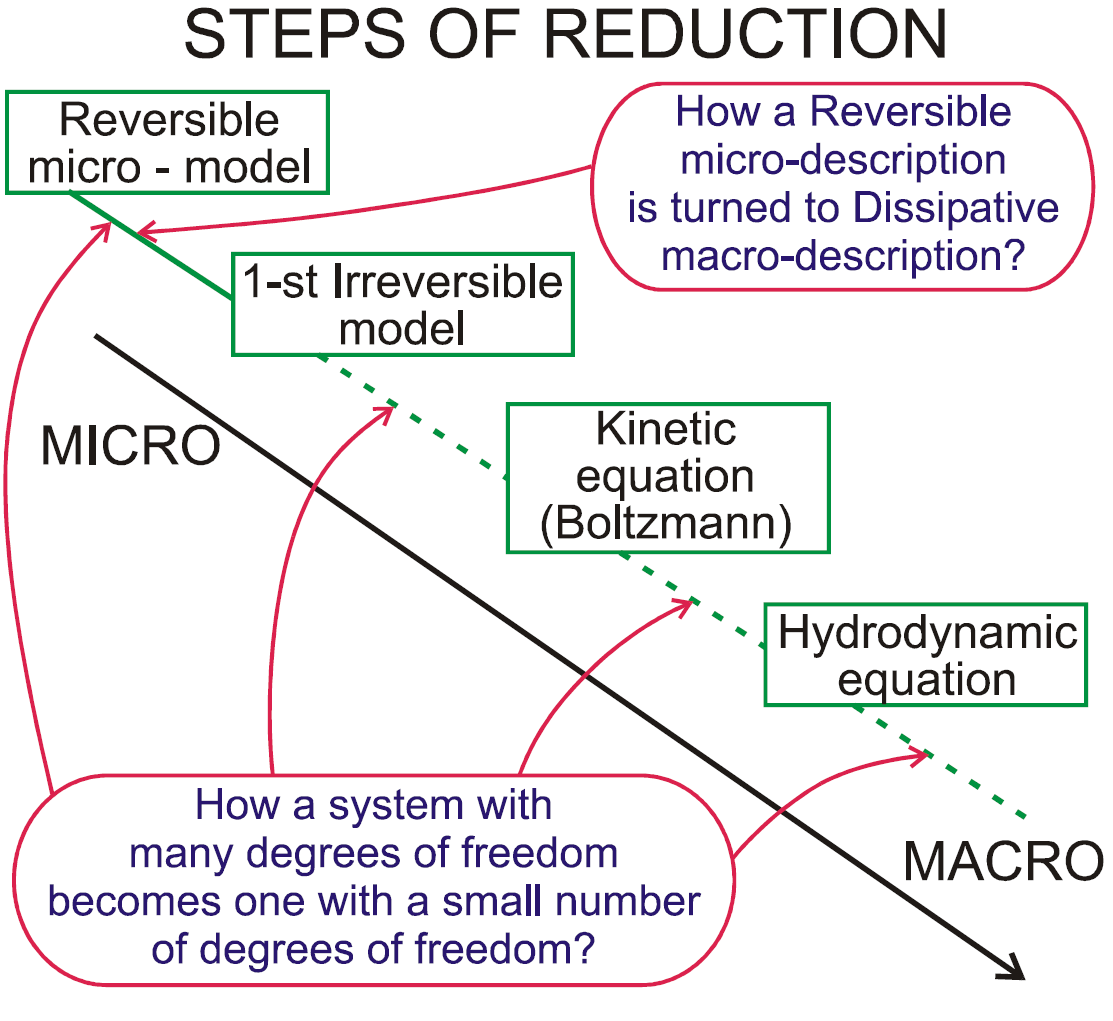
In the 1990s-2000s the problem of "the limiting processes, there merely indicated, which lead from the atomistic view to the laws of motion of continua" was approached by many groups of mathematicians. Main recent results are summarized by Laure Saint-Raymond, Marshall Slemrod, Alexander N. Gorban and Ilya Karlin.
Hilbert's sixth problem
Hilbert's sixth problem is to axiomatize those branches of physics in which mathematics is prevalent. It occurs on the widely cited list of Hilbert's problems in mathematics that he presented in the year 1900. In its common English translation, the explicit statement reads:
Hilbert gave the further explanation of this problem and its possible specific forms:
David Hilbert himself devoted much of his research to the sixth problem; in particular, he worked in those fields of physics that arose after he stated the problem.
In the 1910s, celestial mechanics evolved into general relativity. Hilbert and Emmy Noether corresponded extensively with Albert Einstein on the formulation of the theory.
In the 1920s, mechanics of microscopic systems evolved into quantum mechanics. Hilbert, with the assistance of John von Neumann, L. Nordheim, and E. P. Wigner, worked on the axiomatic basis of quantum mechanics (see Hilbert space). At the same time, but independently, Dirac formulated quantum mechanics in a way that is close to an axiomatic system, as did Hermann Weyl with the assistance of Erwin Schrödinger.
In the 1930s, probability theory was put on an axiomatic basis by Andrey Kolmogorov, using measure theory.
Since the 1960s, following the work of Arthur Wightman and Rudolf Haag, modern quantum field theory can also be considered close to an axiomatic description.
In the 1990s-2000s the problem of "the limiting processes, there merely indicated, which lead from the atomistic view to the laws of motion of continua" was approached by many groups of mathematicians. Main recent results are summarized by Laure Saint-Raymond, Marshall Slemrod, Alexander N. Gorban and Ilya Karlin.
Recent media
Recent media