Hubbry Logo
Hilbert's problemsHilbert's problemsMain
Open search
Hilbert's problems
Community hub
Hilbert's problems
logo
8 pages, 0 posts
0 subscribers
Be the first to start a discussion here.
Hilbert's problems
Hilbert's problems
from Wikipedia

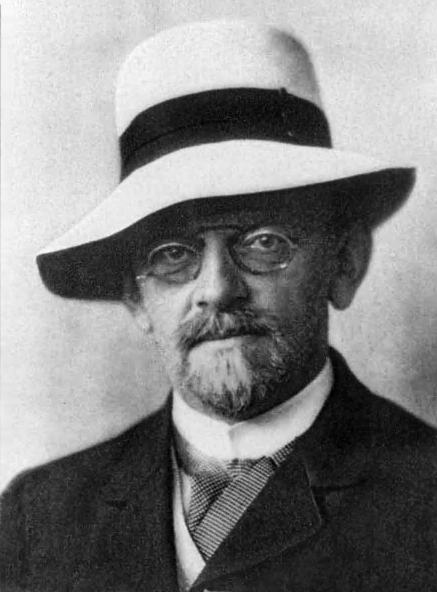
David Hilbert

Hilbert's problems are 23 problems in mathematics published by German mathematician David Hilbert in 1900. They were all unsolved at the time, and several proved to be very influential for 20th-century mathematics. Hilbert presented ten of the problems (1, 2, 6, 7, 8, 13, 16, 19, 21, and 22) at the Paris conference of the International Congress of Mathematicians, speaking on August 8 at the Sorbonne. The complete list of 23 problems was published later, and translated into English in 1902 by Mary Frances Winston Newson in the Bulletin of the American Mathematical Society.[1] Earlier publications (in the original German) appeared in Archiv der Mathematik und Physik.[2]

Of the cleanly formulated Hilbert problems: 3, 6a[a], 7, 10, 11, 14, 17, 18, 19, and 21 have resolutions that are accepted by consensus of the mathematical community. The status of problems 1, 2, 5, 6b, 8c, 13, and 15 is controversial: there are some results, but there exists some controversy as to whether they resolve the problems. Problems 8a, 8b, 9, 12, 16, 20 and 22 are unresolved or widely agreed as unresolved despite some partial results. Problems 4 and 23 are considered as too vague to ever be described as solved; the withdrawn 24 would also be in this class.

List of Hilbert's problems

[edit]

The following are the headers for Hilbert's 23 problems as they appeared in the 1902 translation of Hilbert's presentation, published in the Bulletin of the American Mathematical Society.[1]

1. Cantor's problem of the cardinal number of the continuum.
2. The compatibility of the arithmetical axioms.
3. Scissor congruence of polyhedra of equal volumes.
4. Problem of the straight line as the shortest distance between two points.
5. Lie's concept of a continuous group of transformations without the assumption of the differentiability of the functions defining the group.
6. Mathematical treatment of the axioms of physics.
7. Irrationality and transcendence of certain numbers.
8. Problems of prime numbers.
9. Proof of the most general law of reciprocity in any number field.
10. Determination of the solvability of a Diophantine equation.
11. Quadratic forms with any algebraic numerical coefficients.
12. Extensions of Kronecker's theorem on Abelian fields to any algebraic realm of rationality.
13. Impossibility of the solution of the general equation of 7th degree by means of functions of only two arguments.
14. Proof of the finiteness of certain complete systems of functions.
15. Rigorous foundation of Schubert's enumerative calculus.
16. Problem of the topology of algebraic curves and surfaces.
17. Expression of definite forms by squares.
18. Building up of space from congruent polyhedra.
19. Are the solutions of regular problems in the calculus of variations always necessarily analytic?
20. The general problem of boundary values.
21. Proof of the existence of linear differential equations having a prescribed monodromy group.
22. Uniformization of analytic relations by means of automorphic functions.
23. Further development of the methods of the calculus of variations.

The 24th problem

[edit]

Hilbert originally had 24 problems on his list, but decided against including one of them in the published list. The "24th problem" (in proof theory, on a criterion for simplicity and general methods) was rediscovered in Hilbert's original manuscript notes by German historian Rüdiger Thiele in 2000.[3]

Nature and influence of the problems

[edit]

Hilbert's problems ranged greatly in topic and precision. Some of them, like the 3rd problem, which was the first to be solved, or the 8th problem (the Riemann hypothesis), which still remains unresolved, were presented precisely enough to enable a clear affirmative or negative answer. For other problems, such as the 5th, experts have traditionally agreed on a single interpretation, and a solution to the accepted interpretation has been given, but closely related unsolved problems exist. Some of Hilbert's statements were not precise enough to specify a particular problem, but were suggestive enough that certain problems of contemporary nature seem to apply; for example, most modern number theorists would probably see the 9th problem as referring to the conjectural Langlands correspondence on representations of the absolute Galois group of a number field.[4] Still other problems, such as the 11th and the 16th, concern flourishing mathematical subdisciplines, like the theories of quadratic forms and real algebraic curves.

There are two problems that are not only unresolved but may in fact be unresolvable by modern standards. The 6th problem concerns the axiomatization of physics, a goal that 20th-century developments seem to render both more remote and less important than in Hilbert's time. Also, the 4th problem concerns the foundations of geometry, in a manner that is generally judged to be too vague to enable a definitive answer.

The 23rd problem was purposefully set as a general indication by Hilbert to highlight the calculus of variations as an underappreciated and understudied field. In the lecture introducing these problems, Hilbert made the following introductory remark to the 23rd problem:

"So far, I have generally mentioned problems as definite and special as possible, in the opinion that it is just such definite and special problems that attract us the most and from which the most lasting influence is often exerted upon science. Nevertheless, I should like to close with a general problem, namely with the indication of a branch of mathematics repeatedly mentioned in this lecture—which, in spite of the considerable advancement lately given it by Weierstrass, does not receive the general appreciation which, in my opinion, is its due—I mean the calculus of variations."

The other 21 problems have all received significant attention, and late into the 20th century work on these problems was still considered to be of the greatest importance. Paul Cohen received the Fields Medal in 1966 for his work on the first problem, and the negative solution of the tenth problem in 1970 by Yuri Matiyasevich (completing work by Julia Robinson, Hilary Putnam, and Martin Davis) generated similar acclaim. Aspects of these problems remain of great interest.

Knowability

[edit]

Following Gottlob Frege and Bertrand Russell, Hilbert sought to define mathematics logically using the method of formal systems, i.e., finitistic proofs from an agreed-upon set of axioms.[5] One of the main goals of Hilbert's program was a finitistic proof of the consistency of the axioms of arithmetic: that is his second problem.[b]

However, Gödel's second incompleteness theorem gives a precise sense in which such a finitistic proof of the consistency of arithmetic is provably impossible. Hilbert lived for 12 years after Kurt Gödel published his theorem, but does not seem to have written any formal response to Gödel's work.[c][d]

Hilbert's tenth problem does not ask whether there exists an algorithm for deciding the solvability of Diophantine equations, but rather asks for the construction of such an algorithm: "to devise a process according to which it can be determined in a finite number of operations whether the equation is solvable in rational integers". That this problem was solved by showing that there cannot be any such algorithm contradicted Hilbert's philosophy of mathematics.

In discussing his opinion that every mathematical problem should have a solution, Hilbert allows for the possibility that the solution could be a proof that the original problem is impossible.[e] He stated that the point is to know one way or the other what the solution is, and he believed that we always can know this, that in mathematics there is not any "ignorabimus" (statement whose truth can never be known).[f] It seems unclear whether he would have regarded the solution of the tenth problem as an instance of ignorabimus.

On the other hand, the status of the first and second problems is even more complicated: there is no clear mathematical consensus as to whether the results of Gödel (in the case of the second problem), or Gödel and Cohen (in the case of the first problem) give definitive negative solutions or not, since these solutions apply to a certain formalization of the problems, which is not necessarily the only possible one.[g]

Table of problems

[edit]

Hilbert's 23 problems, and the unpublished 24th problem, are listed below. For details on the solutions and references, see the articles that are linked to in the first column.

Problem Brief explanation Status Year solved
1st The continuum hypothesis (that is, there is no set whose cardinality is strictly between that of the integers and that of the real numbers) Proven to be impossible to prove or disprove within Zermelo–Fraenkel set theory with or without the axiom of choice (provided Zermelo–Fraenkel set theory is consistent, i.e., it does not contain a contradiction). There is no consensus on whether this is a solution to the problem. 1940, 1963?
2nd Prove that the axioms of arithmetic are consistent. There is no consensus on whether results of Gödel and Gentzen give a solution to the problem as stated by Hilbert. Gödel's second incompleteness theorem, proved in 1931, shows that no such proof can be carried out within arithmetic itself. Gentzen proved in 1936 that the consistency of arithmetic follows from the well-foundedness of the ordinal ε0. 1931, 1936?
3rd Given any two polyhedra of equal volume, is it always possible to cut the first into finitely many polyhedral pieces that can be reassembled to yield the second? Resolved. Result: No, proved by Max Dehn using Dehn invariants. Even different Platonic solids of equal volume cannot be obtained this way from each other. 1900
4th Construction of geometries satisfying axioms of classical geometry, where lines are geodesics. Too vague to be stated resolved or not.[h]
5th Are continuous groups automatically differential groups? Depends on the interpretation of continuous group.

If the term is understood as a topological group that is also a topological manifold: yes, proved by Andrew Gleason.[8]

If continuous group is understood as a topological group acting on a manifold, the problem becomes the Hilbert–Smith conjecture, which is still unresolved.

1953?
6th Mathematical treatment of the axioms of physics. In later explanation given by Hilbert:[1]

(a) axiomatic treatment of probability with limit theorems for foundation of statistical physics

(b) the rigorous theory of limiting processes "which lead from the atomistic view to the laws of motion of continua"

(a) Resolved. Kolmogorov's axiomatics was accepted as standard for the foundations of probability theory.

1933

(b) Depends on the interpretation of the problem.

If treated as a physical problem: since the publication of Hilbert's list, new discoveries challenged classical mechanics and led to the formulation of quantum field theory, which holds an "atomistic view" of physical laws; and general relativity, which describes "motion of continua" at large scales. Despite many attempts to unify them into a theory of everything, it is still not obvious how to make clear link between them.

Some authors tried to solve this as a mathematical problem in a classical mechanics framework, which was the dominant physical theory during the publication of the list. In March 2025, Deng, Hani, and Ma published a paper claiming to have solved this problem in by deriving continuous fluid equations and Boltzman kinetic equation from Newton's laws applied for particles.[9] The paper is currently in peer review.[10]

2025?
7th Is ab transcendental, for algebraic a ≠ 0,1 and irrational algebraic b ? Resolved. Result: Yes, illustrated by the Gelfond–Schneider theorem. 1934
8th (a) The Riemann hypothesis: the real part of any non-trivial zero of the Riemann zeta function is 12. Unresolved. Partial results involve much weaker estimations that at least 512 of non-trivial zeros satisfy this condition and almost all of them have real part arbitrarily close to 12.
(b) For pairwise coprime integers: determine solvability of diophantine equation: for x and y being prime numbers. Goldbach's conjecture and the twin prime conjecture are special cases of this problem. Unresolved, even the special cases of this equation are hard open problems. Partial results include Yitang Zhang's proof of bounded gaps between primes, later improved by the Polymath Project.
(c) Generalize results using Riemann zeta function for distribution of prime numbers in integers, to apply them to Dedekind zeta functions for distribution of prime ideals in ring of integers for any number field. Depends on the interpretation of expected results. In 1917, Erich Hecke constructed an analytic continuation for Dedekind zeta functions and proved functional equation, which allowed for obtaining results similar to that currently accessible using Riemann zeta function. However, if understood as proving an extended Riemann hypothesis, then the problem is still unresolved. 1917?
9th Find the most general law of the reciprocity theorem in any algebraic number field. Unresolved. Partial results involve the Artin reciprocity law for abelian extensions of number fields, key result in class field theory. Development of non-abelian class field theory that would work for the general case of number fields is still a largely conjectural area.
10th Find an algorithm to determine whether a given polynomial Diophantine equation with integer coefficients has an integer solution. Resolved. Result: Impossible; Matiyasevich's theorem implies that there is no such algorithm. 1970
11th Solving quadratic forms with any number of variables and coefficients over any number field. Resolved. Helmut Hasse in 1924 created a general theory of classification and deciding solvability of quadratic forms over number fields using the local-global principle. His methodology was later simplified by Ernst Witt using Witt rings.[11] 1924
12th Extend the Kronecker–Weber theorem on abelian extensions of the rational numbers to abelian extensions of any base number field. Unresolved. Partial results involve construction using Hilbert modular forms for CM-fields by Goro Shimura and special cases of totally real fields using Brumer-Stark units by Dasgupta and Kadke.[12][13]
13th Prove that the general case of 7th-degree equation cannot be solved using finite composition of continuous functions (variant: algebraic functions) of two parameters. For continuous variant: at least construct analytic function of three variables that cannot be represented as such composition. Depends on variant of the problem.

For continuous variant: No, Kolmogorov–Arnold representation theorem shows that every multivariate continuous function can be obtained as such composition.

Some authors argue that Hilbert intended for a solution within the space of algebraic functions and possible extension of the Galois theory, thus continuing their own work on the algebraic case.[14][15][16] It appears from one of later Hilbert's papers that this was his original intention for the problem.[17] For algebraic variant: the problem is unresolved.

1957?
14th Is the ring of invariants of an algebraic group acting on a polynomial ring always finitely generated? Resolved. Result: No, a counterexample was constructed by Masayoshi Nagata. 1959
15th Rigorous foundation of Schubert's enumerative calculus. Significant developments for resolving this problem have been made since the publication of the list:
  • Major enumerative examples of Schubert[18][19] have been verified by Aluffi, Harris, Kleiman, Xambó, et al.[20][21]
  • Special presentations of the Chow rings of flag manifolds have been worked out by Borel, Marlin, Billey-Haiman and Duan-Zhao, et al.;[21]
  • Schubert's characteristic problem has been solved by Haibao Duan and Xuezhi Zhao.[21]

Duan and Zhao claimed that their result actually resolved this problem. Currently there is no consensus whether the problem is resolved completely or partially.

1987–2020?
16th Describe relative positions of ovals originating from a real algebraic curve and as limit cycles of a polynomial vector field on the plane. Unresolved. Exact description of position of components for real algebraic curves is open problem, even for small degrees like 8. For polynomial vector fields, partial results include proof that they have finitely many limit cycles, but no effective bound is known.
17th Express a nonnegative rational function as quotient of sums of squares. Resolved. Result: Yes, due to Emil Artin. Moreover, an upper limit was established for the number of square terms necessary. 1927
18th (a) Are there only finitely many essentially different space groups in n-dimensional Euclidean space? Resolved. Result: Yes (by Ludwig Bieberbach) 1910
(b) Is there a polyhedron that admits only an anisohedral tiling in three dimensions? Resolved. Result: Yes (by Karl Reinhardt). 1928
(c) What is the densest sphere packing? Widely believed to be resolved, by computer-assisted proof (by Thomas Callister Hales). Result: Highest density achieved by close packings, each with density approximately 74%, such as face-centered cubic close packing and hexagonal close packing.[i] 1998
19th Are the solutions of regular problems in the calculus of variations always necessarily analytic? Resolved. Result: Yes, proved by Ennio De Giorgi and, independently and using different methods, by John Forbes Nash. 1957
20th Do all variational problems with certain boundary conditions have solutions? Unresolved. A significant topic of research throughout the 20th century, resulting in solutions for some cases.[22][23][24]
21st Proof of the existence of Fuchsian linear differential equations having a prescribed monodromy group Resolved. Result: No, a counterexample was shown by Andrei Bolibrukh.[25][26][27] Despite a negative answer in the most general case, Fuchsian equations may exist in special cases under some additional assumptions.[28] 1989
22nd Uniformization of analytic relations by means of automorphic functions Unresolved. Partial results involve uniformization theorem for Riemann surfaces.
23rd Further development of the calculus of variations Too vague to be stated resolved or not. Since the list was proposed, Hilbert and many other mathematicians have made numerous contributions to the calculus of variations.[29] The dynamic programming of Richard Bellman is considered an alternative to the calculus of variations.[30][31][32][j]
Unpublished 24th problem
24th Development of a theory of proof simplicity Recovered from Hilbert's unpublished notes. Too vague to be stated resolved or not.

Follow-ups

[edit]

Since 1900, mathematicians and mathematical organizations have announced problem lists but, with few exceptions, these have not had nearly as much influence nor generated as much work as Hilbert's problems.

One exception consists of four conjectures made by André Weil in the late 1940s (the Weil conjectures). In the fields of algebraic geometry, number theory and the links between the two, the Weil conjectures were very important.[33][34] The first of these was proven by Bernard Dwork; a completely different proof of the first two, via ℓ-adic cohomology, was given by Alexander Grothendieck. The last and deepest of the Weil conjectures (an analogue of the Riemann hypothesis) was proven by Pierre Deligne. Both Grothendieck and Deligne were awarded the Fields Medal. However, the Weil conjectures were, in their scope, more like a single Hilbert problem, and Weil never intended them as a programme for all mathematics. This is somewhat ironic, since arguably Weil was the mathematician of the 1940s and 1950s who best played the Hilbert role, being conversant with nearly all areas of (theoretical) mathematics and having figured importantly in the development of many of them.

Paul Erdős posed hundreds, if not thousands, of mathematical problems, many of them profound. Erdős often offered monetary rewards; the size of the reward depended on the perceived difficulty of the problem.[35]

William Thurston in his 1982 paper published list of 24 mathematical problems, but unlike Hilbert's list that covered many different branches of mathematics, Thurston's list was focused on problems from geometric topology of 3-dimensional manifolds. Also, unlike Hilbert's problems which most of them took many decades to be resolved, 22 of 24 Thurston's problems were resolved in 30 years after publication of list (which is relatively short time for open mathematical problem).

The end of the millennium, which was also the centennial of Hilbert's announcement of his problems, provided a natural occasion to propose "a new set of Hilbert problems". Several mathematicians accepted the challenge, notably Fields Medalist Steve Smale, who responded to a request by Vladimir Arnold to propose a list of 18 problems (Smale's problems).

At least in the mainstream media, the de facto 21st century analogue of Hilbert's problems is the list of seven Millennium Prize Problems chosen during 2000 by the Clay Mathematics Institute. Unlike the Hilbert problems, where the primary award was the admiration of Hilbert in particular and mathematicians in general, each prize problem includes a million-dollar bounty. Also most of Hilbert's problems was not recognised widely in mathematical community before publication of his list, while all of Millenium Prize Problem was well-known from decades and earned many attempted proofs. As with the Hilbert problems, one of the prize problems (the Poincaré conjecture) was solved relatively soon after the problems were announced.

The Riemann hypothesis is noteworthy for its appearance on the list of Hilbert problems, Smale's list, the list of Millennium Prize Problems, and even the Weil conjectures, in its geometric guise. Although it has been attacked by major mathematicians of our day, many experts believe that it will still be part of unsolved problems lists for many centuries. Hilbert himself declared: "If I were to awaken after having slept for a thousand years, my first question would be: Has the Riemann hypothesis been proved?"[36]

In 2008, DARPA announced its own list of 23 problems that it hoped could lead to major mathematical breakthroughs, "thereby strengthening the scientific and technological capabilities of the DoD".[37][38] The DARPA list also includes a few problems from Hilbert's list, e.g. the Riemann hypothesis.

See also

[edit]

Notes

[edit]

References

[edit]

Further reading

[edit]
[edit]
Revisions and contributorsEdit on WikipediaRead on Wikipedia
from Grokipedia
Hilbert's problems are a set of 23 mathematical challenges proposed by the German mathematician during his address at the Second in on August 8, 1900. These problems spanned diverse areas of mathematics, including , , , and foundational issues in logic and , and were designed to outline key unsolved questions that could guide research and development in the field for the ensuing century. In his , titled "Mathematical Problems," Hilbert argued that the vitality of depends on the existence of open problems, which not only test existing theories but also inspire the creation of new tools and broader perspectives. He presented ten of the problems orally during the , with the complete list of 23 published in the proceedings shortly thereafter, emphasizing their clarity, solvability through rigorous methods, and potential to advance the axiomatic . The problems profoundly shaped 20th-century mathematics, serving as benchmarks for progress; while many have been fully or partially resolved—such as the resolution of the in certain models through Gödel's and Cohen's work on problem 1, or the unsolvability of the tenth problem via Matiyasevich's —others remain open or continue to evolve, including the (problem 8) and aspects of the sixth problem on axiomatizing physics. Their enduring legacy lies in stimulating foundational breakthroughs, from the development of addressing elements of problem 4 to advances in computational theory linked to problem 10, influencing fields far beyond .

Historical Context

The 1900 International Congress of Mathematicians

The Second took place in , , from August 6 to 12, 1900, as part of the broader Exposition Universelle celebrating the new century. Organized by the French Mathematical Society (Société Mathématique de France) following the decision of the inaugural congress in in 1897, the event drew approximately 250 full members from around the world, including prominent figures from Europe and beyond. The congress was opened by Jules Tannery, with welcoming addresses by , who proposed Charles Hermite as honorary president due to his inability to attend in person, and later toasts by the perpetual secretary of the Academy of Sciences, Gaston Darboux. David Hilbert, a leading mathematician at the and one of the era's foremost experts in and algebraic number fields, was invited as a keynote speaker. On , during the section on the and bibliography, Hilbert delivered his address titled "Mathematical Problems" (in German: "Mathematische Probleme"), an extensive presentation that outlined key challenges for future mathematical research. The speech was notable for its forward-looking vision, emphasizing the role of unsolved problems in advancing the field. The represented a pivotal milestone in the internationalization of mathematics, building on the meeting by promoting cross-border collaboration among scholars in the post-19th-century era. Held amid the vibrant intellectual atmosphere of the exposition, which featured numerous scientific gatherings, it facilitated discussions on diverse topics from to applications in physics and astronomy, underscoring mathematics' growing global community and its transition into the .

Hilbert's Address and Selection Process

David Hilbert delivered his seminal address on mathematical problems at the Second International Congress of Mathematicians in Paris on August 8, 1900, presenting it in German to an international audience of leading scholars. His primary motivation was to delineate 23 "definite" problems—carefully chosen as central, feasible, and poised to propel mathematical inquiry forward—serving as a roadmap for the field's evolution over the ensuing century. Hilbert believed these challenges would not only highlight the vitality of mathematics as a living science but also inspire rigorous investigation, fostering breakthroughs through the development of new methods and concepts. The address opened with philosophical reflections on the axiomatic method, underscoring its role in providing a secure foundation for mathematical reasoning and eliminating ambiguities in established theories. Hilbert argued that while theorems represent achievements of the past, unsolved problems constitute the true engines of progress, asserting that "the organic development of mathematics is conditioned by the circumstance that the problems are the motive power of our science, and that all progress is to be traced to the solution of problems." He emphasized the conviction that every is solvable via finite logical processes, rejecting any notion of inherent unsolvability and viewing such optimism as essential to the discipline's advancement. In selecting the problems, Hilbert drew from pressing contemporary issues across , , , and related domains, informed by his extensive experience and discussions with close collaborators such as and . He applied strict criteria, prioritizing challenges that were precisely formulated, sufficiently difficult to demand innovative approaches, yet accessible enough to attract broad engagement, while deliberately omitting those that were too vague, philosophically speculative, or already resolved. At Minkowski's suggestion, Hilbert limited the oral presentation to ten problems to maintain focus during the congress session. Although the congress proceedings captured only partial notes from the address, Hilbert ensured the complete exposition reached the mathematical community by publishing the full text, including all 23 problems, later that year in the Nachrichten der Königlichen Gesellschaft der Wissenschaften zu Göttingen (pp. 253–297). An English translation appeared in 1902 in the Bulletin of the American Mathematical Society, broadening its influence.

Overview of the Problems

Structure and Themes of the 23 Problems

Hilbert presented a total of 23 problems in his 1900 address, intended as guiding challenges to test the vitality and progress of mathematical research, serving as "test questions" that would drive the development of the by focusing efforts on fundamental issues. Some problems are subdivided into parts, such as aspects of the foundational questions in and . Retrospectively, the problems span a wide range of mathematical domains, including , , , , and . This classification underscores the comprehensive scope of Hilbert's agenda, spanning pure mathematical structures to interdisciplinary connections. Recurring themes across the problems emphasize the need for mathematical rigor, particularly through axiomatic approaches to establish solid foundations; the pursuit of generality, as in efforts to develop unifying theories across disparate areas; and practical applicability, including links to physical phenomena. The problems also balance abstract concerns, such as existence proofs for theoretical entities, with demands for constructive methods to explicitly build solutions or algorithms. The problems exhibit notable interconnections that amplify their collective impact, with several building upon or informing others; for instance, Problem 1, concerning the , directly relates to foundational issues raised in Problem 2. Such linkages encouraged mathematicians to approach the set holistically, fostering advances that spanned multiple fields over the subsequent century.

The Added 24th Problem

The added 24th problem, conceived by around the time of his 1900 lecture at the but ultimately excluded from the final list, focuses on foundational aspects of . It was rediscovered in the late 1990s through examination of Hilbert's personal notebooks (Cod. Ms. D. Hilbert 600:3) preserved in the State and University Library, revealing that he had drafted it as an additional challenge beyond the original 23 problems. This posthumous identification, formalized in scholarly interpretations starting in the early 2000s, highlights Hilbert's early interest in extending his problems to address meta-mathematical concerns. The core content of the 24th problem asks for the establishment of criteria of for mathematical proofs, along with the development of a rigorous capable of proving that a given proof achieves the greatest possible simplicity for a specific . Specifically, it seeks an absolute, system-independent measure of proof complexity—such as length in terms of steps or —to evaluate and compare proofs objectively, thereby supporting Hilbert's later emphasis on finitary methods within his formalist program for securing the foundations of . This formulation appears directly in Hilbert's notebook entry: "The 24th problem in my Paris lecture was to be: Criteria of simplicity, or proof of the greatest simplicity of certain proofs. Develop a of the method of proof of the greatest simplicity." Unlike the more concrete challenges in the original list, this problem targets the qualitative and quantitative assessment of proofs themselves, linking to broader themes in Hilbert's foundational concerns, such as those in Problem 2 on the consistency of arithmetic. Hilbert omitted problem from his 1900 address primarily due to its speculative character and the practical difficulties in articulating a precise definition of "" amid the time constraints of the lecture, opting instead to prioritize the 23 more immediately actionable problems. He viewed it as an extension of foundational issues but deemed it too preliminary for public presentation at the time. The problem was not mentioned in the published version of the speech or subsequent early accounts, first receiving related elaboration in Hilbert's 1922 essay "Neubegründung der Mathematik," where he discussed and the need for finitary consistency proofs, themes resonant with problem's aims. Scholars, including historian Rüdiger Thiele, have since debated its potential inclusion in Hilbert's canonical list, arguing it encapsulates his evolving thoughts on mathematical rigor; earlier biographical works, such as Constance Reid's 1970 account, noted the 23 problems without reference to this outlier due to its then-obscure status. In modern terms, the problem remains largely unsolved, with ongoing research in and proof complexity theory providing tools for simplification but no universal metric for absolute .

Detailed Descriptions of the Problems

Problems 1–10: Foundations and Algebra

The first ten problems in David Hilbert's 1900 list emphasize foundational questions in mathematics, spanning , the consistency of arithmetic, the rigor of proofs in and , permissible tools for constructions, inequalities in , axiomatization of physical theories, and core challenges in . These problems highlight Hilbert's vision for strengthening the axiomatic while advancing algebraic structures and arithmetic principles, as articulated in his lecture at the Second in . Hilbert selected these to address unresolved issues that could unify disparate branches of mathematics, drawing from contemporary debates in and . Problem 1: Continuum hypothesis and well-ordering of the reals Hilbert's first problem targets the foundations of , posing two interrelated questions inspired by Georg Cantor's work on transfinite numbers. The primary part is to prove or disprove the , which states that there is no whose is strictly between that of the natural numbers (0\aleph_0) and the s (202^{\aleph_0}). The secondary part asks whether the real numbers admit a well-ordering, meaning an ordering in which every nonempty subset has a least element. Hilbert formulated it as follows: "The investigations on the foundations of suggest the problem: To establish rigorously the arithmetical propositions which are true for all real number systems, and to decide whether the continuum can be well-ordered." This problem arose from efforts to extend the , assumed in Cantor's theory, to the continuum, amid ongoing discussions at the about the size of infinite sets. Problem 2: Consistency of arithmetic axioms The second problem seeks a proof of the consistency of the axioms of arithmetic using only finite, constructive methods, ensuring that no contradictions arise within the system of arithmetic. Hilbert emphasized the need for such a proof to secure the foundations of , stating: "The most important question in the whole of mathematical science is whether from the given axioms of arithmetic it is possible to derive a contradiction, and if this is not possible, to give a proof by finite means." This formulation reflects Hilbert's axiomatic approach, influenced by his work on the foundations of , and aims to demonstrate that arithmetic is free from paradoxes like those in . Problem 3: Promotion of rigorous proofs in analysis Hilbert's third problem advocates for greater rigor in mathematical proofs, particularly in , by challenging mathematicians to establish definitive results for key theorems that lacked complete proofs at the time. It includes two main subparts: first, to prove the , which asserts that every closed in the plane divides the plane into an interior and exterior region; second, to determine whether polyhedra of equal can always be dissected into finitely many congruent polyhedral pieces. Hilbert described it as: "In the of discontinuous groups there are still to be solved two problems of : (1) To prove that a closed in the plane without singular points divides the plane into two regions; (2) To show that two polyhedra of equal can be dissected into the same finite number of polyhedral pieces." This problem underscores Hilbert's call for precision in and , addressing gaps in proofs that relied on intuitive notions of continuity and . Problem 4: Straightedge-and-compass constructions using marked ruler Hilbert's fourth problem asks for the construction and investigation of all metrics on subsets of (or ) for which the straight lines are the geodesics (shortest paths between points). It seeks to understand geometries where the straight line remains the shortest under modified axioms, such as weakening the congruence axiom while preserving the parallel postulate in a generalized sense. Hilbert posed it as: "The straight line is said to be the shortest distance between two points. This important property of the straight line should now be investigated in a more general sense. Namely, it is to be investigated under what conditions and in what manner the straight line can be conceived as the shortest between two points." Originating from considerations in , this problem tests the boundaries of metric structures linking to projective and . Problem 5: Explicit inequalities between sums and integrals Hilbert's fifth problem concerns the nature of continuous groups of transformations. It asks whether a that is locally Euclidean (i.e., a manifold) must necessarily have the differentiable structure of a , without assuming differentiability a priori. Specifically, it explores if every continuous transformation group can be treated analytically without introducing differentials, refining 's . Hilbert stated: "The investigations on continuous groups carried out by Lie and others have brought Lie's concept of continuous group to a high degree of perfection, but have left unanswered the question whether this concept is capable of a purely analytical treatment without the introduction of the notion of differential." This addresses foundational issues in group , impacting the study of symmetries in and physics. Problem 6: Axiomatization of physics The sixth problem calls for a rigorous axiomatization of those in which plays a significant role, such as and , to place them on a secure foundational basis akin to . Hilbert highlighted the need for axioms in probability, noting: "The propositions of the and the integral calculus are based on intuitive notions; but to make these rigorous, we need axioms. The same holds for the calculus of probabilities." Inspired by his axiomatic method in , this problem seeks to formalize physical laws, starting with principles of probability to resolve ambiguities in early 20th-century . Problem 7: Ideal numbers in number fields Hilbert's seventh problem asks to prove that if α is an algebraic number (neither zero nor one) and β is an irrational algebraic number, then α^β is transcendental. He sought general results for such expressions, building on known irrationalities like those of e and π, and highlighted the need to extend transcendence theory beyond specific cases. Hilbert stated: "It is not known whether the number e^π is irrational or not; it is to be proved that certain numbers of this kind are irrational." This problem advances transcendental number theory, with implications for algebraic independence. Problem 8: Riemann hypothesis The eighth problem is the , conjecturing that all nontrivial zeros of the ζ(s)\zeta(s) lie on the critical line where the real part of ss is 1/21/2. Hilbert regarded it as one of the most important unsolved problems, declaring: "The Riemann conjecture on the zeros of the zeta function: that all non-trivial zeros have real part 1/21/2." Formulated by in 1859, it links the distribution of prime numbers to the zeros of ζ(s)\zeta(s), with profound implications for . Problem 9: Laws of reciprocity in number theory Hilbert's ninth problem seeks generalizations of the law of to higher-degree forms and arbitrary number fields, aiming to find algebraic or analytic criteria for when a prime divides a given . He specified: "To find a general law of reciprocity for arbitrary rational functions, or at least for those of degree nn." Building on Gauss's and Eisenstein's , this problem targets a unified , potentially using precursors. Problem 10: Solvability of Diophantine equations The tenth problem asks for an to determine whether a given (polynomial equation with integer coefficients) has integer solutions, with a focus on resolving the solvability of general seventh-degree equations. Hilbert clarified: "To devise a according to which it shall be possible to determine whether a given equation with rational integral coefficients possesses a solution which is also rational and integral." This encompasses Hilbert's earlier work on and algebraic solvability, seeking a decision procedure for the "" in Diophantine analysis.

Problems 11–23: Geometry, Analysis, and Physics

The problems 11 through 23 shift focus from foundational and algebraic concerns to more applied areas of , , and physics, reflecting Hilbert's belief in the unity of and its role in solving real-world scientific challenges. These problems draw inspiration from the developed by , Hilbert's mentor at , who emphasized the importance of group actions in , and from Henri Poincaré's pioneering work in , dynamical systems, and variational methods, which highlighted the need for rigorous existence proofs in . Problem 11 addresses the representation of numbers by quadratic forms over rings of algebraic integers. Hilbert asked for a complete theory of the conditions under which a quadratic form with coefficients in the ring of integers of a number field represents zero non-trivially, generalizing classical results for rational integers to arbitrary algebraic number fields and extending the scope to positive definite forms and their equivalence classes. This problem builds on earlier work in quadratic forms and aims to clarify the arithmetic properties of such representations in higher dimensions. Problem 12 seeks an extension of Kronecker's Jugendtraum (youth's dream) theorem, which characterizes abelian extensions of the rational numbers via cyclotomic fields, to arbitrary fields. Hilbert proposed constructing all abelian extensions of a given number field using specially constructed auxiliary fields, emphasizing the role of ideal class groups and ray class fields in this generalization. The problem underscores the need for a unified to describe these extensions explicitly. Problem 13 concerns the ring of integer solutions to linear Diophantine equations, such as ax+by=1ax + by = 1, and asks for a theory of unique within this ring, analogous to the . Hilbert illustrated this with the Pell equation x2dy2=1x^2 - dy^2 = 1, where solutions form a group under composition, and sought general criteria for irreducibility and unique factorization in such solution rings for systems of equations. This problem highlights the of Diophantine solutions in multiple variables. Problem 14 inquires into the finiteness of systems of invariants for rational functions or forms under linear group actions, building directly on Hilbert's own basis theorem for polynomial ideals. Specifically, Hilbert posed whether, for binary forms of degree nn under the action of GL(2)GL(2), the ring of invariants is finitely generated, and extended this to relative invariants and more general transformation groups. The problem connects to by seeking effective methods for computing complete systems of invariants. Problem 15 calls for a rigorous foundation of Schubert's enumerative calculus in , which counts the number of curves or surfaces satisfying incidence conditions, such as those passing through given points. Hilbert criticized the lack of precision in Schubert's characteristic numbers and sought proofs using modern algebraic methods, like resultants or , to validate these counts for systems of curves on surfaces. This problem aims to place on a firm analytical basis. Problem 16 focuses on the of algebraic curves and surfaces, requesting or refutation of Plücker's formulas relating the number of singularities (nodes, cusps) to the and degree of the curve. Hilbert emphasized the need to determine whether these formulas hold generally for plane curves and their projections, and to develop a systematic study of double curves and tacnodes on surfaces. Influenced by Klein's , the problem seeks to integrate with . Problem 17 addresses variational problems arising in physics, such as the isoperimetric problem of maximizing area for a given perimeter, and more generally, finding extrema of integrals under constraints. Hilbert sought explicit solutions or existence proofs for these problems in the , particularly those modeling physical phenomena like minimal surfaces or geodesics, and highlighted the need for boundary conditions in real-world applications. This reflects Poincaré's influence on and stability. Problem 18 addresses the building up of using congruent , asking for a complete enumeration of all possible space groups ( classes of discrete groups of isometries acting properly discontinuously) in n dimensions, with a focus on three-dimensional . Hilbert inquired into whether there are finitely many such groups and if space can be tiled by congruent copies of a given without gaps or overlaps, with applications to the theory of lattices and tessellations. He stated: "The problem of the : is it possible to prove that there exist only finitely many essentially different systems of plane tessellations by congruent polygons?" This problem links to and . Problem 19 deals with the regularity of solutions to variational problems, specifically whether minimizers of integrals like F(x,y,y)dx\int F(x, y, y') dx are continuously differentiable or analytic under suitable conditions on FF. Hilbert posed this for both one-variable and multi-variable cases, seeking to establish higher differentiability beyond mere existence, with applications to physical equilibria like soap films. Problem 20 seeks a general for solutions to boundary value problems in the , such as for minimal surfaces spanning a given contour. Hilbert emphasized the need for proofs of without assuming a priori , using direct methods or approximations, to handle non-convex integrands and irregular boundaries in physical contexts. Problem 21 considers linear ordinary differential equations with algebraic coefficients, asking whether solutions can always be expressed in terms of algebraic functions or require transcendental extensions. Hilbert proposed examining the monodromy group and branching to determine if the solution field is algebraic over the coefficient field, connecting to Fuchsian equations and Riemann surfaces. Problem 22 addresses the uniformization of multi-valued analytic functions via automorphic functions, generalizing Riemann's mapping theorem to relations defined by algebraic curves. Hilbert asked for a development of the theory of analytic functions with algebraic relations, using modular functions to parameterize them singly-valuedly, influenced by Poincaré's work on Fuchsian groups. Problem 23 calls for further development of the in the large, beyond local extrema, to address global problems like periodic orbits in Hamiltonian systems or stability in physics. Hilbert envisioned extending Hamilton-Jacobi theory to infinite dimensions and incorporating quantum considerations, though primarily focused on classical variational principles for physical laws.

Status and Resolutions

Solved Problems and Key Proofs

Of Hilbert's 23 problems, approximately 20 are considered fully, substantially, or decisively resolved (including via independence or negative results) as of 2025, with key resolutions spanning the early through recent decades. These solutions often involved groundbreaking proofs in , , , and foundational , influencing subsequent developments in their fields. Major contributors included Max Dehn, , Teiji Takagi, , and others, whose works provided rigorous closures to Hilbert's challenges. The latest major full resolution among these was for Problem 21 in 1989. Problem 3, concerning the impossibility of certain dissections of polyhedra and the nature of curves, saw partial resolution immediately by Dehn, who in 1900 proved that not all polyhedra of equal volume can be dissected into finitely many congruent pieces using the Dehn invariant, a quantity preserved under but differing for tetrahedra and cubes. The plane curve aspect was resolved by Hausdorff in 1914, who established that every curve divides the plane into exactly two regions using topological invariants. Hilbert's fifth problem asks if every locally Euclidean topological group is a Lie group. It was solved affirmatively by Gleason, Yamabe, and Montgomery-Zippin in the 1950s, showing that such groups admit a compatible analytic structure. Problem 6, the axiomatization of physics, received partial resolution through the development of quantum mechanics axioms in the 1930s by von Neumann and others, who formalized the mathematical structure using Hilbert spaces and operators, addressing the probabilistic nature of physical laws. In 2025, Deng, Hani, and Ma provided a rigorous derivation unifying microscopic (Newtonian), mesoscopic (Boltzmann), and macroscopic (Euler-Navier-Stokes) theories of fluid dynamics, advancing the axiomatization of classical physics. Problem 7 on the for algebraic number fields was solved by Takagi in 1920 through his establishment of , proving the existence of maximal abelian extensions and their correspondence to ideals in the . Problem 10, the for Diophantine equations, was solved negatively by Matiyasevich in 1970, building on work by Davis, Putnam, and Robinson, showing that no general algorithm exists to determine solvability. Problem 12, the extension of Kronecker's theorem on abelian extensions, was partially addressed by Artin in the 1920s via his , with substantial progress through , though the full non-abelian case remains open. Problem 14, the finiteness of bases for polynomial ideals, was solved by Hilbert himself in 1890 with his basis theorem, proving that every ideal in a polynomial ring over a field has a finite basis, a foundational result in . In Problem 16, partial topological results emerged in the 1920s, including and work on the topology of manifolds, establishing invariance properties for continuous mappings. Problems 19, 22, and 23, spanning and boundary value problems, saw various 20th-century resolutions: Problem 19 on the isoperimetric problem was solved by Blaschke in 1917 using symmetrization techniques; Problem 22 on the generalization of Dirichlet's principle was proven by Riesz in 1909 using ; and Problem 23 on further development of the was substantially progressed by Carathéodory's 1935 work on necessary conditions. Problem 21, on realizing groups via linear differential equations with regular singularities, was solved negatively by Bolibruch in 1989 with a showing not all such groups are realizable.

Unsolved Problems and Partial Results

Among Hilbert's problems, several remain entirely unsolved or have achieved only partial resolution, highlighting persistent challenges in foundational mathematics. Problem 1, concerning the , was shown to be independent of the Zermelo-Fraenkel axioms with the (ZFC) by in 1940, who proved its consistency relative to ZFC, and by in 1963, who demonstrated its negation is also consistent. This independence result implies the hypothesis cannot be resolved within standard , rendering the problem undecidable in that framework. Similarly, Problem 2, which sought a consistency proof for arithmetic without appealing to non-constructive methods, was refuted by of 1931, establishing that no such finitary proof exists within the system itself. Problem 8, encompassing the on the zeros of the zeta function, remains unproven despite extensive verification: as of 2025, computational efforts have confirmed the hypothesis for the first 10^{32} non-trivial zeros, all lying on the critical line. The has offered a $1 million prize for its resolution since 2000, underscoring its centrality to . Problem 11, seeking a classification of quadratic forms over algebraic number fields, lacks a complete solution, with progress limited to specific cases like rational and p-adic fields, while general classification over arbitrary fields eludes mathematicians. Partial advances have illuminated other problems without full closure. For Problem 4, which explores geometries where straight lines are geodesics and includes constructions using a marked (a with fixed marks), certain specific constructions are feasible, such as those resolving Poncelet's porism, but the general decidability of constructibility remains open. In Problem 9, on general reciprocity laws for fields, Emil Artin's reciprocity law of 1927 extended to abelian extensions, forming the basis of , yet non-abelian cases lack a complete formulation. Problem 13, on representing continuous functions as superpositions of functions of fewer variables, was solved negatively by Kolmogorov and Arnold in 1957, proving that such representations are possible but not in the form Hilbert suggested. Problem 15, addressing rigorous foundations for and Schubert's calculus, saw significant progress in the through Gromov-Witten invariants, which provide virtual counts of curves on algebraic varieties and resolve many classical enumerative questions via quantum . For Problem 16, on the topology of algebraic curves, bounds on the number of limit cycles for vector fields exist—such as Hilbert's for degree 2 confirmed and partial results for higher degrees via Hilbert's 16th problem methods—but a full of possible configurations is incomplete. Problem 20, concerning existence proofs in the for boundary value problems, has been substantially advanced by techniques, including direct methods (Tonelli 1921, Morrey 1952) yielding minimizers in Sobolev spaces, though specific regularity and uniqueness for non-convex functionals remain unresolved. Problem 22, on uniformizing analytic relations via automorphic functions, achieved partial resolution through the for Riemann surfaces, with Teichmüller theory in providing tools for moduli spaces, but broader uniformization for multi-valued relations is incomplete. As of 2025, none of these problems have been fully solved. Key barriers to resolution include independence results like those for Problem 1, which shift focus to alternative axioms, and computational limits, as in Problem 8 where verifying all zeros is infeasible despite massive checks. These challenges, compounded by the inherent complexity of infinite structures and non-constructive necessities, continue to drive research in logic, , and .

Philosophical and Methodological Aspects

Knowability and the Entscheidungsproblem

Hilbert's program envisioned a complete and consistent foundation for mathematics, where every well-posed problem would admit a definite yes-or-no answer determinable by a finite algorithm, thereby ensuring the knowability of all mathematical truths through mechanical means. Central to this vision was the Entscheidungsproblem, formalized in 1928 as the challenge of devising an algorithm that, given any first-order logical statement, could decide whether it is a theorem of a given axiomatic system or universally valid. This problem, rooted in Hilbert's second problem from 1900 concerning the consistency of arithmetic, aimed to mechanize proof verification and eliminate any ambiguity in mathematical reasoning. Significant progress toward resolving the Entscheidungsproblem came in 1936 through independent work by and , which formalized the notion of and revealed inherent limitations. Church introduced lambda-definability as a model of effective , while Turing proposed the now known as the , proving that certain problems, including the —determining whether a given program will terminate on a specific input—are undecidable. These results established the Church-Turing thesis, positing that the intuitive concept of an effective procedure aligns with Turing , and directly demonstrated the unsolvability of the Entscheidungsproblem for first-order predicate logic. The undecidability results profoundly undermined Hilbert's optimistic program, particularly its goal of providing finitary consistency proofs for infinite axiomatic systems using only concrete, finite methods. Hilbert had staunchly defended formalism in his 1928 lecture at the in , critiquing L.E.J. Brouwer's for restricting to constructive proofs and insisting that formal axiomatic methods, supported by metamathematical , could secure the reliability of classical without intuitionistic limitations. The Church-Turing findings, building on Gödel's 1931 incompleteness theorems, showed that no such universal finitary verification is possible, as consistency statements themselves become undecidable within sufficiently powerful systems. In modern , the implications extend to a structured of undecidability, captured by the arithmetic hierarchy, which classifies sets of natural numbers based on the quantifier complexity of their defining formulas in first-order arithmetic. Using to encode syntactic objects like proofs and formulas as natural numbers, this framework reveals degrees of undecidability: for instance, the resides at the first level (Σ¹₀), while higher levels involve increasingly complex existential and universal quantifiers, demonstrating that no single algorithm can decide all arithmetical truths. Consequently, the knowability of mathematical problems is stratified, with universal decision procedures impossible, though decidability holds for lower levels of the .

Influence on Mathematical Logic

Hilbert's second problem, which sought a consistency proof for arithmetic, profoundly influenced the development of by motivating Kurt Gödel's incompleteness theorems in 1931. These theorems demonstrated that within any sufficiently powerful , there are true statements that cannot be proved, formalizing the metamathematical investigations Hilbert had envisioned. Similarly, Hilbert's tenth problem, concerning an to determine the solvability of Diophantine equations, anticipated key concepts in , as its negative resolution in 1970 by built on earlier work by and establishing the limits of mechanical computation. The Hilbert-Bernays program, detailed in their multi-volume Grundlagen der Mathematik (1934–1939), advanced by emphasizing finitary methods to establish consistency, providing a rigorous framework for analyzing formal systems that shaped subsequent logical research. Gerhard Gentzen's 1936 consistency proof for Peano arithmetic, employing up to the ordinal ε₀, extended this program while highlighting the need for non-finitary tools, influencing the boundaries of in logic. The interest spurred by Hilbert's foundational problems contributed to the founding of the Association for Symbolic Logic in 1936, which fostered a dedicated community for logical studies amid rapid advancements in the field. Post-World War II, evolved from Hilbert's formalist emphasis on syntax and consistency toward recursion theory, exemplified by the work of Stephen Kleene and others, which prioritized computable functions and effective procedures over purely axiomatic security. Advancements in , particularly Alfred Tarski's semantic approach to truth and satisfaction from the 1930s, traced roots to Hilbert's first problem on the axiomatization of and related foundational efforts, enabling the study of structures interpreting formal languages beyond mere syntactic manipulation. Unlike Hilbert's broader program of axiomatizing all mathematics for consistency, emphasized distinctions between syntax (formal proofs) and semantics (interpretations and models), leading to specialized subfields that addressed undecidability results arising from his problems.

Legacy and Developments

Impact on 20th-Century Mathematics

Hilbert's problems profoundly shaped the trajectory of 20th-century by providing a framework for targeted research across multiple disciplines, inspiring generations of mathematicians to pursue rigorous solutions and extensions. Their influence extended beyond individual resolutions, fostering a culture of problem-oriented inquiry that prioritized foundational challenges and interdisciplinary connections. This approach not only accelerated advancements in core areas but also established Hilbert's list as a benchmark for mathematical progress, with many subsequent developments tracing their origins to these 23 questions. In algebra, Problems 7, 9, and 12 were instrumental in driving the development of class field theory, which describes abelian extensions of number fields in terms of the fields' arithmetic structure. Hilbert's 12th problem, in particular, generalized Kronecker's Jugendtraum to arbitrary number fields, laying the groundwork for this theory created by Hilbert and his students at the turn of the century. These efforts culminated in the Langlands program, viewed as a non-abelian generalization of class field theory, which connects number theory, representation theory, and algebraic geometry through deep correspondences. Similarly, in geometry, Problems 13, 16, and 18 influenced the evolution of algebraic geometry by prompting investigations into the topological and analytical properties of algebraic varieties. For instance, Problem 8's extension of the Riemann hypothesis to algebraic function fields over finite fields inspired the Weil conjectures, which posited analogous statements about the zeta functions of varieties and were fully proved by Pierre Deligne in 1974, earning him the Fields Medal in 1978. The problems also advanced analysis, particularly through Problems 19–23, which addressed regularity of solutions to variational problems, boundary value issues for analytic functions, and the further development of the calculus of variations. Problem 19, concerning the regularity of minimizers for variational integrals, spurred the creation of modern elliptic regularity theory for partial differential equations (PDEs), establishing that solutions to certain elliptic PDEs with analytic coefficients are themselves analytic. Problems 20 and 23, focused on boundary value problems and optimization in infinite-dimensional spaces, contributed to the foundations of PDE-constrained optimization, unifying variational methods with . Quantitatively, the problems' legacy is evident in their role in shaping major awards and theorems; Deligne's resolution of aspects of Problem 8 via the Weil conjectures exemplifies how Hilbert's challenges directly influenced Fields Medal recognitions. Culturally, Hilbert's list modeled "problem-driven" research, encouraging systematic pursuit of open questions and influencing mathematical schools worldwide, including those in the Soviet Union and the United States, where it informed curricula and research priorities amid Cold War-era competitions. Although much of the century's focus was on theoretical resolutions, post-2000 computational efforts have underemphasized in earlier accounts by verifying the Riemann hypothesis—central to Problem 8—for trillions of non-trivial zeros on the critical line, with computations extending to heights beyond 3 × 10^{12} by 2020, providing empirical support amid ongoing proof pursuits.

Follow-Up Conferences and Modern Perspectives

Following the initial presentation of Hilbert's problems, several key conferences commemorated and extended their legacy. In September 1930, the Second Conference on the Epistemology of the Exact Sciences in , , focused on for the foundations of , where announced his first incompleteness theorem, profoundly impacting discussions on the consistency and completeness of formal systems related to Hilbert's foundational aims. This event highlighted early challenges to Hilbert's optimism about finitary proofs securing . The centennial in 2000 was marked by the announcement of the Clay Mathematics Institute's at the in on May 24, inspired directly by Hilbert's list; seven major unsolved problems were selected, including the (Hilbert's eighth) and the , offering $1 million prizes each to encourage progress on enduring challenges. In the 21st century, mathematicians have continued to revisit Hilbert's problems through targeted symposia and new problem lists. Steve Smale, a Fields Medalist, proposed 18 problems for the in 1998, published in 1999, drawing explicit inspiration from Hilbert's approach to guide research in dynamical systems, , and ; these included questions on the Navier-Stokes equations and , emphasizing interdisciplinary applications. By 2025, none of Hilbert's originally unsolved problems—such as the (Problem 8) and the (Problem 1)—have been fully resolved, though significant partial advances persist. For Problem 1, modern employs forcing techniques and their variants, such as proper forcing axioms (e.g., PFA), to explore models where the continuum's cardinality varies consistently with ZFC axioms, providing deeper insights into the hypothesis's independence without settling it. Contemporary perspectives reinterpret Hilbert's problems through advanced frameworks, often critiquing his formalist optimism in light of , which demonstrated inherent limitations in axiomatic systems for capturing all mathematical truths. Problem 22, concerning the well-ordering of the continuum and related axioms, has been reframed in via toposes and internal set theories, where the translates to statements about cardinalities in sheaf models or synthetic , allowing exploration beyond classical ZFC. For Problem 8, computational verification has advanced dramatically, with the first 1.2 \times 10^{13} non-trivial zeros of the confirmed to lie on the critical line Re(s) = 1/2 as of 2020, with no further increases in verified count reported by 2025, though this empirical support falls short of proof. Emerging computational approaches, including algorithms to detect patterns in zeta zeros or approximate solutions, represent AI-assisted efforts by 2025, aiding hypothesis generation but not resolution. These developments underscore Hilbert's enduring influence, shifting focus toward hybrid theoretical-computational methods and philosophical reflections on undecidability.

References

Add your contribution
Related Hubs
User Avatar
No comments yet.