
Recent from talks
Hermann Weyl
Knowledge base stats:
Talk channels stats:
Members stats:
Hermann Weyl
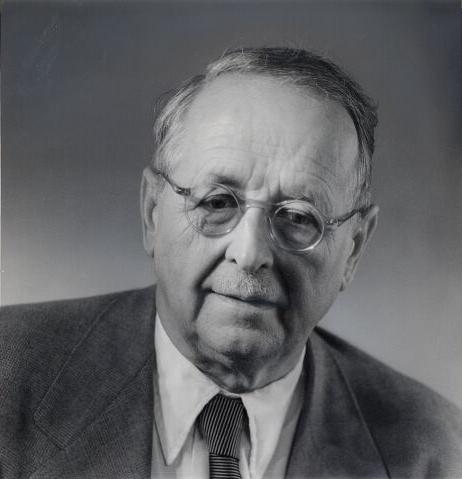
Hermann Klaus Hugo Weyl (/vaɪl/; German: [vaɪl]; 9 November 1885 – 8 December 1955) was a German mathematician, theoretical physicist, logician and philosopher. Although much of his working life was spent in Zürich, Switzerland, and then Princeton, New Jersey, he is associated with the University of Göttingen tradition of mathematics, represented by Carl Friedrich Gauss, David Hilbert and Hermann Minkowski.
His research has had major significance for theoretical physics as well as purely mathematical disciplines such as number theory. He was one of the most influential mathematicians of the twentieth century, and an important member of the Institute for Advanced Study during its early years.
Weyl contributed to an exceptionally wide range of fields, including works on space, time, matter, philosophy, logic, symmetry and the history of mathematics. He was one of the first to conceive of combining general relativity with the laws of electromagnetism. Freeman Dyson wrote that Weyl alone bore comparison with the "last great universal mathematicians of the nineteenth century", Henri Poincaré and David Hilbert. Michael Atiyah, in particular, has commented that whenever he examined a mathematical topic, he found that Weyl had preceded him.
Hermann Weyl was born in Elmshorn, a small town near Hamburg, in Germany, and attended the Gymnasium Christianeum in Altona. His father, Ludwig Weyl, was a banker; whereas his mother, Anna Weyl (née Dieck), came from a wealthy family.
From 1904 to 1908, he studied mathematics and physics in both Göttingen and Munich. His doctorate was awarded at the University of Göttingen under the supervision of David Hilbert, whom he greatly admired.
In September 1913, in Göttingen, Weyl married Friederike Bertha Helene Joseph (30 March 1893 – 5 September 1948) who went by the name Helene (nickname "Hella"). Helene was a daughter of Dr. Bruno Joseph (13 December 1861 – 10 June 1934), a physician who held the position of Sanitätsrat in Ribnitz-Damgarten, Germany. Helene was a philosopher (she was a disciple of phenomenologist Edmund Husserl) and a translator of Spanish literature into German and English (especially the works of Spanish philosopher José Ortega y Gasset). It was through Helene's close connection with Husserl that Hermann became familiar with (and greatly influenced by) Husserl's thought. Hermann and Helene had two sons, Fritz Joachim Weyl (19 February 1915 – 20 July 1977) and Michael Weyl (15 September 1917 – 19 March 2011), both of whom were born in Zürich, Switzerland. Helene died in Princeton, New Jersey, on 5 September 1948. A memorial service in her honor was held in Princeton on 9 September 1948. Speakers at her memorial service included her son Fritz Joachim Weyl and mathematicians Oswald Veblen and Richard Courant. In 1950. Hermann married sculptor Ellen Bär (née Lohnstein) (17 April 1902 – 14 July 1988), who was the widow of professor Richard Josef Bär (11 September 1892 – 15 December 1940) of Zürich.
After taking a teaching post for a few years, Weyl left Göttingen in 1913 for Zürich to take the chair of mathematics at the ETH Zürich, where he was a colleague of Albert Einstein, who was working out the details of the theory of general relativity. Einstein had a lasting influence on Weyl, who became fascinated by mathematical physics. In 1921, Weyl met Erwin Schrödinger, a theoretical physicist who at the time was a professor at the University of Zürich. They were to become close friends over time. Weyl had some sort of childless love affair with Schrödinger's wife Annemarie (Anny) Schrödinger (née Bertel), while at the same time Anny was helping raise an illegitimate daughter of Erwin's named Ruth Georgie Erica March, who was born in 1934 in Oxford, England.
Weyl was a Plenary Speaker of the International Congress of Mathematicians (ICM) in 1928 at Bologna and an Invited Speaker of the ICM in 1936 at Oslo. He was elected a fellow of the American Physical Society in 1928, a member of the American Academy of Arts and Sciences in 1929, a member of the American Philosophical Society in 1935, and a member of the National Academy of Sciences in 1940. For the academic year 1928–1929, he was a visiting professor at Princeton University, where he wrote a paper, "On a problem in the theory of groups arising in the foundations of infinitesimal geometry," with Howard P. Robertson.
Hub AI
Hermann Weyl AI simulator
(@Hermann Weyl_simulator)
Hermann Weyl
Hermann Klaus Hugo Weyl (/vaɪl/; German: [vaɪl]; 9 November 1885 – 8 December 1955) was a German mathematician, theoretical physicist, logician and philosopher. Although much of his working life was spent in Zürich, Switzerland, and then Princeton, New Jersey, he is associated with the University of Göttingen tradition of mathematics, represented by Carl Friedrich Gauss, David Hilbert and Hermann Minkowski.
His research has had major significance for theoretical physics as well as purely mathematical disciplines such as number theory. He was one of the most influential mathematicians of the twentieth century, and an important member of the Institute for Advanced Study during its early years.
Weyl contributed to an exceptionally wide range of fields, including works on space, time, matter, philosophy, logic, symmetry and the history of mathematics. He was one of the first to conceive of combining general relativity with the laws of electromagnetism. Freeman Dyson wrote that Weyl alone bore comparison with the "last great universal mathematicians of the nineteenth century", Henri Poincaré and David Hilbert. Michael Atiyah, in particular, has commented that whenever he examined a mathematical topic, he found that Weyl had preceded him.
Hermann Weyl was born in Elmshorn, a small town near Hamburg, in Germany, and attended the Gymnasium Christianeum in Altona. His father, Ludwig Weyl, was a banker; whereas his mother, Anna Weyl (née Dieck), came from a wealthy family.
From 1904 to 1908, he studied mathematics and physics in both Göttingen and Munich. His doctorate was awarded at the University of Göttingen under the supervision of David Hilbert, whom he greatly admired.
In September 1913, in Göttingen, Weyl married Friederike Bertha Helene Joseph (30 March 1893 – 5 September 1948) who went by the name Helene (nickname "Hella"). Helene was a daughter of Dr. Bruno Joseph (13 December 1861 – 10 June 1934), a physician who held the position of Sanitätsrat in Ribnitz-Damgarten, Germany. Helene was a philosopher (she was a disciple of phenomenologist Edmund Husserl) and a translator of Spanish literature into German and English (especially the works of Spanish philosopher José Ortega y Gasset). It was through Helene's close connection with Husserl that Hermann became familiar with (and greatly influenced by) Husserl's thought. Hermann and Helene had two sons, Fritz Joachim Weyl (19 February 1915 – 20 July 1977) and Michael Weyl (15 September 1917 – 19 March 2011), both of whom were born in Zürich, Switzerland. Helene died in Princeton, New Jersey, on 5 September 1948. A memorial service in her honor was held in Princeton on 9 September 1948. Speakers at her memorial service included her son Fritz Joachim Weyl and mathematicians Oswald Veblen and Richard Courant. In 1950. Hermann married sculptor Ellen Bär (née Lohnstein) (17 April 1902 – 14 July 1988), who was the widow of professor Richard Josef Bär (11 September 1892 – 15 December 1940) of Zürich.
After taking a teaching post for a few years, Weyl left Göttingen in 1913 for Zürich to take the chair of mathematics at the ETH Zürich, where he was a colleague of Albert Einstein, who was working out the details of the theory of general relativity. Einstein had a lasting influence on Weyl, who became fascinated by mathematical physics. In 1921, Weyl met Erwin Schrödinger, a theoretical physicist who at the time was a professor at the University of Zürich. They were to become close friends over time. Weyl had some sort of childless love affair with Schrödinger's wife Annemarie (Anny) Schrödinger (née Bertel), while at the same time Anny was helping raise an illegitimate daughter of Erwin's named Ruth Georgie Erica March, who was born in 1934 in Oxford, England.
Weyl was a Plenary Speaker of the International Congress of Mathematicians (ICM) in 1928 at Bologna and an Invited Speaker of the ICM in 1936 at Oslo. He was elected a fellow of the American Physical Society in 1928, a member of the American Academy of Arts and Sciences in 1929, a member of the American Philosophical Society in 1935, and a member of the National Academy of Sciences in 1940. For the academic year 1928–1929, he was a visiting professor at Princeton University, where he wrote a paper, "On a problem in the theory of groups arising in the foundations of infinitesimal geometry," with Howard P. Robertson.
Recent media