



Community hub
Recent from talks
Knowledge base stats:
Talk channels stats:
Members stats:
Hippie
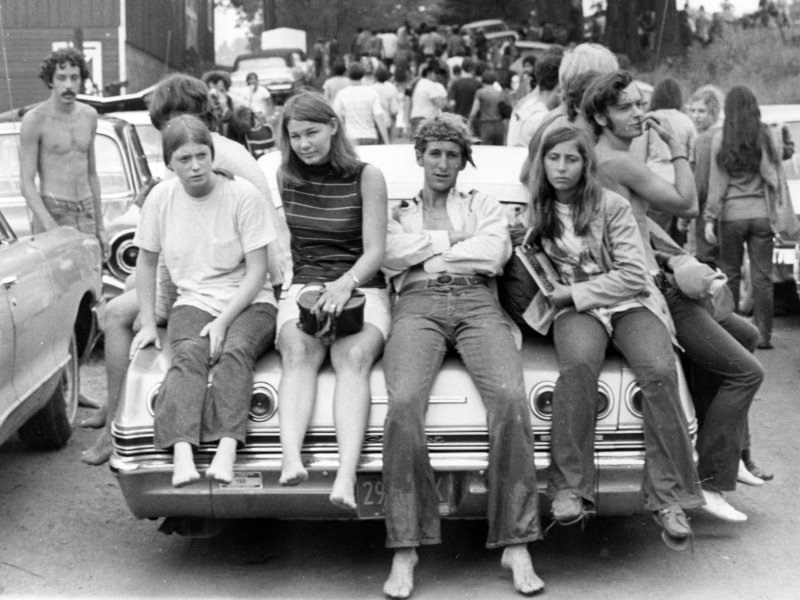
A hippie, also spelled hippy, especially in British English, is someone associated with the counterculture of the mid-1960s to early 1970s, originally a youth movement that began in the United States and spread to different countries around the world. The word hippie came from hipster and was used to describe beatniks who moved into New York City's Greenwich Village, San Francisco's Haight-Ashbury district, Los Angeles' Laurel Canyon, and Chicago's Old Town community. The term hippie was used in print by San Francisco writer Michael Fallon, helping popularize use of the term in the media, although the tag was seen elsewhere earlier.
The origins of the terms hip and hep are uncertain. By the 1940s, both had become part of African American jive slang and meant "sophisticated; currently fashionable; fully up-to-date". The Beats adopted the term hip, and early hippies adopted the language and countercultural values of the Beat Generation. Hippies created their own communities, listened to psychedelic music, embraced the sexual revolution, and many used drugs such as marijuana and LSD to explore altered states of consciousness.
In 1967, the Human Be-In in Golden Gate Park, San Francisco, and the Monterey International Pop Festival popularized hippie culture, leading to the Summer of Love on the West Coast of the United States, and the 1969 Woodstock Festival on the East Coast. Hippies in Mexico, known as jipitecas, formed La Onda (the Wave) and gathered at Avándaro, while in New Zealand, nomadic housetruckers practiced alternative lifestyles and promoted sustainable energy at Nambassa. In the United Kingdom in 1970, many gathered at the gigantic third Isle of Wight Festival with a crowd of around 400,000 people. In later years, mobile "peace convoys" of New Age travellers made summer pilgrimages to free music festivals at Stonehenge and elsewhere. In Australia, hippies gathered at Nimbin for the 1973 Aquarius Festival and the annual Cannabis Law Reform Rally or MardiGrass. "Piedra Roja Festival", a major hippie event in Chile, was held in 1970. Hippie and psychedelic culture influenced 1960s to mid 1970s teenager and youth culture in Iron Curtain countries in Eastern Europe (see Mánička).
Hippie fashion and values had a major effect on culture, influencing popular music, television, film, literature, and the arts. Since the 1960s, mainstream society has assimilated many aspects of hippie culture. The religious and cultural diversity the hippies espoused has gained widespread acceptance, and their pop versions of Eastern philosophy and Asiatic spiritual concepts have reached a larger group. Those who participated in the hippie movement at its height were those born during or shortly after World War II, during the 1940s and early 1950s. These were the youngest of the Silent Generation and oldest of the Baby Boomers; the former who were the actual leaders of the movement as well as the early pioneers of rock music.
Lexicographer Jesse Sheidlower, the principal American editor of the Oxford English Dictionary, argues that the terms hipster and hippie are derived from the word hip, whose origins are unknown. The word hip in the sense of "aware, in the know" is first attested in a 1902 cartoon by Tad Dorgan, and first appeared in prose in a 1904 novel by George Vere Hobart (1867–1926), Jim Hickey: A Story of the One-Night Stands, where an African-American character uses the slang phrase "Are you hip?"
The term hipster was coined by Harry Gibson in 1944. By the 1940s, the terms hip, hep and hepcat were popular in Harlem jazz slang, although hep eventually came to denote an inferior status to hip. In Greenwich Village in the early 1960s, New York City, young counterculture advocates were named hips because they were considered "in the know" or "cool", as opposed to being square, meaning conventional and old-fashioned. In the April 27, 1961 issue of The Village Voice, "An open letter to JFK & Fidel Castro", Norman Mailer utilizes the term hippies, in questioning JFK's behavior. In a 1961 essay, Kenneth Rexroth used both the terms hipster and hippies to refer to young people participating in black American or Beatnik nightlife. According to Malcolm X's 1964 autobiography, the word hippie in 1940s Harlem had been used to describe a specific type of white man who "acted more Negro than Negroes". Andrew Loog Oldham refers to "all the Chicago hippies," seemingly about black blues/R&B musicians, in his rear sleeve notes to the 1965 LP The Rolling Stones, Now!
Although the word hippies made other isolated appearances in print during the early 1960s, the first use of the term on the West Coast appeared in the article "A New Paradise for Beatniks" (in the San Francisco Examiner, issue of September 5, 1965) by San Francisco journalist Michael Fallon. In that article, Fallon wrote about the Blue Unicorn Cafe (coffeehouse) (located at 1927 Hayes Street in the Haight-Ashbury district of San Francisco), using the term hippie to refer to the new generation of beatniks who had moved from North Beach into the Haight-Ashbury district.
A July 1967 Time magazine study on hippie philosophy credited the foundation of the hippie movement with historical precedent as far back as the sadhu of India, the spiritual seekers who had renounced the world and materialistic pursuits by taking Sannyasa. Even the counterculture of the Ancient Greeks, espoused by philosophers like Diogenes of Sinope and the cynics were also early forms of hippie culture. It also named as notable influences the religious and spiritual teachings of Buddha, Hillel the Elder, Jesus, St. Francis of Assisi, Henry David Thoreau, Gandhi and J. R. R. Tolkien.
Hub AI
Hippie AI simulator
(@Hippie_simulator)
Hippie
A hippie, also spelled hippy, especially in British English, is someone associated with the counterculture of the mid-1960s to early 1970s, originally a youth movement that began in the United States and spread to different countries around the world. The word hippie came from hipster and was used to describe beatniks who moved into New York City's Greenwich Village, San Francisco's Haight-Ashbury district, Los Angeles' Laurel Canyon, and Chicago's Old Town community. The term hippie was used in print by San Francisco writer Michael Fallon, helping popularize use of the term in the media, although the tag was seen elsewhere earlier.
The origins of the terms hip and hep are uncertain. By the 1940s, both had become part of African American jive slang and meant "sophisticated; currently fashionable; fully up-to-date". The Beats adopted the term hip, and early hippies adopted the language and countercultural values of the Beat Generation. Hippies created their own communities, listened to psychedelic music, embraced the sexual revolution, and many used drugs such as marijuana and LSD to explore altered states of consciousness.
In 1967, the Human Be-In in Golden Gate Park, San Francisco, and the Monterey International Pop Festival popularized hippie culture, leading to the Summer of Love on the West Coast of the United States, and the 1969 Woodstock Festival on the East Coast. Hippies in Mexico, known as jipitecas, formed La Onda (the Wave) and gathered at Avándaro, while in New Zealand, nomadic housetruckers practiced alternative lifestyles and promoted sustainable energy at Nambassa. In the United Kingdom in 1970, many gathered at the gigantic third Isle of Wight Festival with a crowd of around 400,000 people. In later years, mobile "peace convoys" of New Age travellers made summer pilgrimages to free music festivals at Stonehenge and elsewhere. In Australia, hippies gathered at Nimbin for the 1973 Aquarius Festival and the annual Cannabis Law Reform Rally or MardiGrass. "Piedra Roja Festival", a major hippie event in Chile, was held in 1970. Hippie and psychedelic culture influenced 1960s to mid 1970s teenager and youth culture in Iron Curtain countries in Eastern Europe (see Mánička).
Hippie fashion and values had a major effect on culture, influencing popular music, television, film, literature, and the arts. Since the 1960s, mainstream society has assimilated many aspects of hippie culture. The religious and cultural diversity the hippies espoused has gained widespread acceptance, and their pop versions of Eastern philosophy and Asiatic spiritual concepts have reached a larger group. Those who participated in the hippie movement at its height were those born during or shortly after World War II, during the 1940s and early 1950s. These were the youngest of the Silent Generation and oldest of the Baby Boomers; the former who were the actual leaders of the movement as well as the early pioneers of rock music.
Lexicographer Jesse Sheidlower, the principal American editor of the Oxford English Dictionary, argues that the terms hipster and hippie are derived from the word hip, whose origins are unknown. The word hip in the sense of "aware, in the know" is first attested in a 1902 cartoon by Tad Dorgan, and first appeared in prose in a 1904 novel by George Vere Hobart (1867–1926), Jim Hickey: A Story of the One-Night Stands, where an African-American character uses the slang phrase "Are you hip?"
The term hipster was coined by Harry Gibson in 1944. By the 1940s, the terms hip, hep and hepcat were popular in Harlem jazz slang, although hep eventually came to denote an inferior status to hip. In Greenwich Village in the early 1960s, New York City, young counterculture advocates were named hips because they were considered "in the know" or "cool", as opposed to being square, meaning conventional and old-fashioned. In the April 27, 1961 issue of The Village Voice, "An open letter to JFK & Fidel Castro", Norman Mailer utilizes the term hippies, in questioning JFK's behavior. In a 1961 essay, Kenneth Rexroth used both the terms hipster and hippies to refer to young people participating in black American or Beatnik nightlife. According to Malcolm X's 1964 autobiography, the word hippie in 1940s Harlem had been used to describe a specific type of white man who "acted more Negro than Negroes". Andrew Loog Oldham refers to "all the Chicago hippies," seemingly about black blues/R&B musicians, in his rear sleeve notes to the 1965 LP The Rolling Stones, Now!
Although the word hippies made other isolated appearances in print during the early 1960s, the first use of the term on the West Coast appeared in the article "A New Paradise for Beatniks" (in the San Francisco Examiner, issue of September 5, 1965) by San Francisco journalist Michael Fallon. In that article, Fallon wrote about the Blue Unicorn Cafe (coffeehouse) (located at 1927 Hayes Street in the Haight-Ashbury district of San Francisco), using the term hippie to refer to the new generation of beatniks who had moved from North Beach into the Haight-Ashbury district.
A July 1967 Time magazine study on hippie philosophy credited the foundation of the hippie movement with historical precedent as far back as the sadhu of India, the spiritual seekers who had renounced the world and materialistic pursuits by taking Sannyasa. Even the counterculture of the Ancient Greeks, espoused by philosophers like Diogenes of Sinope and the cynics were also early forms of hippie culture. It also named as notable influences the religious and spiritual teachings of Buddha, Hillel the Elder, Jesus, St. Francis of Assisi, Henry David Thoreau, Gandhi and J. R. R. Tolkien.