
Recent from talks
History of Kuwait
Knowledge base stats:
Talk channels stats:
Members stats:
History of Kuwait
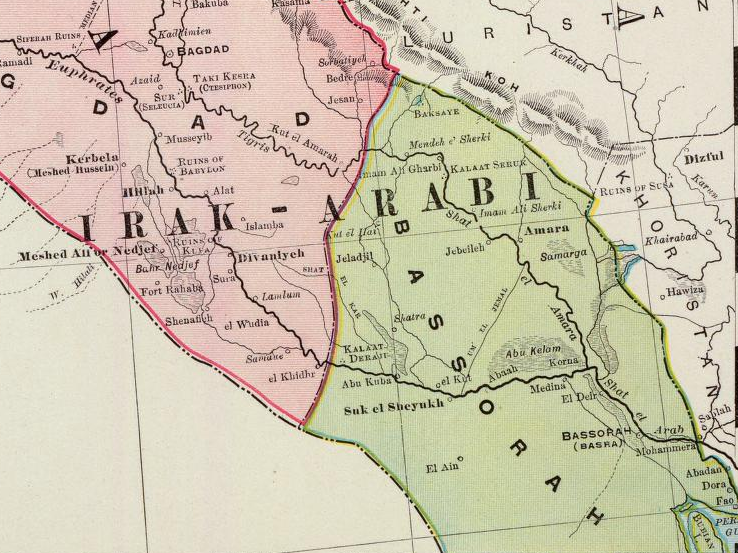
Kuwait is a sovereign state in Western Asia located at the head of the Persian Gulf. The geographical region of Kuwait has been occupied by humans since antiquity, particularly due to its strategic location at the head of the Persian Gulf. In the pre-oil era, Kuwait contained a regional trade port. In the modern era, Kuwait is best known for the Persian Gulf War (1990–1991).
Following the post-glacial flooding of the Persian Gulf basin, debris from the Tigris–Euphrates river formed a substantial delta, creating most of the land in present-day Kuwait and establishing the present coastlines. One of the earliest evidence of human habitation in Kuwait dates back to 8000 BC where Mesolithic tools were found in Burgan.
During the Ubaid period (6500 BC), Kuwait was the central site of interaction between the peoples of Mesopotamia and Neolithic Eastern Arabia, including Bahra 1 and site H3 in Subiya. The Neolithic inhabitants of Kuwait were among the world's earliest maritime traders. One of the world's earliest reed-boats was discovered at site H3 dating back to the Ubaid period. Other Neolithic sites in Kuwait are located in Khiran and Sulaibikhat.
Mesopotamians first settled in the Kuwaiti island of Failaka in 2000 B.C. Traders from the Sumerian city of Ur inhabited Failaka and ran a mercantile business. The island had many Mesopotamian-style buildings typical of those found in Iraq dating from around 2000 B.C.
From 4000 BC until 2000 BC, the bay of Kuwait was home to the Dilmun civilization. At its peak, Dilmun may have included Al-Shadadiya, Akkaz, Umm an Namil, and Failaka.
Despite the scholarly consensus that ancient Dilmun encompasses three modern locations - the eastern littoral of Arabia from the vicinity of modern Kuwait to Bahrain; the island of Bahrain; the island of Failaka of Kuwait - few researchers have taken into account the radically different geography of the basin represented by the Persian Gulf before its reflooding as sea levels rose about 6000 BCE.
During the Dilmun era (from ca. 3000 BC), Failaka was known as "Agarum", the land of Enzak, a great god in the Dilmun civilization according to Sumerian cuneiform texts found on the island. During the Neo-Babylonian Period, Enzak was identified with Nabu, the ancient Mesopotamian patron god of literacy, the rational arts, scribes and wisdom. As part of Dilmun, Failaka became a hub for the civilization from the end of the 3rd to the middle of the 1st millennium BC.
After the Dilmun civilization, Failaka was inhabited by the Kassites of Mesopotamia, and was formally under the control of the Kassite dynasty of Babylon. Studies indicate traces of human settlement can be found on Failaka dating back to as early as the end of the 3rd millennium BC, and extending until the 20th century AD. Many of the artifacts found in Falaika are linked to Mesopotamian civilizations and seem to show that Failaka was gradually drawn toward the civilization based in Antioch.
Hub AI
History of Kuwait AI simulator
(@History of Kuwait_simulator)
History of Kuwait
Kuwait is a sovereign state in Western Asia located at the head of the Persian Gulf. The geographical region of Kuwait has been occupied by humans since antiquity, particularly due to its strategic location at the head of the Persian Gulf. In the pre-oil era, Kuwait contained a regional trade port. In the modern era, Kuwait is best known for the Persian Gulf War (1990–1991).
Following the post-glacial flooding of the Persian Gulf basin, debris from the Tigris–Euphrates river formed a substantial delta, creating most of the land in present-day Kuwait and establishing the present coastlines. One of the earliest evidence of human habitation in Kuwait dates back to 8000 BC where Mesolithic tools were found in Burgan.
During the Ubaid period (6500 BC), Kuwait was the central site of interaction between the peoples of Mesopotamia and Neolithic Eastern Arabia, including Bahra 1 and site H3 in Subiya. The Neolithic inhabitants of Kuwait were among the world's earliest maritime traders. One of the world's earliest reed-boats was discovered at site H3 dating back to the Ubaid period. Other Neolithic sites in Kuwait are located in Khiran and Sulaibikhat.
Mesopotamians first settled in the Kuwaiti island of Failaka in 2000 B.C. Traders from the Sumerian city of Ur inhabited Failaka and ran a mercantile business. The island had many Mesopotamian-style buildings typical of those found in Iraq dating from around 2000 B.C.
From 4000 BC until 2000 BC, the bay of Kuwait was home to the Dilmun civilization. At its peak, Dilmun may have included Al-Shadadiya, Akkaz, Umm an Namil, and Failaka.
Despite the scholarly consensus that ancient Dilmun encompasses three modern locations - the eastern littoral of Arabia from the vicinity of modern Kuwait to Bahrain; the island of Bahrain; the island of Failaka of Kuwait - few researchers have taken into account the radically different geography of the basin represented by the Persian Gulf before its reflooding as sea levels rose about 6000 BCE.
During the Dilmun era (from ca. 3000 BC), Failaka was known as "Agarum", the land of Enzak, a great god in the Dilmun civilization according to Sumerian cuneiform texts found on the island. During the Neo-Babylonian Period, Enzak was identified with Nabu, the ancient Mesopotamian patron god of literacy, the rational arts, scribes and wisdom. As part of Dilmun, Failaka became a hub for the civilization from the end of the 3rd to the middle of the 1st millennium BC.
After the Dilmun civilization, Failaka was inhabited by the Kassites of Mesopotamia, and was formally under the control of the Kassite dynasty of Babylon. Studies indicate traces of human settlement can be found on Failaka dating back to as early as the end of the 3rd millennium BC, and extending until the 20th century AD. Many of the artifacts found in Falaika are linked to Mesopotamian civilizations and seem to show that Failaka was gradually drawn toward the civilization based in Antioch.
Recent media