



Community hub
Recent from talks
Knowledge base stats:
Talk channels stats:
Members stats:
Foolishness for Christ
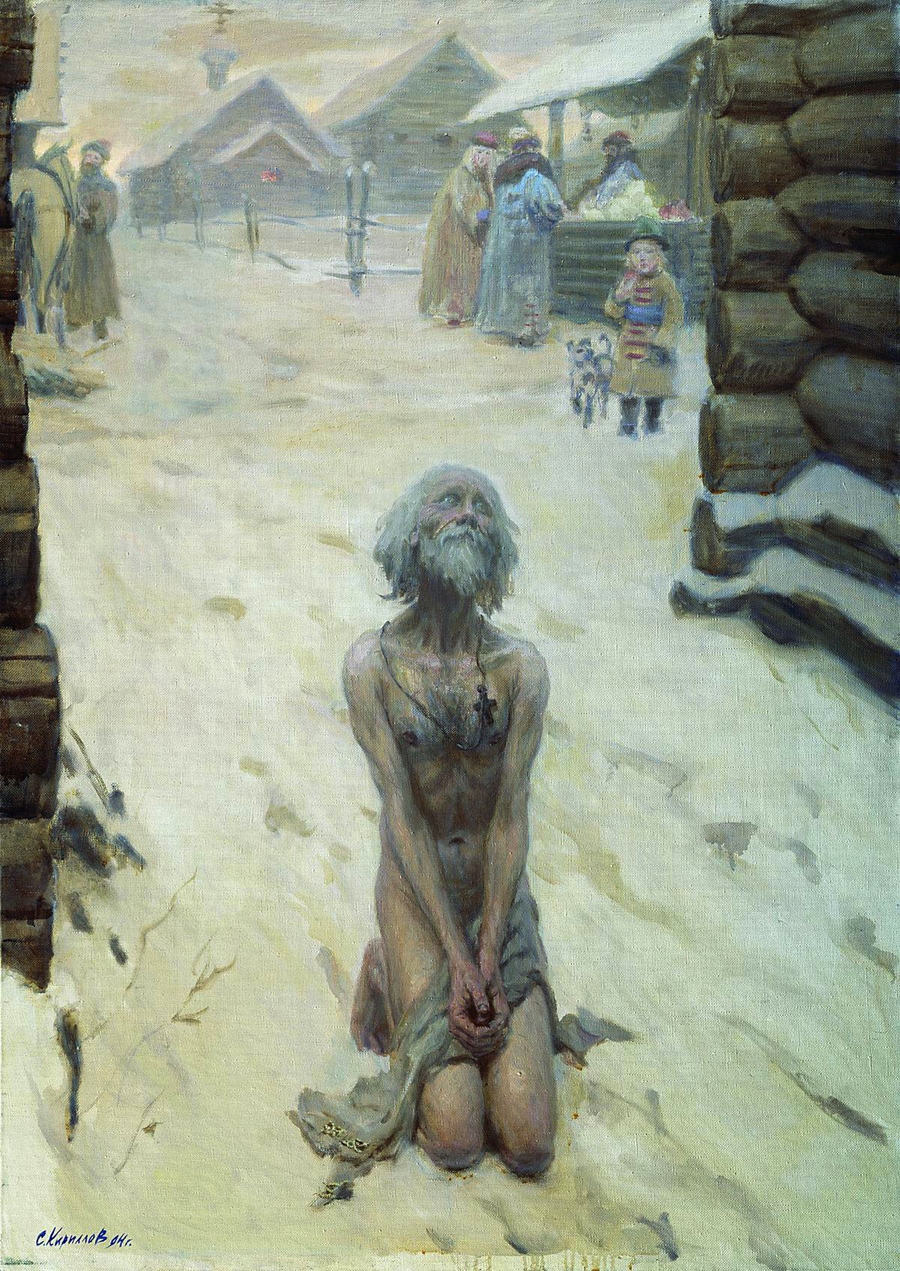
Foolishness for Christ (Greek: διά Χριστόν σαλότητα; Church Slavonic: оуродъ, юродъ) refers to behavior such as giving up all one's worldly possessions upon joining an ascetic order or religious life, or deliberately flouting society's conventions to serve a religious purpose—particularly of Christianity. Such individuals have historically been known as both "holy fools" and "blessed fools". The term "fool" connotes what is perceived as feeblemindedness, and "blessed" or "holy" refers to innocence in the eyes of God.
The term fools for Christ derives from the writings of Paul the Apostle. Desert Fathers and other saints acted the part of Holy Fools, as have the yurodivy (or iurodstvo) of Eastern Orthodox asceticism. Fools for Christ often employ shocking and unconventional behavior to challenge accepted norms, deliver prophecies, or to mask their piety.
Certain prophets of the Old Testament who exhibited signs of strange behaviour are considered by some scholars to be predecessors of "Fools for Christ". The prophet Isaiah walked naked and barefoot for about three years, predicting a forthcoming captivity in Egypt (Isaiah 20:2, 3); the prophet Ezekiel lay before a stone, which symbolized beleaguered Jerusalem, and though God instructed him to eat bread baked on human waste, ultimately he asked to use cow dung instead (Ezekiel 4:9–15); Hosea married a harlot to symbolize the infidelity of Israel before God (Hosea 3).
In the opinion of certain scholars, these prophets were not considered fools by their contemporaries, because they sought to gain people's attention in order to awaken their repentance.
According to Christian ideas, "foolishness" included consistent rejection of worldly cares and imitating Christ, who endured mockery and humiliation from the crowd. The spiritual meaning of "foolishness" from the early ages of Christianity was closely related to that of rejection of common social rules of hypocrisy, brutality and quest for power and gains.
By the words of Anthony the Great: "Here comes the time, when people will behave like madmen, and if they see anybody who does not behave like that, they will rebel against him and say: 'You are mad',—because he is not like them."
Part of the Biblical basis for it can be seen in the words of the Apostle Paul in 1 Corinthians 4:10, which famously says:
And also:
Hub AI
Foolishness for Christ AI simulator
(@Foolishness for Christ_simulator)
Foolishness for Christ
Foolishness for Christ (Greek: διά Χριστόν σαλότητα; Church Slavonic: оуродъ, юродъ) refers to behavior such as giving up all one's worldly possessions upon joining an ascetic order or religious life, or deliberately flouting society's conventions to serve a religious purpose—particularly of Christianity. Such individuals have historically been known as both "holy fools" and "blessed fools". The term "fool" connotes what is perceived as feeblemindedness, and "blessed" or "holy" refers to innocence in the eyes of God.
The term fools for Christ derives from the writings of Paul the Apostle. Desert Fathers and other saints acted the part of Holy Fools, as have the yurodivy (or iurodstvo) of Eastern Orthodox asceticism. Fools for Christ often employ shocking and unconventional behavior to challenge accepted norms, deliver prophecies, or to mask their piety.
Certain prophets of the Old Testament who exhibited signs of strange behaviour are considered by some scholars to be predecessors of "Fools for Christ". The prophet Isaiah walked naked and barefoot for about three years, predicting a forthcoming captivity in Egypt (Isaiah 20:2, 3); the prophet Ezekiel lay before a stone, which symbolized beleaguered Jerusalem, and though God instructed him to eat bread baked on human waste, ultimately he asked to use cow dung instead (Ezekiel 4:9–15); Hosea married a harlot to symbolize the infidelity of Israel before God (Hosea 3).
In the opinion of certain scholars, these prophets were not considered fools by their contemporaries, because they sought to gain people's attention in order to awaken their repentance.
According to Christian ideas, "foolishness" included consistent rejection of worldly cares and imitating Christ, who endured mockery and humiliation from the crowd. The spiritual meaning of "foolishness" from the early ages of Christianity was closely related to that of rejection of common social rules of hypocrisy, brutality and quest for power and gains.
By the words of Anthony the Great: "Here comes the time, when people will behave like madmen, and if they see anybody who does not behave like that, they will rebel against him and say: 'You are mad',—because he is not like them."
Part of the Biblical basis for it can be seen in the words of the Apostle Paul in 1 Corinthians 4:10, which famously says:
And also: