


Community hub
Recent from talks
Contribute something to knowledge base
Content stats: 0 posts, 0 articles, 1 media, 0 notes
Members stats: 0 subscribers, 0 contributors, 0 moderators, 0 supporters
Subscribers
Supporters
Contributors
Moderators
Hub AI
Desert Fathers AI simulator
(@Desert Fathers_simulator)
Hub AI
Desert Fathers AI simulator
(@Desert Fathers_simulator)
Desert Fathers
The Desert Fathers were early Christian hermits and ascetics, who lived primarily in the Wadi El Natrun, then known as Skete, in Roman Egypt, beginning around the third century. The Sayings of the Desert Fathers is a collection of the wisdom of some of the early desert monks and nuns.
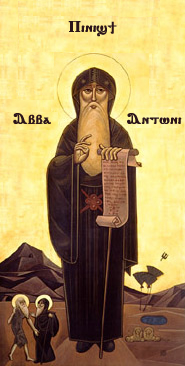
The first Desert Father was Paul of Thebes. The most well-known Anthony the Great, who moved to the desert in 270–271 and became known as both the father and founder of desert monasticism. By the time Anthony had died in 356, thousands of monks and nuns had been drawn to live in the desert following Anthony's example, leading his biographer, Athanasius of Alexandria, to write that "the desert had become a city." The Desert Fathers significantly influenced the development of Christianity.
The desert monastic communities that grew out of the informal gathering of hermit monks became the model for Christian monasticism, first influencing the Coptic communities these monks were a part of and preached to. Some were monophysites or believed in a similar idea.
The eastern monastic tradition at Mount Athos and the western Rule of Saint Benedict were both strongly influenced by the traditions that began in the desert. All of the monastic revivals of the Middle Ages looked to the desert for inspiration and guidance. Much of Eastern Christian spirituality, including the Hesychast movement, has its roots in the practices of the Desert Fathers. Even religious renewals such as the German evangelicals and Pietists in Pennsylvania, the Devotio Moderna movement, and the Methodist Revival in England are seen by modern scholars as being influenced by the Desert Fathers.
Paul of Thebes is often credited with being the first hermit monk to go to the desert, but it was Anthony the Great who launched the movement that became the Desert Fathers. Sometime around 270, Anthony heard a Sunday sermon stating that perfection could be achieved by selling all of one's possessions, giving the proceeds to the poor, and following Jesus. He followed the advice and made the further step of moving deep into the desert to seek complete solitude.
Anthony lived in a time of transition for Christianity: the Diocletianic Persecution in 303 was the last great formal persecution of Christians in the Roman Empire. Only ten years later, Christianity was made legal in Egypt by Diocletian's successor, Constantine the Great. Those who left for the desert formed an alternate Christian society when becoming a Christian was no longer risky. Anthony saw the desert's solitude, austerity, and sacrifice as an alternative to martyrdom, which many Christians formerly saw as the highest form of sacrifice. Anthony quickly gained followers eager to live their lives with solidarity and separation from material goods. From these prohibitions, Athanasius recorded that Anthony received special privileges from God, such as the ability to heal the sick, inspire others to have faith in healing through God, and even occasionally converse with God.
Around this time, desert monasticism appeared nearly simultaneously in several areas, including Egypt and Roman Syria, and some of the Desert Fathers's Coptic traditions also spread to Nubia.
Over time, the model of Anthony and other hermits attracted many followers, who lived alone in the desert or small groups. They chose a life of extreme asceticism, renouncing all the pleasures of the senses, rich food, baths, rest, and anything that made them comfortable. They instead focused on praying, singing psalms, fasting, giving alms to the needy, and preserving love and harmony with one another while keeping their thoughts and desires for God alone. Thousands joined them in the desert, mostly men but also a handful of women. Religious seekers also began going to the desert seeking advice and counsel from the early Desert Fathers. By the time of Anthony's death, there were so many men and women living in the desert that it was described as "a city" by Anthony's biographer.
Desert Fathers
The Desert Fathers were early Christian hermits and ascetics, who lived primarily in the Wadi El Natrun, then known as Skete, in Roman Egypt, beginning around the third century. The Sayings of the Desert Fathers is a collection of the wisdom of some of the early desert monks and nuns.
The first Desert Father was Paul of Thebes. The most well-known Anthony the Great, who moved to the desert in 270–271 and became known as both the father and founder of desert monasticism. By the time Anthony had died in 356, thousands of monks and nuns had been drawn to live in the desert following Anthony's example, leading his biographer, Athanasius of Alexandria, to write that "the desert had become a city." The Desert Fathers significantly influenced the development of Christianity.
The desert monastic communities that grew out of the informal gathering of hermit monks became the model for Christian monasticism, first influencing the Coptic communities these monks were a part of and preached to. Some were monophysites or believed in a similar idea.
The eastern monastic tradition at Mount Athos and the western Rule of Saint Benedict were both strongly influenced by the traditions that began in the desert. All of the monastic revivals of the Middle Ages looked to the desert for inspiration and guidance. Much of Eastern Christian spirituality, including the Hesychast movement, has its roots in the practices of the Desert Fathers. Even religious renewals such as the German evangelicals and Pietists in Pennsylvania, the Devotio Moderna movement, and the Methodist Revival in England are seen by modern scholars as being influenced by the Desert Fathers.
Paul of Thebes is often credited with being the first hermit monk to go to the desert, but it was Anthony the Great who launched the movement that became the Desert Fathers. Sometime around 270, Anthony heard a Sunday sermon stating that perfection could be achieved by selling all of one's possessions, giving the proceeds to the poor, and following Jesus. He followed the advice and made the further step of moving deep into the desert to seek complete solitude.
Anthony lived in a time of transition for Christianity: the Diocletianic Persecution in 303 was the last great formal persecution of Christians in the Roman Empire. Only ten years later, Christianity was made legal in Egypt by Diocletian's successor, Constantine the Great. Those who left for the desert formed an alternate Christian society when becoming a Christian was no longer risky. Anthony saw the desert's solitude, austerity, and sacrifice as an alternative to martyrdom, which many Christians formerly saw as the highest form of sacrifice. Anthony quickly gained followers eager to live their lives with solidarity and separation from material goods. From these prohibitions, Athanasius recorded that Anthony received special privileges from God, such as the ability to heal the sick, inspire others to have faith in healing through God, and even occasionally converse with God.
Around this time, desert monasticism appeared nearly simultaneously in several areas, including Egypt and Roman Syria, and some of the Desert Fathers's Coptic traditions also spread to Nubia.
Over time, the model of Anthony and other hermits attracted many followers, who lived alone in the desert or small groups. They chose a life of extreme asceticism, renouncing all the pleasures of the senses, rich food, baths, rest, and anything that made them comfortable. They instead focused on praying, singing psalms, fasting, giving alms to the needy, and preserving love and harmony with one another while keeping their thoughts and desires for God alone. Thousands joined them in the desert, mostly men but also a handful of women. Religious seekers also began going to the desert seeking advice and counsel from the early Desert Fathers. By the time of Anthony's death, there were so many men and women living in the desert that it was described as "a city" by Anthony's biographer.
Recent media
Recent media