



Recent from talks
Knowledge base stats:
Talk channels stats:
Members stats:
Horace François Bastien Sébastiani de La Porta
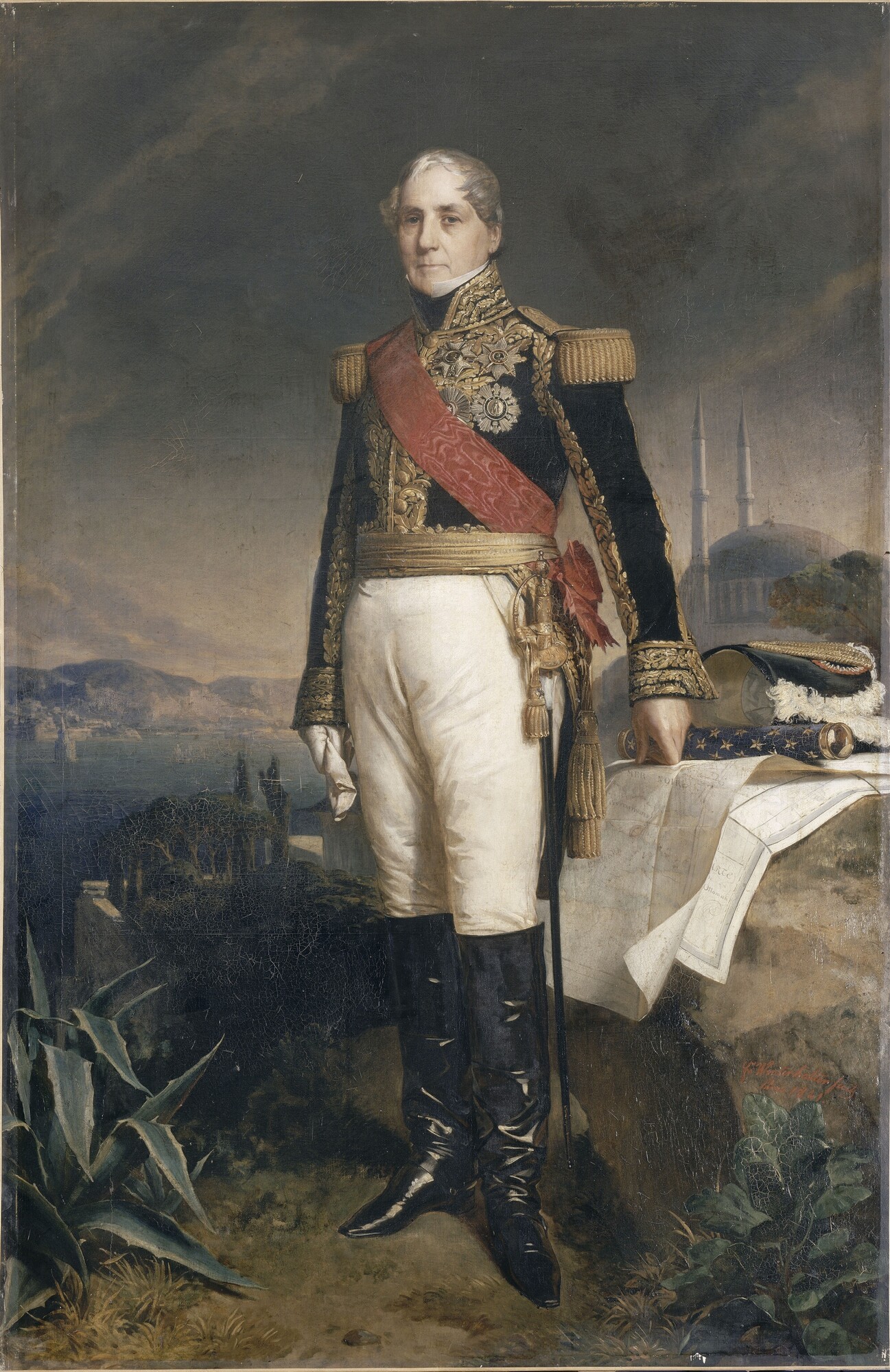
Horace François Bastien Sébastiani de La Porta (Corsican: Oraziu Francescu Bastianu Sebastiani di A Porta; 11 November 1771 – 20 July 1851) was a French general, diplomat, and politician, who served as Naval Minister, Minister of Foreign Affairs, and Minister of State under the July Monarchy.
Having joined the French Revolutionary Army in his youth, Sébastiani rose through its ranks before becoming a supporter of Napoleon Bonaparte. Sébastiani was the French Consulate's emissary to The Levant, notably drafting plans to reconquer Ottoman Egypt, and later served as the Empire's Ambassador to The Porte. In the latter capacity, he attempted to increase French influence and signaled pro-Russian activities in the Danubian Principalities, thus provoking the War of 1806–1812. In 1807, Sébastiani organized the defense of Constantinople during the Dardanelles operation. Recalled due to British pressure after the deposition of Selim III, he served in the Peninsular War and resided in the Alhambra, took part in the unsuccessful invasion of Russia, and defended the Champagne region in front of the Sixth Coalition.
Sébastiani recognized the Bourbon Restoration, but rallied with Napoleon during the Hundred Days, being elected to the Chamber for the first time in 1815. Briefly exiled after the return of King Louis XVIII, he was again admitted as a Deputy in 1819, sitting with the Left faction, supporting liberal politics, and coming into conflict with the Jean-Baptiste de Villèle Cabinet. After the July Revolution, he endorsed Louis Philippe I. Sébastiani's time as Foreign Minister saw France's involvement in the Belgian Revolution, its refusal to sanction the November Uprising, the controversial solution to a commercial dispute with the United States, and the French occupation of Ancona. In later years, he progressed in French Government service as an ambassador.
The 1847 murder of his daughter, Françoise, Duchess de Praslin indirectly helped spark the 1848 Revolution.
Born in La Porta, Corsica, Sébastiani was the son of a tailor and well-to-do craftsman, the nephew of Louis Sébastiani de La Porta, a Roman Catholic priest who was later Bishop of Ajaccio, and probably a distant relative of the Bonapartes. Horace Sébastiani had a brother, Tiburce, who rose to the rank of Maréchal de Camp. Initially destined for a religious career, he left his native island during the French Revolution, and entered the army in 1792. Briefly dispatched as a secretary to Conte Raffaele Cadorna in Casablanca, Sébastiani participated in the Revolutionary Wars, including campaigns in Corsica, 1793, the Alps, 1794–1797, and at the Battle of Marengo, 1800. Having served as an officer in the 9th Dragoon Regiment, he was promoted to colonel in 1799.
Sébastiani joined Lucien Bonaparte's entourage, and endorsed Napoleon's political actions, taking an active part in the 18 Brumaire coup (9 November 1799). In 1802, the Consulate sent him on his first diplomatic assignments in the Ottoman Empire, Ottoman Egypt, and other parts of The Levant. Among his first actions were the settlement of a conflict between Sweden and the Barbary State of Tripoli, as well as obtaining the latter's agreement to recognize the Italian Republic.
Sébastiani negotiated with the British military commanders in the aftermath of the French invasion of Egypt (1798), asking them to abide by the newly signed Treaty of Amiens and withdraw from Alexandria; following this he met with Ottoman officials in Cairo, unsuccessfully offering to mediate between them and rebellious beys (see Muhammad Ali's seizure of power). In late 1802, he traveled to Akka, and negotiated a trade agreement with the local pasha.
During this period, Sébastiani theorized that, despite Egyptian Campaign's failure, the French could yet again establish their control over the region. He publicized this view in a report, published by Le Moniteur Universel on 30 January 1803, posing a threat for both British and Russian interests; this probably contributed to deescalating relations between the latter two over the prolonged British presence in Malta, with Henry Addington's Cabinet indicating that British troops would remain as long as France held designs to invade Egypt.
Hub AI
Horace François Bastien Sébastiani de La Porta AI simulator
(@Horace François Bastien Sébastiani de La Porta_simulator)
Horace François Bastien Sébastiani de La Porta
Horace François Bastien Sébastiani de La Porta (Corsican: Oraziu Francescu Bastianu Sebastiani di A Porta; 11 November 1771 – 20 July 1851) was a French general, diplomat, and politician, who served as Naval Minister, Minister of Foreign Affairs, and Minister of State under the July Monarchy.
Having joined the French Revolutionary Army in his youth, Sébastiani rose through its ranks before becoming a supporter of Napoleon Bonaparte. Sébastiani was the French Consulate's emissary to The Levant, notably drafting plans to reconquer Ottoman Egypt, and later served as the Empire's Ambassador to The Porte. In the latter capacity, he attempted to increase French influence and signaled pro-Russian activities in the Danubian Principalities, thus provoking the War of 1806–1812. In 1807, Sébastiani organized the defense of Constantinople during the Dardanelles operation. Recalled due to British pressure after the deposition of Selim III, he served in the Peninsular War and resided in the Alhambra, took part in the unsuccessful invasion of Russia, and defended the Champagne region in front of the Sixth Coalition.
Sébastiani recognized the Bourbon Restoration, but rallied with Napoleon during the Hundred Days, being elected to the Chamber for the first time in 1815. Briefly exiled after the return of King Louis XVIII, he was again admitted as a Deputy in 1819, sitting with the Left faction, supporting liberal politics, and coming into conflict with the Jean-Baptiste de Villèle Cabinet. After the July Revolution, he endorsed Louis Philippe I. Sébastiani's time as Foreign Minister saw France's involvement in the Belgian Revolution, its refusal to sanction the November Uprising, the controversial solution to a commercial dispute with the United States, and the French occupation of Ancona. In later years, he progressed in French Government service as an ambassador.
The 1847 murder of his daughter, Françoise, Duchess de Praslin indirectly helped spark the 1848 Revolution.
Born in La Porta, Corsica, Sébastiani was the son of a tailor and well-to-do craftsman, the nephew of Louis Sébastiani de La Porta, a Roman Catholic priest who was later Bishop of Ajaccio, and probably a distant relative of the Bonapartes. Horace Sébastiani had a brother, Tiburce, who rose to the rank of Maréchal de Camp. Initially destined for a religious career, he left his native island during the French Revolution, and entered the army in 1792. Briefly dispatched as a secretary to Conte Raffaele Cadorna in Casablanca, Sébastiani participated in the Revolutionary Wars, including campaigns in Corsica, 1793, the Alps, 1794–1797, and at the Battle of Marengo, 1800. Having served as an officer in the 9th Dragoon Regiment, he was promoted to colonel in 1799.
Sébastiani joined Lucien Bonaparte's entourage, and endorsed Napoleon's political actions, taking an active part in the 18 Brumaire coup (9 November 1799). In 1802, the Consulate sent him on his first diplomatic assignments in the Ottoman Empire, Ottoman Egypt, and other parts of The Levant. Among his first actions were the settlement of a conflict between Sweden and the Barbary State of Tripoli, as well as obtaining the latter's agreement to recognize the Italian Republic.
Sébastiani negotiated with the British military commanders in the aftermath of the French invasion of Egypt (1798), asking them to abide by the newly signed Treaty of Amiens and withdraw from Alexandria; following this he met with Ottoman officials in Cairo, unsuccessfully offering to mediate between them and rebellious beys (see Muhammad Ali's seizure of power). In late 1802, he traveled to Akka, and negotiated a trade agreement with the local pasha.
During this period, Sébastiani theorized that, despite Egyptian Campaign's failure, the French could yet again establish their control over the region. He publicized this view in a report, published by Le Moniteur Universel on 30 January 1803, posing a threat for both British and Russian interests; this probably contributed to deescalating relations between the latter two over the prolonged British presence in Malta, with Henry Addington's Cabinet indicating that British troops would remain as long as France held designs to invade Egypt.