Hubbry Logo
Howard HoffmanHoward HoffmanMain
Open search
Howard Hoffman
Community hub
Howard Hoffman
logo
8 pages, 0 posts
0 subscribers
Be the first to start a discussion here.
Howard Hoffman
Howard Hoffman
from Wikipedia

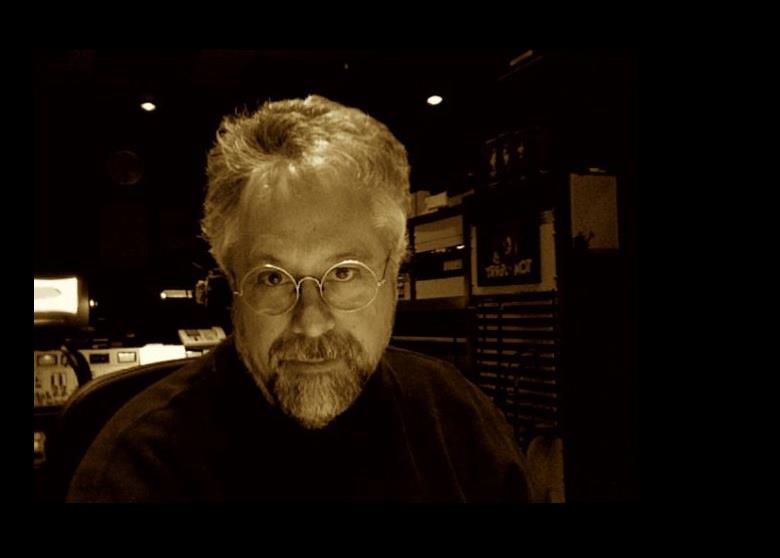
Howard Hoffman (born October 6, 1954) is an American voice actor and a broadcast branding producer in New York City. He also operates the internet radio station Great Big Radio. He was also a presenter of Contemporary Hit Radio shows in New York City, Chicago, San Francisco, Providence, Phoenix, and Houston.

Key Information

Hoffman is currently the Creative Services/Production Director of WOR (AM)/iHeartMedia New York.

Early career

[edit]

Howard's first radio job came in 1971 during his senior year in Suffern High School. An English Teacher (and faculty adviser of the school radio station WSHS), Hank Gross, was working at WTBQ Radio in Warwick, New York on weekends and brought in Howard to do odd jobs like news-gathering, music filing and an occasional newscast.[1] The station hired him full-time shortly thereafter, and he did the 2p.m.-to-signoff shift. While finishing his final year in high school, Howard also took on the role of music director, and the station made a transition from a "beautiful music" format to a more adult contemporary sound.[2]

After a brief stint in Spring Valley, New York, Howard landed his first Top 40 job doing evenings on WALL in Middletown, New York in 1973. It was here where Howard found his voice, relying heavily on listener phone participation. What set the show apart was the inclusion of local and national pop culture topics as well as humorously touching on the news as part of the show's fabric, along with the hits and oldies. Hoffman said, "… that's where I first started doing stuff like putting callers on the air, clowning around with them, hanging up on them … and they loved it."[1] Howard also included pre-recorded parodies and sketches, which were a coveted talent that set apart the top DJ entertainers. This did not go unnoticed, and in 1974, he was hired at WDRQ in Detroit for his production and on-air skills.

New York City and Beyond

[edit]

In 1975, Howard was picked up by WPIX-FM in New York City – originally as a fill-in host before taking the reins as WPIX's permanent evening host on the station's "Disco 102." After initial success, the disco craze eventually fizzled, so Howard set his sights on an area he always loved, New England.

This drew him to WPRO-FM[3] in Providence, Rhode Island, which gave him the freedom to do an evening show with more humor and poking fun at the music he had to play.[4] This sparked some conversations with listeners who took on Howard – either in agreement or rage. A highlight of Hoffman's tenure happened on February 5, 1978, during the Northeastern United States blizzard of 1978. He and several other WPRO AM and FM staffers were stranded at the radio station for three days. With the FM discontinued and its transmitter unreachable, WPRO's AM and FM staff double-teamed on the AM and brought non-stop news and information to the area. Howard calls this his "first true radio moment" – in how the medium can be a force in bringing a community together in an emergency.

WABC

[edit]

In 1979, Rick Sklar, vice president in charge of programming for ABC Radio, sought out and hired Howard to take over the evening show at their Houston FM station, KAUM. The station had just switched formats to CHR (contemporary hit radio – the new moniker for "Top 40") and despite his New York upbringing, Howard was a hit at KAUM, bringing the station to within striking distance of the long-established CHR leader, KRBE.

In late 1979, Howard got what everyone in the radio business refers to as "THE call"[5] when WABC, New York, program director Al Brady Law offered him the coveted evening slot as part of a major restructuring of WABC's lineup.[6] As it turned out, it was while Howard was in Providence that Law listened to his show while Law was programming WHDH in Boston. Howard jumped at the chance and became one of the last on-air hires of WABC's MusicRadio era.[7]

To accommodate his phone-intensive act, WABC installed an extra mixing board and a telephone hybrid system – something the station never used previously. Ten minutes into his very first night, he showed his self-deprecating side when he said "hello" to his parents listening in Suffern – then said, "Who am I kidding? They tuned out of this mess five minutes ago."

Howard's high-energy delivery was a shock for many WABC listeners, who were accustomed to the station's more "adult" approach. Critics weren't kind to this sudden shift and wondered what WABC was thinking. However, everyone involved was aware that FM was beginning to dominate the radio landscape, and Howard's arrival was designed to be part of a game-changer for the station. Long time afternoon fixture Dan Ingram was moved to mornings, Ingram sound-alike Bob Cruz was placed in the afternoons and Sturgis Griffin was brought in for overnights.

Hoffman's tenure at WABC was marked by two diverse events. First was his now notorious 1979 New Year's Eve show, just two weeks into his job. It was a huge in-studio party with WABC and WPLJ engineers, staffers and announcers while Hoffman counted down the top 100 of the year. That show continued almost two hours into 1980 before he finally reached number one. The second was the night of the killing of John Lennon, shortly after Howard took the helm of the overnight show. WABC became a mix of all-news and all-Beatles throughout that night, with Hoffman anchoring the event.

Despite an improvement in listenership,[8] the handwriting was on the wall for AM's future, and WABC began the switch to talk in 1981 with the addition of the New York Yankees, which moved Howard to the all-night shift. Howard attempted to do an all-night talk show called The Phonebooth which was produced and co-written by his friend Tom Leykis. The show went unnoticed by WABC management, however, and Howard exited the station when he was replaced by WABC's first full-time talk show, Dr. Judith Kuriansky.

The 1980s

[edit]

Howard left New York to host his first morning show at KOPA in Phoenix, then moved to San Francisco in 1984 to help launch KMEL's new CHR format as their afternoon drive host. His three years at KMEL had several high points, including an appearance on NBC's Miami Vice, a charity auction of Madonna's "Like A Virgin" wedding dress, a stint as a WWE wrestling manager and an ongoing war with fans of Duran Duran (which was ended by a surprise in-studio visit by the group).

Following a short morning stint at KKFR in Phoenix, Howard returned to New York to co-host the "Howard and Stephanie" morning show on dance-oriented CHR Hot 97 (WQHT). He and Stephanie Miller occupied that slot for the better part of four years before the station went toward a more hardcore hip-hop format. During this time, he landed in the "Top 40 DJs of All Time" list compiled by Decalcomania.[9]

Voiceover and production careers

[edit]

Howard went back to San Francisco to sell the property he bought during his KMEL era and did a short stint at KFRC. It was there where he signed with Look Talent and began pursuing his voiceover career. Leykis then let him know that KABC/KMPC in Los Angeles needed a production director[10] (KMPC carried Leykis' syndicated show at the time). The program director was none other than Al Brady Law, who hired Howard at WABC. Law was convinced that Howard would not stand for a behind-the-scenes job for more than three months, but they reached a deal nonetheless in 1994. Howard's tenure at KABC would last 17+12 years. Among the awards for creative radio promotions he received were two first place RAP awards in 2008[11] for two parody spots: "Obama/McCain Season" in which Hoffman did the voices of Bugs Bunny and Daffy Duck for the 2008 presidential campaign; and "KABC vs TV", a sendup of Apple's "Mac vs PC" spots. He won the same award again in 2016 for a campaign for KXL in Portland, "We Will Inform You," a reboot of Queen's "We Will Rock You."

His voice acting credits include all the characters[12] in the Academy Award nominated animated short The Chicken from Outer Space[13] – the pilot for Courage the Cowardly Dog. He also worked on the series Jackie Chan Adventures and on several projects for Warner Bros. and Toon Disney. His commercial credits include REI, Hostess, Kraft, the Los Angeles Dodgers, Ford, Anheuser-Busch, Audi, Post Cereals, Wawa Markets, Mattel, NBC, T-Mobile and many more. He is signed with DPN Talent of Beverly Hills for his voice acting.

On July 15, 2019, Hoffman was named Creative Services/Production Director of WOR (AM)/iHeartMedia New York.

In 2025, Hoffman returned to his roots as an air personality at Connoisseur Media's WEBE in Connecticut.

[edit]

References

[edit]
Revisions and contributorsEdit on WikipediaRead on Wikipedia
from Grokipedia
Howard Hoffman (born October 6, 1954) is an American voice actor, radio personality, and broadcast branding producer based in . Hoffman began his radio career in 1971 during his senior year at Suffern High School, starting at WTBQ in . He gained prominence in the 1970s and 1980s as a Top 40 at stations including WPRO-FM in Providence, KAUM in , and WABC in New York, where he hosted shows from 1979 to 1981 and won Billboard's Rock Personality of the Year award in 1978. Later roles included morning shows at HOT 97 in New York (1991–1993) and KFRC in (1993). Transitioning to production in the , Hoffman served as creative services director at KABC in from 1994 to 2011. He returned to New York in 2019, working at , including as Creative Services Director for WOR and Broadway until mid-2025. As of November 2025, he operates the station Great Big Radio and continues work for commercials, , and promotional content. Hoffman's voice acting credits include contributions to , Warner Bros., , and productions, as well as award-winning commercial campaigns.

Early Life and Beginnings

Childhood and Education

Howard Hoffman was born in 1954 in the New York area. Growing up in a household where his father—a car salesman—kept the radio playing nearly around the clock, Hoffman was immersed from an early age in diverse programming that shaped his fascination with broadcasting. This constant exposure introduced him to influential figures such as the comedy team Bob & Ray and the narrative style of , whose work on WOR radio left a lasting impression and fueled his interest in the creative possibilities of the medium. Hoffman attended Suffern High School in Suffern, New York, where he graduated in 1972. The school operated its own radio station, providing him with hands-on opportunities to explore during his high school years. Under the mentorship of faculty advisor and English teacher Hank Gross, Hoffman honed his skills in on-air presentation and production, turning a youthful into a clear vocational pursuit. These early experiences at school laid the groundwork for his entry into professional radio, as Hoffman's enthusiasm led him to seek opportunities beyond the campus station.

First Radio Experiences

Howard Hoffman's entry into professional radio began in 1971 during his senior year at Suffern High School, when he was hired as a part-time at WTBQ, a 250-watt daytimer station in . Influenced by his family's constant radio listening, including shows by & Ray and , Hoffman started with weekend shifts that quickly expanded to include donut and pizza runs for the station, eventually leading to afternoon drive duties and program director responsibilities while still in high school, for $82 per week. Following his high school graduation in , Hoffman was promoted to a full-time role at WTBQ as program and . Later that year, in September, he transitioned to weekends at WKQW in , marking his first step toward broader on-air experience in the region. In 1973, Hoffman moved to the evening shift (6 p.m. to midnight) at , a Top 40 station in Middletown, New York. His program incorporated a block from 6 to 7 p.m., board-operating the listener call-in show "Orange County Speaks" from 7 to 8 p.m., and playing hit records afterward. Hoffman's skills in production and on-air delivery were further honed during a brief three-month stint in the summer of 1974 as production director at WDRQ in , his first major market position at age 19. He returned to as production director before advancing in 1975 to WPIX-FM in , where he became the evening host for the station's pioneering "Disco 102" program, filling in initially and securing the role after submitting a demo tape.

Radio Career

Early Local Stations (1971-1976)

Howard Hoffman's entry into professional radio began in 1971 at WTBQ, a 250-watt daytimer in , where he handled afternoon shifts while still in high school. Initially starting with weekend duties that included errands like pizza runs, he quickly advanced to full-time afternoons and assumed responsibilities as program director during his senior year. As , Hoffman curated playlists that helped shape the station's evolving sound, drawing on his high school radio experiences to infuse energy into the broadcasts. In 1973, Hoffman transitioned to WALL in Middletown, New York, marking his first foray into Top 40 radio with the 6 p.m. to midnight shift. His role encompassed delivering news blocks from 6 to 7 p.m., board-operating the local talk program Orange County Speaks from 7 to 8 p.m., and spinning hits thereafter, which allowed him to experiment with on-air personality. To boost listener engagement, Hoffman pioneered interactive caller segments during his evening show, a tactic that propelled his ratings ahead of established New York personalities like Cousin Brucie in the Orange County Pulse survey. By 1974, at age 19, Hoffman moved to WDRQ in as production director for a three-month stint during the station's "Super Summer of '74" promotion. This position sharpened his technical skills in audio production and on-air imaging, building on mentorship from earlier colleagues like Jim Brownold, and provided hands-on learning in a larger market environment. His contributions included crafting promotional elements that supported the station's energetic programming, laying groundwork for future production roles. Returning to New York in 1975, Hoffman joined WPIX-FM as a fill-in host before securing the permanent evening slot, overseeing the " 102" format amid the rising popularity of the genre. He curated playlists featuring key tracks, blending them with his humorous delivery to create a vibrant nighttime show that captured the era's craze. This period honed his ability to adapt to format-specific hosting, though the station's shift away from in 1977 prompted his next career move.

Providence and Houston Roles (1976-1979)

In 1977, Howard Hoffman joined WPRO-FM in Providence, Rhode Island, as the evening host for the 6 p.m. to 10 p.m. shift, marking his transition from New York stations to a larger New England market where he could experiment with a more personality-driven format. Building on production skills from his early local radio work, Hoffman incorporated innovative elements like interactive caller segments and high-energy delivery to engage listeners in the competitive Top 40 landscape. His approach emphasized a comedic edge, compensating for vocal traits with humorous timing and storytelling that became hallmarks of his style during this period. A pivotal moment in Hoffman's Providence tenure came during the Northeastern United States blizzard of 1978, which struck on February 6 and paralyzed Southern with up to 40 inches of snow. On air for his evening shift at WPRO-FM, Hoffman reported live as the storm intensified, but when the FM signal went off due to power failures, he shifted to sister station to continue essential updates and morale-boosting content for stranded listeners. Trapped at the station for four days alongside colleagues, he played a key community role by coordinating food supplies—responding to on-air appeals that prompted residents to deliver provisions via sleds and snowplows—and even served as the impromptu cook for the team during the ordeal. This event not only highlighted Hoffman's adaptability but also solidified his connection with Providence audiences, earning him the Rock Personality of the Year award later that year for his engaging, resilient on-air presence. By late 1978, Hoffman's rising profile at WPRO-FM caught the attention of ABC Radio executive Rick Sklar, who recruited him for a brief stint at KAUM in , in 1979 as part of the network's expansion efforts. At KAUM, a new Top 40 outlet, Hoffman hosted evenings and infused his humorous, personality-focused style to challenge established competitors like , helping the station gain traction in a major market. This short role served as a crucial stepping stone, honing his delivery for bigger opportunities while transitioning him toward national prominence.

WABC Breakthrough (1979-1982)

In late 1979, Howard Hoffman was hired by WABC program director Rick Sklar for the evening slot, marking a significant step in the station's restructuring amid its (Top 40) format. Coming off his role at KAUM in , Hoffman debuted on December 19, 1979, bringing a fresh, teen-oriented energy to the lineup as one of the final music-focused hires before WABC's gradual shift toward talk programming. His evening show emphasized rapid-fire delivery, with lightning-fast one-liners, humorous voice bits, and a high volume of current hits to engage younger listeners during prime listening hours. By October 1980, Hoffman transitioned to the all-night shift following a swap with overnight host Sturgis Griffin, adapting his style to the late hours while maintaining an interactive approach that blended music selections, witty commentary, and direct listener engagement. This period showcased his ability to sustain energy overnight, often featuring commercial-free hours to highlight WABC's musical strengths, as heard in broadcasts from February 1980 promoting the station as "a remarkable radio station." Hoffman's on-air persona, characterized by humor and seamless transitions between tracks and calls, helped foster a among night owls tuning into Top 40 staples. In 1981, amid rumors of WABC fully converting to an all-talk format, Hoffman launched "The Phonebooth," an innovative interactive call-in segment that aired overnights on weekends for seven weeks, co-hosted with to encourage listener participation and delay the music era's end. The feature allowed callers to share stories and requests in a booth-like setup, amplifying Hoffman's phone-intensive style and underscoring his role in experimenting with engagement tactics during the station's transitional phase. This effort, installed with special equipment to support his act, exemplified his commitment to interactivity in late-night radio. Hoffman's tenure contributed to WABC's Top 40 legacy during a challenging period of declining ratings, as the 1979 restructuring aimed to revitalize the station against FM competition; his shows, including the memorable chaotic 1979 Top 100 countdown sponsored by , remained fan favorites that captured the era's vibrancy. As the last teen-oriented at WABC, he played a key part in sustaining the format's appeal through 1982, even as sports programming like New York Yankees broadcasts encroached on music slots, ultimately leading to his departure for Phoenix.

1980s Market Expansions

Following his tenure at WABC, where he honed skills in (CHR) formatting, Hoffman expanded his career across multiple markets in the 1980s, transitioning to morning drive roles and exploring diverse formats. In the early 1980s, he hosted his first morning show at KOPA-FM in , marking a shift to leading the day's programming and engaging listeners during peak commute hours. This role at the CHR station allowed him to build on his New York experience by delivering high-energy Top 40 content tailored to the Southwest audience. From 1984 to 1987, Hoffman moved to to join -FM, where he contributed to launching its CHR format while focusing on urban contemporary hits that blended rhythmic pop and emerging dance tracks. As the afternoon drive host, he brought a humorous, engaging style that resonated with the Bay Area's diverse listeners, helping solidify 's position as a key player in the rhythmic radio landscape. His tenure there highlighted successes in adapting to a more urban-leaning playlist, though it required navigating the station's format evolution from adult-oriented rock to a youth-focused CHR sound. Brief stints in other markets, such as a return to Phoenix for morning drive at KKFR-FM in the late , further demonstrated his versatility in CHR environments. In the late 1980s, Hoffman returned to as part of the "Howard and Stephanie" morning duo at Hot 97 (WQHT-FM), partnering with comedian to revitalize the station's dance-oriented CHR morning slot. The show emphasized quick-witted humor, original comedic bits, and interactive segments with guests and callers, avoiding offensive content to appeal broadly to the 12-34 demographic. Challenges included overcoming Hot 97's historically weak morning ratings compared to competitors like Z100, as well as adapting to co-host dynamics in a high-pressure market where male-female pairings demanded balanced chemistry. Successes emerged through community initiatives, such as unity events addressing racial tensions, and cross-promotions that boosted street-level visibility and listener engagement. This period underscored Hoffman's growth in morning drive, where he balanced solo hosting experience with collaborative improvisation.

Production Roles in Los Angeles (1994-2011)

In 1994, Howard Hoffman transitioned from on-air radio roles to production leadership when he was hired as Production Director for "710 Talk" in , a move facilitated by connections in the industry including syndicated host , whose show aired on the station. His prior on-air experience in the , particularly in market expansions and talk formats, informed his approach to audio production. Hoffman's responsibilities at quickly expanded to include KABC, where he served as Creative Services and Production Director from the mid-1990s through 2011, overseeing the creation of station imaging, promotional materials, and audio branding tailored to programming. This involved developing content, promos, sweepers, and elements that enhanced the stations' on-air identity and listener engagement, often incorporating his skills for seamless integration. Under his direction, production efforts supported KABC's news-talk format, including contributions to ESPN-affiliated programming and occasional work for sister station , emphasizing high-quality audio that aligned with ABC's broadcast standards during its ownership era. During this 17-year tenure, Hoffman managed a production team responsible for daily operations, from scripting and recording to final mixing, marking a pivotal shift in his career from performing to strategic oversight in broadcast branding. His work focused on innovative sound design that differentiated Los Angeles talk stations in a competitive market, including custom promos for high-profile shows and events that bolstered audience retention. By 2011, Hoffman's expertise had solidified his reputation as a key figure in West Coast radio production, having archived and preserved significant station history as KABC's unofficial historian.

Return to New York and Recent Developments (2019-2025)

In July 2019, Howard Hoffman returned to the New York radio market after an eight-year period of freelance work in , production, and commercial projects, taking on the role of Creative Services/Production Director at , part of iHeartMedia's New York operations. This appointment marked his re-entry into full-time broadcast leadership following his long tenure in , where he had honed skills in audio engineering and branding that informed his new responsibilities. Hoffman's duties at WOR encompassed overseeing audio production, station imaging, , and creative direction for on-air promotions, including contributions to iHeartRadio Broadway initiatives. He engineered custom interstitials, commercials, and branding elements that enhanced the station's news/talk format and digital extensions, drawing on his extensive experience to maintain WOR's competitive edge in the market. During his six-year stint, Hoffman collaborated with program directors and talent to produce content that aligned with iHeartMedia's broader audio strategies, focusing on innovative soundscapes without on-air hosting roles. In June 2025, Hoffman departed from and WOR, concluding his role as Creative Services Director amid station programming changes, such as the addition of new syndicated shows. Following a brief period of freelance work, including a fill-in shift at WEBE (FM) in , in October 2025, Hoffman returned to his career-starting station (AM) in Middletown, New York, as the afternoon drive host from 3:00 p.m. to 7:00 p.m., as of 2025.

Voice Acting Career

Animation and Television Credits

Howard Hoffman's voice acting career in animation and television began in the mid-1990s, showcasing his versatility in providing multiple character voices for animated projects, often drawing on his background in radio production to deliver nuanced performances. One of his earliest and most notable contributions was in the 1996 pilot episode "The Chicken from Outer Space," which served as the origin for the Cartoon Network series Courage the Cowardly Dog. Hoffman provided the voices for the titular character Courage, the elderly Muriel Bagge, the farmer Eustace, and additional roles including a mouse and the antagonistic chicken from outer space, earning recognition for the short's Academy Award nomination for Best Animated Short Film. This multi-role performance highlighted his ability to differentiate characters through distinct vocal timbres and accents, setting a foundation for his work in ensemble animation. In the same year, Hoffman contributed additional voices to the animated anthology series What a Cartoon!, specifically voicing , Farmer, Muriel, Mouse, and Chicken in a segment that overlapped with his pilot work, further demonstrating his efficiency in populating worlds with varied personalities. He also lent his voice to , providing character work that added depth to the show's whimsical episodes, though specific roles like the voice of Mary Jo's Car appeared in later seasons such as the 2002 episode "Driving Mr. Goodman." Hoffman's animation credits extended into the 2000s, including uncredited additional voices in two episodes of (2000), where he supported the action-comedy series' ensemble of and elements. Later, in 2006, he provided additional voices for the animated feature : The Movie, contributing to its satirical portrayal of LGBTQ+ themes through ensemble vocal support. Throughout his voice acting tenure, Hoffman has been represented by the DPN Talent agency in Beverly Hills, California, which has facilitated his placements in high-profile animation projects from networks like Cartoon Network, Nickelodeon, and Warner Bros. His radio-honed skills in modulation and timing notably enhanced the expressiveness of his animated characters.

Commercial and Promotional Work

Hoffman has contributed voiceovers to numerous national and regional commercials throughout his career, including early promotional spots for record labels such as Columbia and Warner Bros. Records, as well as extensive work produced in association with KABC in Los Angeles. His commercial portfolio also encompasses freelance reads for stations under Alpha Media, including KXL, KTSA, and KFOR, where he delivered engaging announcements to promote programming and events. These efforts highlight his ability to adapt his voice to diverse advertising needs, from product endorsements to station-specific promotions. In the realm of radio promotional work, Hoffman has provided imaging and voiceover services for major market stations, including in and Hot 97 () in New York, where he previously served as an on-air personality. His contributions to these outlets involved creating signature station liners, sweepers, and promotional packages that captured the energetic spirit of urban contemporary and rhythmic formats. Additionally, he has voiced imaging for a wide array of other stations, such as KFRC, PRO-FM, and , helping to define their on-air identity through concise, memorable audio elements. Hoffman's approach to commercial and promotional reads emphasizes persuasive and energetic delivery, often employing varied mouth shapes and tonal shifts to customize the emotional impact of each line. He focuses on within the constraints of 30- to 60-second spots, positioning the voice as a relatable "good friend" to the to build trust and urgency. For radio , he adheres to a "seven-word rule" for tight, high-impact messaging that reinforces brand positioning without overwhelming the listener. This vocal versatility, honed partly through his experience, allows him to infuse content with authenticity and dynamism.

Production and Branding Career

Broadcast Production Achievements

Hoffman began his professional journey in broadcast production during his early career, including a stint as production director at WDRQ in at age 19, where he gained foundational experience in radio and . From 1994 to 2011, Hoffman served as creative and production director at KABC Radio and in , overseeing the development of station promos, audio identities, and promotional materials that defined the stations' on-air sound. In this role, he produced a wide range of content, including sweepers and elements, often incorporating creative to enhance listener engagement on formats. His tenure at these stations spanned over 17 years, during which he crafted campaigns that blended humor and innovation, contributing to KABC's distinctive branding in a competitive market. Hoffman's production work extended to parody spots and thematic campaigns, such as satirical takes on political events and media rivalries, which showcased his ability to adapt classic formats for contemporary radio audiences. These efforts helped elevate the audio quality and memorability of station promotions, influencing standards in broadcast by emphasizing dynamic, narrative-driven elements over traditional announcements. Returning to the New York area in 2019, Hoffman served as Creative Services Director at iHeartMedia from 2019 to mid-2025, managing on-air imaging for WOR (AM) and iHeartRadio Broadway. There, he focused on producing promos and audio identities that incorporated dramatic and comedic styles suited to the portable people meter (PPM) measurement era, ensuring stations maintained strong auditory presence amid digital shifts. His projects at WOR innovated in radio branding, building on his Los Angeles legacy to adapt traditional production techniques for modern multimedia environments. In September 2025, Hoffman joined Connoisseur Media in a creative and production capacity, contributing to branding efforts at stations such as WEBE-FM in Connecticut.

Awards and Internet Radio Ventures

Hoffman received notable recognition for his creative contributions to radio production, including two first-place wins in the 19th Annual Radio and Production (RAP) Awards in 2009 for parody promotional spots created for KABC-AM in . These included "Obama Season/McCain Season," a satirical piece voicing both U.S. presidential candidates during the 2008 election cycle, and "The News Junkie," highlighting addictive news consumption. In 2016, Hoffman earned another first-place RAP Award in the Major Market Promos category for the "We Will Inform You" campaign, a parody of Queen's "We Will Rock You" produced for Alpha Media's KXL in Portland, Oregon, and KTSA in San Antonio, Texas. This entry also placed as a finalist in the 27th Annual RAP Awards the following year, underscoring its impact in news/talk radio imaging. Earlier in his career, Hoffman was honored with the Rock Personality of the Year Award in 1978 for his on-air work at WPRO-FM in , recognizing his innovative programming and listener engagement during a period of high ratings for Top 40 radio. Reflecting his enduring passion for radio, Hoffman launched and operates Great Big Radio (greatbigradio.com), an independent internet streaming station established around 2006 that curates a 24/7 of and underappreciated tracks from his decades in . The station emphasizes personally selected music from the through the , blending mainstream successes with "songs that should've been" hits, and serves as a digital extension of his production legacy.

References

Add your contribution
Related Hubs
User Avatar
No comments yet.