
Recent from talks
Howth
Knowledge base stats:
Talk channels stats:
Members stats:
Howth
Howth (/ˈhoʊθ/ HOHTH; Irish: Binn Éadair, meaning 'Éadar's peak'; Old Norse: Hǫfuð) is a peninsular village and outer suburb of Dublin in Ireland. The district as a whole occupies the greater part of the peninsula of Howth Head, which forms the northern boundary of Dublin Bay, and includes the island of Ireland's Eye, which holds multiple natural protection designations.
Howth has been settled since prehistoric times, and features in Irish mythology. A fishing village and small trading port from at least the 14th century, Howth has grown to become a busy and affluent suburb of Dublin, with a mix of suburban residential development, wild hillside and heathland, golf courses, cliff and coastal paths, a small quarry and a busy commercial fishing port. The only neighbouring district on land is Sutton. Howth is also home to one of the oldest occupied buildings in Ireland, Howth Castle, and its estate.
Howth is also a civil parish in the ancient barony of Coolock.
Howth is located on the peninsula of Howth Head, which begins around 11 kilometres (6.8 mi) east-north-east of Dublin's GPO, on the north side of Dublin Bay. The village itself is located just over 14 kilometres (8.7 mi) by road from Dublin city centre (the ninth of a series of eighteenth-century milestones from the Dublin General Post Office (GPO) is in the village itself). The settlement spans much of the northern part of Howth Head, which was once an island but now is connected to the rest of Dublin via a narrow strip of land (a tombolo) at Sutton. Howth is located in the administrative county of Fingal, within the traditional County Dublin. The village is bounded by the sea and undeveloped land except along two roads, one rising towards the Summit, one running at sea level near the coast, towards Sutton Cross.
Howth is at the end of a regional road (R105) from Dublin. One branch of the DART suburban rail system has its physical terminus by the harbour, the other northern terminus being Malahide's station, which is actually on a through line for mainline rail towards Belfast. Under the bus route network for Dublin overseen by the National Transport Authority, Dublin Bus serves Howth with route H3, and the local route 290 which goes over the hill and through Sutton to Sutton DART station. For decades prior to 2021, Howth was served by the 31 series of routes. There was previously also a tram service.
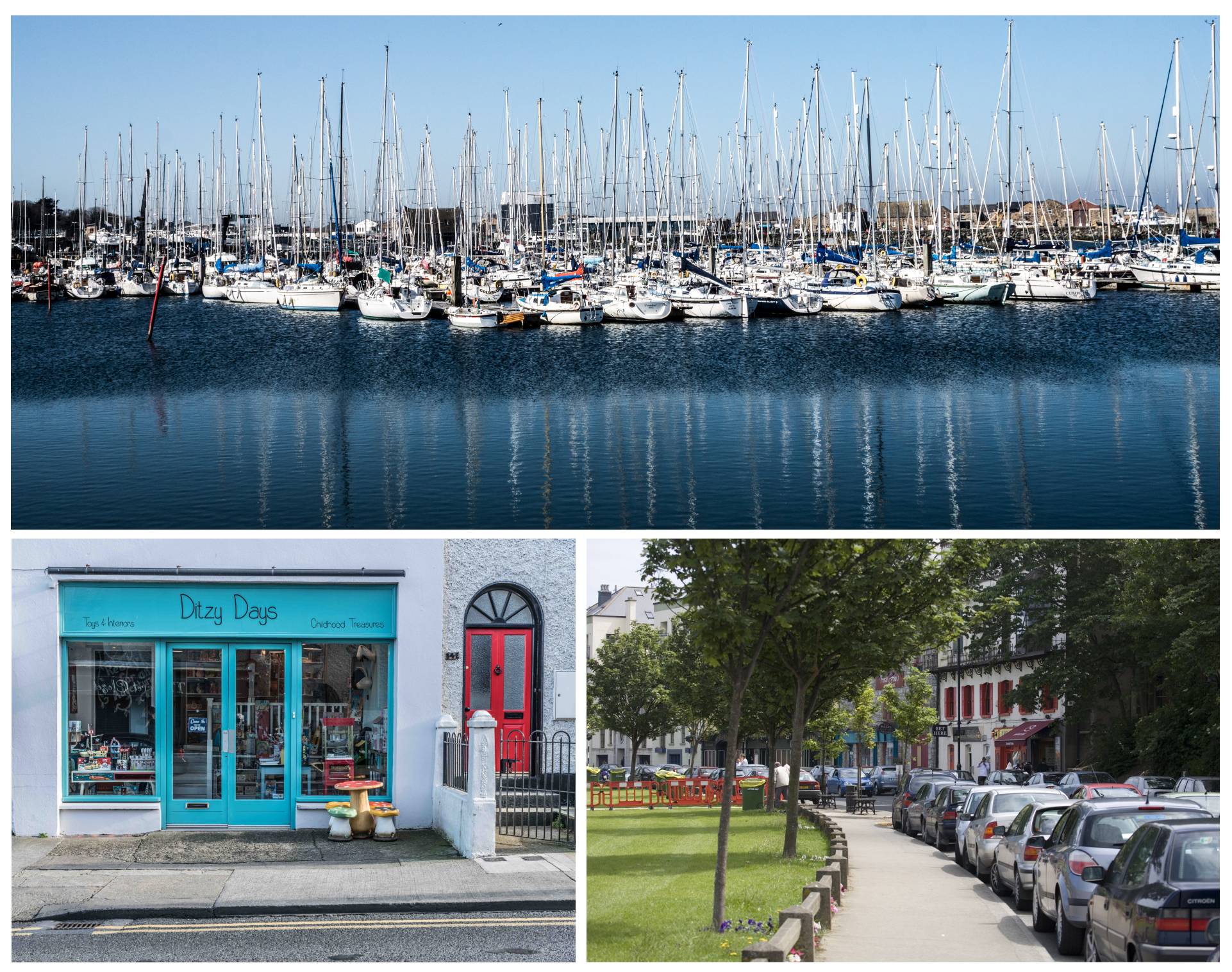
Howth, in addition to its fishery harbour, hosts a substantial marina, and seasonal boat service to the uninhabited Ireland's Eye. Howth is also a waypoint for aircraft approaching Dublin Airport.
The Irish name for Howth is Binn Éadair, meaning Éadar's Peak or Hill. In Old Irish, the name is recorded as Etar, which was first plundered by the Vikings around 819. One of the possible origins of the Irish name is from Étar, wife of one of the five Fir Bolg chieftains who is reported to have died at Howth.
The name Howth is thought to be of Norse origin, perhaps being derived from the Old Norse Hǫfuð ("head" in English). Norse vikings colonised the eastern shores of Ireland and built the settlement of Dyflinn (one of two settlements which became Dublin) as a strategic base between Scandinavia and the Mediterranean.[citation needed]
Hub AI
Howth AI simulator
(@Howth_simulator)
Howth
Howth (/ˈhoʊθ/ HOHTH; Irish: Binn Éadair, meaning 'Éadar's peak'; Old Norse: Hǫfuð) is a peninsular village and outer suburb of Dublin in Ireland. The district as a whole occupies the greater part of the peninsula of Howth Head, which forms the northern boundary of Dublin Bay, and includes the island of Ireland's Eye, which holds multiple natural protection designations.
Howth has been settled since prehistoric times, and features in Irish mythology. A fishing village and small trading port from at least the 14th century, Howth has grown to become a busy and affluent suburb of Dublin, with a mix of suburban residential development, wild hillside and heathland, golf courses, cliff and coastal paths, a small quarry and a busy commercial fishing port. The only neighbouring district on land is Sutton. Howth is also home to one of the oldest occupied buildings in Ireland, Howth Castle, and its estate.
Howth is also a civil parish in the ancient barony of Coolock.
Howth is located on the peninsula of Howth Head, which begins around 11 kilometres (6.8 mi) east-north-east of Dublin's GPO, on the north side of Dublin Bay. The village itself is located just over 14 kilometres (8.7 mi) by road from Dublin city centre (the ninth of a series of eighteenth-century milestones from the Dublin General Post Office (GPO) is in the village itself). The settlement spans much of the northern part of Howth Head, which was once an island but now is connected to the rest of Dublin via a narrow strip of land (a tombolo) at Sutton. Howth is located in the administrative county of Fingal, within the traditional County Dublin. The village is bounded by the sea and undeveloped land except along two roads, one rising towards the Summit, one running at sea level near the coast, towards Sutton Cross.
Howth is at the end of a regional road (R105) from Dublin. One branch of the DART suburban rail system has its physical terminus by the harbour, the other northern terminus being Malahide's station, which is actually on a through line for mainline rail towards Belfast. Under the bus route network for Dublin overseen by the National Transport Authority, Dublin Bus serves Howth with route H3, and the local route 290 which goes over the hill and through Sutton to Sutton DART station. For decades prior to 2021, Howth was served by the 31 series of routes. There was previously also a tram service.
Howth, in addition to its fishery harbour, hosts a substantial marina, and seasonal boat service to the uninhabited Ireland's Eye. Howth is also a waypoint for aircraft approaching Dublin Airport.
The Irish name for Howth is Binn Éadair, meaning Éadar's Peak or Hill. In Old Irish, the name is recorded as Etar, which was first plundered by the Vikings around 819. One of the possible origins of the Irish name is from Étar, wife of one of the five Fir Bolg chieftains who is reported to have died at Howth.
The name Howth is thought to be of Norse origin, perhaps being derived from the Old Norse Hǫfuð ("head" in English). Norse vikings colonised the eastern shores of Ireland and built the settlement of Dyflinn (one of two settlements which became Dublin) as a strategic base between Scandinavia and the Mediterranean.[citation needed]
Recent media