
Recent from talks
Huang Tingjian
Knowledge base stats:
Talk channels stats:
Members stats:
Huang Tingjian
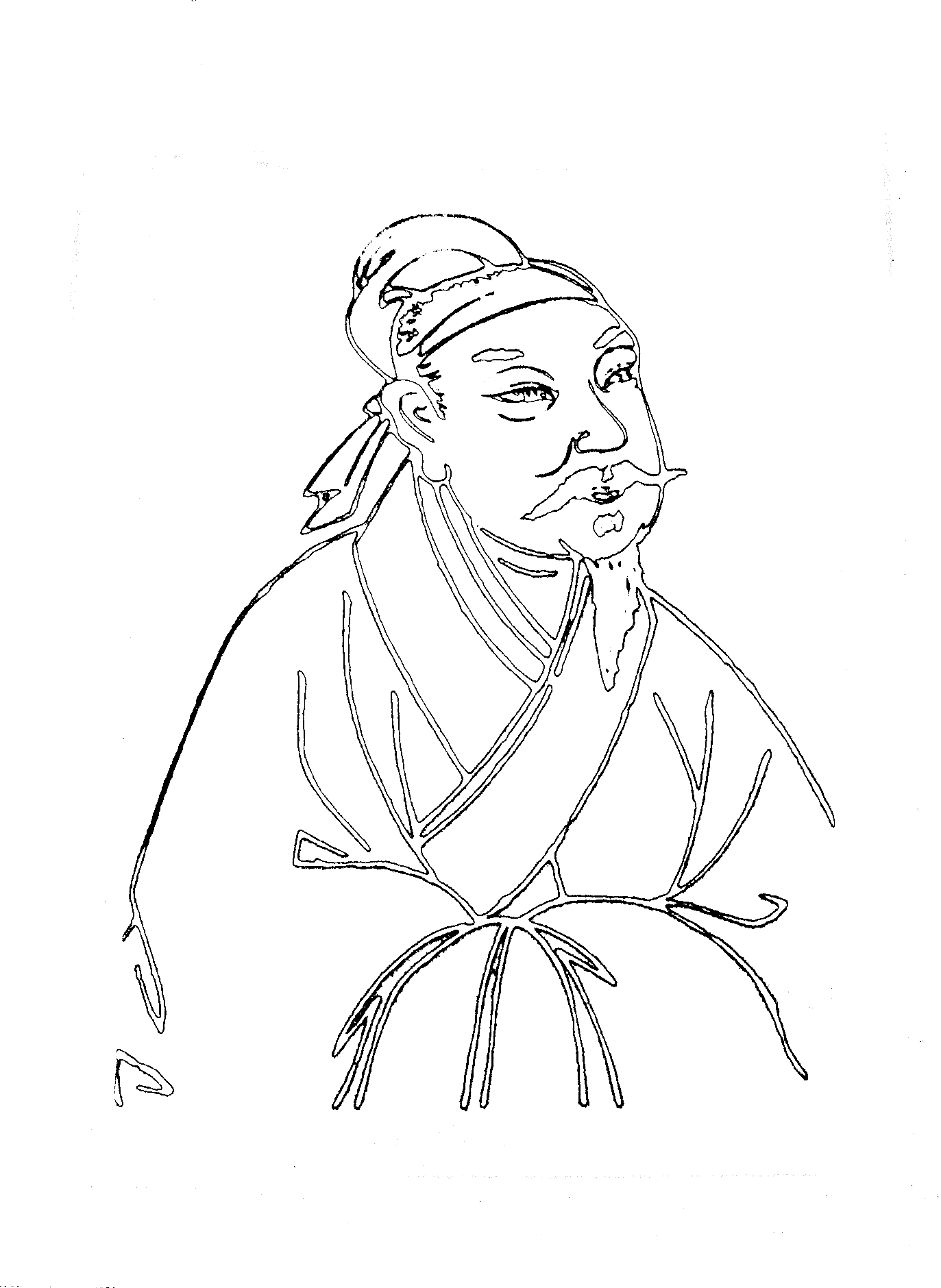
Huang Tingjian (simplified Chinese: 黄庭坚; traditional Chinese: 黃庭堅; Wade–Giles: Huang T'ing-chien; 1045, Jiangxi province, China–1105, Yizhou [now Yishan], Guangxi) was a Chinese calligrapher, painter, and poet of the Song dynasty. He is predominantly known as a calligrapher, and is also admired for his painting and poetry. He was one of the Four Masters of the Song Dynasty (Chinese: 宋四家), and was a younger friend of Su Shi and influenced by his and his friends' practice of literati painting (simplified Chinese: 文人画; traditional Chinese: 文人畫), calligraphy, and poetry; regarded as the founder of the Jiangxi school of poetry.
Huang Tingjian was born into the prominent Huang clan and to a family of poets, which had established residence in Jiangnan, south of the Yangzi River, just across the river gorge from the main turmoils and troubles of the Five Dynasties period. Tingjian's great-great-grandfather had then and there established a great library, together with an educational system. Achievement of the jinshi degree was a common attainment for men of the Huang clan. Huang Tingjian's mother, Lady Li, was an accomplished painter of bamboo and player of the guqin. His father, Huang Shu (黃庶,1018-1058) received his jinshi in 1042, and introduced his son Huang Tingjian to the works of Du Fu and Han Yu, before dying when Tingjian was 13 years old, at which point Huang Tingjian left his hometown of Fenning (分寧, in modern Jiangxi).
After his father's death, Huang Tingjian was sent to Anhui to be further brought up by his uncle, Li Chang (李常,1027-1090), who was also possessed of a large library.
Huang Tingjian failed his jinshi in the Imperial examination, at his first attempt, in 1064, but was passed in 1067, when he was 22 years old. His first employment was in Song Shenzong's first year as emperor.
In 1068-1069 a series of major earthquakes occurred southwest of modern Tianjin. The devastating human consequences were noted by Huang Tingjian. This was the occasion of his writing the poem "Lament for the Refugees" (流民嘆/流民歎, using the imagery of a giant tortoise moving mountains which it carried upon its back .
Huang Tingjian passed his teaching credential exam in 1072, and spent the next 7 years teaching at the Damingfu Imperial Academy in Hebei. Its location was in what is currently Daming County. Damingfu was then Northern Capital of the Song Chinese Empire, and not far from the militarily turbulent northern border with the rival Khitan Empire.
In 1072, Li Chang, his maternal uncle, and Sun Jue his father-in-law had shown examples of Huang Tingjian's works to the famous poet and New Policy opponent Su Shi (Dongpo). In 1078, Huang presented Su with a letter and two elaborate gushi-style poems, to which Su returned with two poems of his own, matching Huang's rhyme-scheme. Huang's fame was secured when Su Shi (Dongpo) heaped his praises upon him, and the two became close friends for life.
So far, it seems that Huang had managed to avoid entanglement in politics, and in fact his early career as an imperial teaching official seems to have been in part secured by the favor of Wang Anshi, upon reading a poem of Huang's, hinting at retiring from the boredom which he was experiencing at that point of his career. At the time, there were two major parties, a "reform" party (also known as the New Policies Group), led by Wang Anshi and a "conservative" party, which included such prominent officials as Sima Guang, Ouyang Xiu, and Su Shi. Under the imperial system the winning side was chosen by the emperor (or the emperor's regent in the case of his minority). Imperial disfavor could range from death to a stalled career.
Hub AI
Huang Tingjian AI simulator
(@Huang Tingjian_simulator)
Huang Tingjian
Huang Tingjian (simplified Chinese: 黄庭坚; traditional Chinese: 黃庭堅; Wade–Giles: Huang T'ing-chien; 1045, Jiangxi province, China–1105, Yizhou [now Yishan], Guangxi) was a Chinese calligrapher, painter, and poet of the Song dynasty. He is predominantly known as a calligrapher, and is also admired for his painting and poetry. He was one of the Four Masters of the Song Dynasty (Chinese: 宋四家), and was a younger friend of Su Shi and influenced by his and his friends' practice of literati painting (simplified Chinese: 文人画; traditional Chinese: 文人畫), calligraphy, and poetry; regarded as the founder of the Jiangxi school of poetry.
Huang Tingjian was born into the prominent Huang clan and to a family of poets, which had established residence in Jiangnan, south of the Yangzi River, just across the river gorge from the main turmoils and troubles of the Five Dynasties period. Tingjian's great-great-grandfather had then and there established a great library, together with an educational system. Achievement of the jinshi degree was a common attainment for men of the Huang clan. Huang Tingjian's mother, Lady Li, was an accomplished painter of bamboo and player of the guqin. His father, Huang Shu (黃庶,1018-1058) received his jinshi in 1042, and introduced his son Huang Tingjian to the works of Du Fu and Han Yu, before dying when Tingjian was 13 years old, at which point Huang Tingjian left his hometown of Fenning (分寧, in modern Jiangxi).
After his father's death, Huang Tingjian was sent to Anhui to be further brought up by his uncle, Li Chang (李常,1027-1090), who was also possessed of a large library.
Huang Tingjian failed his jinshi in the Imperial examination, at his first attempt, in 1064, but was passed in 1067, when he was 22 years old. His first employment was in Song Shenzong's first year as emperor.
In 1068-1069 a series of major earthquakes occurred southwest of modern Tianjin. The devastating human consequences were noted by Huang Tingjian. This was the occasion of his writing the poem "Lament for the Refugees" (流民嘆/流民歎, using the imagery of a giant tortoise moving mountains which it carried upon its back .
Huang Tingjian passed his teaching credential exam in 1072, and spent the next 7 years teaching at the Damingfu Imperial Academy in Hebei. Its location was in what is currently Daming County. Damingfu was then Northern Capital of the Song Chinese Empire, and not far from the militarily turbulent northern border with the rival Khitan Empire.
In 1072, Li Chang, his maternal uncle, and Sun Jue his father-in-law had shown examples of Huang Tingjian's works to the famous poet and New Policy opponent Su Shi (Dongpo). In 1078, Huang presented Su with a letter and two elaborate gushi-style poems, to which Su returned with two poems of his own, matching Huang's rhyme-scheme. Huang's fame was secured when Su Shi (Dongpo) heaped his praises upon him, and the two became close friends for life.
So far, it seems that Huang had managed to avoid entanglement in politics, and in fact his early career as an imperial teaching official seems to have been in part secured by the favor of Wang Anshi, upon reading a poem of Huang's, hinting at retiring from the boredom which he was experiencing at that point of his career. At the time, there were two major parties, a "reform" party (also known as the New Policies Group), led by Wang Anshi and a "conservative" party, which included such prominent officials as Sima Guang, Ouyang Xiu, and Su Shi. Under the imperial system the winning side was chosen by the emperor (or the emperor's regent in the case of his minority). Imperial disfavor could range from death to a stalled career.
Recent media