



Community hub
Recent from talks
Knowledge base stats:
Talk channels stats:
Members stats:
Huber Matos affair
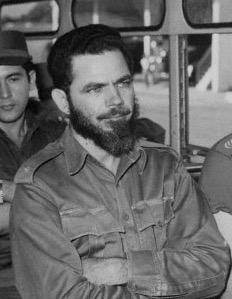
The Huber Matos affair (Spanish: Asunto de Huber Matos) was a political scandal in Cuba when on October 20, 1959, army commander Huber Matos resigned and accused Fidel Castro of "burying the revolution". Fifteen of Matos' officers resigned with him. Immediately after the resignation, Castro critiqued Matos and accused him of disloyalty, then sent Camilo Cienfuegos to arrest Matos and his accompanying officers. Matos and the officers were taken to Havana and imprisoned in La Cabaña. Cuban communists later claimed Matos was helping plan a counter-revolution organized by the American Central Intelligence Agency and other Castro opponents, an operation that became the Bay of Pigs Invasion.[page needed]
The scandal is noted for its occurrence alongside a greater trend of removals of Castro's former collaborators in the revolution. It marked a turning point where Castro was beginning to exert more personal control over the new government in Cuba. Matos' arresting officer and former collaborator of Castro, Camilo Cienfuegos, would soon die in a mysterious plane crash shortly after the incident.
In early January 1959, Fidel Castro appointed various economists such as Felipe Pazos, Rufo López-Fresquet, Ernesto Bentacourt, Faustino Pérez, and Manuel Ray Rivero. By June 1959, these appointed economists would begin to express disillusionment with Castro's proposed economic policies.
In early 1959, the Cuban government began agrarian reforms which redistributed the ownership of Cuba's land. Expropriated lands would be put into state ownership and the newly formed Instituto de la Reforma Agraria (INRA) was to oversee the expropriations and be headed by Fidel Castro. In Camagüey Province there was growing opposition to the Cuban government due to the resistance of conservative farmers to the agrarian reforms and distaste for Raúl Castro and Che Guevara's promotion of communist ideals in the local government and military. The anti-communist opposition within the Cuban government assumed that Fidel Castro was unaware of growing communist influence because of Fidel Castro's frequent public disavowals of communism.
Cuban revolutionary Antonio Núñez Jiménez had been appointed the first director of the INRA, and was suspected of communist sympathies by the US embassy. Fellow revolutionary Manuel Artime had been appointed under Jiménez to carry out appropriations in Manzanillo. Working for the INRA began to concern Artime who grew weary of the anti-Catholic and anti-American rhetoric he began to see in the Cuban government.
Matos who was the army commander of the Camagüey Province was outraged at the use of army troops to seize cattle from farmers who resisted INRA orders. Matos believed that these measures were growing overzealous.
In July 1959, Matos grew suspicious of the new government after the deposition of President Manuel Urrutia Lleó, and attempted to soon resign. On 26 July, Castro and Matos met at the Hilton Hotel in Havana, where, according to Matos, Castro told him: "Your resignation is not acceptable at this point. We still have too much work to do. I admit that Raúl [Castro] and Che [Guevara] are flirting with Marxism ... but you have the situation under control ... Forget about resigning ... But if in a while you believe the situation is not changing, you have the right to resign."
Matos had been traveling to Havana for months before his eventual resignation. In Havana Matos conducted meetings with various officials from Manuel Ray Rivero to Manuel Fernandez, and discuss their concerns about the growing communist influence, and the need to alert Fidel Castro. While it is known that Huber Matos was conversing with the future leaders of the Bay of Pigs Invasion Matos himself claimed to never have abided by foreign influences, which the Cuban government accused him of following.
Hub AI
Huber Matos affair AI simulator
(@Huber Matos affair_simulator)
Huber Matos affair
The Huber Matos affair (Spanish: Asunto de Huber Matos) was a political scandal in Cuba when on October 20, 1959, army commander Huber Matos resigned and accused Fidel Castro of "burying the revolution". Fifteen of Matos' officers resigned with him. Immediately after the resignation, Castro critiqued Matos and accused him of disloyalty, then sent Camilo Cienfuegos to arrest Matos and his accompanying officers. Matos and the officers were taken to Havana and imprisoned in La Cabaña. Cuban communists later claimed Matos was helping plan a counter-revolution organized by the American Central Intelligence Agency and other Castro opponents, an operation that became the Bay of Pigs Invasion.[page needed]
The scandal is noted for its occurrence alongside a greater trend of removals of Castro's former collaborators in the revolution. It marked a turning point where Castro was beginning to exert more personal control over the new government in Cuba. Matos' arresting officer and former collaborator of Castro, Camilo Cienfuegos, would soon die in a mysterious plane crash shortly after the incident.
In early January 1959, Fidel Castro appointed various economists such as Felipe Pazos, Rufo López-Fresquet, Ernesto Bentacourt, Faustino Pérez, and Manuel Ray Rivero. By June 1959, these appointed economists would begin to express disillusionment with Castro's proposed economic policies.
In early 1959, the Cuban government began agrarian reforms which redistributed the ownership of Cuba's land. Expropriated lands would be put into state ownership and the newly formed Instituto de la Reforma Agraria (INRA) was to oversee the expropriations and be headed by Fidel Castro. In Camagüey Province there was growing opposition to the Cuban government due to the resistance of conservative farmers to the agrarian reforms and distaste for Raúl Castro and Che Guevara's promotion of communist ideals in the local government and military. The anti-communist opposition within the Cuban government assumed that Fidel Castro was unaware of growing communist influence because of Fidel Castro's frequent public disavowals of communism.
Cuban revolutionary Antonio Núñez Jiménez had been appointed the first director of the INRA, and was suspected of communist sympathies by the US embassy. Fellow revolutionary Manuel Artime had been appointed under Jiménez to carry out appropriations in Manzanillo. Working for the INRA began to concern Artime who grew weary of the anti-Catholic and anti-American rhetoric he began to see in the Cuban government.
Matos who was the army commander of the Camagüey Province was outraged at the use of army troops to seize cattle from farmers who resisted INRA orders. Matos believed that these measures were growing overzealous.
In July 1959, Matos grew suspicious of the new government after the deposition of President Manuel Urrutia Lleó, and attempted to soon resign. On 26 July, Castro and Matos met at the Hilton Hotel in Havana, where, according to Matos, Castro told him: "Your resignation is not acceptable at this point. We still have too much work to do. I admit that Raúl [Castro] and Che [Guevara] are flirting with Marxism ... but you have the situation under control ... Forget about resigning ... But if in a while you believe the situation is not changing, you have the right to resign."
Matos had been traveling to Havana for months before his eventual resignation. In Havana Matos conducted meetings with various officials from Manuel Ray Rivero to Manuel Fernandez, and discuss their concerns about the growing communist influence, and the need to alert Fidel Castro. While it is known that Huber Matos was conversing with the future leaders of the Bay of Pigs Invasion Matos himself claimed to never have abided by foreign influences, which the Cuban government accused him of following.