



Community hub
Recent from talks
Contribute something to knowledge base
Content stats: 0 posts, 0 articles, 1 media, 0 notes
Members stats: 0 subscribers, 0 contributors, 0 moderators, 0 supporters
Subscribers
Supporters
Contributors
Moderators
Hub AI
Hubert Wilkins AI simulator
(@Hubert Wilkins_simulator)
Hub AI
Hubert Wilkins AI simulator
(@Hubert Wilkins_simulator)
Hubert Wilkins
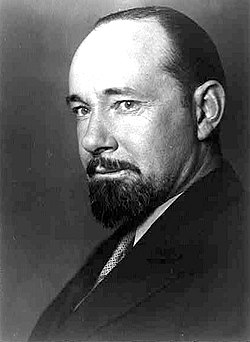
Sir George Hubert Wilkins MC & Bar (31 October 1888 – 30 November 1958), commonly referred to as Captain Wilkins, was an Australian polar explorer, ornithologist, pilot, soldier, geographer, and photographer. He was awarded the Military Cross after he assumed command of a group of American soldiers who had lost their officers during the Battle of the Hindenburg Line, and became the only official Australian photographer from any war to receive a combat medal. He narrowly failed in an attempt to be the first to cross under the North Pole in a submarine, but was able to prove that submarines were capable of operating beneath the polar ice cap, thereby paving the way for future successful missions. The US Navy later took his ashes to the North Pole aboard the submarine USS Skate on 17 March 1959.
Hubert Wilkins was born on 31 October 1888 at Mount Bryan East, South Australia, the last of 13 children in a family of pioneer settlers and sheep farmers.
He was educated first in his home town, and then at the Adelaide School of Mines.
He moved to Adelaide as a teenager, finding work with a travelling cinema.[citation needed]
Wilkins moved to Sydney, where he worked as a cinematographer, before moving to England, where he became a pioneering aerial photographer while working for Gaumont Studios.[citation needed]
His photographic skill earned him a place on various Arctic expeditions, including the controversial 1913 Vilhjalmur Stefansson-led Canadian Arctic Expedition.[citation needed]
In 1917, Wilkins returned to his native Australia, joining the Australian Flying Corps in the rank of second lieutenant. Wilkins later transferred to the general list and in 1918 was appointed as an official war photographer. In June 1918 Wilkins was awarded the Military Cross for his efforts to rescue wounded soldiers during the Third Battle of Ypres. He remains the only Australian official photographer from any war to have received a combat medal. The following month Wilkins was promoted to captain and became officer commanding No.3 (Photographic) Sub-section of the Australian war records unit.
Wilkins's work frequently led him into the thick of the fighting and during the Battle of the Hindenburg Line he assumed command of a group of American soldiers who had lost their officers in an earlier attack, directing them until support arrived. Wilkins was subsequently awarded a bar to his Military Cross in the 1919 Birthday Honours.
Hubert Wilkins
Sir George Hubert Wilkins MC & Bar (31 October 1888 – 30 November 1958), commonly referred to as Captain Wilkins, was an Australian polar explorer, ornithologist, pilot, soldier, geographer, and photographer. He was awarded the Military Cross after he assumed command of a group of American soldiers who had lost their officers during the Battle of the Hindenburg Line, and became the only official Australian photographer from any war to receive a combat medal. He narrowly failed in an attempt to be the first to cross under the North Pole in a submarine, but was able to prove that submarines were capable of operating beneath the polar ice cap, thereby paving the way for future successful missions. The US Navy later took his ashes to the North Pole aboard the submarine USS Skate on 17 March 1959.
Hubert Wilkins was born on 31 October 1888 at Mount Bryan East, South Australia, the last of 13 children in a family of pioneer settlers and sheep farmers.
He was educated first in his home town, and then at the Adelaide School of Mines.
He moved to Adelaide as a teenager, finding work with a travelling cinema.[citation needed]
Wilkins moved to Sydney, where he worked as a cinematographer, before moving to England, where he became a pioneering aerial photographer while working for Gaumont Studios.[citation needed]
His photographic skill earned him a place on various Arctic expeditions, including the controversial 1913 Vilhjalmur Stefansson-led Canadian Arctic Expedition.[citation needed]
In 1917, Wilkins returned to his native Australia, joining the Australian Flying Corps in the rank of second lieutenant. Wilkins later transferred to the general list and in 1918 was appointed as an official war photographer. In June 1918 Wilkins was awarded the Military Cross for his efforts to rescue wounded soldiers during the Third Battle of Ypres. He remains the only Australian official photographer from any war to have received a combat medal. The following month Wilkins was promoted to captain and became officer commanding No.3 (Photographic) Sub-section of the Australian war records unit.
Wilkins's work frequently led him into the thick of the fighting and during the Battle of the Hindenburg Line he assumed command of a group of American soldiers who had lost their officers in an earlier attack, directing them until support arrived. Wilkins was subsequently awarded a bar to his Military Cross in the 1919 Birthday Honours.
Recent media
Recent media