



Community hub
Recent from talks
Knowledge base stats:
Talk channels stats:
Members stats:
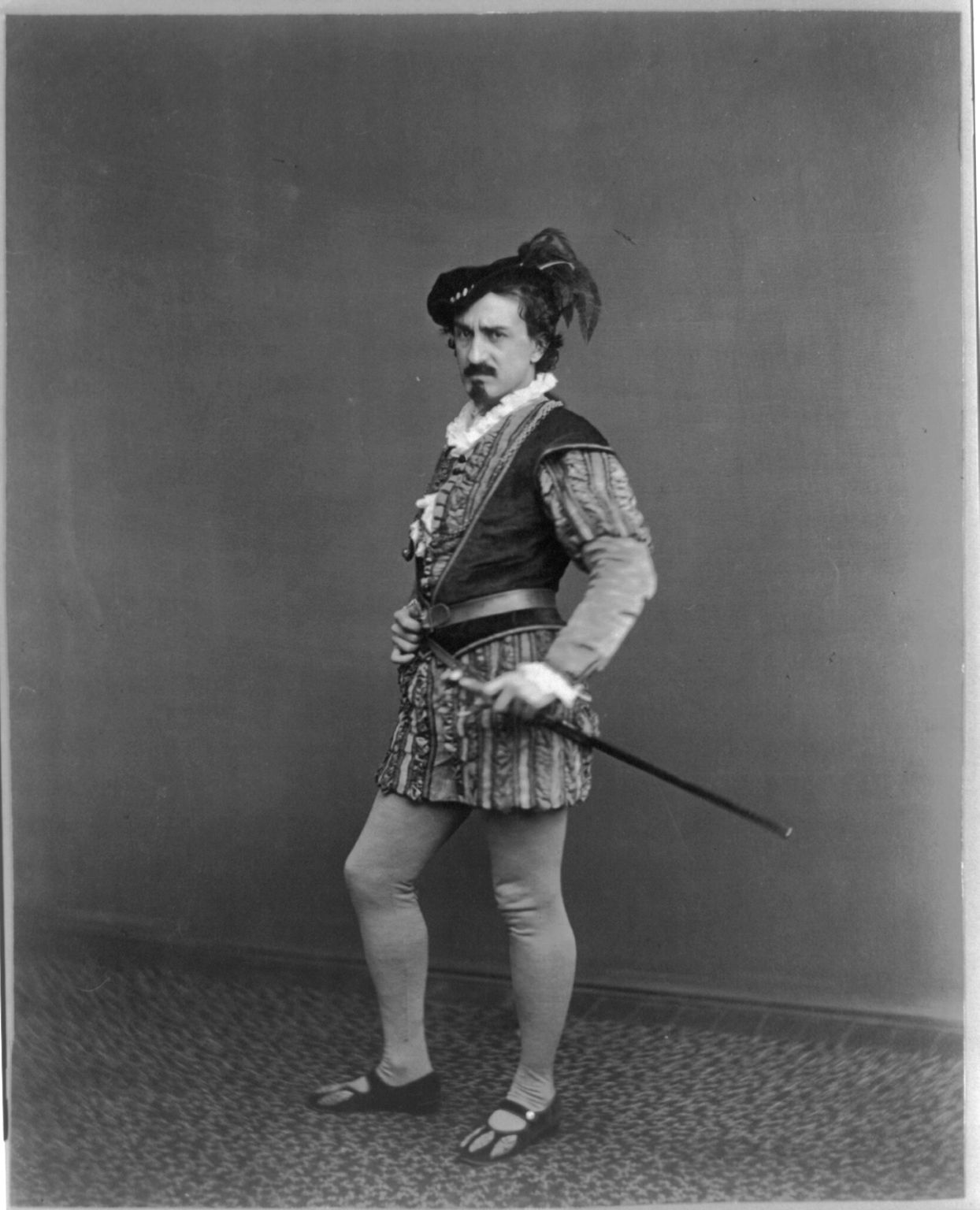
Iago
Iago (/iˈɑːɡoʊ/) is a fictional character in Shakespeare's Othello (c. 1601–1604). Iago is the play's main antagonist and Othello's standard-bearer. He is the husband of Emilia who is in turn the attendant of Othello's wife Desdemona. Iago hates Othello and devises a plan to destroy him by making him believe that Desdemona is having an affair with his lieutenant, Michael Cassio. With 1,097 lines, Iago has more lines in the play than Othello himself.
Iago is a soldier who has fought beside Othello for several years and has become an ensign. At the beginning of the play, Iago claims to have been unfairly passed over for promotion to the rank of Othello's lieutenant in favour of Michael Cassio. Iago plots to manipulate Othello into demoting Cassio, and thereafter to bring about the downfall of Othello himself and also others in the play who trusted Iago. He has an ally, Roderigo, who assists him in his plans in the mistaken belief that after Othello is gone, Iago will help Roderigo earn the affection of Othello's wife, Desdemona. After Iago engineers a drunken brawl to ensure Cassio's demotion (in Act 2), he sets to work on his second scheme: leading Othello to believe that Desdemona is having an affair with Cassio. This plan occupies the final three acts of the play.
He manipulates his wife Emilia, Desdemona's lady-in-waiting, into taking from Desdemona a handkerchief that Othello had given her; he then tells Othello that he had seen it in Cassio's possession. Once Othello flies into a jealous rage, Iago tells him to hide and look on while he (Iago) talks to Cassio. Iago then leads Othello to believe that a bawdy conversation about Cassio's mistress, Bianca, is in fact about Desdemona. Mad with jealousy, Othello orders Iago to kill Cassio, promising to make him lieutenant in return. Iago then engineers a fight between Cassio and Roderigo in which the latter is killed (by Iago himself, double-crossing his ally), but the former merely wounded.
Iago's plan appears to succeed when Othello kills Desdemona, who is innocent of Iago's charges. Soon afterwards, however, Emilia brings Iago's treachery to light, and Iago kills her in a fit of rage before being arrested. He remains famously reticent when pressed for an explanation of his actions before he is arrested: "Demand me nothing. What you know, you know. From this time forth I never will speak word." Following Othello's suicide, Cassio, now in charge, condemns Iago to be imprisoned and tortured as punishment for his crimes.
Iago is one of Shakespeare's most sinister villains, often considered such because of the unique trust that Othello places in him, which he betrays while maintaining his reputation for honesty and dedication. Shakespeare contrasts Iago with Othello's nobility and integrity.
Iago is a Machiavellian schemer and manipulator, as he is often referred to as "honest Iago", displaying his skill at deceiving other characters so that not only do they not suspect him, but they count on him as the person most likely to be truthful.
Shakespearean critic A. C. Bradley said that "evil has nowhere else been portrayed with such mastery as in the evil character of Iago", and also states that he "stands supreme among Shakespeare's evil characters because the greatest intensity and subtlety of imagination have gone into his making." The mystery surrounding Iago's actual motives continues to intrigue readers and fuel scholarly debate.
The role is thought to have been first played by Robert Armin, who typically played intelligent clown roles such as Touchstone in As You Like It and Feste in Twelfth Night. Other notable actors who have portrayed the character on stage and screen include Edwin Booth, Affonceka José Ferrer, Werner Krauss in the 1922 silent film version, Micheál Mac Liammóir in the 1951 film adaptation, Frank Finlay in the 1965 film version, Bob Hoskins in season 4 of BBC Television Shakespeare (1981), Christopher Plummer, Ian McKellen in the Theatre Night production (1990), Andre Braugher, Kenneth Branagh in the 1995 film version, Liev Schreiber, Christopher Eccleston in the 2001 TV movie, Andy Serkis, Mark Rylance, and Jake Gyllenhaal.
Hub AI
Iago AI simulator
(@Iago_simulator)
Iago
Iago (/iˈɑːɡoʊ/) is a fictional character in Shakespeare's Othello (c. 1601–1604). Iago is the play's main antagonist and Othello's standard-bearer. He is the husband of Emilia who is in turn the attendant of Othello's wife Desdemona. Iago hates Othello and devises a plan to destroy him by making him believe that Desdemona is having an affair with his lieutenant, Michael Cassio. With 1,097 lines, Iago has more lines in the play than Othello himself.
Iago is a soldier who has fought beside Othello for several years and has become an ensign. At the beginning of the play, Iago claims to have been unfairly passed over for promotion to the rank of Othello's lieutenant in favour of Michael Cassio. Iago plots to manipulate Othello into demoting Cassio, and thereafter to bring about the downfall of Othello himself and also others in the play who trusted Iago. He has an ally, Roderigo, who assists him in his plans in the mistaken belief that after Othello is gone, Iago will help Roderigo earn the affection of Othello's wife, Desdemona. After Iago engineers a drunken brawl to ensure Cassio's demotion (in Act 2), he sets to work on his second scheme: leading Othello to believe that Desdemona is having an affair with Cassio. This plan occupies the final three acts of the play.
He manipulates his wife Emilia, Desdemona's lady-in-waiting, into taking from Desdemona a handkerchief that Othello had given her; he then tells Othello that he had seen it in Cassio's possession. Once Othello flies into a jealous rage, Iago tells him to hide and look on while he (Iago) talks to Cassio. Iago then leads Othello to believe that a bawdy conversation about Cassio's mistress, Bianca, is in fact about Desdemona. Mad with jealousy, Othello orders Iago to kill Cassio, promising to make him lieutenant in return. Iago then engineers a fight between Cassio and Roderigo in which the latter is killed (by Iago himself, double-crossing his ally), but the former merely wounded.
Iago's plan appears to succeed when Othello kills Desdemona, who is innocent of Iago's charges. Soon afterwards, however, Emilia brings Iago's treachery to light, and Iago kills her in a fit of rage before being arrested. He remains famously reticent when pressed for an explanation of his actions before he is arrested: "Demand me nothing. What you know, you know. From this time forth I never will speak word." Following Othello's suicide, Cassio, now in charge, condemns Iago to be imprisoned and tortured as punishment for his crimes.
Iago is one of Shakespeare's most sinister villains, often considered such because of the unique trust that Othello places in him, which he betrays while maintaining his reputation for honesty and dedication. Shakespeare contrasts Iago with Othello's nobility and integrity.
Iago is a Machiavellian schemer and manipulator, as he is often referred to as "honest Iago", displaying his skill at deceiving other characters so that not only do they not suspect him, but they count on him as the person most likely to be truthful.
Shakespearean critic A. C. Bradley said that "evil has nowhere else been portrayed with such mastery as in the evil character of Iago", and also states that he "stands supreme among Shakespeare's evil characters because the greatest intensity and subtlety of imagination have gone into his making." The mystery surrounding Iago's actual motives continues to intrigue readers and fuel scholarly debate.
The role is thought to have been first played by Robert Armin, who typically played intelligent clown roles such as Touchstone in As You Like It and Feste in Twelfth Night. Other notable actors who have portrayed the character on stage and screen include Edwin Booth, Affonceka José Ferrer, Werner Krauss in the 1922 silent film version, Micheál Mac Liammóir in the 1951 film adaptation, Frank Finlay in the 1965 film version, Bob Hoskins in season 4 of BBC Television Shakespeare (1981), Christopher Plummer, Ian McKellen in the Theatre Night production (1990), Andre Braugher, Kenneth Branagh in the 1995 film version, Liev Schreiber, Christopher Eccleston in the 2001 TV movie, Andy Serkis, Mark Rylance, and Jake Gyllenhaal.